


1/12 figure clothing vs 1/6 figure clothing comes down to one brutal fact: fabric that looks realistic at 12 inches turns into cardboard at 6 inches. Everything else — wire, seams, price — follows from that single problem.
Why Scale Actually Matters for Clothing Fit
1/6 scale translates to roughly 12 inches for a human figure. 1/12 scale gives you 6 inches. Sounds simple. It isn't, once you touch actual fabric.
At 1/6 scale, thinner materials drape the way real clothing does. A 0.5mm cotton shirt fabric scales down and still reads as cloth. Shrink that same approach to 1/12, though, and the weave suddenly looks chunky, almost like corduroy blown up under a magnifying glass.
This is why most 1/12 figure clothing vs 1/6 figure clothing construction diverges completely. Manufacturers lean on vinyl, thin pleather, or cotton calendered down to near-paper thickness. You lose drape. You lose natural movement. That's the trade.
Button holes tell the same story. Perfect at 1/6. Nearly impossible to execute cleanly at 1/12. Snap closures and decorative stitching stand in for functional fasteners instead — a small compromise most collectors never notice from three feet away.
| Feature | 1/6 Scale (12") | 1/12 Scale (6") |
|---|---|---|
| Figure Height | ~12 inches | ~6 inches |
| Fabric Thickness | 0.3–0.8mm works | 0.1–0.3mm max |
| Seam Detail | Visible, realistic | Simplified or hidden |
| Price Range | $25–80 per piece | $15–50 per piece |
| Wire Support | Common in coats | Rare, difficult |
Fabric Weight Changes Everything
Scaling a 1/6 pattern straight down to 1/12 rarely works. I've tried it. The results look bulky, stiff, and wrong on the shelf, no matter how careful the cutting is.
1/6 clothing tolerates heavier fabrics — lightweight denim, canvas, that kind of thing — and still keeps realistic proportions. Drop the same fabric to 1/12 and the coat overwhelms the figure. It looks like the figure is wearing a cardboard box, not a coat.
Specialized techniques fix some of this. Pre-washing fabric multiple times breaks down the fibers. Some makers use fabric softener. A few sand the material lightly to strip bulk before cutting.
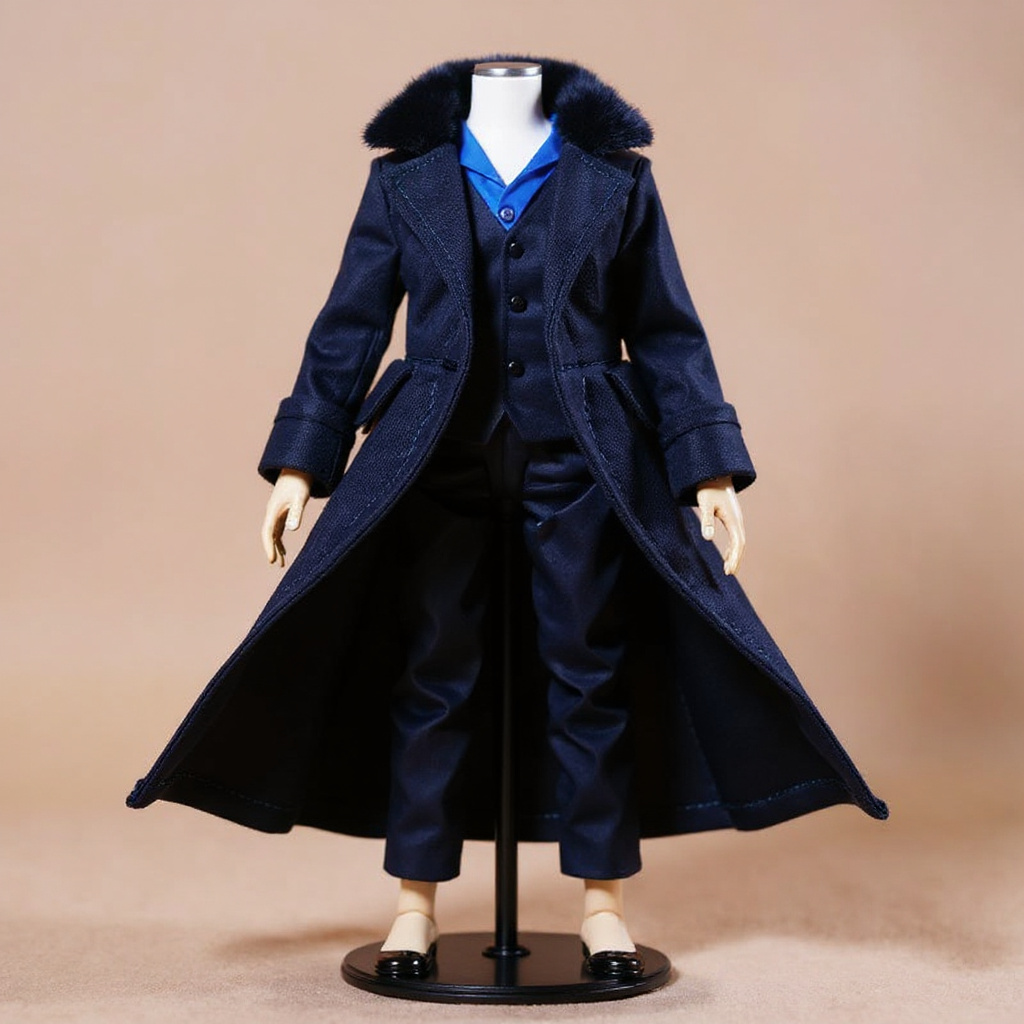
Our Sabo Coat for 1/12 Action Figure uses a matte cotton blend treated to hold its dark navy-black color and structure while staying thin enough to look natural on a 6-inch frame. The fur-like trim collar and wide lapels needed extra hand-thinning at the edges — otherwise the collar alone would have doubled the coat's visual bulk.
Internal wire framework matters here too. At 1/6, heavier gauge wire hides in seams without creating obvious lumps. At 1/12, you need 28–30 gauge wire, placed with tweezers basically, so it doesn't restrict movement or poke through the matte fabric finish.
Wire Gauge Comparison
| Scale | Typical Wire Gauge | Placement Difficulty | Common Failure Point |
|---|---|---|---|
| 1/6 | 20–24 gauge | Low | Wire shifts inside hem |
| 1/12 | 28–30 gauge | High | Wire snaps after repeated posing |
| 1/12 (armature-grade) | 30–32 gauge | Very high | Cost, not durability |
Honestly, if you're brand new to soft-goods work, skip wired 1/12 coats for your first project. Start with a simple non-wired cape. Wire at this scale punishes beginners fast.
Posability Differences You'll Actually Notice
1/12 vs 1/6 figure clothing behaves differently the moment you start posing. Not subtly either.
1/6 figures have more joint clearance, so clothing can sit looser around elbows and knees without blocking movement. 1/12 figures need tighter, more exact tailoring around every single joint. There's no slack to hide mistakes in.
Here's what changes with scale:
1. Shoulder clearance: 1/12 clothing needs wider armholes or stretch panels 2. Hip articulation: pants and skirts must account for tighter joint spacing 3. Neck movement: collars that work fine on 1/6 can lock up 1/12 head articulation 4. Layering limits: 1/12 figures can't handle multiple layers without losing posability 5. Fabric memory: at 6 inches, creases become nearly permanent 6. Wire placement: support structures must sit precisely, never crossing a joint
A 1/6 figure pulls off dynamic poses even in restrictive clothing. A 1/12 figure can't. Every joint's range is precious, so clothing has to be engineered around the figure from day one, not adjusted after the fact.
Brand Compatibility Across Scales
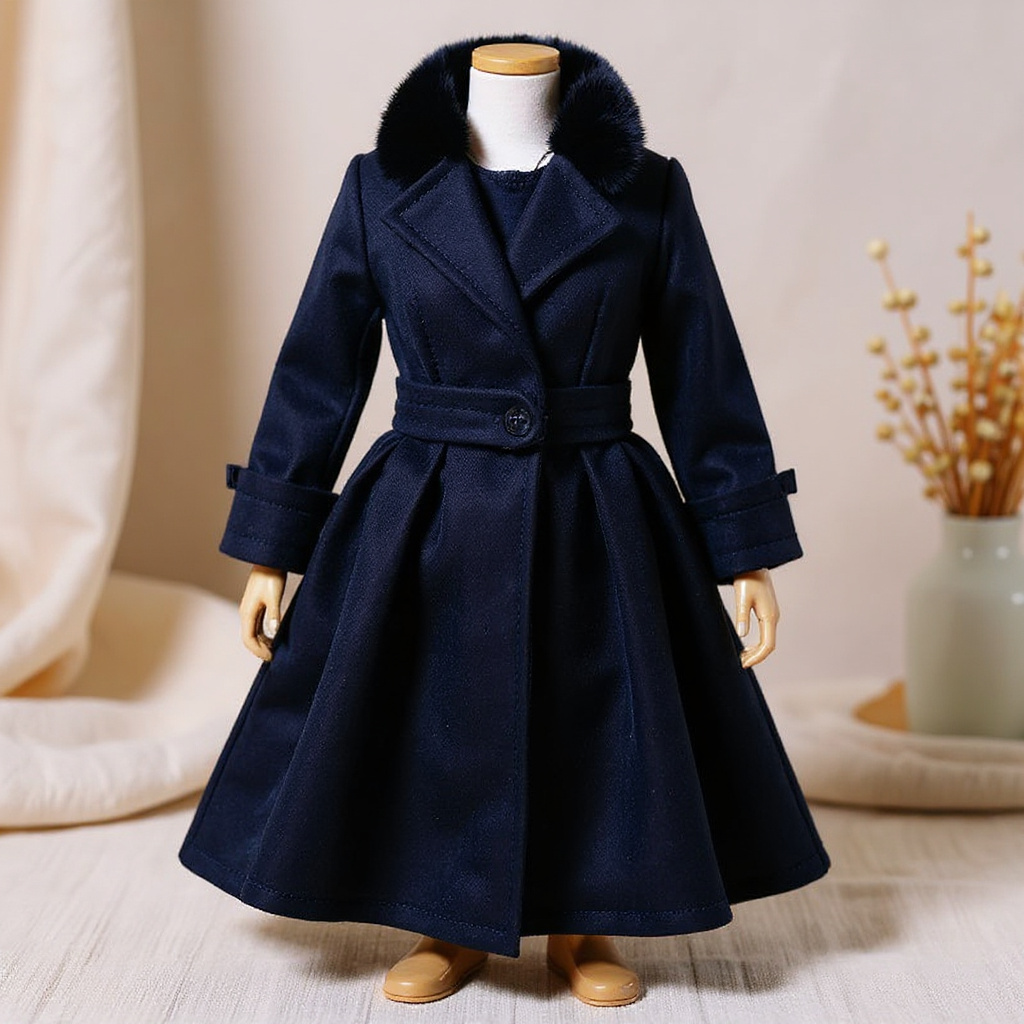
"1/12 scale" sounds universal. It's not, and this trips up a lot of first-time buyers.
Tamashii Nations figures run slightly smaller than Storm Collectibles. Figma bodies are slimmer than Marvel Legends. Even inside one company, different product lines use different proportions.
| Brand | Approx. Height | Body Style | Coat Fit Notes |
|---|---|---|---|
| Tamashii Nations (S.H. Figuarts) | 5.5–6 in | Realistic, slim | Runs narrow at shoulders |
| Marvel Legends | 6–6.5 in | Heroic, bulked | Needs wider chest allowance |
| Storm Collectibles | 6.5 in | Muscular, dense | Longer torso than average |
| Figma | 5.5 in | Slim, anime-proportioned | Tightest fit overall |
The Tamashii Nations body type favors realistic proportions. Marvel Legends goes heroic and bulked-up. Clothing sized for one won't sit right on the other without adjustment — sometimes a lot of adjustment.
1/6 scale has similar quirks, but the larger size gives you wiggle room. Padding, clips, quick fixes. At 1/12 there's no room for tricks like that. What you cut is what you get.
Cost Breakdown: What You're Actually Paying For
1/12 clothing costs more per square inch of fabric than you'd expect. Tiny seams need more precision. Pattern drafting gets technical fast. One mistake ruins the piece — there's no spare material to fix it with.
Factory-made 1/12 clothing runs $15–25 for basic pieces, usually with heat-sealed edges instead of real seams. The fit is generic, built to work "well enough" across multiple body types.
Custom handmade pieces like our handmade Sabo coat at $50 sit in between. Proper seaming. Custom tailoring. Internal wire that factory pieces skip entirely. You also get the honest imperfections of handmade work — visible thread ends, slight asymmetry, natural variation in the matte fabric finish that some collectors actually prefer over factory-perfect vinyl.
Premium custom tailors charge $80–150 for 1/12 pieces because it's jewelry-level precision work at that point. Every stitch counts when the whole coat is smaller than your palm.
Wire vs Non-Wired: Why It Changes Everything
Non-wired clothing drapes naturally but stays wherever gravity puts it. Fine for static poses. Limiting for anything else.
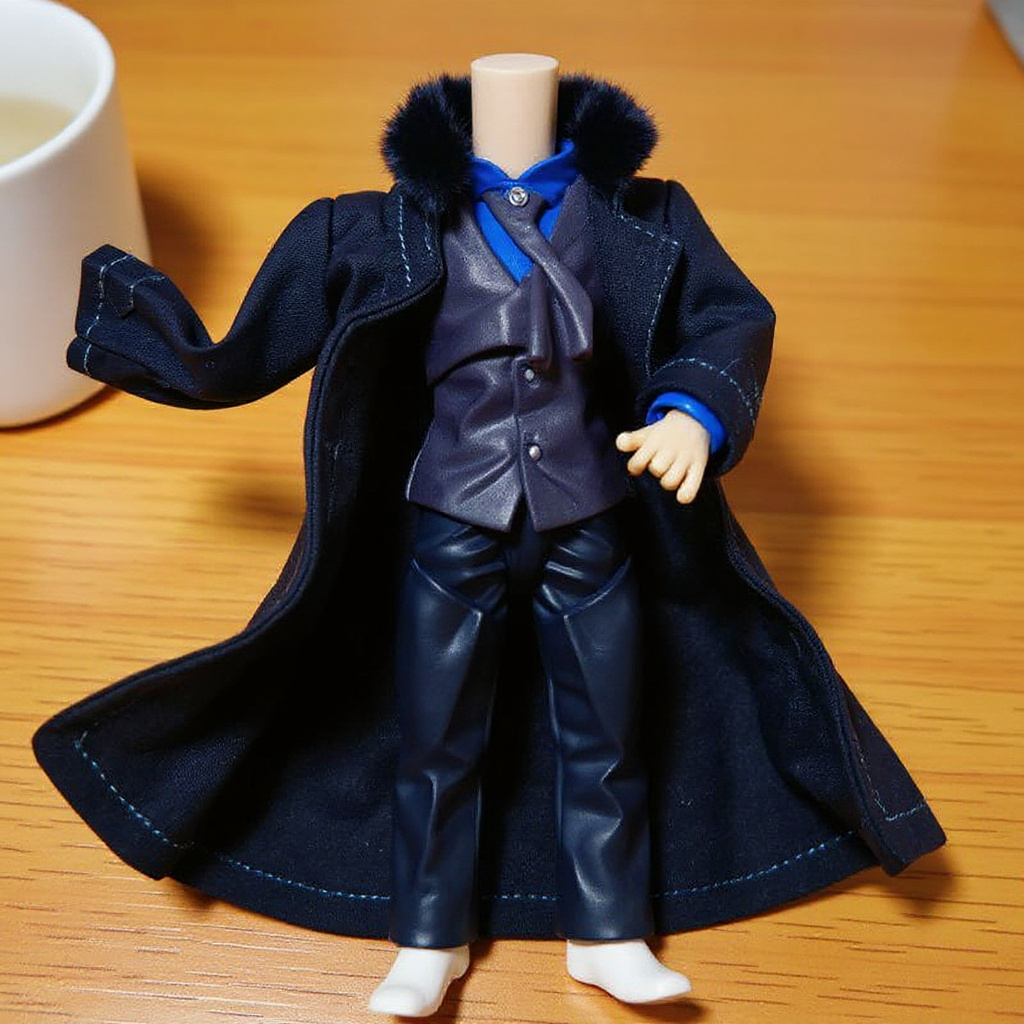
Wired clothing lets you pose the fabric itself — wind-blown effects, a coat tail curving around a leg, that dramatic flared silhouette Sabo's coat is known for. But at 1/12 scale, the wire work turns delicate fast.
Too thin, and the wire snaps after a handful of repositions. Too thick, and you get weird lumps under the matte fabric. Most makers land on 28–30 gauge craft wire; the better pieces use armature wire built for miniature work, following the hem and major seams without ever crossing an articulation point.
What Crosses Between Scales (And What Doesn't)
Some accessories cross scales. Clothing almost never does.
1/12 weapons or props can work as oversized items on 1/6 figures — a small pistol becomes a hand cannon, which might even suit certain characters. But clothing doesn't scale that way. 1/6 clothing on a 1/12 figure isn't just loose. It's unwearable. And 1/12 clothing on a 1/6 figure looks exactly like doll clothes on a person, because that's basically what it is.
One crossover trick that actually works: use a 1/12 piece as a pattern reference for testing proportions before cutting expensive fabric for the 1/6 version.
Finding the Right Size for Your Figure
Most product listings give overall figure height. That number tells you almost nothing about chest width, shoulder breadth, or waist measurement — the numbers that actually determine fit.
1. Chest circumference: measure around the widest part of the torso 2. Shoulder width: shoulder point to shoulder point, across the back 3. Waist: narrowest point, usually above the belt line 4. Arm length: shoulder to wrist, arm extended 5. Inseam: crotch to ankle 6. Neck circumference: for collared jackets like Sabo's fur-trim coat 7. Hip width: for fitted pants or skirts
The Reddit ActionFigures community maintains unofficial measurement databases for popular figure lines — check there before ordering anything custom.
What's Actually Worth the Upgrade
Not every figure needs custom clothing. Some pieces do make a real difference on the shelf, though.
Coats and cloaks show the biggest jump in quality with custom work. Factory versions are usually stiff vinyl with zero structure. A properly built coat with internal wire and a fur-like trim collar completely changes how the figure reads from across the room.
Shirts and pants improve less dramatically unless the factory version is genuinely bad. Accessories — belts, holsters, pouches — are worth upgrading because they sit in plain sight and factory versions tend to run oversized.
For One Piece characters like Sabo (One Piece), the coat carries the character design. A flat, stiff factory coat undermines the whole figure. Browse our full soft-goods catalog for more scale-accurate options beyond the Sabo piece, or read our wire-posing guide for hands-on setup tips.

