


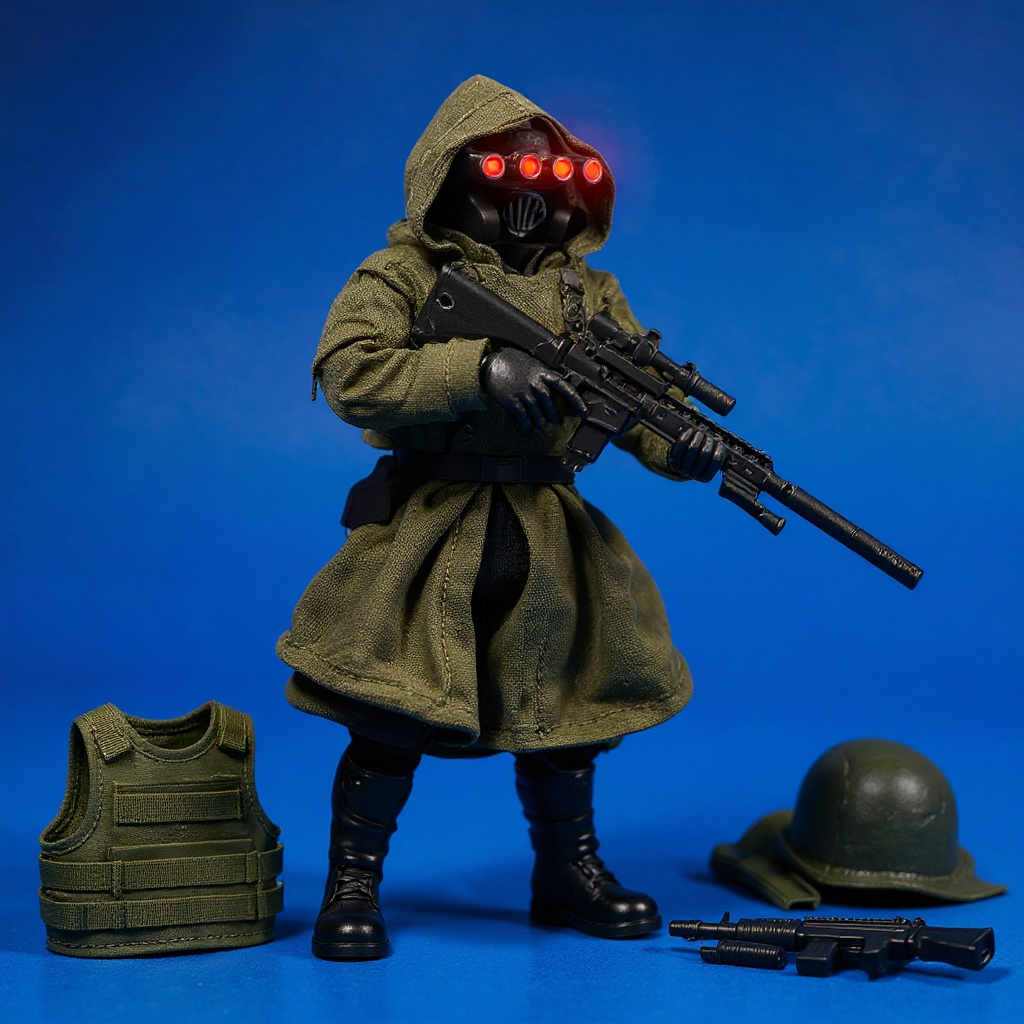
Tactical clothing for 6-inch action figures needs precise 1/12 scale sizing, real woven fabric construction, and internal wire framing for dynamic poses. Most mass-produced options fall short on at least one of these criteria.
Getting the fit right isn't just about measurements. It's about how the fabric drapes, whether the shoulders stay structured during arm articulation, and if the jacket holds poses without bunching up around joints.
Why Scale Accuracy Matters More Than You Think
A jacket that's even 2mm too wide in the shoulders will look oversized on a 6-inch figure. That's because 1:12 scale means every millimeter on the figure represents 12mm in real life.
Stock plastic armor often gets proportions wrong because it's designed for manufacturing ease, not scale accuracy. The chest pieces are too thick, shoulder pads sit too high, and belt pouches look cartoonish.
Real fabric changes this completely. Woven cloth naturally drapes at the correct thickness for 1/12 scale. A properly sized tactical jacket should measure roughly 35mm across the chest when laid flat, with sleeve length around 28mm from shoulder seam to cuff.
Material Construction That Actually Works
Not all "soft goods" are created equal. Felt looks wrong because it's too thick at scale. Vinyl appears cheap and cracks over time. Cotton jersey stretches out of shape.
Woven fabric maintains its structure while allowing natural movement. The weave should be tight enough that individual threads aren't visible from normal viewing distance, but loose enough for flexibility.
Wire framing makes the difference between clothing that poses and clothing that just hangs there. Thin gauge wire sewn into jacket edges lets you bend collars, adjust sleeve positioning, and maintain shoulder structure even when the figure's arms are fully extended.
Our 1/12 Scale Tactical Jacket uses this exact construction approach. The $39 price point reflects the handmade wire-frame construction that mass-produced alternatives can't match.
Body Compatibility Across Different Brands
| Figure Brand | Chest Width | Shoulder Breadth | Fit Quality |
|---|---|---|---|
| Marvel Legends | 34-36mm | 42mm | Excellent |
| DC Multiverse | 35-37mm | 43mm | Good |
| Star Wars Black Series | 33-35mm | 41mm | Excellent |
| ThreeA | 32-34mm | 39mm | Tight but workable |
| Storm Collectibles | 36-38mm | 44mm | Loose fit |
ThreeA figures run smaller than most 1/12 bodies. A jacket sized for Marvel Legends will be loose on ThreeA, but the wire framing helps maintain structure even with extra fabric.
Storm Collectibles figures are bulkier, so standard tactical jackets might pull tight across the chest. Check measurements before ordering if you're dressing a Storm figure.
Functional Details That Sell the Illusion
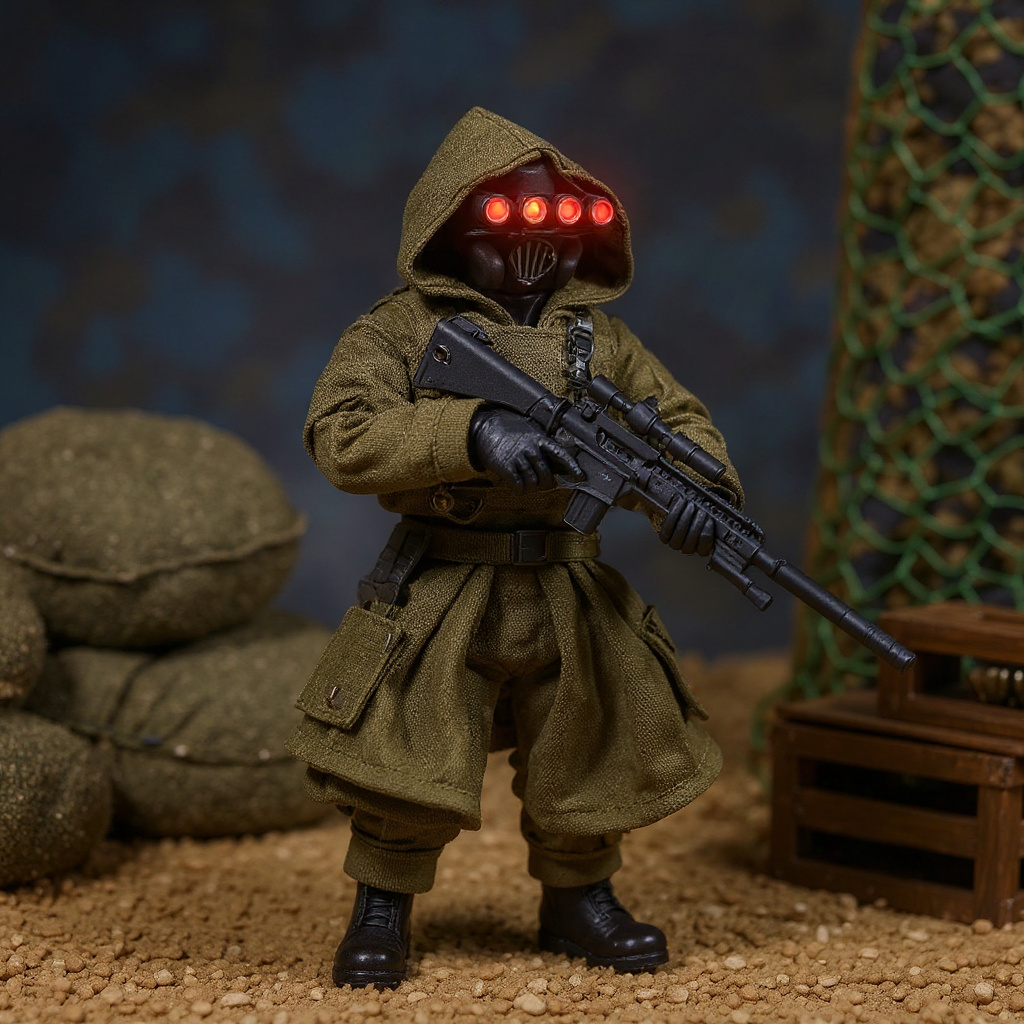
Pockets need to look functional without being oversized. Real tactical gear has specific proportions - magazine pouches are roughly 25mm tall, radio pouches around 20mm square.
Zippers at 1/12 scale are almost impossible to make functional, but stitched seam details can suggest zipper tracks. Velcro strips work better than snaps for closures at this size.
Color accuracy matters more than you'd expect. Olive drab should match military specifications, not just look "greenish." Black tactical gear should be matte, not glossy.
Avoiding Common Fitting Problems
1. Sleeve length too long - Cuffs should end at the wrist joint, not cover the hands 2. Shoulder seams dropping - Wire reinforcement prevents this sagging effect 3. Collar standing too stiff - Natural fabric drape beats rigid plastic every time 4. Back pulling tight during poses - Proper back panel width allows full arm articulation 5. Hem riding up - Weighted fabric edges or wire threading keeps proportions correct 6. Pocket placement off-center - Handmade construction allows precise positioning 7. Color fading after display - Quality dyes resist UV degradation better than cheap alternatives
The biggest mistake is assuming all 6-inch figures have identical proportions. They don't. Even within the same brand, different characters can have different body sculpts.
Competition Analysis: What's Actually Available
DAM Toys makes excellent 1/6 scale tactical gear but their 1/12 offerings are limited. Flagset produces some 6-inch compatible pieces, but quality varies widely between production runs.
Mass-produced plastic alternatives from companies like Marauder Gun Runners cost $10-20 but lack the realistic drape of fabric. They work for basic customs but don't photograph well for action figure photography.
Custom sewers on forums charge $45-80 for similar quality, but wait times can stretch 3-4 months. The handmade market for 1/12 soft goods is surprisingly small, which explains the pricing.
Photography and Display Considerations
Fabric clothing transforms how figures look in photos. The natural shadows and texture variations add realism that plastic gear can't match.
For diorama work, fabric responds to lighting setups more naturally. Harsh studio lights don't create the artificial sheen that ruins the scale illusion with plastic armor.
Dynamic poses hold better with wire-framed clothing. You can adjust jacket positioning after posing the figure, fine-tuning the silhouette for the perfect shot.
What Actually Justifies the Cost
Handmade 1/12 tactical gear costs more than mass-produced alternatives because every piece requires individual fitting and wire installation. Machine production can't replicate the precise wire placement needed for proper posability.
At $39, quality soft goods occupy the middle tier between cheap plastic ($10-20) and premium custom work ($60-80). You're paying for materials that won't degrade, construction that maintains poses, and sizing accuracy that fits properly.
The alternative is spending hours modifying cheaper options or waiting months for custom commissions. Neither option makes sense if you want quality clothing ready to use.
Frequently Asked Questions
Where can I find soft goods clothes for 1/12 6-inch figures? Specialty figure shops and custom makers produce most quality soft goods. Mass retailers focus on larger 1/6 scale because the market is bigger. How do you make action figure clothes for 1/12 scale? Start with accurate measurements, use appropriate fabric weight, and include wire framing in structural areas. Pattern drafting at this scale requires precision - 1mm errors become noticeable. How do you build a custom 1/12 scale soft goods tactical suit? Begin with the jacket, then add pants, boots, and accessories in order. Each piece affects how the next layer fits, so work from base layers outward. Will a 1/12 scale jacket fit a ThreeA figure? ThreeA figures run smaller than standard 1/12 proportions. Most jackets will be loose but functional with proper wire framing to maintain structure. What cheap base body works for a custom figure like John Marston? Marvel Legends cowboy-style figures provide good starting points. The Deadpool body has useful articulation, and western character releases often include appropriate clothing elements. Does real fabric clothing make a figure look better than sculpted stock clothing? Fabric provides more realistic proportions and better photography results, but requires more care and costs more than stock plastic. What is the difference between 1/12 scale and 1/6 scale military clothes? 1/6 scale clothes are twice as large, designed for 12-inch figures. The construction methods differ because larger scale allows more detail and functional elements.Is Quality Tactical Clothing Worth the Investment?
Upgrading from stock plastic to quality fabric changes how your figures display and photograph. The difference becomes obvious once you see proper scale clothing in person.
For serious collectors building military dioramas or photography setups, the investment pays off in results. Casual collectors might prefer the lower maintenance of plastic alternatives.
If you're ready to upgrade your 6-inch tactical figures with properly constructed soft goods, see our 1/12 Scale Tactical Jacket designed specifically for these applications. The wire-frame construction and accurate scaling address the common fitting problems that plague mass-produced alternatives.

