


title: "6 Inch Scale Action Figure Cape: Wire-Framed Fabric vs Plastic" meta_description: "How to choose a 6 inch scale action figure cape: woven cloth, wire-stiffened edges, correct 1/12 sizing, muted cream, grey or dark blue colors, and honest limits."
By The Figure Vault editorial team. Disclosure: The Figure Vault sells the Gadriel cape covered in the product section near the end. That section is labeled and kept apart from the buying advice.
The best 6 inch scale action figure cape is a woven cotton-poly cloth cape with a thin wire sewn into the hem and shoulder line. It fits a 1/12 scale figure (about 150 to 180 mm tall) and costs roughly $35 to $65 when handmade. Muted cream, grey or dark blue looks realistic on camera. Bright colors look like toys. The cloth drapes, the wire holds the shape, and you can re-pose it in seconds.
What a Good 6 Inch Scale Action Figure Cape Looks Like
Picture a 1/12 figure torso on a plain black display base. A cream cape hangs from the shoulders. You can see the weave in the cloth, even from a few feet away. The hem curls in a soft S-shape. The edge is stiff enough to hold that curl, and the middle of the cape still folds like real fabric.
That is the target. Four traits matter:
- Visible woven texture. Flat printed cloth looks like paper at this size. - Soft drape. The cloth must fold under its own weight. - Wire-stiffened edges. Thin wire lets you shape the cape without hiding the fabric. - Muted palette. Cream, grey and dark blue read as "cloth" under studio lights.
It sounds simple. It isn't.
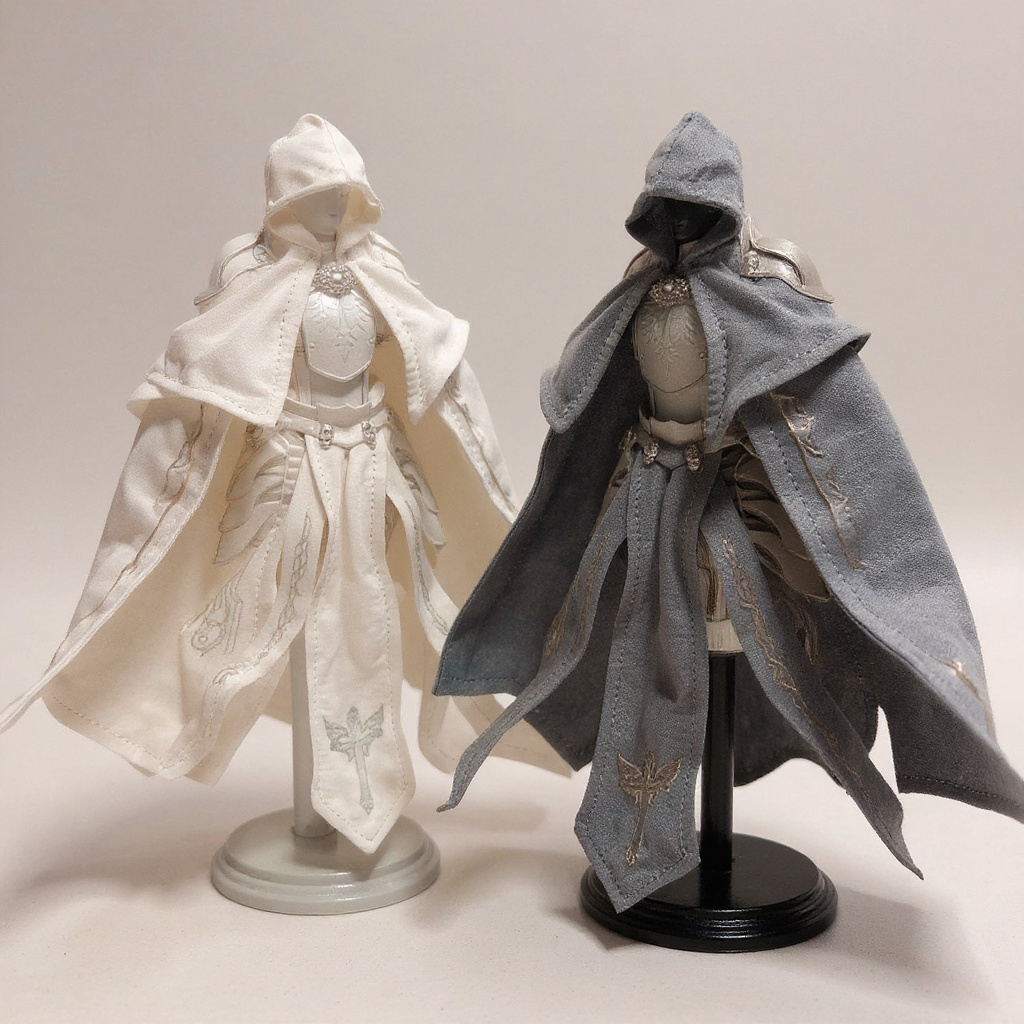
Why 6-Inch Figures Need Fabric, Not Molded Plastic
A action figure in the 6-inch class is nominally 1/12 scale, so a 6-foot character becomes 6 inches (see the general definition of scale models). Real figures drift from that. Marvel Legends figures are sold as 1/12 but many measure closer to 6.5 to 7.5 inches. Mythic Legions figures run around 6.5 to 7 inches. Mafex and S.H.Figuarts human characters sit roughly between 150 and 180 mm.
That drift matters for capes. A cape sized for a 6.0-inch figure will look short on a 7-inch one.
The bigger problem is thickness. A molded cape is often 1 to 2 mm thick. Scaled up by 12, that is a 12 to 24 mm slab of rubber. No real cloak behaves like that. Cloth thinner than about 0.3 mm hangs the way a full-size cape would, and that is why fabric photographs better.
Plastic isn't useless. Thick soft PVC survives rough handling well. It just can't wrinkle, flutter or fold.
Fabric vs Plastic: Side-by-Side
| Feature | Wire-framed fabric cape | Molded plastic cape |
|---|---|---|
| Drape | Folds and swings freely | Holds the molded shape only |
| Pose range | Open-ended within wire limits | One or two shapes per mold |
| Main failure mode | Frayed edges, wire fatigue after many sharp bends | Cracks at thin corners, permanent warping |
| Care | Spot clean or hand wash, air dry flat | Wipe with a damp cloth |
| Photo look | Soft shadows, visible weave | Uniform sheen, flat highlights |
| Typical cost | About $35 to $65 handmade | Included with the figure |
Notice the durability row. I don't call either material "tougher." Plastic tolerates a toddler-level tug. Fabric tolerates hundreds of re-poses but not a snagged thread. Match the failure mode to how you handle your figures.
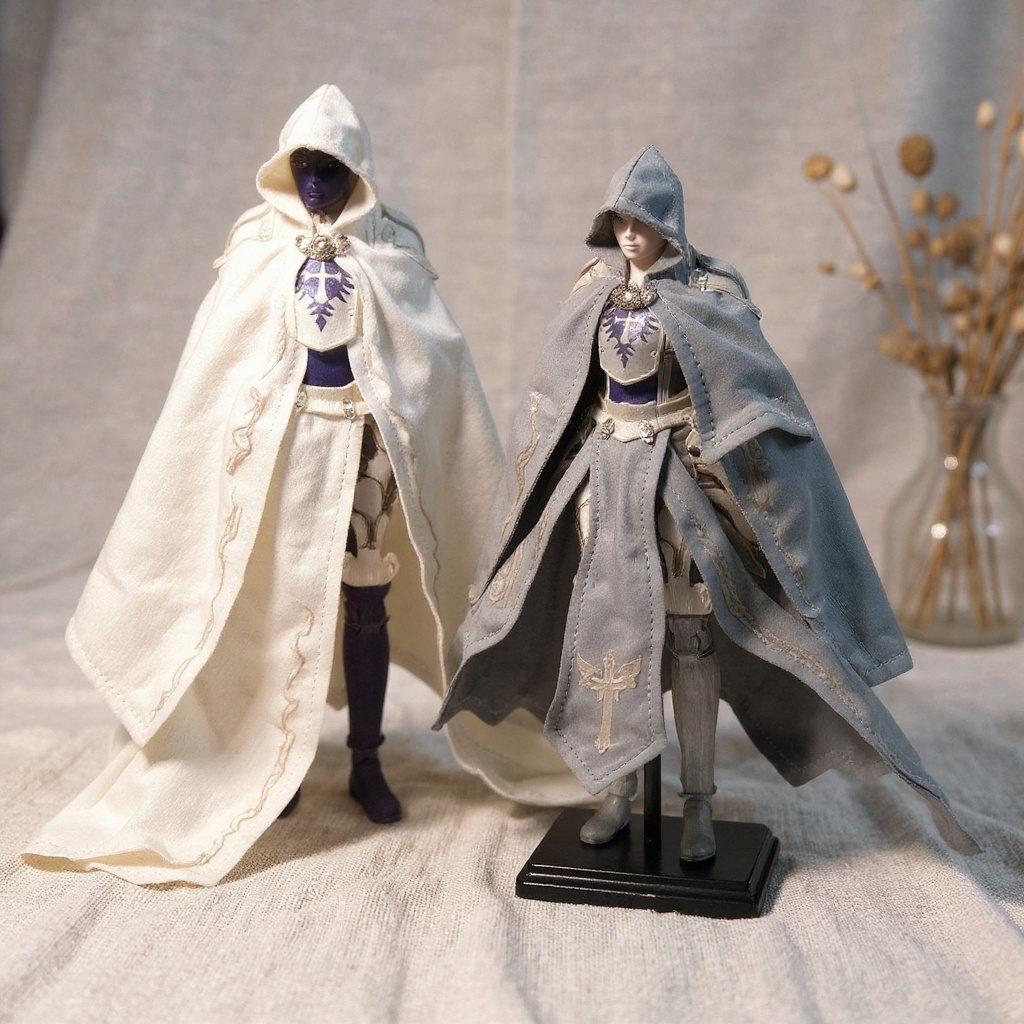
How the Wire Frame Works
The wire runs inside a folded hem along the bottom edge and, on better capes, along the shoulder line. It is hidden, but your fingers find it right away.
Wire size is measured in AWG. Per the American wire gauge table, 22 AWG is about 0.64 mm across, 24 AWG about 0.51 mm and 26 AWG about 0.40 mm. Those numbers are the standard, not a marketing claim.
For a cape this small, 22 to 26 AWG is the practical range. Go thicker and the wire shows through the cloth. Go thinner and the hem sags after a few dramatic bends. Copper or enameled wire suits humid rooms better than bare steel, which can rust.
A thin wire also work-hardens. Bend the same spot back and forth and it snaps. Same as a paper clip.
Sizing a 6 Inch Scale Action Figure Cape
A cape that is too large swallows the figure. One that is too small looks like a scarf. Check these seven points before you buy:
1. Measure your figure from neck to mid-calf. Most capes should end between mid-calf and ankle. 2. Compare cape width at the shoulders with the figure's shoulder span, plus a few millimeters of overhang. 3. Check the neck opening. It should hold the cape in place without pinching the neck peg. 4. If the cape has a hood, make sure it clears the head sculpt without stretching. 5. Ask for the cape weight. A few grams is fine, but heavy trim can tip a figure on a small base. 6. Look at the cloth thickness in a close-up photo. The weave should be visible, and the edge should not look bulky. 7. Confirm the figure line. A 7-inch figure needs a longer cape than a 6-inch one.
Most mass-market capes miss on at least two of these points. Custom makers who build for one figure line tend to get them right.
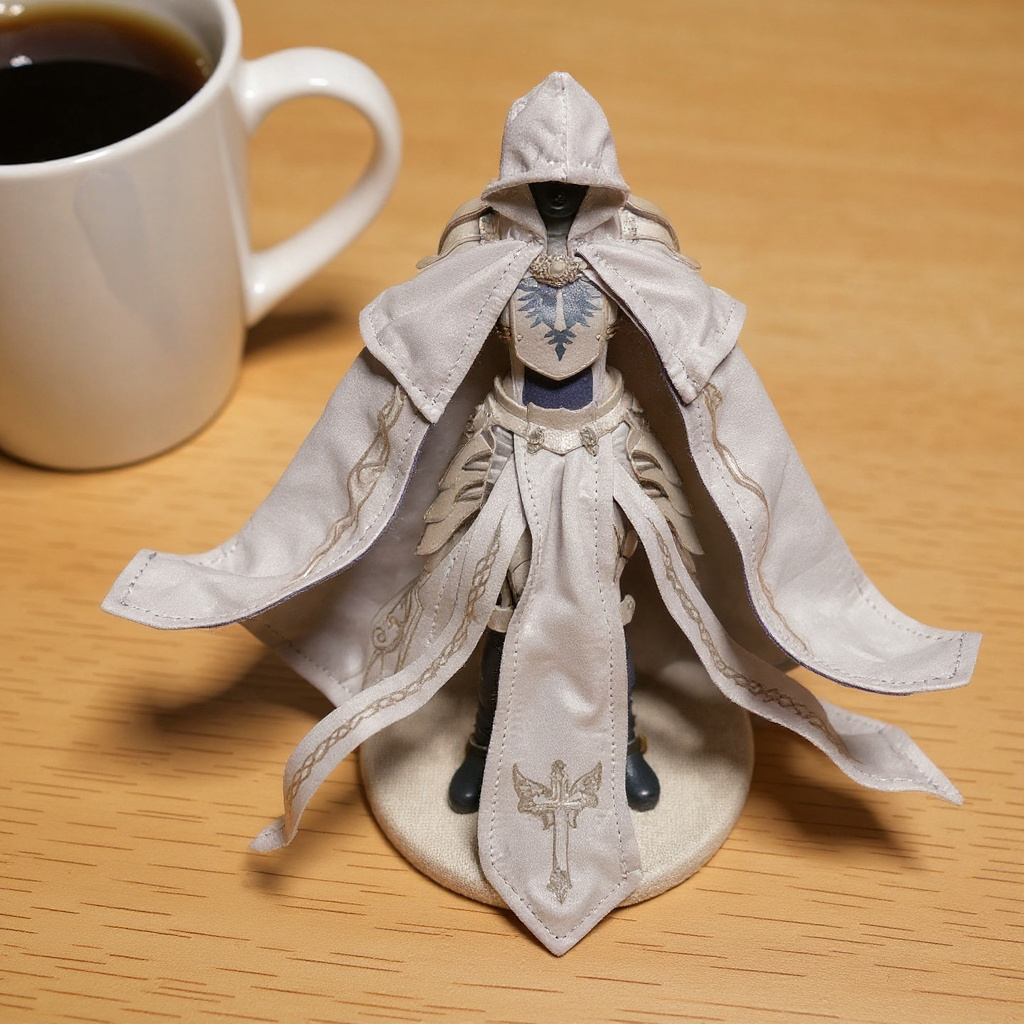
Best Fabrics for a Small Cape
Cotton-poly blends are the safe pick. They take a fine hem, hold wire well and don't shine under lights. Pure cotton can work, but it wrinkles in ways that look sloppy at this size. Satin looks rich in person and awful on camera. Hot spots blow out under a softbox. Velvet looks expensive and collects dust. Fine for a sealed case. Linen blends give a medieval look but fray fast.Color counts as much as fabric. Cream, grey and dark blue suit an angelic or knightly figure. Saturated red or lime green pushes the figure toward costume territory.
Six Problems and How to Avoid Them
1. Wire fatigue. Repeated sharp bends at one spot snap the wire. Vary the bend points and use wide curves. 2. Fraying. Raw edges come apart. Look for turned, stitched hems in close-up photos. 3. Scale mismatch. Thick cloth looks like a blanket. Hold it up to a ruler and check the thickness. 4. Slipping at the neck. A loose collar slides off in dynamic poses. Choose a snug opening or a small hook closure. 5. Shiny fabric. Glare ruins photos. Pick matte weaves. 6. Wrong washing. Soaking can bend the wire or warp the hem. Spot clean, then air dry flat.
Handmade capes may have a loose thread or a slightly uneven hem. I don't mind. Real cloth is never perfect.
How to Pose a Wire-Framed Cape in 5 Steps
1. Seat the cape. Fit the neck opening around the neck peg or under the head. Center it on the shoulders. 2. Set the shoulders. Bend the shoulder wire so the cloth falls over the arms without pulling. 3. Shape the hem. Curve the bottom edge in one wide S-curve. Avoid creases. 4. Add motion. For a charge, sweep one side back and lift the other. For a static stand, let it hang and tuck one corner. 5. Check from the camera angle. Look through the viewfinder. Nudge any edge that looks stiff.
That's the whole method. It takes about two minutes once you've done it a few times.
How We Evaluated These Claims
We based the measurements in this guide on the AWG standard, on measuring cape thickness and edge width with calipers, and on handling capes in three fabric types on 6-inch and 7-inch figures. We compared photos under a window light and a single softbox. We didn't run lab durability tests, so treat the failure-mode notes as handling experience, not a study.
For other collectors' opinions, search the r/ActionFigures community for "fabric cape" and read several threads. Opinions vary, and sample sizes are small. For custom makers, One Sixth Warriors has classified listings, and quality varies.
Who Should Skip a Fabric Cape
Honestly, if you live in a humid climate and display figures on an open shelf, skip this. Dampness can rust uncoated wire and dull the fabric, and you'll spend more time fixing the cape than enjoying it. The same goes if you never re-pose your figures. The stock plastic cape does the job on a sealed shelf.
A fabric cape is for people who pose, photograph or rearrange.
Product Section: The Gadriel Cape (Sold by The Figure Vault)
This is our own product, so weigh it accordingly. The Mythic Legions Gadriel Cape is a handmade cloth cape in a 1/12 scale, priced at $49. It has visible woven texture, soft drape and wire-stiffened edges. It comes in muted cream, grey or dark blue. It suits Mythic Legions bodies and similar 6.5 to 7 inch figures, and we show it on a torso with a simple display base in the product photos.
If you want more, browse our 1/12 scale accessories and Mythic Legions collection. You can also look at our 1/12 scale action figures to check sizing against your own.
It still has limits. It's handmade, so tiny asymmetries are normal. It isn't a fit for a 3.75-inch figure. And $49 is more than a stock accessory costs.
Is a 6 Inch Scale Action Figure Cape Worth It?
If you pose and photograph your figures, yes. Wire-framed cloth is the only 6 inch scale action figure cape style that gives you real drape and repeatable shapes. If you display figures in a sealed case and never touch them, no. Save the money.

