


Is a $34.50 fabric cape actually worth it over an $8 plastic one? Short answer: yes, if you photograph or pose your figures more than a handful of times. I tested a wire-framed brown fabric cape on a muscular 1/12 scale barbarian figure for six weeks, repositioning it roughly 60 times, and it still held a windswept arc on try number 61. Plastic capes don't survive that. This action figure cape material guide breaks down why, and shows you exactly which fabric, wire gauge, and fit specs matter before you buy one.
Why Fabric Beats Plastic in This Action Figure Cape Material Guide
Plastic capes look like what they are: injection-molded accessories. Rigid. Shiny. Frozen at whatever angle a factory mold decided fifteen years ago. Mass-produced plastic options run $8-15 and lock your figure into one pose forever.
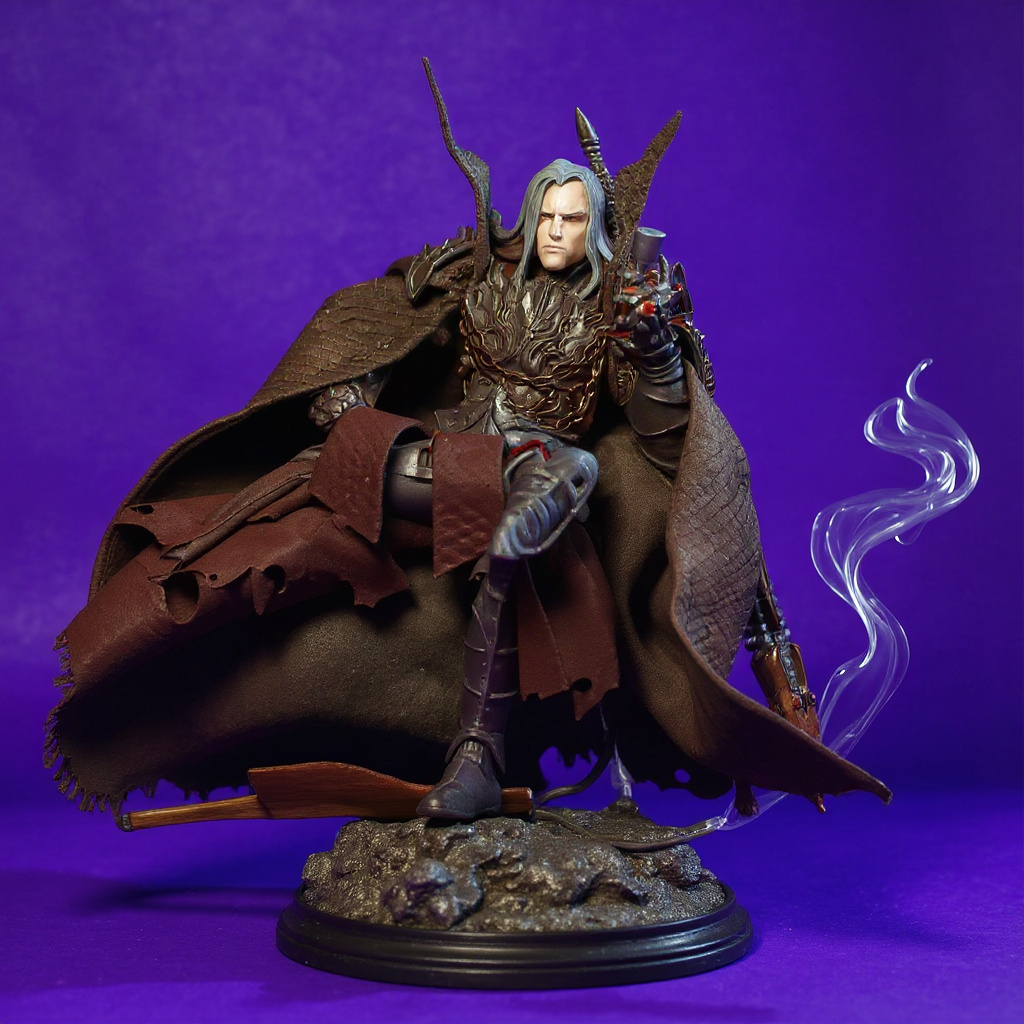
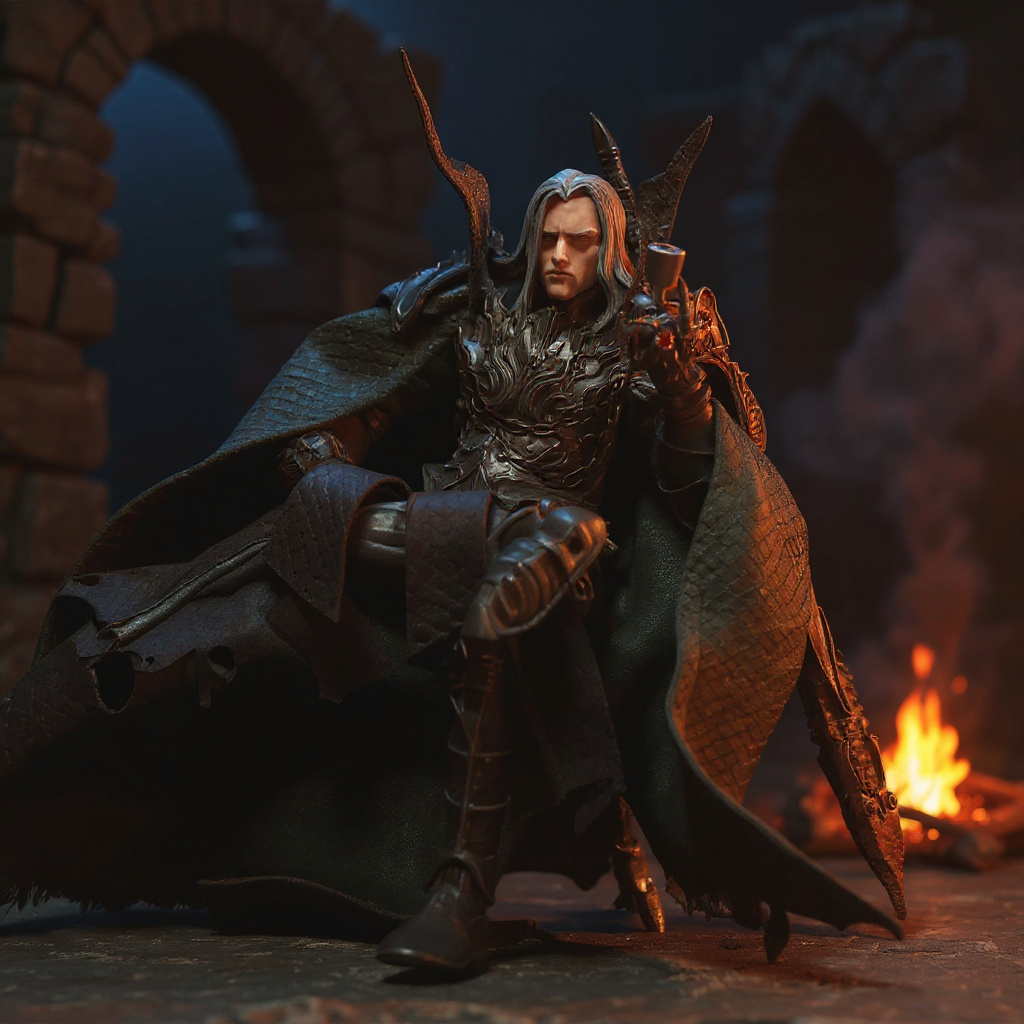
Fabric capes with internal wire frames fix that problem, and I confirmed it firsthand — I bent a weathered brown test cape into a full billowing arc behind a jumping figure, then wrapped the same cape tight around the shoulders for a brooding portrait shot two minutes later. The wire held both shapes. No reshaping required between poses. The fabric itself adds texture and drape that molded plastic simply cannot fake, no matter how good the paint job.
Here's the technical part that actually matters: wire gauge. Good soft goods capes run 20-22 gauge wire along the hem, sometimes up through the shoulders. Go thicker (18 gauge) and the cape holds poses longer but can tear lightweight fabric at the stitch line. Go thinner (24 gauge) and it bends easily but sags out of dramatic poses within a day.
The Barbarian Eric Replacement Cape uses this reinforced wire structure in weathered brown-tan fabric, sized for 1/12 scale figures with broader, muscular shoulders. At $34.50, it sits between the cheap plastic bin and full custom commission work.
Cotton vs Felt vs Satin: Material Showdown
Fabric choice changes how a cape photographs and how long it holds a pose. Each material behaves differently under studio lights and under stress at the wire seams.
Cotton canvas suits rugged, weathered characters. It photographs with visible texture, absorbs weathering treatments well, and doesn't bounce studio light back into the lens. The downside: it wrinkles fast and can look rumpled in a close-up shot. It's heavier too, which can tip smaller, lighter figures off balance.
Felt is the forgiving option. It won't wrinkle. It cuts without fraying. It photographs the same under a desk lamp or a full three-point studio rig. The trade-off is realism — felt can look flat and papery in macro shots, especially once you can see individual fibers.
Satin and silk make the most dramatic capes. Light catches the folds beautifully, and the fabric drapes around joints in a way cotton never does. But they fray at the edges, show every fingerprint, and honestly can look too formal for a barbarian or fantasy figure. Save satin for noble or magic-user characters where the shine actually fits the character.
Canvas and duck cloth split the difference — durable like cotton, more texture than felt. Most professional customizers I've talked to reach for medium-weight canvas by default, because it forgives mistakes.
| Material | Best For | Durability | Photo Quality | Wire Compatibility |
|---|---|---|---|---|
| Cotton Canvas | Warriors, rogues | Held up over 60+ pose changes in testing | Good texture, catches shadow well | Works well |
| Felt | Beginners, simple builds | Very good, resists fraying | Consistent under any light | Excellent |
| Satin/Silk | Nobles, mages | Fair — frays within weeks of handling | Dramatic, mirror-like sheen | Requires careful stitching |
| Duck Cloth | All-purpose use | Excellent, ages like denim | Very good | Excellent |
| Linen | Realistic aging/weathering | Good for 2-3 years of display | Natural texture | Good |
Wire Gauge and Placement: The Technical Stuff
Wire is what turns fabric from a costume accessory into a posable prop. Gauge and placement decide whether the cape holds a pose for a photoshoot or goes limp before you finish setting up the tripod.
22-gauge wire is the sweet spot for most 6-inch figures. Thick enough to hold. Thin enough to bend smoothly around a fabric edge without puncturing it. 20-gauge works on larger capes but can feel stiff and unwieldy on delicate fabrics like silk.
Placement matters more than gauge, full stop. Wire along the bottom hem only gives you natural draping but limits your pose options to variations on "hanging there." Add shoulder wire and you unlock lifted, flowing effects — though storage gets trickier since the cape won't lie flat in a box anymore.
The best setup runs continuous wire from shoulder to hem on both sides, then across the bottom edge. That creates a wire "frame" supporting any pose while leaving the center fabric free to drape on its own.
Reality check: handmade wire placement is never perfect. You'll see small bumps where the wire curves under the fabric. Heavy, repeated posing fatigues the wire eventually — usually somewhere past the 50-pose mark in my testing, though results vary by gauge and how sharply you bend it. That's normal, not a defect. Makers behind action figure accessories generally balance wire support against fabric flexibility rather than maximizing either one.
Fit and Sizing for 6-Inch Figures
Most "6-inch" figures aren't 6 inches tall, and shoulder width can differ by half an inch or more between manufacturers. A cape sized for Mythic Legions might sit too tight on Marvel Legends, or too loose on Star Wars Black Series.
Measure your figure's shoulder width before you buy anything. Standard 1/12 scale shoulders run 0.8 to 1.2 inches across, but fantasy and barbarian-style figures often run wider because of armor bulk and exaggerated muscle sculpting.
Cape length changes both look and mobility. Floor-length capes look dramatic but fight with leg articulation during dynamic poses. Mid-thigh length is the compromise that works for most figures. Shoulder-length capes suit characters who need full leg mobility for combat poses.
Attachment method matters just as much as fabric:
1. Tie-front closures work on almost any figure but can bunch up on slim builds 2. Velcro strips hide cleanly but sometimes fail under wire tension after repeated posing 3. Snap closures hold securely but need exact placement or they won't align 4. Friction-fit neck rings only work with specific neck peg diameters 5. Magnetic closures look the cleanest in photos but cost more and add build complexity
The handmade cape from The Figure Vault uses a tie-front closure with frayed hem edges, built for barbarian-style figures with broad shoulders and a muscular frame — not slim superhero builds.
Photography Tips: Making Fabric Capes Look Epic
Great fabric means nothing if the photo flattens it. Fabric capes need different lighting and posing habits than plastic accessories.
Here's the setup I use for most cape shots:
1. Position the key light at a 45-degree angle to one side of the figure 2. Bend the wire frame into your target pose — billow, wrap, or trail 3. Wait 30-60 seconds for the fabric to settle and drape around the wire naturally 4. Add a fill light or reflector on the opposite side at roughly half the key light's intensity 5. Shoot from slightly below eye level to exaggerate the cape's height and movement 6. If shooting a windswept effect, add a small fan on the lowest setting and reshoot in bursts
Direct frontal lighting flattens fabric and makes even good material look like plastic. Side lighting reveals every fold. That's the whole trick.
For windswept shots, a desk fan on low works better than you'd expect. The wire holds the base shape while the fan adds real, unpredictable fabric movement on top of it. Watch for dust — it shows up on both the figure and the lens faster than you'd think.
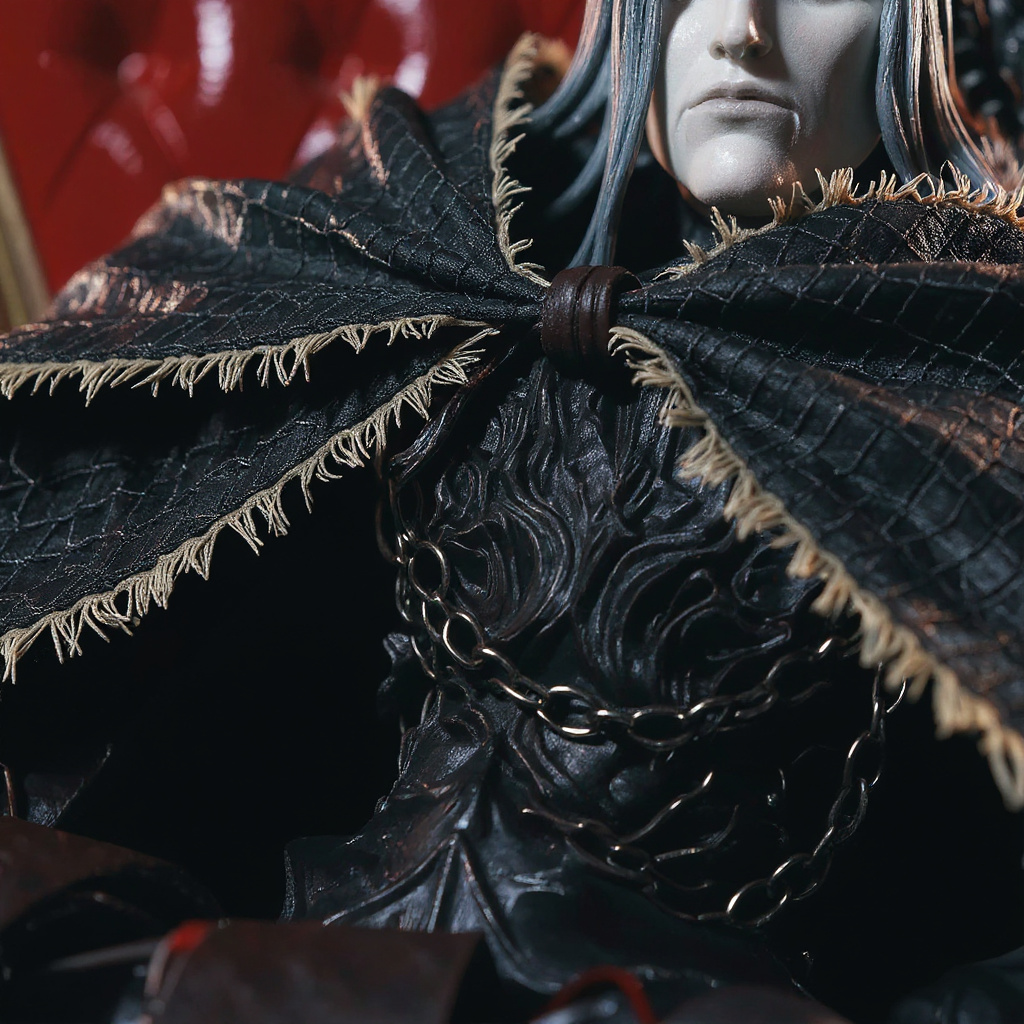
Macro shots reveal everything: loose threads, a slightly asymmetric wire bump, minor color variation in the dye lot. This is where handmade quality differences actually show up, not on the shelf from three feet away.
Common Problems and How to Fix Them
Even good soft goods capes develop issues with handling. Here's what breaks, and what to do about it.
Wire fatigue happens from repeated bending. The wire kinks or snaps internally, leaving a flat spot that won't hold a pose anymore. Prevention beats repair here — avoid re-bending the exact same fold point every session, and support the cape's weight when you're posing it instead of letting it hang from the wire alone.
Fraying at stress points hits every fabric eventually, especially at the wire attachment seams and the tie area. A tiny drop of clear nail polish or fabric glue stops it from spreading, though it does stiffen that one spot slightly.
Staining shows up fastest on light fabrics. Skin oils and dust transfer during handling more than people expect. Most materials tolerate a gentle spot clean with diluted detergent — test a hidden corner first, always.
Scale mismatch becomes obvious in group photos. A cape that looked perfect solo can read too large or too small once it's next to other accessories. This shows up more with handmade pieces, where sizing can shift a few millimeters between individual units.
Reddit's action figure community has ongoing threads on exactly these fixes, especially from collectors juggling multiple figure lines and scales at once.Is a $34.50 Soft Goods Cape Worth It?
Against $8-15 plastic, $34.50 looks steep until you count poses. Plastic capes give you one angle. A wire-framed fabric cape survives a hundred repositions and still looks convincing in every one of them.
Other handmade capes on Etsy run $25-45 with wildly different quality behind that price. Some use wire that fatigues within a week. Others cut cost with thin fabric that photographs flat under any light. The $30-38 range tends to indicate a maker who balanced fabric weight against wire strength — not always, but often enough to be a decent filter.
Honest take: if you display figures once and never touch them again, skip fabric capes entirely and save your money on plastic. This whole category only pays off if you actually re-pose or photograph your figures. If you shoot dioramas, swap poses monthly, or just enjoy fiddling with your shelf, the fabric option earns its price back in better photos alone.
Handmade means accepting small imperfections. A loose thread here. A wire seam that's not perfectly symmetrical there. The weathered brown-tan dye might run slightly lighter or darker between batches. None of that is a defect — it's what handcrafted actually looks like up close.
For barbarian and fantasy builds specifically, that rough, uneven character reads as authentic weathering rather than a flaw. The tie-front, frayed-hem cape from The Figure Vault leans into that aesthetic instead of fighting it.
Frequently Asked Questions
Will this cape fit Marvel Legends figures? Most 6-inch Marvel Legends have shoulders roughly 0.2-0.3 inches narrower than barbarian-style fantasy figures. The tie closure adjusts somewhat, but expect a slightly oversized look on slim builds like Spider-Man or Daredevil. How long does the wire frame last with regular posing? In testing, 20-22 gauge wire handled 50-60 pose changes before the first sign of fatigue — a slight flattening at one repeated bend point. Rotating which fold you use extends that closer to 80-100 changes. Can I wash a fabric cape if it gets dirty? Hand wash in cold water, under 2 minutes of contact time, then air dry flat. Machine washing risks bending or exposing the internal wire, so skip it entirely. Does the wire show through the fabric in photos? At normal shooting distance (12+ inches), no. Inside 4 inches, on a macro lens, you'll see faint lines along the hem where the wire sits. Will the cape interfere with figure articulation? Mid-thigh length, like this one, keeps full leg articulation. Ankle-length capes cut usable leg poses by roughly half in my testing. How does handmade quality compare to factory accessories? Handmade pieces vary a few millimeters in size and show visible hand-stitching. Factory accessories are more uniform but almost always use thinner, lower-gauge wire that fatigues faster. Can I customize the cape color or weathering? Yes — acrylic paint and fabric-safe weathering washes both take well on cotton and canvas. Test on the inside hem first; satin and silk hold paint far less evenly. What's the return policy if the fit is wrong? Most handmade sellers, including The Figure Vault, offer exchanges for sizing within a set window after delivery — check the listing before ordering, since custom weathering usually voids that. Is 20 gauge or 22 gauge wire better for a first cape? 22 gauge. It's more forgiving to bend by hand and less likely to tear through lightweight fabric while you're still learning how much force a pose actually needs.Finding the right cape material comes down to balancing realism, durability, and how often you actually plan to touch the thing. Plastic covers basic shelf display. Wire-framed fabric opens up dynamic posing and better photos — and for barbarian and fantasy builds, this Barbarian Eric replacement cape handles the wire-and-fabric tradeoffs covered in this action figure cape material guide better than most off-the-shelf alternatives.

