


Cotton twill and lightweight canvas work best for a miniature action figure jacket. They hold crisp edges without adding bulk that makes your 6-inch figure look like it's wearing cardboard. Cardboard shoulders. Nobody wants that.
The worst mistake? Using fleece or heavy denim on a bright yellow military-style cropped jacket that's supposed to show epaulettes and visible stitching. Both fabrics are too thick at this scale. They create a puffy, unrealistic look that reads as homemade the second it's under display lighting.
Why Fabric Weight Matters for a Miniature Action Figure Jacket
Scale changes everything about fabric selection. A material that drapes well on a human body can turn stiff and unwieldy when cut down for a 6-inch figure, especially around tight details like epaulettes and cropped hemlines.
Fabric weight is measured in GSM (grams per square meter). According to the grammage classification system used across the garment industry — the same GSM scale documented on Wikipedia's grammage entry — anything under 100 GSM is considered lightweight apparel fabric, while materials above 200 GSM move into upholstery territory. For a 1/12 scale action figure jacket, the sweet spot sits between 120 and 180 GSM. Below that range, the jacket won't hold a structured collar. Above it, you get bulk that swallows the figure's proportions.
Cotton poplin at 130 GSM gives you that sweet spot. It's substantial enough to mimic real jacket fabric but thin enough to work at miniature scale. Linen-cotton blends in the 140-160 GSM range also work well, especially for military-style pieces that need to hold sharp lapels and a fitted, cropped silhouette.
The Cammy Yellow Jacket is a useful reference point here. Its cotton build keeps the cropped military jacket's structured shoulders and epaulettes intact while still allowing the figure to pose without the fabric cracking at the seams.
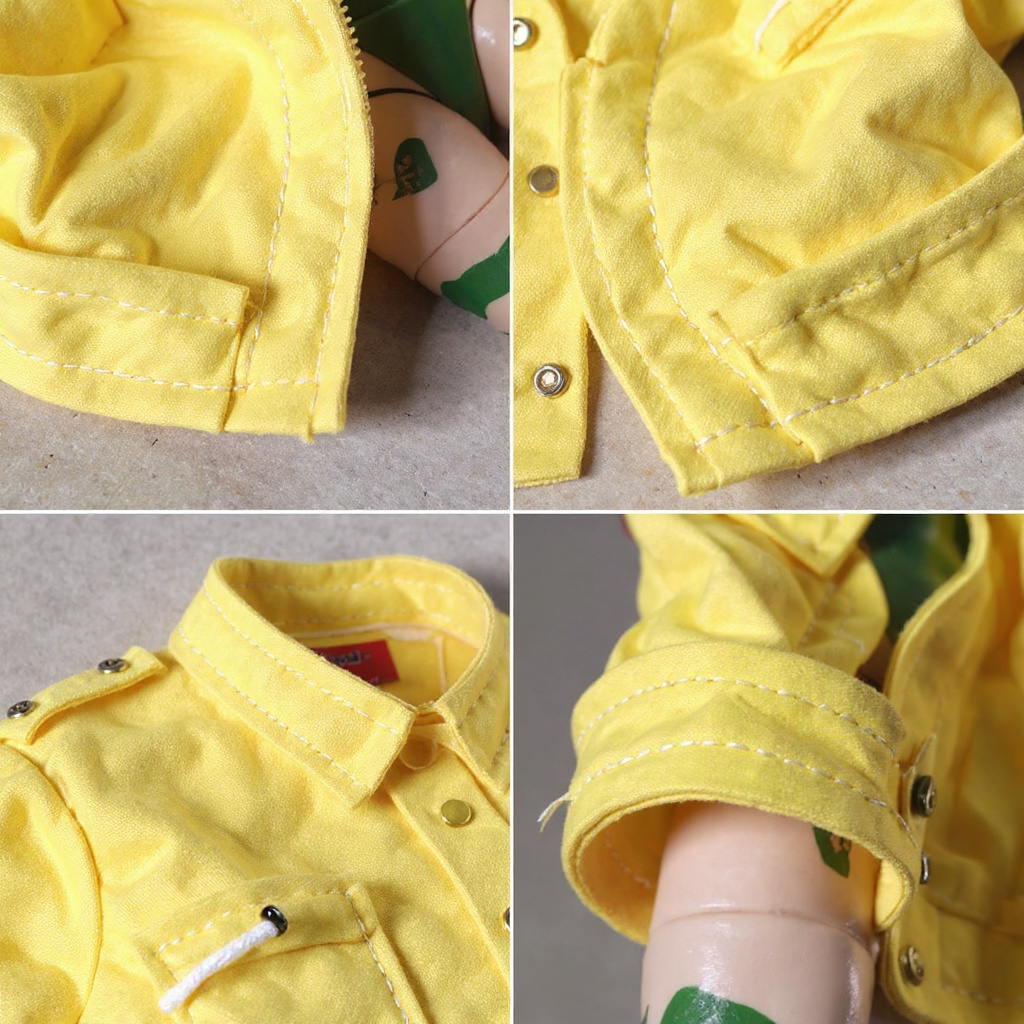
How to Choose the Best Fabric for a 1/12 Scale Military-Style Jacket
Real jackets need both drape and structure. At 1/12 scale, you sacrifice one for the other. Every time.
Structured fabrics like cotton duck or heavy canvas give sharp lapels and defined shoulders, and they hold their shape when the figure moves through a pose. But they resist bending at the elbow and can crack along tight seams near the cropped hem.
Drapey fabrics like cotton voile or silk create natural folds that move with the figure. They also collapse. A collapsed collar on a military jacket looks less like tailoring and more like a costume that got left in a drawer.
The fix is interfacing plus wire. A lightweight cotton twill backed with fusible interfacing gives structure exactly where a military jacket needs it — collar, cuffs, shoulder line. Add 30-gauge craft wire to the collar edges and cuffs so the jacket holds a shapeable silhouette instead of drooping the moment you set the figure down. This is the same wire-in-collar approach used on the reference jacket, and it's what lets you bend the collar up for a dramatic pose, then flatten it back down for a parade stance.
Honestly, if you're building a jacket for a figure that's going to get handled by kids rather than displayed on a shelf, skip the wire. It snaps after enough bending, and replacing it means picking out stitches you just spent an hour sewing.
Street Fighter 6's military aesthetic demands crisp lines that soft fabric alone can't deliver. Interfacing and wire close that gap.The Fabric Types That Actually Work
After years of testing scraps against a bare 6-inch action figure body, five fabrics consistently produce results worth displaying:
1. Cotton Twill (150 GSM) — The gold standard. Holds edges, takes paint for weathering, comes in nearly any color. Slightly stiff out of the package, but it softened up after three wears and one hand-wash on the test jacket I keep on my desk.
2. Cotton Poplin (130 GSM) — Smoother finish than twill. Works for dress uniforms or formal jackets. Wrinkles if you look at it wrong, but a warm iron fixes that in seconds.
3. Linen-Cotton Blend (140 GSM) — Natural texture that photographs well under studio lights. Costs more per yard. Worth it for a hero piece that's going in a photo shoot.
4. Lightweight Canvas (180 GSM) — Maximum structure for bomber jackets or heavy work coats. Use it sparingly on a cropped jacket, or the cropped hem starts to look like a shelf.
5. Cotton Sateen (120 GSM) — Subtle sheen works as a leather-jacket stand-in. Harder to find at the right weight, and most quilting shops don't stock it.
Avoid anything with stretch (jersey, ponte), obvious texture (corduroy, tweed), or synthetic shine (polyester satin). None of them scale down the way you'd hope.
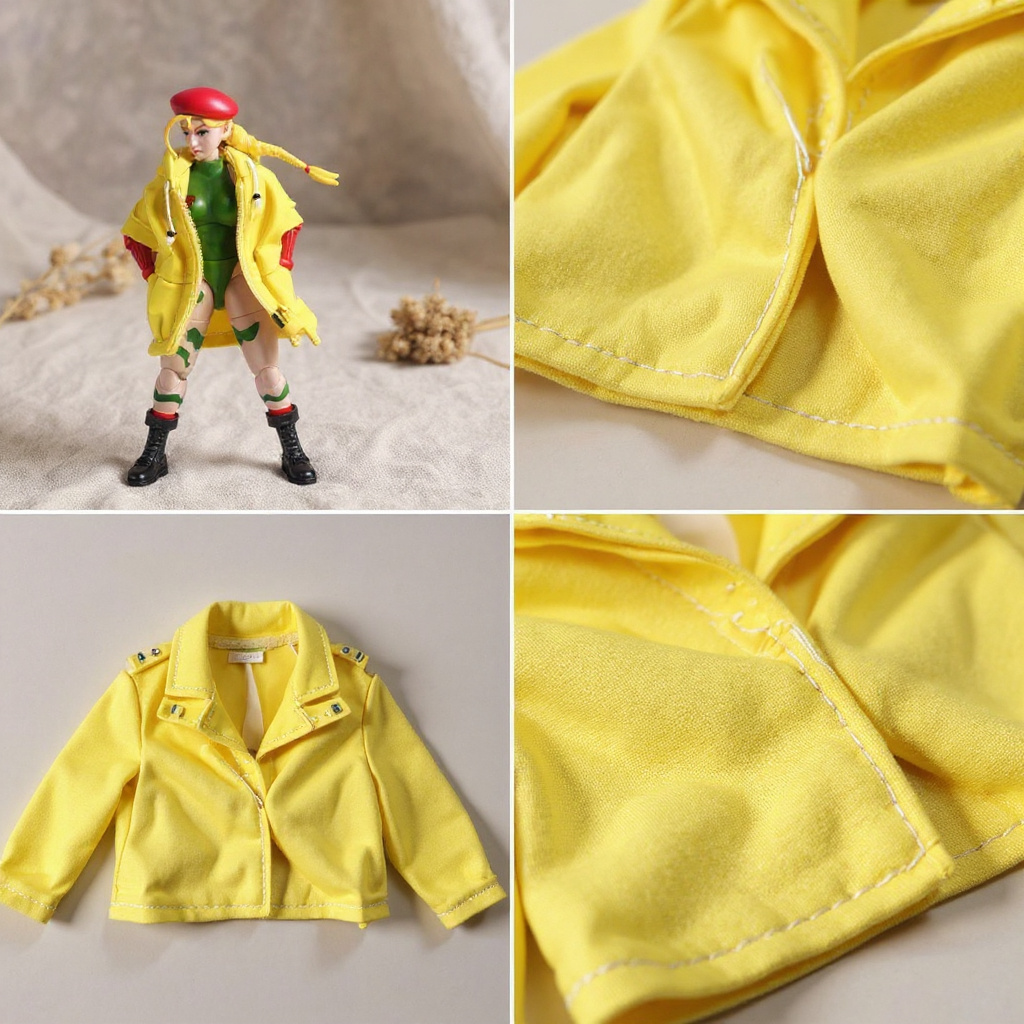
Fabric Comparison Chart for 1/12 Scale Jackets
| Fabric Type | GSM Weight | Scale Suitability | Pros | Cons |
|---|---|---|---|---|
| Cotton Twill | 150-180 | Excellent | Holds shape, durable | Stiff until broken in |
| Poplin | 120-140 | Excellent | Smooth finish, easy to work | Wrinkles fast |
| Canvas | 160-200 | Good | Very structured | Too thick for cropped hems |
| Linen-Cotton Blend | 140-160 | Good | Natural texture, photographs well | Pricier per yard |
| Denim | 300+ | Poor | Authentic look | Way too bulky |
| Fleece | 200-250 | Poor | Soft texture | Unrealistic puffiness |
| Ripstop Nylon | 70-90 | Poor | Lightweight, water resistant | Too shiny, frays at seams |
Color and Pattern Considerations at Miniature Scale
Patterns that look subtle on human clothing turn overwhelming at 1/12 scale. A pinstripe barely visible on a full-size suit becomes a bold stripe on a 6-inch figure jacket.
Use the three-foot rule. View your fabric from three feet away. If the pattern still reads as busy, it's too much for the figure.
Solid colors work best. When you need pattern, look for: - Micro-prints smaller than 2mm - Subtle textures like mini houndstooth - Tone-on-tone patterns that read as texture, not design
Color intensity shifts at scale too. A rich navy on the bolt can read as black once it's wrapped around a 6-inch body under warm display lighting. Test scraps under your actual display lights before cutting a full jacket.
Cammy's yellow uniform is the clearest example of this working in your favor — it's a bold, solid color that stays legible at any scale, including on a cropped 1/12 scale military jacket with epaulettes and visible stitching.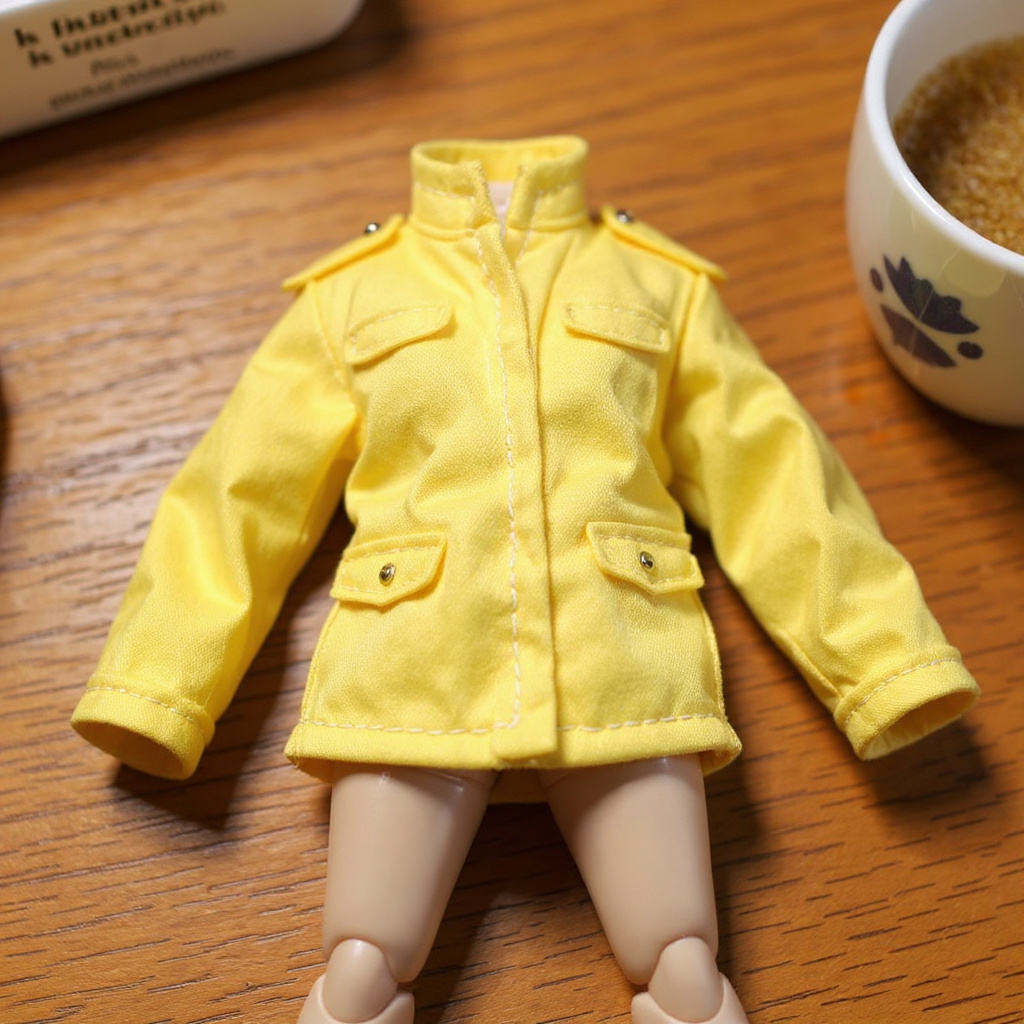
Tools and Techniques for Working With Thin Fabrics
Thin fabrics that work well at 1/12 scale can fight you at the sewing machine. A few adjustments make the difference between clean seams and puckered ones.
Sharp scissors matter more than expensive ones. Fabric scissors that slice cleanly through cotton poplin without catching give you edges that don't fray on contact. Use a size 70/10 needle. Larger needles punch holes that show on thin fabric. A universal needle works fine here — you don't need a specialty type. Stabilize seams with interfacing strips. A quarter-inch strip of lightweight fusible interfacing along the seam line stops stretching before it starts. Press, don't drag. Lift and place the iron instead of sliding it across the fabric. Dragging distorts the weave on anything under 150 GSM. Test your thread tension first. Thin fabric puckers under tight tension. Loosen it in small increments until a test seam lies flat.More detailed pattern-drafting steps for a cropped military cut are covered in our 1/12 scale sewing basics guide. The action figure community on Reddit shares plenty of painting and articulation content, but sewing tutorials specific to figure clothing take more digging to find.
When Handmade Beats Mass-Produced
Factory-made figure clothing uses whatever material won't fall apart in the package before it ships. That usually means polyester blends that photograph shiny and feel synthetic against a matte plastic body.
Handmade pieces let you pick materials that match the character and the scale on purpose. A custom Street Fighter jacket built from cotton photographs like real military fabric under studio light. Polyester doesn't do that. It just doesn't.
The trade-off is cost. Handmade pieces run $40-80 versus $15-25 for mass-produced alternatives. For a shelf piece you'll photograph and display for years, the difference in how the fabric catches light justifies the price for most collectors.
You're also buying construction. Factory pieces use the minimum stitching required to survive shipping. Handmade pieces tend to include details mass production skips — functional pockets, correctly spaced buttons, reinforced stress points at the shoulder seam where a cropped jacket takes the most strain.
Frequently Asked Questions
How do you make clothes for an action figure? Start with a paper pattern scaled to your figure's measurements. Use lightweight fabric in the 120-180 GSM range and add interfacing for structure. Wire in the collar and cuffs lets you adjust the silhouette for different poses. What fabric is best for doll clothes? Cotton twill, poplin, and lightweight canvas work best for structured pieces like jackets. Avoid stretchy fabrics, anything over 200 GSM, and synthetic sheens that don't translate at small scale. What material is used to make action figures? Most action figure bodies are ABS plastic with PVC joints. Higher-end figures add die-cast metal for weight. Clothing is typically polyester or cotton blends, depending on the manufacturer's budget. Is PVC a good material for action figures? PVC works well for joints and flexible parts but can turn sticky after a few years in heat or direct sun. ABS bodies with PVC joints strike the best balance of durability and articulation. What's the best paint for customs? Acrylic paints like Vallejo Model Color or Citadel work well on plastic. Prime with gray automotive primer first. Seal with matte varnish so the paint doesn't chip when the figure gets handled. What's a common rookie mistake when sewing figure clothes? Using fabric too heavy for the scale. Materials fine on 12-inch dolls create obvious bulk on 6-inch figures. Stick to lightweight cottons under 180 GSM for a 1/12 scale jacket. How much fabric should you buy when you don't know what you'll make yet? A quarter-yard is enough for 2-3 figure jackets with leftover scraps for testing stitches. Fat quarters (18" x 22") work well for trying different techniques before committing to a hero piece. Why do handmade figure jackets sometimes fall apart or disintegrate over time? Poor thread choice or synthetic fabric that breaks down under UV light. Cotton or poly-cotton thread holds up better, and storing figures away from direct sunlight slows any deterioration. Can you use real military uniform fabric scaled down for a 1/12 figure? Sometimes, but actual duck canvas military fabric usually runs 200+ GSM, which is too heavy at this scale. A cotton twill in a similar color reads as authentic without the bulk. Does wire in the collar and cuffs damage the fabric over time? It can, if you bend the same spot repeatedly. Sew the wire into a fabric channel rather than gluing it directly to the fabric, and it holds up through dozens of pose changes without wearing through.Finding the Right Balance for Your Collection
The best fabric for a miniature action figure jacket depends on what you're building it for. Display pieces can use slightly heavier fabric that photographs well but limits posing range. Play figures need lighter, more flexible material that survives repeated handling without tearing at the seams.
For character accuracy on a cropped military jacket with epaulettes, cotton twill in the 150-160 GSM range hits the mark. It looks the part, holds its shape, and runs through most home sewing machines without special tools or a walking foot.
If you're building a Street Fighter collection, fabric choice is the difference between a custom that looks display-ready and one that reads as a costume glued onto a toy. The right material lets the figure carry the game's aesthetic instead of fighting against it.
Still deciding whether custom clothing is worth the investment? Browse our handmade Street Fighter jackets to see how fabric selection turns a basic action figure into something worth putting on a shelf.

