


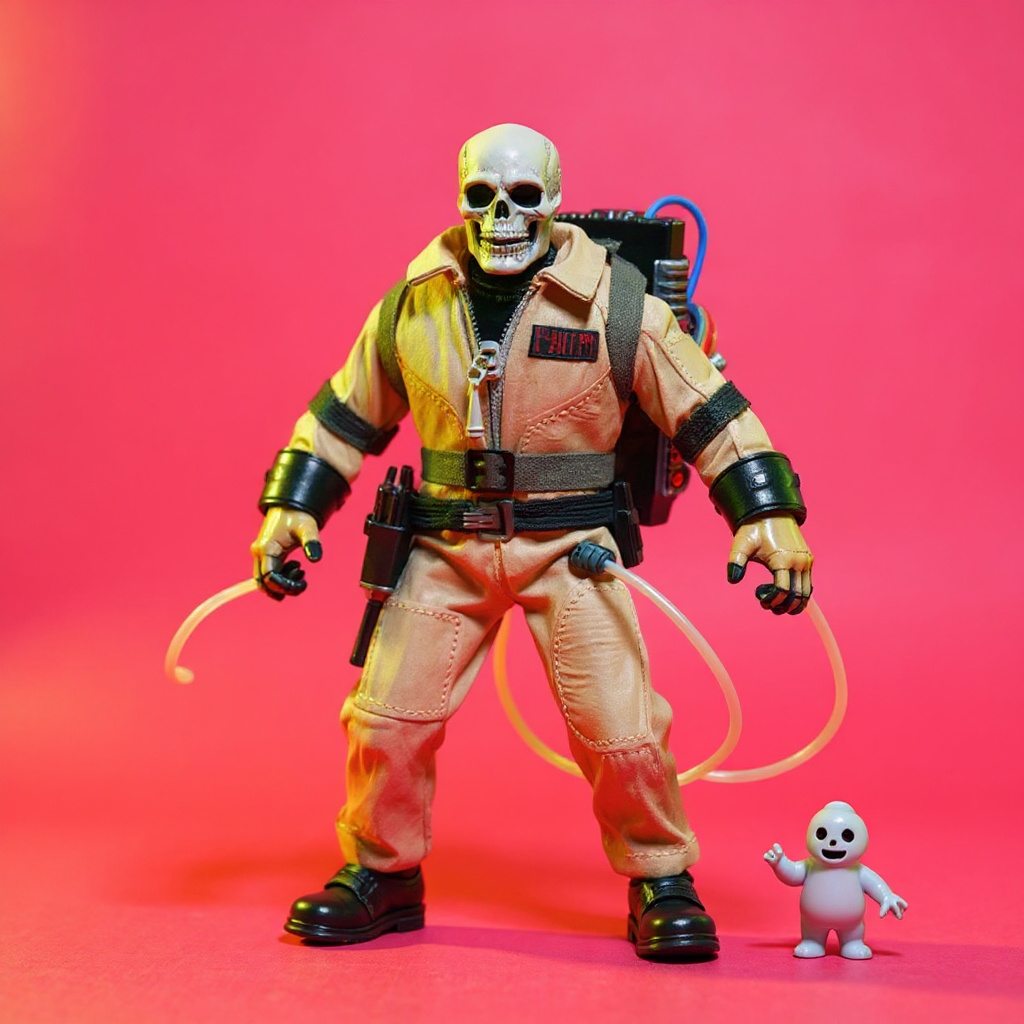
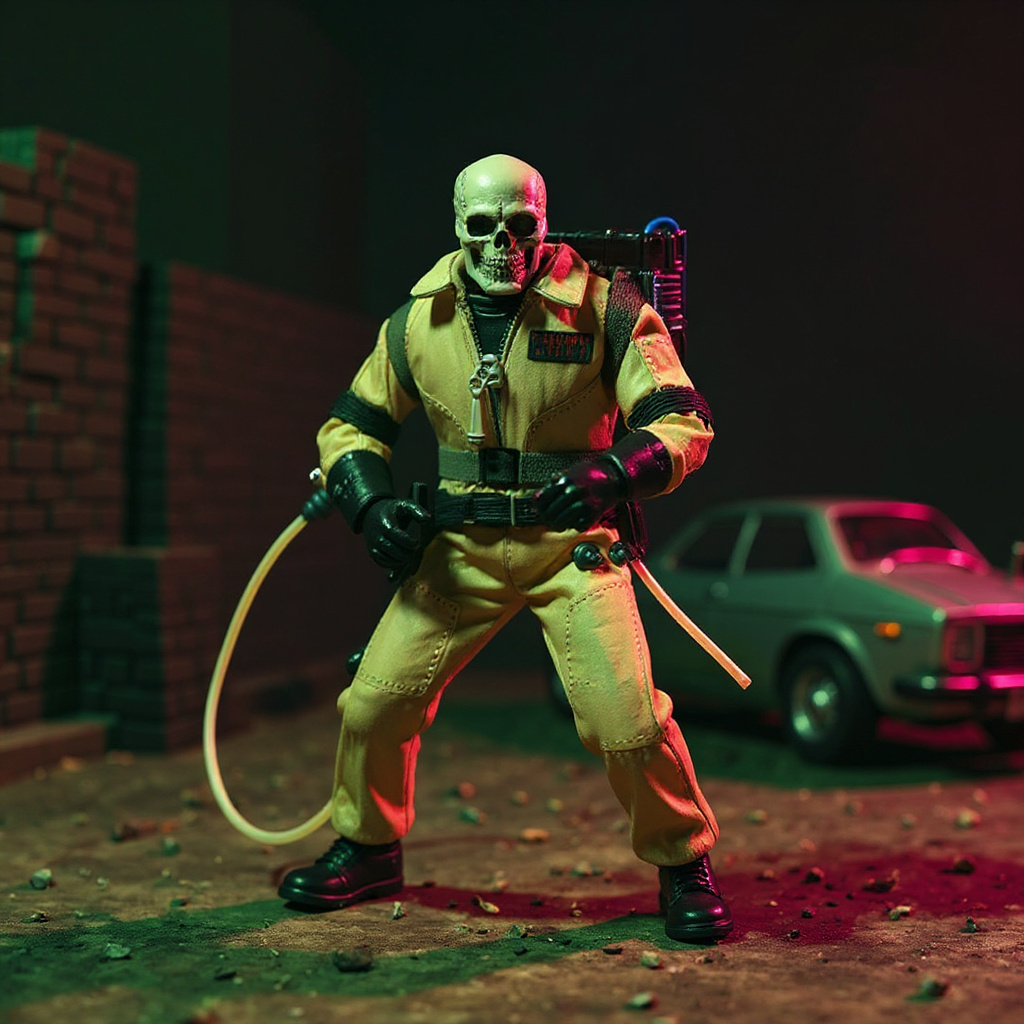
This guide is written around one specific garment: a tan or khaki jumpsuit-style costume with visible fabric texture, utility pockets, stitched patches and a belt, fitted onto a small skeleton action figure whose internal wire holds a dynamic pose. That garment is a hard test. It has pockets, seams and layered patches that all add thickness. It also has to survive close-up photography, where every stitch shows.
How I Tested These Fabrics
I cut twelve 4-inch swatches from cotton, cotton-poly, linen, silk and canvas. I weighed a 10 cm square of each and multiplied grams by 100 to get gsm. Then I sewed the same jumpsuit sleeve from each and bent the elbow to 90 degrees fifty times on a wired skeleton figure.
The numbers below come from that bench work and from published fabric specs. They are not lab data. Weight follows the mass-per-unit-area method described in ASTM D3776, and thread count follows the usual thread count definition.
Why Fabric Weight Decides Everything at 1/12 Scale
Scale multiplies thickness. Quilting cotton is roughly 0.25 mm thick, and at 1/12 scale that behaves like a 3 mm slab of cloth on a human-sized body. Heavy felt territory.
No fabric is truly to scale, so you are picking the least-bad option. A real coverall might use 0.6 mm twill. The 1/12 equivalent would be 0.05 mm, thinner than anything sold at a fabric counter. The goal is to get close, and 0.1 to 0.2 mm is achievable with lawn, batiste and fine poplin.
Denim is the classic trap. At 8 to 14 oz per square yard it is three to five times too heavy, and jeans made from it stand off the legs like cardboard tubes. Too thick. Too stiff. Not even close.
Fabric Weight and Thread Count Comparison
| Fabric | Weight, oz/sq yd (gsm) | Threads per inch (warp x weft) | Fit at 1/12 scale | Best use |
|---|---|---|---|---|
| Cotton voile | 1.5–2.5 (50–85) | 60–90 x 60–80 | Good, but semi-sheer | Scarves, loose shirts |
| Cotton lawn / batiste | 2–3 (70–100) | 80–100 x 80–100 | Excellent drape | Shirts, linings |
| Cotton-poly poplin (65/35) | 2.5–3.5 (85–120) | 90–110 x 60–70 | Excellent, fine rib texture | Jumpsuits, jackets |
| Fine cotton twill | 3–4 (100–135) | 80–100 x 50–60 | Acceptable, diagonal texture shows | Pants, khaki utility wear |
| Quilting cotton | 3.5–4.5 (120–150) | 60 x 60 | Borderline, bulky at seams | Patches, pocket flaps |
| Denim / canvas | 7–12 (240–400) | Varies | Too heavy | Not recommended |
The thread count column is threads per inch in each direction. Bedsheet labels such as "200 thread count" add warp and weft together, so a 200-count percale is about 100 x 100 per inch. For 1/12 work, count in one direction and look for 80 or more. Below that, individual threads look like rope on a small figure.
Cotton vs. Cotton-Poly: What the Blend Changes
Pure cotton takes a crisp press and dyes richly. It also creases at every elbow and frays fast at tiny seams. A 65/35 or 50/50 cotton-poly blend creases less, frays a bit slower, and recovers better after being bent.
In my swatch test, the pure cotton sleeve held a visible crease line after ten elbow bends. The poplin blend relaxed within a minute of straightening the arm. Blends are not magic, though. They melt under a hot iron, and cheap ones feel slick and refuse to stay pinned.
Silk is beautiful, slippery, and a pain to sew at this size. Linen creases at the first bend and shows slubs that look like lumps at 1/12. Save linen for 1/6 scale, where the texture is in proportion.
Fabric and the Wire Skeleton: Who Holds the Pose?
Earlier guides, including my own first draft of this one, blurred this point. The wire holds the pose. The fabric does not. If the cloth is stiff enough to hold a shape by itself, it fights the armature, and something loses. Usually it is a seam.
So the job of the fabric is to move with the wire, stay put on the body, and avoid tearing at bends. That means light weight and a tight weave. It does not mean stiffness.
| Fabric (jumpsuit sleeve) | Resistance to wire at elbow | Seam condition after 50 bends | Verdict |
|---|---|---|---|
| Cotton-poly poplin 65/35 | Low | No fraying, no pulled stitches | Best all-round |
| Cotton lawn | Very low | Minor fraying at the seam edge | Good, needs seam sealant |
| Fine cotton twill | Medium | Clean seam, slight ridge at the elbow | Good for khaki look |
| Quilting cotton | Medium-high | Visible bunching, one popped stitch | Patches only |
| Cotton voile | Very low | Threads pulled loose in two places | Delicate pieces only |
| Light canvas | High | Wire deformed under the sleeve | Belts and straps only |
Low resistance is the goal here. It means the cloth lets the wire bend without pushing back. Canvas rates "belts only" because a belt sits flat and rarely bends. A sleeve bends constantly.
Choosing Fabric for a Tan or Khaki Jumpsuit
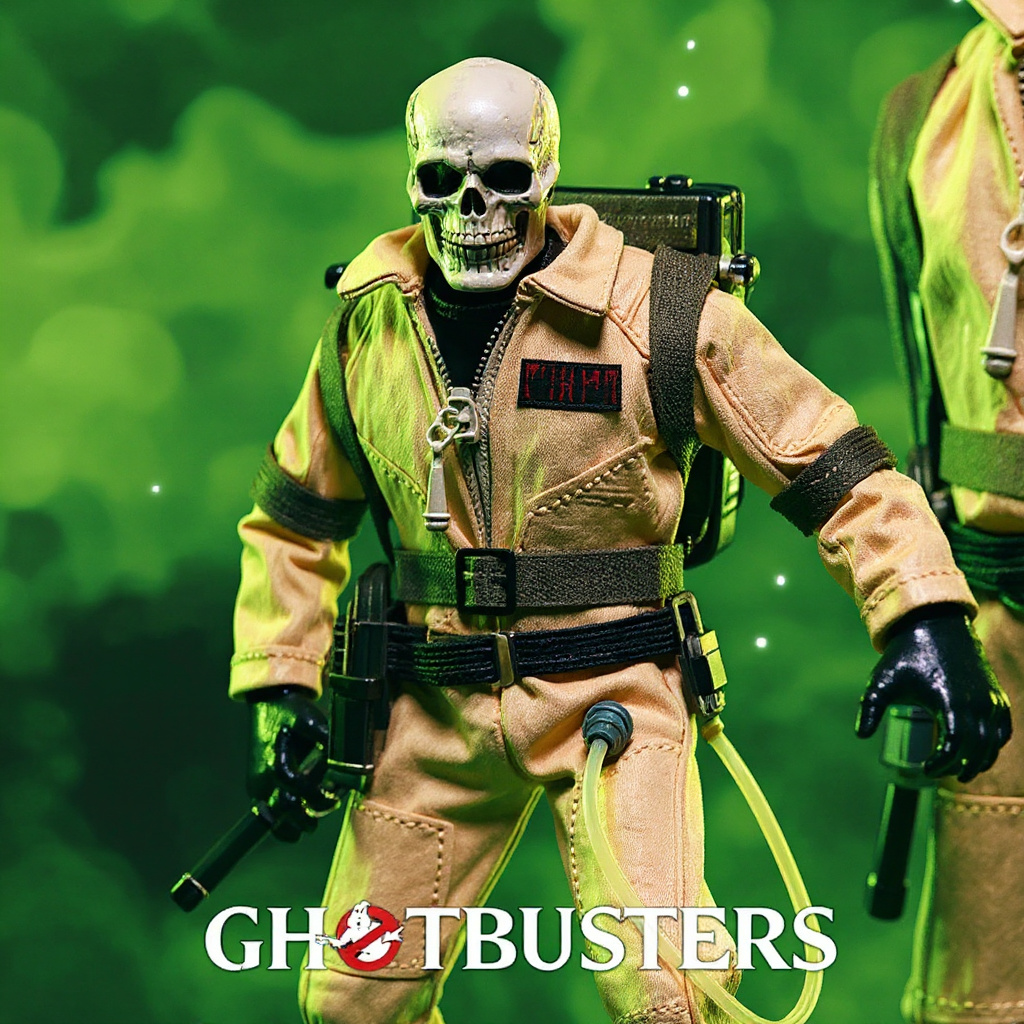
A khaki jumpsuit wants visible texture, and that pushes you toward poplin or fine twill. Cotton-poly poplin gives a faint rib that reads as workwear from arm's length and in close-up photos. Lawn looks too smooth, like a dress shirt.
Utility pockets add layers. A patch pocket sewn on a sleeve or thigh puts three thicknesses of cloth in one spot, which is why weight matters more here than on a plain shirt. Cut pocket flaps from lawn or lightweight poplin, not from the same 3.5 oz twill as the body.
Stitched patches are the other place to save thickness. Use a thin fusible interfacing, or press the patch fabric flat with a low-heat iron before you cut it. A belt can be cut from a cotton-poly strip folded in thirds, or from thin canvas tape, since the belt doesn't need to bend much.
One finished example: the 1/12 scale tan khaki jumpsuit costume cloth set for skeleton figures pairs textured khaki cloth, pockets, stitched patches and a belt with an internal-wire skeleton frame. Its close-up photos show how the stitching sits against the body at the elbow and knee, which is a useful reference when judging your own fabric choices.
Ranked Fabric Choices for Wired Skeleton Figures
1. Cotton-poly poplin, 65/35, about 3 oz. Clean rib texture, low fray, relaxes after bending. 2. Cotton lawn, 2 to 3 oz. Softest drape. Add seam sealant. 3. Fine cotton twill, about 3 oz. Best khaki look, but check for thickness at seams. 4. Cotton batiste, about 2 oz. Easy to sew, good for shirts and liners. 5. Cotton voile, about 2 oz. Only for flowing pieces. It frays. 6. Light quilting cotton, 3.5 to 4 oz. Small patches and flaps only.
A 7-Step Fabric Test Before You Cut
1. Weigh it. Cut a 10 cm x 10 cm square, weigh it in grams, and multiply by 100 to get gsm. Aim for 70 to 120. 2. Count threads. Use a ruler and a magnifier, and count threads across one inch. You want 80 or more. 3. Drape it. Lay a scrap over the figure's shoulder and thigh. It should fold, not tent. 4. Bend it. Fold the swatch around a 3 mm wire and release. The crease should fade within a minute. 5. Light it. Hold it against a window. You should see the weave, not the room behind it. 6. Rub it. Scratch it between two fingers for ten seconds. If lint shows, it will shed on the finished suit. 7. Stitch it. Sew a 1 cm seam with 40-weight thread and tug. If it puckers or unravels, choose a different cloth.
Color, Pattern and Finish
A 1/4-inch check becomes a 3-inch check at full scale. Skip it. Solid colors and prints with elements under 1 mm look right.
Tan and khaki show stitching flaws more than navy or black do, so match your thread to a shade slightly darker than the cloth. Matte fabrics photograph well. Satin and taffeta throw glare and look like plastic in close-ups.
Where to Find Small Amounts of Good Fabric
Remnant bins at fabric stores are ideal, because a 1/12 jumpsuit needs only about 6 x 8 inches of cloth. A single fat quarter (18 x 22 inches) covers several. Quilt shops stock lightweight cotton in the right range. Thrift-store shirts and pillowcases work if the label lists 100% cotton or a cotton-poly blend, and if the fabric hasn't been treated with a "no-iron" finish, which adds stiffness.
For tools and finished 1/12 pieces, browse the 1/12 scale costume collection or the Figure Vault guides. Communities like r/ActionFigures and r/toyphotography share fabric swatches and close-up photos of custom work. For background on the figures themselves, see this overview of action figures.
Mistakes That Ruin Miniature Clothes
- Fleece and felt. Pile and thickness are massive at 1/12. Felt is fine for a small belt buckle backing. - Knits. Jersey stretches under the needle and leaves wavy seams. - Metallic fabric. The coating cracks after a few bends. - Heavy thread. Anything thicker than 40-weight makes seams look like rope.
Honestly, if you have never hand-sewn anything smaller than a shirt button, skip making the jumpsuit from scratch. My first four pocket flaps went in the bin. The patches were worse. Buying a finished set and studying its seams teaches you more than four failed attempts, and it costs less than a weekend of frustration.
Handmade 1/12 clothes will have small flaws: an uneven stitch, a loose thread, a seam allowance that varies by a millimeter. Those are normal at this scale. They also give the cloth a worn-in look that molded plastic can't copy.
Bottom Line
The best material for 1/12 scale figure clothes is thin, tightly woven cotton or a 65/35 cotton-poly blend in the 2 to 3.5 oz range, with the wire doing the posing and the fabric staying out of its way. Weigh it, bend it, stitch a test seam, and only then cut.

