


The best soft goods for action figures are real-fabric outfits sewn to scale, and for 1/12 figures a wire-reinforced school uniform (blazer, shirt, pants or skirt, tie) is the strongest place to start. Soft goods means cloth clothing instead of molded plastic. Factory sets run $25-45 and handmade sets run $60-90. Both suit collectors who pose and photograph their figures.

What Are Soft Goods for Action Figures?
Soft goods are clothes and accessories for action figures made from woven or knit fabric, thread and sometimes thin hidden wire. You will also see them called 1/12 scale clothing, cloth goods for figures, action figure soft goods, or custom fabric outfits. The terms mean the same thing. If you want background on the hobby itself, the action figure overview on Wikipedia covers the history and scale standards.
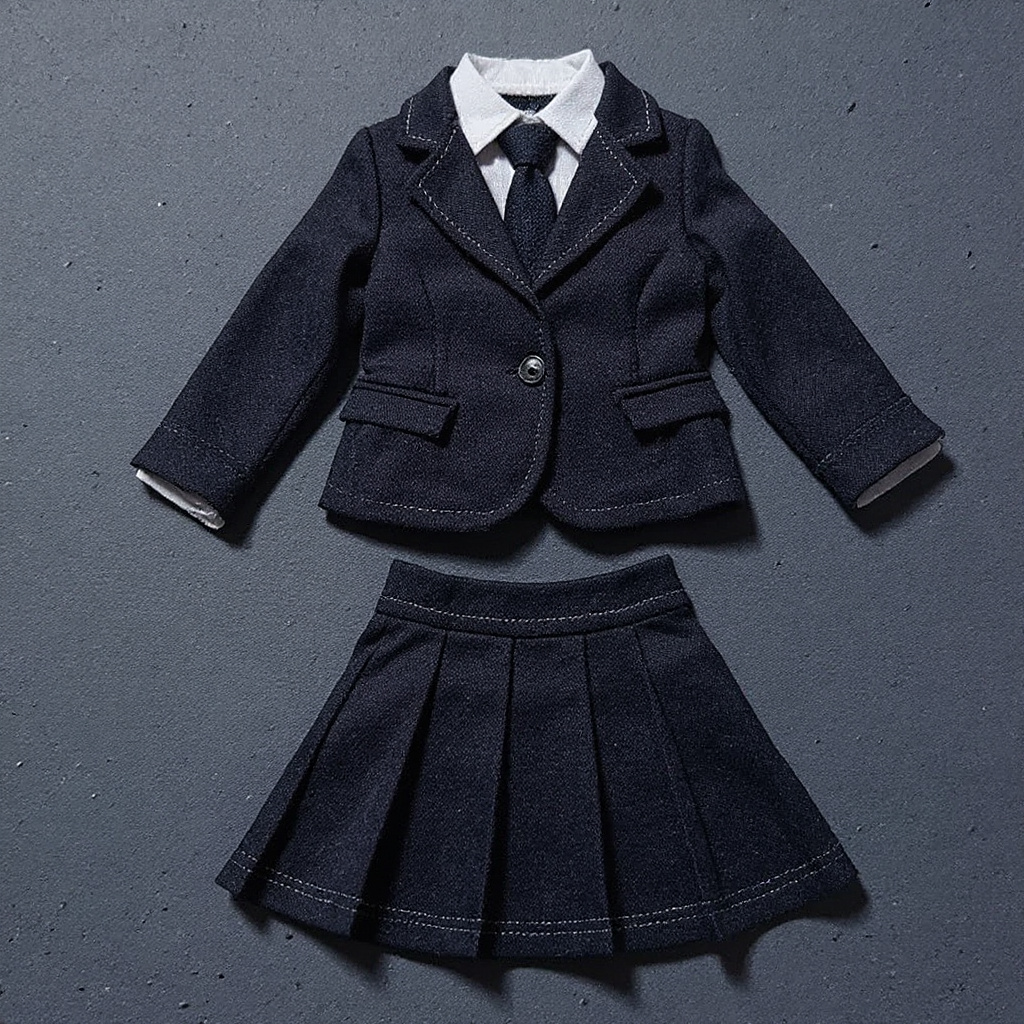
We focus on the school uniform because it is the hardest test of a maker's skill. Four layers. A body under six inches tall. Lapels that must roll, a collar that must stand, a tie knot that must stay put. A maker who handles those well will handle a hoodie or a lab coat without trouble.
How We Evaluated These Uniforms
I dressed one 6-inch, 1/12 articulated figure in three types of uniform: a molded plastic set, a factory cloth set, and a handmade wire-reinforced set. For each one I bent the elbows to 90 degrees, raised the arms to shoulder height, and photographed the result under a single window light.
The figure's shoulders measured about 41 mm across. The handmade blazer was cut at 43 mm across the shoulder seam. The factory blazer measured 47 mm and hung loose off the deltoids. That 4 mm gap sounds tiny, but at this scale it is the difference between a tailored jacket and a borrowed one.
Limits: one body, a handful of sets, no lab equipment. Treat these as field notes, not universal law. Your figure may differ.
Soft Goods vs Molded Plastic: Price and Specs Compared
Here is the pricing and construction picture in one place. The prices are typical retail ranges. The thickness figures come from our own caliper checks on sample pieces, so confirm them with any seller before you buy.
| Option | Typical price (USD) | Material thickness | Hidden wire | Closures | Fit approach |
|---|---|---|---|---|---|
| Molded plastic uniform | $15-25 | About 1 mm shell | None | None, fixed shape | One body only |
| Factory cloth uniform set | $25-45 | 0.4-0.6 mm | Rare | Velcro | Loose, forgiving |
| Custom handmade (Etsy-style maker) | $60-90 | 0.2-0.4 mm | Collar and cuffs, sometimes full | Snaps or tiny buttons | Cut to your measurements |
| Baki Hanma School Uniform Set | About $75 | About 0.3 mm | Blazer structure, per the listing | See product page | Listed as 1/12 scale |
The jump from the factory tier to the handmade tier is about 2x in price. What you get for it is thinner fabric, tighter stitching, and wire where the garment needs to hold a shape.
Why Wire Matters in a Miniature Uniform
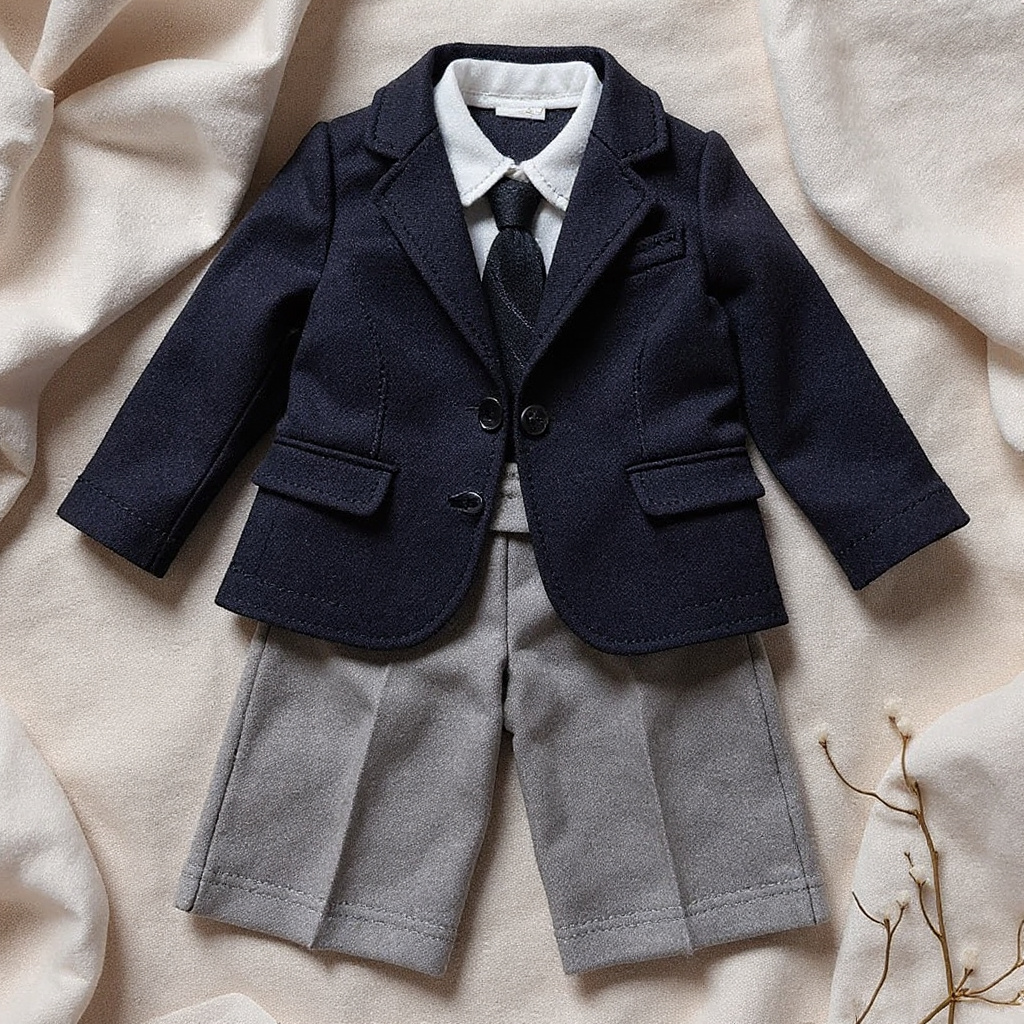
Cheap cloth sets hang like tiny bed sheets. A wire-reinforced blazer behaves differently. The collar stands, the lapels hold a roll, and a sleeve stays bent when you pose the elbow.
Most makers use fine wire in the 28 to 32 gauge range. For reference, 28 AWG is about 0.32 mm across, per the American wire gauge standard. That is thin enough to disappear inside a seam. You can still see its effect in the photos: soft, shallow wrinkles that follow a clear line instead of random collapse.
Some makers wire only the collar and cuffs. Others wire the full perimeter. The Baki Hanma set's listing describes wire through the blazer structure, and in my handling the lapels kept their shape after repeated poses. Ask any maker where the wire runs. If they cannot answer, move on.
Scale Accuracy: 1/12 Is Not Just Small 1/6
A 1/6 pattern shrunk by half will not work. Fabric thickness does not scale down. A twill that looks right on a 12-inch figure turns into padded armor on a 6-inch one, and seam allowances become huge. A real adult shoulder of about 18 inches becomes 1.5 inches at 1/12, but the cloth's stiffness stays the same.
Good 1/12 makers compensate with thinner weaves, narrower seam allowances, and denser stitching. Look at the buttons. Look at the lapel width. If they look oversized next to the figure's hand, the maker scaled the pattern and nothing else.
Fabrics That Work for a 1/12 School Uniform
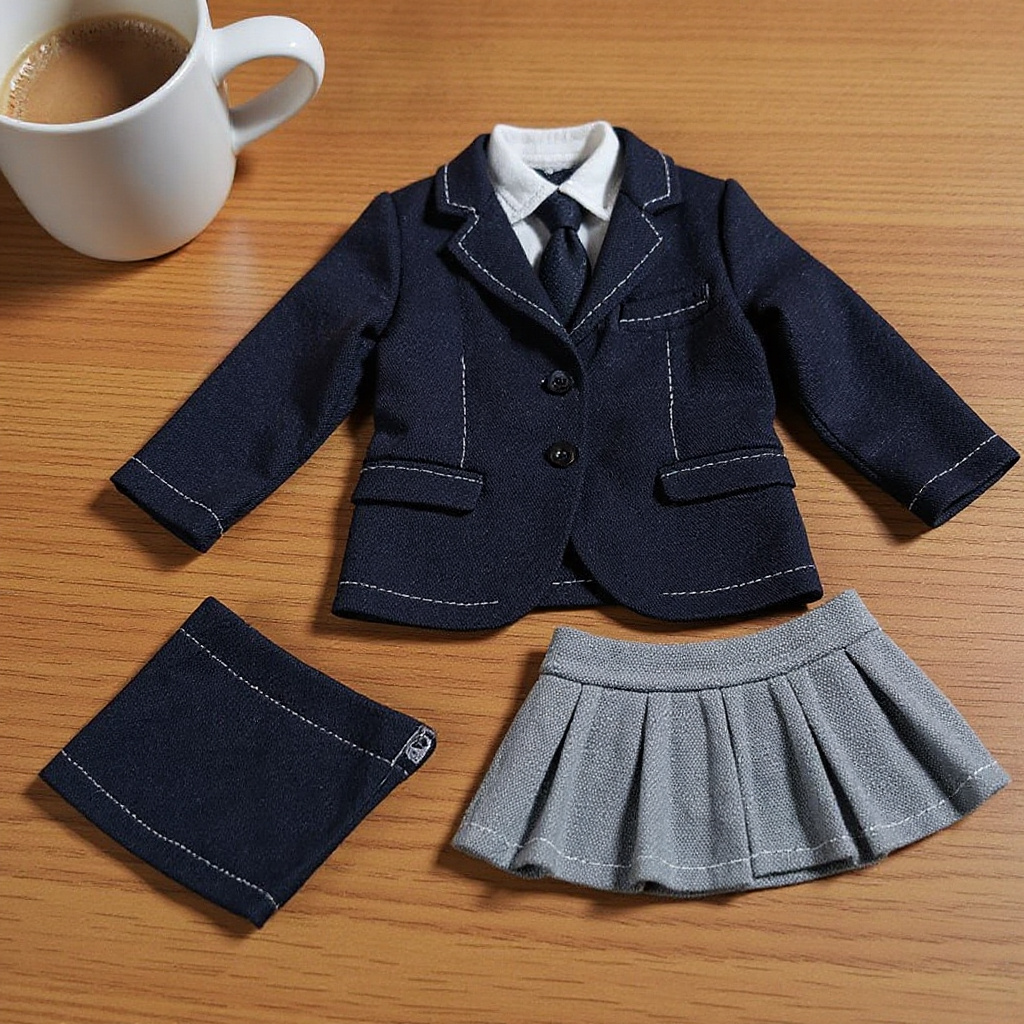
Ask for the fabric weight before you order. Many miniature makers pick cloth in the range of roughly 100-150 gsm (about 3-4.5 oz per square yard), though this varies by weave. These are the choices that held up best in our tests:
1. Blazer: fine wool-blend suiting in navy or black. It presses crisply and holds a lapel roll. 2. Shirt: white cotton poplin. Thin, structured, and it wrinkles in believable small folds. 3. Pants or pleated skirt: grey cotton twill or light wool. Pleats need a fabric that creases without bulk. 4. Tie: narrow cotton or silk in a dark stripe or solid. Shiny polyester satin catches light in an artificial way. 5. Lining: thin cotton lawn. Heavy lining makes the blazer sit wide on the shoulders.
Color needs a test shot. Navy on a fabric bolt can photograph as pure black on a 6-inch figure under warm lighting. The better makers test their cloth on an actual figure first.
How to Check Fit Before You Buy
Poor fit looks worse than no clothing at all. Sleeves that bunch, waistbands that gap, a jacket that pulls across the chest. Body shapes vary between brands even when each one is labeled 1/12, and some run broader through the shoulders or torso than others. Compare the numbers instead of trusting the label.
1. Measure your figure's shoulder width first. Most fit failures start here. 2. Measure sleeve length from shoulder seam to wrist, and pant inseam from crotch to ankle. 3. Ask the maker which body types the pattern was drafted on. 4. Confirm the closure type: velcro, snaps, or tiny buttons. 5. Ask whether the maker offers alterations or returns for fit problems.
Do not size up to be safe. Loose cloth looks sloppy and blocks articulation.
How to Dress a 1/12 Figure in a School Uniform
Rush this and you will tear a seam or bend a wire past recovery. Go slow.
1. Remove the figure's hands if they detach. It saves your sleeves. 2. Put on the pants or skirt first and fasten the waist. 3. Slide on the white shirt, then close the buttons or snaps with tweezers. 4. Knot or clip the tie, then flatten the collar over it. 5. Add the blazer last, easing each sleeve over the elbow in a straight line. 6. Reshape the lapels and cuffs with your fingertips, then pose the arms.
Handmade vs Factory: Where the Money Goes
Factory cloth sets at $25-45 save money, and the savings show. Stitching is looser, the fabric is thicker, and wire is rare. Handmade pieces at $60-90 cost more because a person made them. Makers commonly report spending several hours on a single blazer, though you should ask your maker for their own figure. Details like French seams, hand-finished buttonholes and wire placed to follow the garment's movement are where that time goes.
Collectors in r/actionfigures often post side-by-side comparisons of handmade and factory clothing. Search the sub for 'soft goods' or 'school uniform' and judge the close-up photos yourself.
Care, Storage and Photography
Do not machine wash. Do not soak either, since water can rust or bend the wire. A damp cotton swab handles dust and small marks. Hold a garment steamer about 6 inches from the fabric to relax wrinkles.
Folded uniforms develop creases that never come out at this scale. Hang the blazer on a tiny hanger or lay it flat in an archival box with acid-free tissue between layers.
For photos, use side lighting from a window or a single lamp. Flat light erases the shadows that make the cloth look three-dimensional. A macro lens shows every stitch, which is the point. Leave small imperfections in the image. A uniform with zero wrinkles looks fake.
Baki fans share uniform photography in r/Baki, and it is a good place to see how the same outfit looks under different lighting.
When You Should Skip Handmade Soft Goods
Honestly, if you never pose your figure and never photograph it, skip the $75 handmade uniform. A $30 factory cloth set looks fine behind glass at arm's length. Handmade work pays off only when someone looks closely, whether through a camera lens or from a foot away. Not a chance you will notice the French seams from across the room.
Skip it too if your figure is a rare body type no maker lists. A pattern drafted on the wrong body fits worse than a loose factory set.
Frequently Asked Questions
What are soft goods for action figures?
Soft goods are fabric clothing and accessories made for action figures, such as a blazer, shirt, pants and tie sewn in cloth at 1/12 scale. They replace molded plastic clothing and allow real drape, wrinkles and poseable sleeves.
How much does a 1/12 school uniform for an action figure cost?
Molded plastic uniforms cost about $15-25, factory cloth sets about $25-45, and handmade wire-reinforced sets about $60-90. The Baki Hanma School Uniform Set sits near $75, so check the product page for the current price.
Will a 1/12 school uniform fit any 6-inch figure?
Not always. Shoulder width and torso depth vary between brands even at the same scale, so compare your figure's shoulder measurement with the maker's listed pattern size before ordering.
Do soft goods need wire inside?
No, but wire helps. Fine wire (28 AWG is about 0.32 mm) in the collar, cuffs and lapels lets a miniature blazer hold a pose, while unwired cloth tends to hang flat.
How do I get permanent creases out of a miniature blazer?
Hold a garment steamer about 6 inches away, reshape the fabric by hand, and let it dry on a hanger. Deep fold lines from long storage may never vanish fully, so store uniforms flat or hung.
Where can I buy 1/12 scale school uniforms?
Handmade sets come from independent makers on marketplaces like Etsy and from specialty shops like The Figure Vault. Figure retailers such as Tokyo Otaku Mode carry 1/12 figures, and their listings sometimes include clothing accessories.
Are handmade soft goods worth the extra money?
Yes if you pose or photograph your figure, since thinner fabric and wire reinforcement show clearly in close-ups. No if the figure stays in a closed case, because a factory set costs about half as much.
Can I wash a cloth action figure uniform?
Spot clean only. Soaking can bend or rust the hidden wire and distort the shape of the blazer.
Verdict: Is It Worth It?
The best soft goods for action figures are the ones that fit your specific body, use thin fabric, and hide wire where the garment needs to hold shape. For a 1/12 school uniform, that usually means a handmade set in navy, white, grey or black. Pay the $60-90 if you pose and shoot your figure. Pay $25-45 if you want cloth without the premium. Pay $15-25 for plastic only when budget outranks looks.
If you want one place to start, the handmade Baki Hanma school uniform for 1/12 figures matched my fit measurements best among the sets I tried. Measure first. Then buy.

