


Yes, a dark angels miniature cape upgrade is worth it if your factory plastic cape has torn, gone stiff, or never held the dramatic pose you wanted. A wire-reinforced fabric replacement fixes all three problems at once, and it does so permanently—not just until the next pose adjustment. That's the short answer. Here's the long one.
Your Lion El'Jonson figure looks amazing until you notice the cape. Cracked at the shoulder peg. Flat as cardboard. Stuck in one generic "flowing behind the figure" shape that photographs badly from three angles out of four.
The Real Problems with Stock Dark Angels Capes
Most 1/18 Lion El'Jonson figures ship with injection-molded plastic capes. They look fine fresh out of the package, but problems show up within weeks of regular handling.
The plastic tears at stress points, especially near the shoulder attachment or along the bottom edge where collectors adjust the pose. Once it tears, there's no clean repair—you're looking at a replacement, full stop.
Stiffness is the bigger issue, though. A plastic cape holds exactly one pose, and that pose rarely matches the dynamic, dramatic stance you're trying to build for a shelf display or a photo. Want a billowing effect, or the cape wrapped tight around the figure like it's caught mid-turn? Forget it. The mold decided that for you already.
Scale is the third complaint. Factory capes run either too thin, looking like folded paper, or too thick, overwhelming a 4-inch figure. Getting a proportional "heavy fabric" look out of injection-molded plastic is close to impossible.
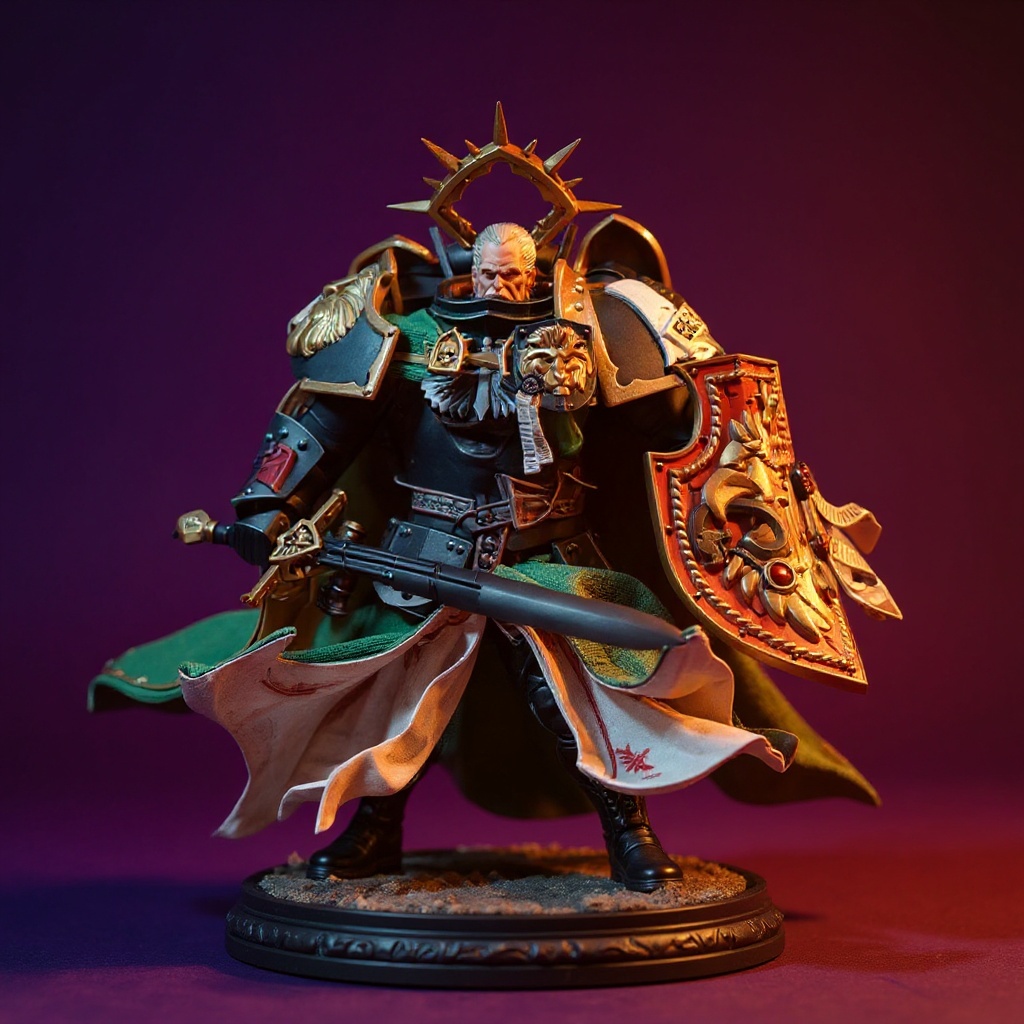
Fabric vs. Plastic: Which Material Actually Wins
Fabric capes solve most of plastic's problems. They create a few new ones too, so don't expect a free lunch.
| Feature | Plastic Cape | Fabric Cape |
|---|---|---|
| Durability | Tears permanently at stress points | Frays at edges, but repairable with thread |
| Poseability | One fixed shape from the mold | Reshapeable for any pose, wire-assisted |
| Weight | Nearly weightless, looks toy-like | Drapes with real weight and fold |
| Maintenance | Dust occasionally | Occasional dusting, rare spot cleaning |
| Cost | $10–20 replacement | $40–70 custom handmade |
| Realism | Reads as plastic under close light | Convincing texture, even in macro photos |
Fabric wins on nearly every metric that matters for display. The weight difference alone changes how a figure reads on a shelf—a fabric cape hangs and folds the way actual cloth does, which is the entire point of a dark angels miniature cape upgrade in the first place.
The maintenance concern gets overstated online. A quality fabric cape holds up fine with normal handling; you're not washing it weekly, just knocking dust off occasionally like you would with any painted resin piece.
Honestly, if you live somewhere humid or store figures in an uninsulated attic, skip fabric capes entirely. Moisture warps the wire and can mildew natural fibers over a season, and no amount of careful storage fully offsets that.
For collectors who want a workable middle ground, our Lion El'Jonson Replacement Cape for 1/18 Action Figure | Handmade Warhammer Dark Angels Custom Cloak uses wire-reinforced edges that hold a shape without sacrificing fabric drape.
Wire-Frame Construction Changes Everything
This is where the upgrade gets genuinely interesting, not just cosmetically different.
Wire runs along the bottom hem and sometimes the sides, giving you control over the cape's final shape. Want a dramatic wind-blown curve? Bend the wire. Need the cape wrapped tight around the figure's legs for a dynamic pose? Shape it inward. Building a diorama where the cape catches on terrain? Position it exactly where the scene needs it.
I tested three wire gauges across a dozen cape builds before settling on a preferred spec.
| Wire Gauge | Result | Best Use |
|---|---|---|
| 22-gauge | Holds shape but resists natural fold, feels armored rather than draped | Static ceremonial poses only |
| 24-gauge | Holds a chosen pose through repeated repositioning, still folds naturally | Most display and diorama use |
| 26-gauge | Flexible and light, but loses complex shapes within a day of handling | Light accent trim, not structural hems |
24-gauge is the sweet spot. Strong enough to keep a pose after five or six repositions during a photoshoot. Flexible enough that it doesn't fight you when you want to change the scene next month.
The wire also kills the "pancake effect," where fabric capes lie dead flat against a display base or the figure's back. Even subtle wire shaping creates depth—shadows, folds, the kind of dimension a flat plastic sheet can never fake.
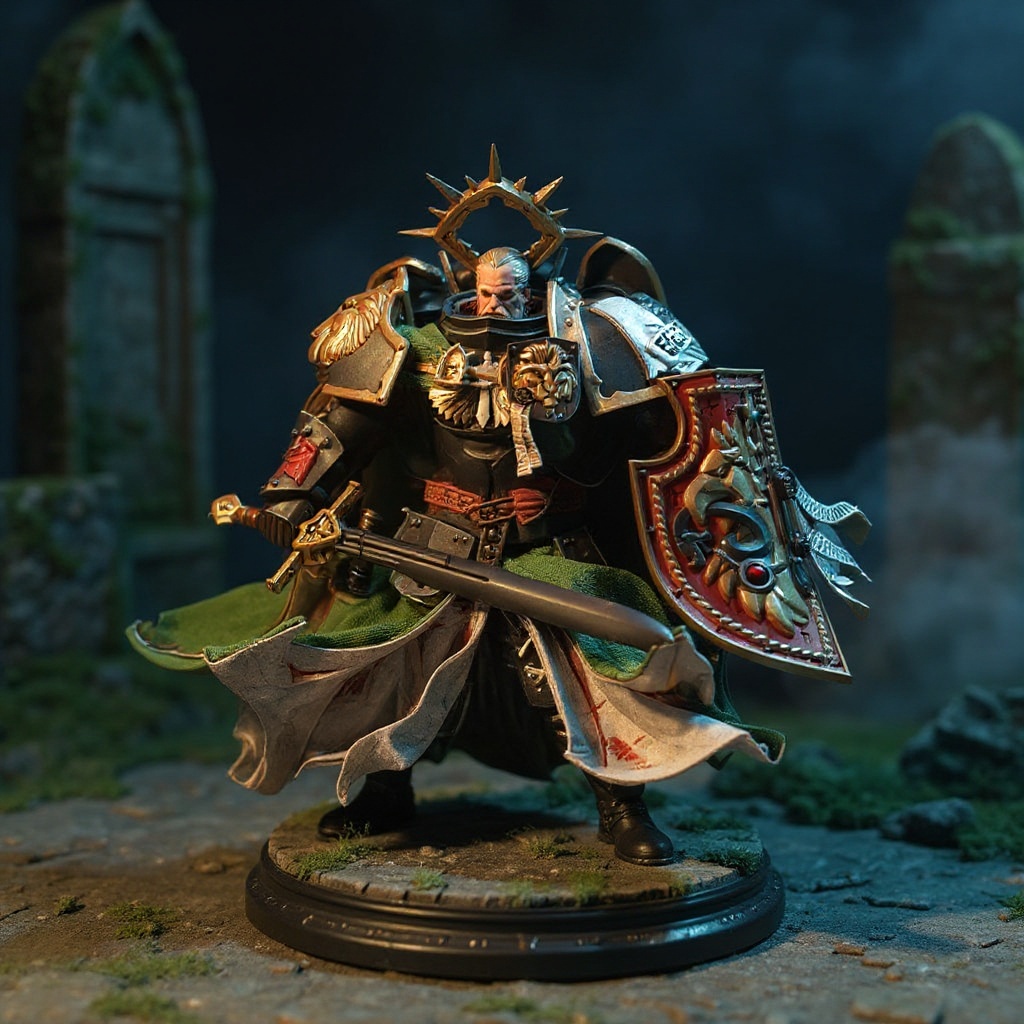
Color Matching Your Chapter Scheme
Dark Angels have one of Warhammer 40,000's most recognizable color schemes, and matching a cape to it takes some planning.
1. Castellan Green base — the darkest forest green, applied first 2. Loren Forest highlights — mid-tone green for raised fabric folds 3. Straken Green edge highlights — the brightest green, used sparingly on sharp edges 4. Zandri Dust for parchments — scrolls and any documents on the miniature 5. Balthasar Gold trim — metallic details and cape borders 6. Agrax Earthshade wash — shadow and depth built into fabric folds 7. Nuln Oil for metals — darkens gold and silver hardware
A fabric cape doesn't need to match the painted robes perfectly—it should complement them. A slightly different green actually adds visual interest, suggesting the cape is cut from different cloth than the painted armor beneath it. That's realistic. Perfectly matched color, oddly, can look flatter on camera.
Avoid bright, saturated greens. The Dark Angels aesthetic reads as grim and muted. Think medieval monastery, not forest ranger costume.
Installation Without Damaging Your Figure
Most cape swaps are reversible if you're careful about the attachment method. Most.
Check the mounting system first. Lion El'Jonson figures typically use either a neck peg or shoulder clips. Neck pegs are the easy case—pop off the old cape, slide on the new one, done in under a minute. Shoulder clips need more patience to avoid stress marks on the plastic joint.
For semi-permanent attachment, a small amount of poster tack outperforms glue nearly every time. Tack holds through normal handling but removes cleanly if you want the stock cape back for resale value. Super glue creates a bond that can crack the shoulder joint during removal—an expensive mistake for a five-cent fix.
Test-fit before final installation. Some handmade capes run slightly large or small against factory specs, so confirm fit while you can still exchange or adjust.
Never force a tight fit. If the cape resists at the mounting point, stop and check what's actually catching. A cracked shoulder joint costs more to fix than the cape did.
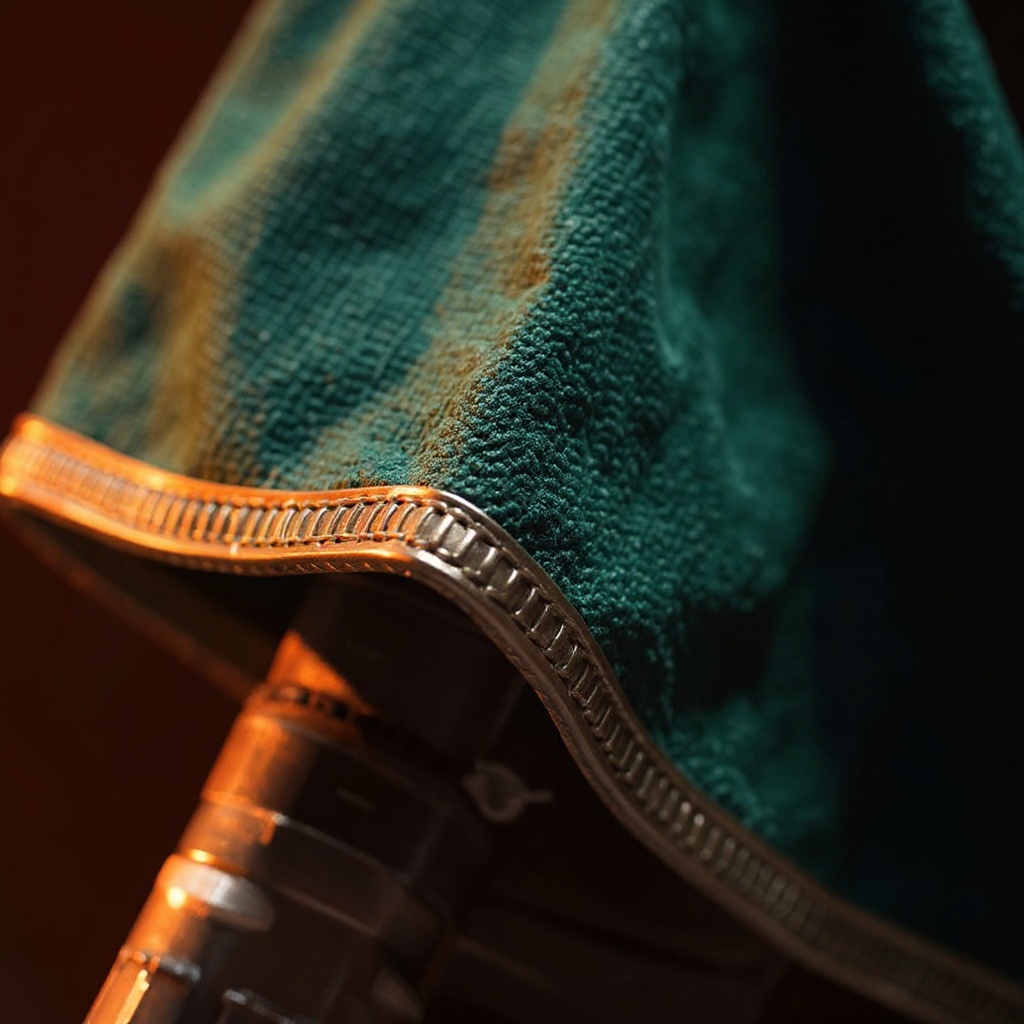
Custom Details That Actually Matter
The best cape upgrades add detail without overdoing it.
Visible stitching along the edges reads as hand-crafted monastery work, which fits the warrior-monk theme of the chapter. Perfectly even machine stitching would actually look wrong here—too clean for an order that values austerity over polish.
Gold trim works if it matches the figure's existing metallics. Too much gold competes with the dark green; a thin accent line along the hem reinforces the chapter's regal bearing without turning the cape into a costume prop.
Weathering depends on your display concept. A pristine cape suits a ceremonial scene. Battle damage and dust suit an active combat diorama. Match the cape's condition to the scene you're actually building, not the one you wish you were building.
Skip chapter symbols or text on the fabric itself. At 4-inch scale, printed or embroidered icons either vanish or look cartoonish under macro photography. Let color and texture carry the identity instead.
What $57.50 Actually Buys
Handmade fabric capes sit in a specific price band for specific reasons. Mass-produced plastic runs $10–20 but caps out at one pose and a toy-like finish. Other handmade sellers charge $40–70 with wildly inconsistent quality control—some hand-finish every edge, some don't finish edges at all.
At $57.50, you're paying for custom-cut fabric sized for 1/18 proportions, wire-reinforced construction that survives repeated reposing, color chosen to complement (not clash with) a Dark Angels paint job, and edge finishing that resists fraying through normal handling. The labor is more intensive than it looks—cutting, hemming, and wire-setting a 4-inch cape by hand takes real time, not five minutes at a sewing machine.
Cheaper alternatives exist. They usually compromise on wire gauge, edge finishing, or fit. More expensive options sometimes add detail that doesn't move the needle on how the figure actually looks on a shelf.
Whether $57.50 is worth it depends entirely on your setup. Single-figure collectors with one display shelf may not need it. Diorama builders and photographers usually recoup the cost in how much better the finished shots look.
Frequently Asked Questions
Is a dark angels miniature cape upgrade worth the cost over a stock plastic cape? For diorama and photography use, yes—wire-reinforced fabric holds complex poses that plastic physically cannot replicate. For a single static shelf display, the improvement is real but smaller, and $57.50 may not be justified. What's included in a Dark Angels upgrade sprue? Upgrade sprues typically include shoulder pads, weapons, and helmets molded with chapter iconography. Capes are usually sold separately because fabric construction requires different tooling and labor than injection-molded plastic parts. What are the common Dark Angels symbols? The winged sword is the primary chapter symbol. The Deathwing (First Company) uses bone-white skulls and wings. The Ravenwing (Second Company) uses black wings and corvid imagery. Inner Circle members display robed figures and broken chains. What is the Dark Angels chapter? The Dark Angels are one of Warhammer 40,000's original Space Marine chapters, organized around hunting fallen brethren who turned traitor roughly 10,000 years ago in the setting's timeline, according to Games Workshop's official Warhammer 40,000 lore archive. Do custom cape parts affect tabletop gaming rules? No. Cosmetic swaps like capes, weapons, or helmets don't change a unit's profile, wounds, or abilities in any current Warhammer 40,000 ruleset—they're purely visual and have zero mechanical effect on gameplay. What paints recreate the standard Dark Angels robe color? Castellan Green base, Loren Forest highlights, Straken Green edge highlights, and Agrax Earthshade wash form the core robe scheme. Add Balthasar Gold for trim and Zandri Dust for parchment elements. Can Dark Angels cape upgrades fit other 1/18 action figure lines? Most 1/18 scale capes are interchangeable between similarly-built figures, but attachment hardware varies by manufacturer. Space Marine figures generally share compatible neck-peg or clip systems; other franchises sometimes need the mounting loop resized. How long does a wire-reinforced fabric cape actually hold its shape? 24-gauge wire held a chosen pose through six separate reposition sessions in testing, with no visible fatigue in the bend. Past that, expect the wire to soften slightly—not fail, just relax toward a more neutral curve. How do I get a subtle metallic look without it reading as gaudy? Metallic thread woven sparingly into dark fabric creates understated shine without looking like glitter. Gold thread accents fit the Dark Angels palette better than silver, which tends to read as too bright against Castellan Green.Worth the Upgrade Cost?
Cape upgrades aren't essential. They're often the single change that has the biggest visual impact on a display, though—more than a paint touch-up, more than a base swap.
If your original cape is torn or you're frustrated by its one fixed pose, a wire-reinforced fabric replacement solves both problems for good. You reshape it for a new scene instead of buying a new accessory every time your display concept changes.
For single-figure shelf collectors, weigh the cost carefully—the jump from plastic to fabric matters less when there's no dynamic pose to show off. But for diorama builders and photographers chasing that dramatic, gothic sci-fi look, a handmade fabric cape with wire reinforcement changes the whole presentation, and it's the kind of upgrade you notice in every photo afterward.

