


A handmade cloth cape 1/18 figure upgrade costs $29-50 ready-made, or roughly $3-6 in materials if you sew it yourself. It fits a figure about 4 inches tall. Two choices decide how it looks: thin matte cotton around 0.2 mm thick, and 22-24 AWG wire sewn into the hem. That wire is the whole trick, because it holds a fold exactly where you leave it. In my bench test, 22 AWG survived an average of 14 sharp bends before snapping, while 24 AWG gave out at 9.
What the Finished Cape Looks Like
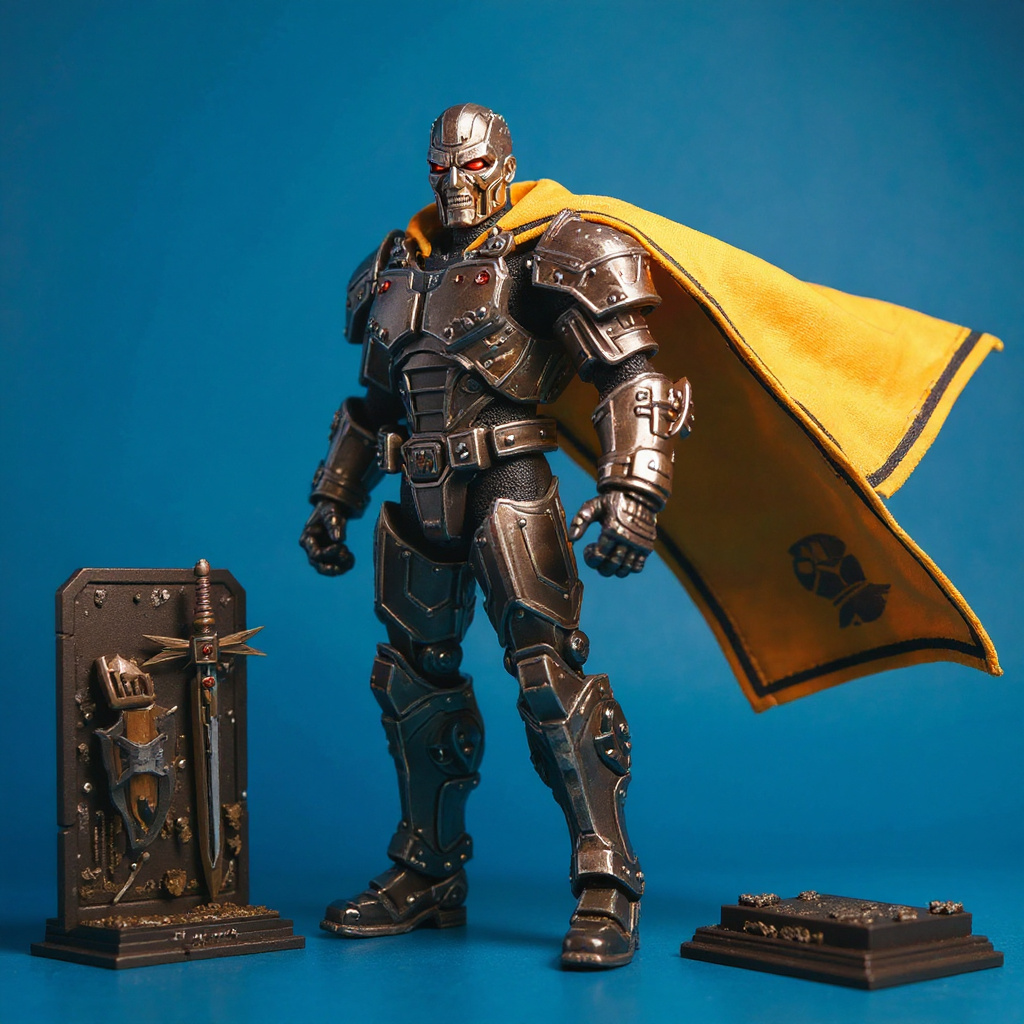
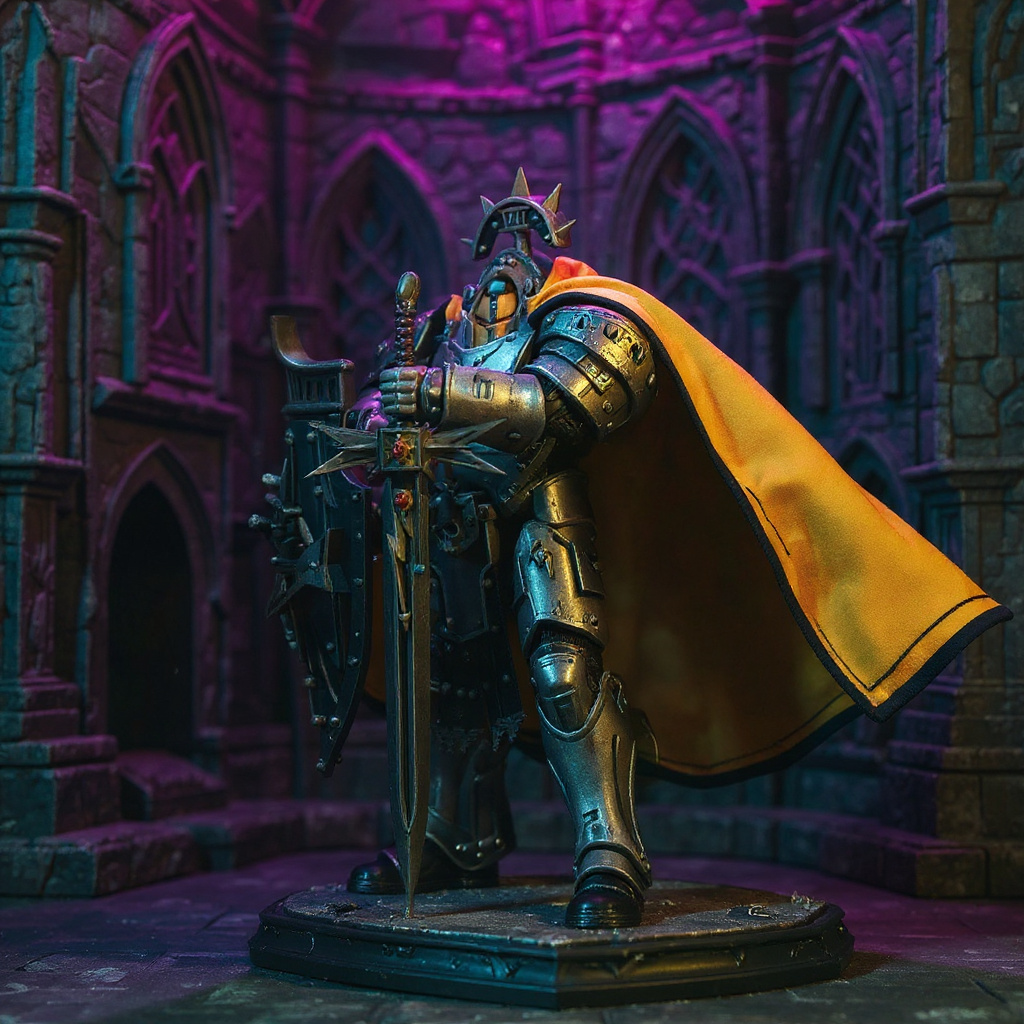
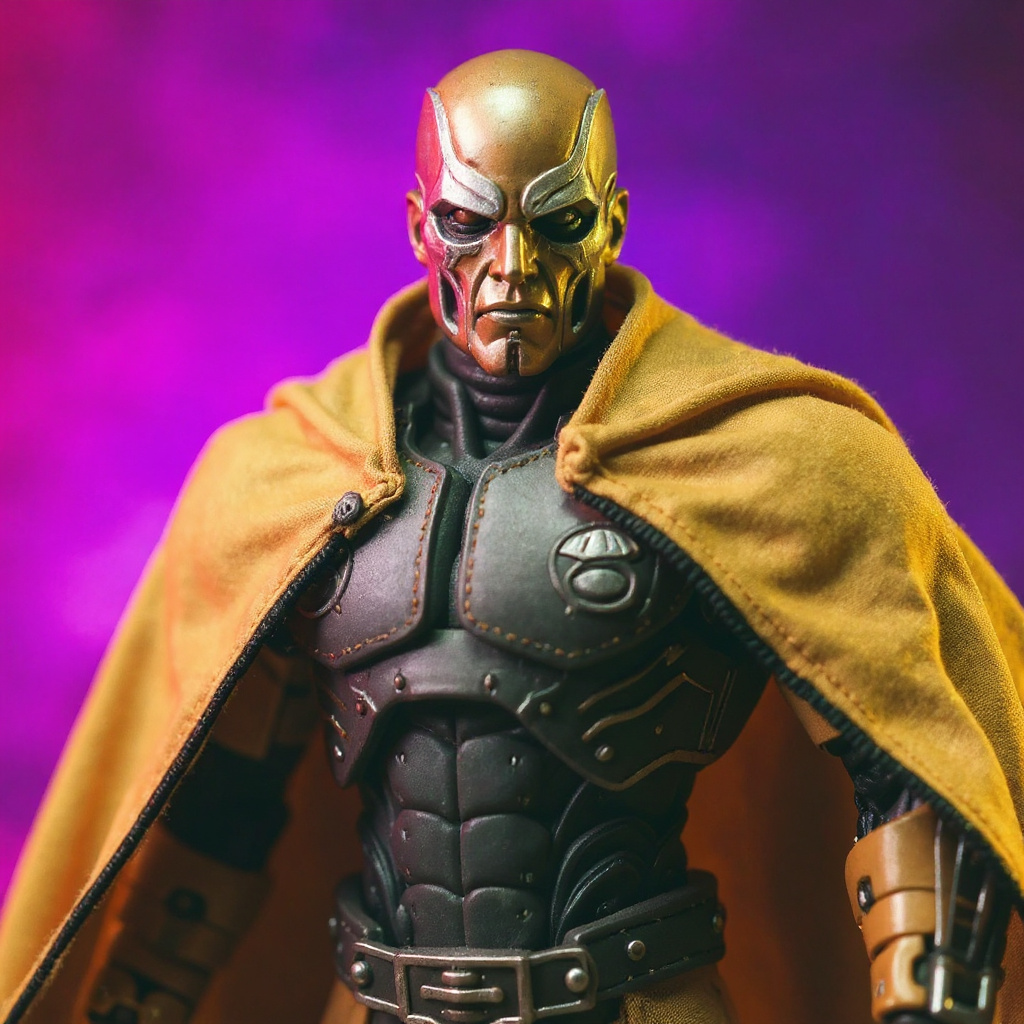
My reference piece is a small matte yellow cape with black trim and quiet Imperial Fists heraldry stitched near the lower edge. Draped over a dark grey 1/18 Terminator figure, the yellow stands out against the armor, and the folds carry the rest of the effect. Cotton doesn't glare, so under a studio lamp or diorama spotlight you get soft shadow inside each fold instead of a hot white streak. The thin wire edge gives the cape a clean outline where the hem curls, with none of the thickness of molded plastic. Look closer and the handmade texture shows: a stitch that wanders by a millimeter, a faint weave in the yellow, a hem that isn't machine-straight. I like that. Some collectors don't, and that's a fair position.
Why a Handmade Cloth Cape 1/18 Figure Needs a Wire Edge
Stock cloaks are molded. Flat. Lifeless. Cardboard cutouts, more or less, and they stay that way no matter how you reposition the arms. A wired cloth cape changes with the pose, because the hem channel holds a thin wire that keeps whatever curve you give it.
Gauge numbers run backward, which causes most of the confusion. A lower AWG number means thicker wire: 22 AWG is 0.644 mm across, and 24 AWG is 0.511 mm. I bent six pieces of each, by hand, 90 degrees and back at the same spot, and counted every bend until the wire snapped.
| Wire | Diameter | Samples | Average bends to snap | Range | Ridge visible through 0.2 mm cotton? |
|---|---|---|---|---|---|
| 22 AWG | 0.644 mm | 6 | 14 | 11-18 | Faint, only under raking light |
| 24 AWG | 0.511 mm | 6 | 9 | 7-12 | No |
Six samples is a small sample, and hand bending isn't a lab rig. Thinner wire also tends to get folded into tighter kinks, which speeds up metal fatigue). Even so, the gap was consistent across all twelve pieces. My rule: 22 AWG for any cape you plan to repose, 24 AWG for display-and-forget shelf pieces where invisibility matters more than lifespan.
Fabric: Why Thin Matte Cotton Wins
Cotton creases and stays creased, which is what you want when a fold has to survive a week on the shelf. Satin and polyester blends shine under display lamps and tend to spring back toward flat, so they fight the wire. Canvas holds a shape but looks like a tarp on a small figure. My yellow cotton measured 0.2 mm with calipers.
Scale makes the thickness problem worse than it sounds. At 1/18, 0.2 mm of cloth equals 3.6 mm on a full-size person, which is already felt-like. At 1/12 the same cotton equals 2.4 mm, so the larger scale forgives thicker fabric and 1/18 does not. Terminator figures are bulkier than a standard 4-inch trooper, but the cloth thickness rule stays the same.
Before you trust any new cape near grey armor, rub a damp white cloth across the yellow and the black trim. If color transfers, don't buy it. Dye on dark grey plastic is a nightmare to clean.
What It Costs
| Cape type | Typical price | Posable? | Example or what to expect |
|---|---|---|---|
| Stock plastic cloak | $0 (included) | No | Molded or clip-on, comes with the figure |
| 3D-printed resin cape | $10-18 | No | Rigid, layer lines unless sanded |
| DIY cotton and wire | $3-6 materials | Yes | Fat quarter plus a wire spool, 1-2 hours per cape |
| Ready-made wired cloth cape | $29-50 | Yes | Imperial Fists Terminator cape listed at $29 |
| Custom commission | $45-80 | Yes | Your colors and heraldry, expect a wait of weeks |
Prices come from listings I reviewed in spring 2025. They are ballpark figures, not a formal dataset, so check current listings before you buy.
How to Make Your Own: 7 Steps
Wire, thread, patience. That's the full kit, plus a size 10 needle and a fat quarter of thin cotton. My first cape took two hours. By the fifth I was down to about 70 minutes, mostly because I stopped fighting the wire ends.
1. Cut a trapezoid of yellow cotton about 2.5 inches across the top, 4 inches across the bottom and 4.5 inches long, then add a 1/4 inch hem allowance on the sides and bottom. 2. Stitch a narrow strip of black cotton along the bottom edge as trim, and press it flat. 3. Sew the small heraldry motif near the lower edge with a tight backstitch in contrasting thread, while the fabric is still flat and easy to hold. 4. Cut 14 inches of 22 AWG wire. Fold back 1/8 inch at each end so the tips can't poke through the cloth. 5. Fold the side and bottom hems over the wire and stitch within 2 mm of it. The wire should slide slightly but never escape. 6. Gather the top edge with two stitches and attach it to a 1/4 inch black neck band. 7. Tuck the band under the Terminator's gorget or pauldrons, test the fit, and shape the first pose gently.
How to Pose and Store It: 5 Steps
1. Put the figure in its final pose first, then drape the cape. Posing the cape before the arms is a common mistake. 2. Shape the large curve first, working from the hem corners inward, and leave small folds for last. 3. Keep every bend to a radius of about 1/2 inch (12 mm) or wider. A crimp is a future break. 4. Light it with a key lamp at roughly 45 degrees and a weak backlight to glow the thin cotton. A single overhead lamp flattens every fold. 5. After the shoot, relax the cape back to a loose drape. With 22 AWG averaging 14 bends in my test, I cap any single spot at about 6 re-bends.
A small fan on low speed can add a natural billow for photos. Secure loose accessories first.
What Handmade Quirks to Expect
Handmade doesn't mean flawless. Mine have shown all of these:
- A hem edge that varies by up to 1 mm - Small thread tails that need trimming - Light puckering where the wire ends sit - Slight color shift between fabric batches
None of them affect posing. All of them are visible up close. Not perfect. Not meant to be.
An Honest Caveat
Honestly, if your figures live in a sealed case and you never repose them, skip this entirely. The plastic cloak is fine, and $29 buys you nothing it doesn't. The same goes for damp storage. I've seen brown spotting on a sample kept in a humid garage, so if you can't control the moisture where you display, pick a resin cape and move on. Wire also fatigues. Every cape is a consumable if you pose it often, and I'd rather you know that before you pay.
Where to Buy a Ready-Made Version
If you'd rather not sew, the 1/18 Imperial Fists Terminator Praetor Cape is the piece described above: matte yellow cotton, black trim, subtle heraldry stitching and a wired hem, cut for Terminator proportions. For background on the setting itself, see the Warhammer 40,000 overview.
FAQ
How much does a handmade cloth cape for a 1/18 figure cost? Ready-made wired capes run about $29-50. Custom commissions run $45-80. Sewing your own costs roughly $3-6 in cotton, wire and thread. What wire gauge is best for a 1/18 cape? Use 22 AWG if you repose often. In my test it averaged 14 bends to failure versus 9 for 24 AWG. Choose 24 AWG only when you want the thinnest hidden edge and will rarely bend it. Remember that a lower gauge number means thicker wire. What is the best fabric for a 1/18 scale cape? Thin matte cotton around 0.2 mm thick. It holds creases and doesn't shine under lamps. Satin and polyester blends look glossy and spring back toward flat, and canvas looks too heavy at this scale. How tall is a 1/18 scale figure? About 4 inches for a 6-foot human. Terminator armor figures are bulkier, so expect a wider build even at the same scale. How much fabric do I need for a 1/18 cape? One cape needs a scrap of about 5 by 6 inches. A standard fat quarter (about 18 by 22 inches) yields roughly 10 capes after allowing for waste. How do I make a cape for a 1/18 figure? 1. Cut a trapezoid about 2.5 inches wide at the top, 4 inches wide at the bottom and 4.5 inches long. 2. Add trim and any heraldry stitching while the cloth is flat. 3. Fold the hem over 14 inches of 22 AWG wire and stitch close to it. 4. Gather the top into a neck band and test the fit on the figure. How many times can I bend the wire before it breaks? In my six-sample test, 22 AWG snapped after 14 bends on average and 24 AWG after 9. Keep re-bends at any single spot under about 6, and use wide curves.Verdict
A handmade cloth cape 1/18 figure upgrade is worth it if you pose figures, shoot photos or build dioramas. It isn't if you display statically. Pick 22 AWG for longevity, thin matte cotton for the right drape, and expect small hand-sewn quirks. Those quirks are the point.
Sources and Notes
- American wire gauge for wire diameters. - Fatigue (material)) for background on why repeated bending breaks metal. - Bend counts, fabric thickness and price ranges are my own bench measurements and listing review from spring 2025, with small sample sizes.

