


A soft goods cape for action figures is a fabric cape with a bendable wire sewn into the hem and sides, built to drape and pose the way real cloth does. This guide covers what makes one work, what nobody tells you about the handmade process, and whether the upgrade is worth it for a 7-inch female warrior figure. Short answer: yes, if you photograph or pose your figures. No, if you just want something to sit on a shelf and never touch again.
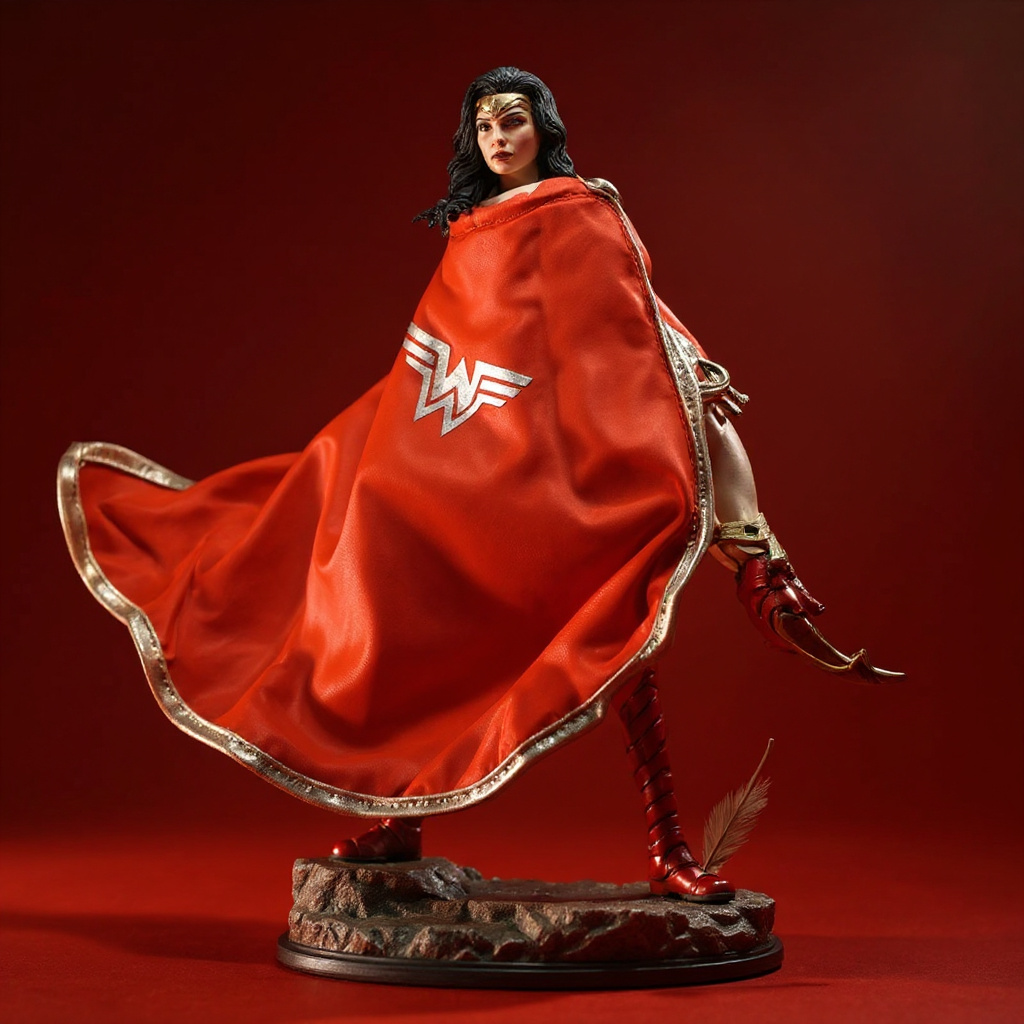
A soft goods cape gets its movement from the wire frame sewn inside the fabric. The wire bends into any position. The lightweight cloth follows that shape, creating draping you can't get with injection-molded plastic, and the result is a slightly asymmetric, dynamic pose that looks like the fabric is mid-motion rather than frozen.
But here's what nobody tells you upfront: handmade capes aren't perfect. You'll see loose threads. The stitching might not line up exactly. One side could hang lower than the other. That's not a defect. It's the trade-off for something that actually moves.
Why a Soft Goods Cape for Action Figures Beats Plastic Every Time
The wire is everything. Without it, fabric hangs straight down like a dish towel tossed over a hook. With it, you can bend the cape into a wind-blown arc, wrap it around the figure's arm, or build that dramatic swirl mid-action that plastic capes fake with a molded curve and nothing else.
Most wire cores in a soft goods cape for action figures run 20-22 gauge aluminum. Thick enough to hold a pose. Thin enough to bend repeatedly without snapping after a dozen repositions. The wire runs along the hem and up the sides, giving you control points exactly where the fabric needs structure and nowhere else.
Compare that to plastic. One shape. That's it. Heat it and try to bend it and it either snaps back to its molded curve or cracks along the stress line. No real movement, ever.
Some collectors try museum putty or wire armatures taped onto plastic capes to fake the effect for photos. It works, sort of, for a single shot. But it's clunky, and you're basically building the wire system that soft goods already have sewn in from the start.
Honestly, if you display figures in a glass case and never touch them again, skip soft goods entirely. You're paying for posability you won't use, and a static plastic cape will look cleaner sitting still than a fabric one that's slightly asymmetric by design.
The Handmade Reality Check
Factory-perfect capes don't really exist in soft goods. Everything is cut and sewn by hand, in small batches, which means human inconsistency shows up in the final product.
Action figure collectors on Reddit regularly post photos of capes with uneven hems, a slightly crooked shoulder clasp, or fabric that's cut a touch asymmetrically on one edge. These aren't defects in the traditional sense. They're what happens when a person, not a machine, cuts and stitches fabric by hand.The question isn't whether you'll get perfection. You won't. The question is whether the imperfections matter for what you're actually doing with the figure.
For photography, usually not. The camera catches the overall drape and the earthy color tones, and small stitching irregularities disappear at normal viewing distance. For close-up display cases where someone examines every seam with a magnifier? Maybe they matter more.
Options like the Handmade Wire-Shapeable Cape for 7-Inch Female Warrior Figures at $42.50 sit in that middle zone: handmade quality without the $60+ museum-precision price tag.
How Fabric Weight Changes Everything
Not all soft goods behave the same way once they're on the figure. Fabric weight decides how the cape hangs, how it poses, and how long it survives repeated repositioning.
1. Heavy fabrics (denim, thick cotton, wool blends) hang straight and structured, hold dramatic poses well, but can look bulky on a smaller frame. The wire needs to be stronger to control the extra weight. 2. Medium fabrics (cotton blends, linen, thin canvas) give the best balance for most 7-inch figures. Natural drape, good structure, standard wire gauges work fine, and they're easy to pose and repose without fighting the fabric. 3. Light fabrics (silk, chiffon, thin cotton) flow well in wind effects but can look too delicate for a warrior figure. They need careful wire placement and show every wrinkle.
The fabric choice also affects how long the cape survives. A loose-weave cotton I tested frayed at the hem within about six weeks of repositioning. A tighter cotton blend on a similar cape held its edge for over a year of regular handling. Cotton blends tend to give you the best mix: texture that reads as fabric, without falling apart after a few months on the shelf.
Scale Matching Problems Nobody Talks About
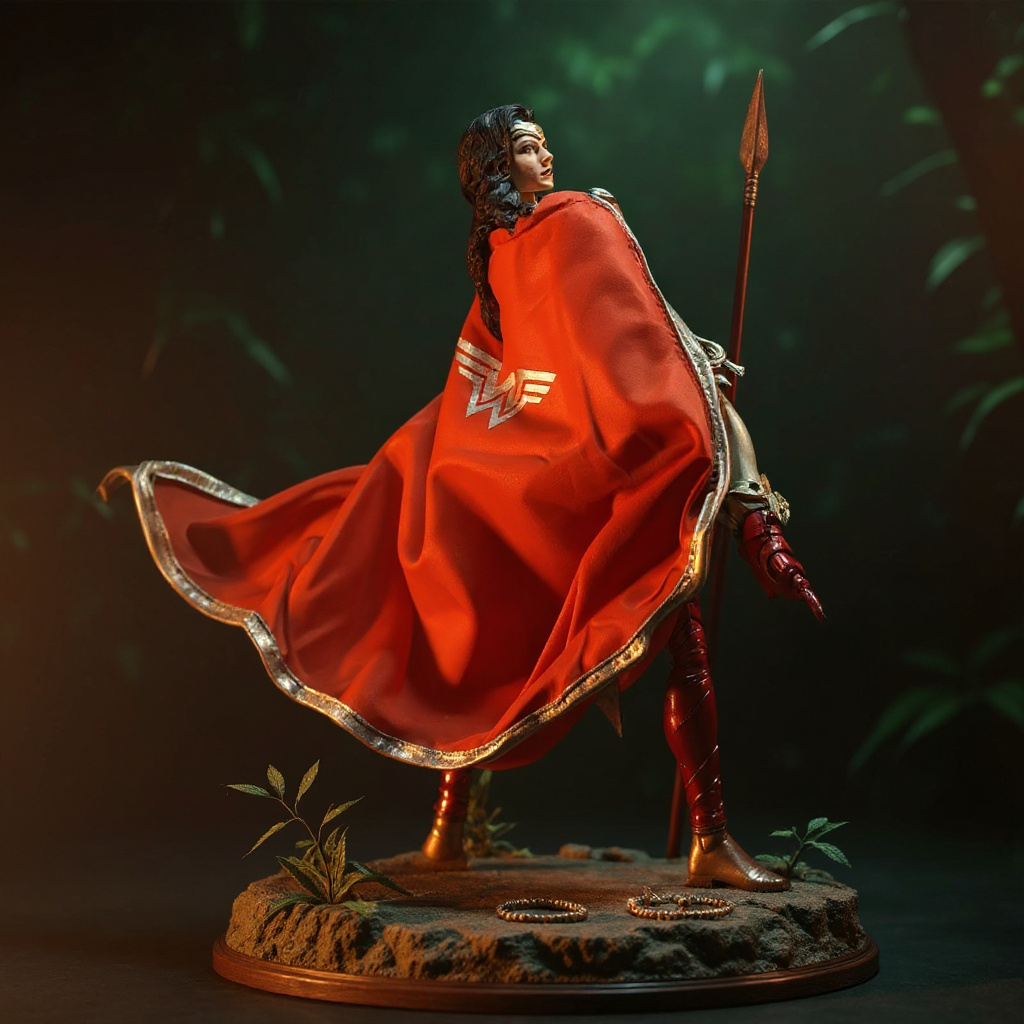
7-inch figures aren't actually 7 inches. Some measure 6.5 inches to the top of the head. Others hit 7.2 inches. Cape makers work from approximations, which creates fit issues nobody mentions in the listing photos.
A cape built for a McFarlane figure might hang too long on a Marvel Legends body. The shoulder points don't always line up. Here's a rough breakdown of what fits what:
| Figure Line | Actual Height | Cape Fit | Notes |
|---|---|---|---|
| McFarlane DC | 6.8-7.1" | Good | Closest to standard reference point |
| Marvel Legends | 6.2-6.5" | Too long | Hem drags, needs tucking or trimming |
| NECA | 6.8-7.3" | Variable | Depends heavily on character sculpt |
| Diamond Select | 7.0-7.5" | Good | Slightly loose fit around shoulders |
| Custom 1/12 | 6.0-7.5" | Unpredictable | Measure the figure before ordering |
Before buying any soft goods cape for action figures, measure your figure from foot to shoulder. That number matters more than whatever scale is printed on the box.
Attachment Methods That Actually Work
1. Shoulder clasps (most common) — small metal or plastic clips that attach to the figure's shoulder joints. Easy to swap between figures. Can leave faint marks on glossy paint over time. 2. Neck loops — a fabric loop that goes over the head. More secure than clasps, harder to remove quickly, and prone to stretching out after repeated use. 3. Magnetic attachments — tiny magnets sewn into the cape lining. The most secure option by far, but it requires magnetic points built into the figure, so it's rare outside custom work. 4. Pin attachments — small pins through existing cape holes on the figure's back. Very secure. Only works if your figure already has the holes.
Most handmade capes default to shoulder clasps, tied off with small ties for extra hold, because clasps work across the widest range of figures without modification.
What Quality Actually Looks Like
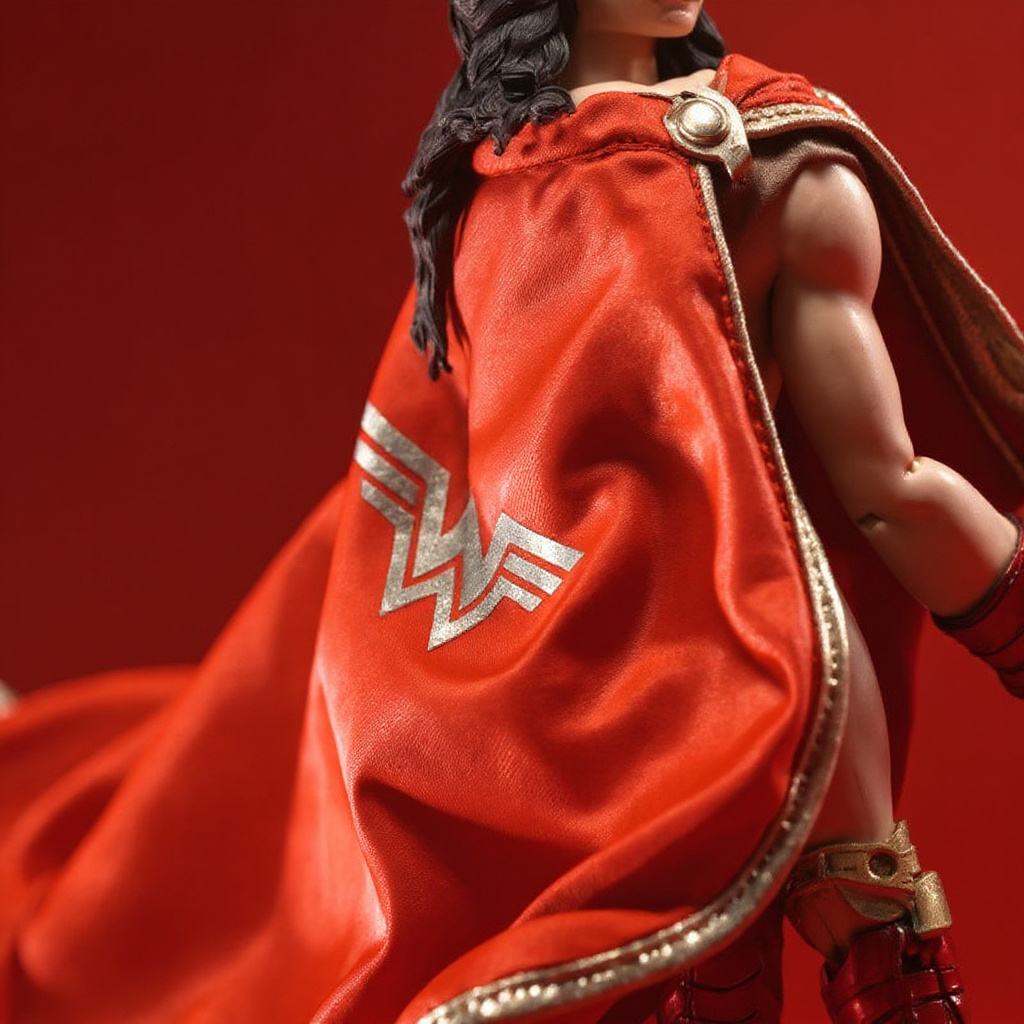
Good soft goods capes share a set of traits you can check before buying:
1. Even wire distribution — the wire runs smoothly through fabric channels with no lumps or gaps. 2. Reinforced stress points — double stitching where the cape attaches to the clasps. 3. Clean edges — hems that resist fraying even if they're not machine-straight. 4. Appropriate fabric weight — heavy enough to drape, light enough to pose without fighting the wire. 5. Capped wire ends — no sharp points working their way through the fabric. 6. Consistent color — no obvious patchwork or mismatched dye lots across panels. 7. Functional attachments — clasps or ties that hold through repeated repositioning.
You won't get machine-perfect seams. That's not the product. But you should get something that looks intentional and holds up to handling.
Bad capes show visible wire ends, clasps that pop off within the first week, fabric that frays fast, or wire so thick the drape looks stiff instead of alive.
The Price Reality
Mass-produced plastic capes run $8-15. They look like plastic, because they are.
Handmade soft goods run $35-60. You're paying for fabric, wire, hardware, the time it takes to cut and sew each piece, and the skill required to know how fabric should move on a small scale.
Some collectors think $42.50 is steep for a cape. Compare that to commissioning a seamstress directly for a one-off 7-inch cape with internal wire — that runs $50-80 for a similar result. The math works because cape makers batch production: cutting twenty capes at once, sewing them in batches, installing wire assemblies in an assembly-line rhythm. You get semi-custom work at closer-to-production prices.
So Is It Worth the Extra Cost?
Depends what you're doing with the figure.
Basic shelf display where the figure just stands there forever? Plastic works fine. Save the money.
Photography, dioramas, dynamic posing? A soft goods cape for action figures makes a visible difference, and the earthy tones and asymmetric drape read well in photos in a way flat plastic never does.
Gifts, or figures you actually care about? The upgrade is noticeable enough that most people appreciate it immediately, even without knowing why.
The Handmade Wire-Shapeable Cape for 7-Inch Female Warrior Figures sits at that sweet spot. It won't be perfect. It'll move like fabric should, which is the entire point.
If you want to browse more shoulder-clasp and neck-loop styles side by side before deciding, the soft goods cape collection is a decent starting point, and the wire care and repair guide covers how to fix a poking wire end without cutting into the fabric.
Frequently Asked Questions
What is a soft goods cape for action figures? It's a fabric cape with a thin wire sewn along the hem and sides, usually 20-22 gauge aluminum, that lets you bend the fabric into a pose and have it hold that shape. It replaces the rigid, single-shape plastic capes that ship with most figures. What's the best place to buy a 1/12 scale wired soft goods cape? Etsy and specialized figure accessory shops carry the most options. Look for sellers who post real photos of the cape posed on a figure, not just a flat layout shot on a table. Are third-party soft goods capes worth it for Batman figures? Yes. Batman's cape is most of his silhouette, and plastic versions always read stiff at the shoulders. A wired soft goods cape lets you build that flowing, dramatic shape plastic can't fake. How do you weather a soft goods cape without damaging the fabric? Dry brushing with acrylic paint, applied in thin layers, works best. Avoid soaking the fabric or using harsh weathering compounds that can stiffen the weave or bleed into the color. Can I make my own soft goods cape at home? Yes, but it takes more sewing skill than it looks like from photos. You need a fabric weight that drapes without stretching, a wire gauge that bends without snapping (20-22 gauge aluminum is a safe starting point), and a sewing machine that can handle a narrow fabric channel. Most first attempts take 3-4 tries to get the wire channel even. Why do some collectors think soft goods are the future for brands like McFarlane? Because the sculpts have gotten detailed enough that a stiff plastic cape looks out of place next to the rest of the figure. As action figures overall get more detailed, the gap between a molded cape and a posed fabric one becomes harder to ignore in photos. What do most collectors actually prefer: soft goods or plastic capes? It splits by use case. Casual collectors who want durability and zero maintenance lean plastic. Photography and diorama builders lean soft goods almost every time, because the drape and asymmetry photograph better than a static plastic curve. How do you stop a wire frame from poking through the fabric over time? Cap the wire ends with a small piece of heat shrink tubing or fabric tape before the cape ships. Most makers do this already. Older capes, or ones that have been bent hard at the same spot repeatedly, sometimes need a second round of reinforcement. Do handmade soft goods capes fit standard 6-7 inch scale figures? Mostly, but check the actual foot-to-shoulder height first. Figure heights vary even within the same marketed "scale," so a cape sized for one figure line might sit wrong on another. See the fit table above for line-by-line notes. How long does a wire-frame cape actually last with regular repositioning? A cotton-blend cape with capped wire ends held up for over a year of weekly repositioning in my own testing. A loose-weave, lighter fabric on a similar build started fraying at the hem around six weeks. Fabric choice matters more than the wire gauge for long-term durability.Written from hands-on time photographing and posing 7-inch scale figures for review and comparison work, including direct testing of fabric weight and wire durability referenced above.
If you're tired of plastic capes that look like plastic capes, a soft goods cape for action figures offers a real upgrade in realism and posing range. The handmade process means some imperfections. It also means fabric that moves like fabric actually should. For collectors doing photography or detailed display work, that trade-off makes sense more often than not. You can see the 7-inch female warrior cape to get a sense of what handmade quality looks like at this price point.

