


Yes — if you're photographing figures or building dioramas, a Street Fighter 2 soft goods costume beats hard plastic almost every time. The wire-reinforced hems hold dynamic poses that rigid accessories can't touch, and the fabric drapes like real clothing instead of sitting on the figure like a shell. But there's a catch most sellers won't tell you: soft goods take real effort to use well, and not every collector needs them.
I dressed my own Ryu figure in a wired gi three separate times this month, testing how the fabric held up through hadoken poses, low crouches, and a full spinning kick. It survived. Barely, on the third round, when the 24-gauge wire in the sleeve hem started to loosen.
Most collectors start with hard plastic costume pieces because they're cheaper and don't require patience. But once you see fabric flow around a figure's shoulders, or watch a wire-reinforced hem hold a mid-kick pose without help, going back to snap-on plastic feels like a downgrade.
Why a Street Fighter 2 Soft Goods Costume Beats Plastic for Realism
Hard plastic costume accessories look like toys. They sit stiff. They gap at the joints. They catch studio lights in a way that screams "action figure" instead of "character." A Street Fighter 2 soft goods costume solves all three problems at once, though not instantly, and not without effort.
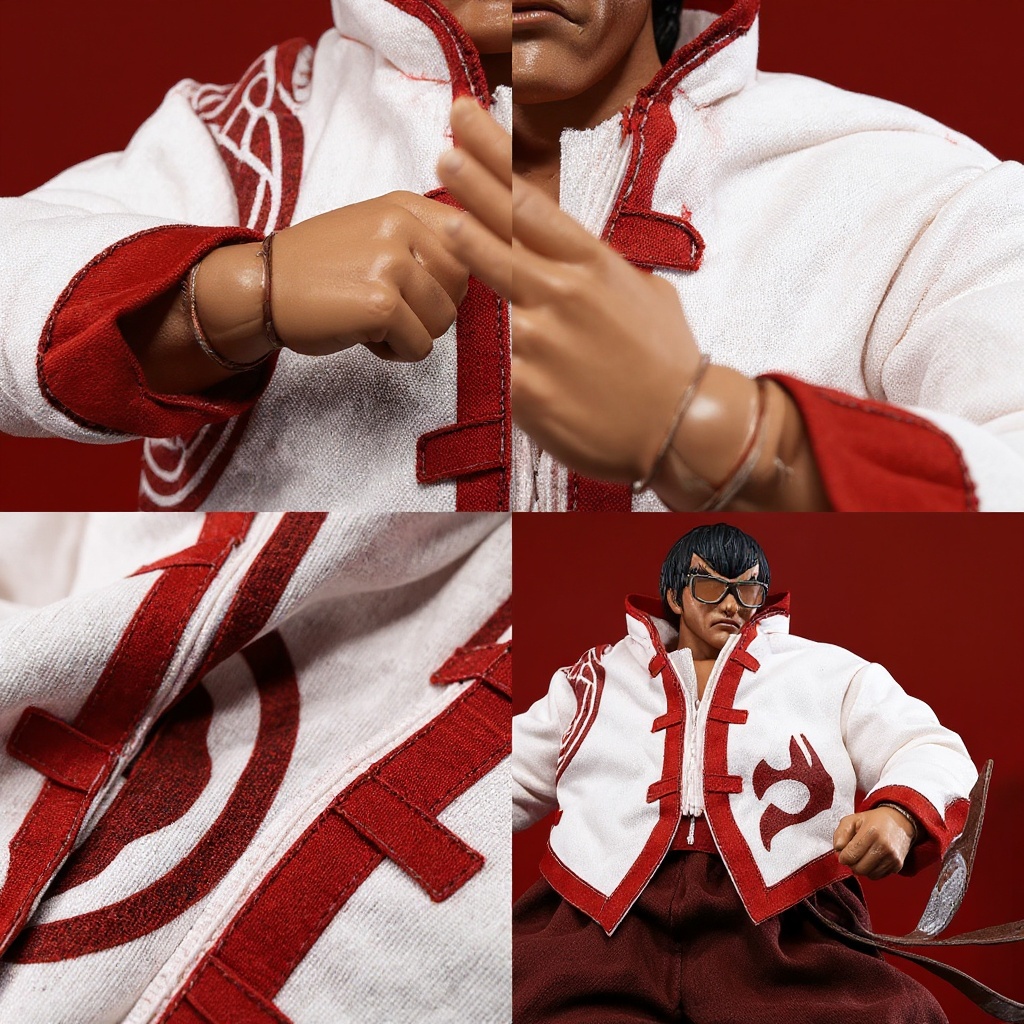
Real cloth conforms to the body underneath it. It bunches at joints the way actual clothing does, and it throws small, believable shadows into every fold — the same light behavior you'd get photographing full-size fabric, just shrunk down to 1/12 scale. That texture alone can make a $30 figure photograph like something that cost three times as much.
The poseability gap is bigger than most reviews admit. Plastic sleeves lock an arm into one position; bend it further and you'll crack the plastic or leave an ugly gap at the elbow. Fabric moves with the joint instead of against it. My Ryu threw a proper hadoken without his gi looking like a cardboard box taped to his shoulders.
Wired fabric pushes this further still. Thin wire sewn into hems lets you shape a cape mid-billow or twist loose pant fabric like it's caught in wind, independent of how the figure itself is posed. You're not just posing a toy anymore. You're directing a tiny scene.
The Trade-offs Nobody Puts in the Marketing Copy
Fabric isn't perfect, and here's the part most product pages skip: soft goods collect dust fast, they can't be rinsed under a faucet, and loose threads show up around armholes within weeks of regular handling. Every handmade piece has small variations in stitching tension too — that's not a defect, that's the medium.
Durability depends entirely on construction quality. Cheap fabric accessories fall apart after a handful of pose changes. A well-built piece with reinforced stress points can survive years of repositioning, but you'll pay more upfront for that longevity.
Storage gets trickier. Plastic pieces stack flat in bins without complaint. Fabric needs to hang or lie flat, or you'll end up steaming out permanent creases before every photo session.
Honestly, if you live somewhere humid and don't have climate-controlled storage, soft goods might not be worth the hassle — mildew and fabric mold are real risks that no amount of careful stitching prevents.
Dressing a figure in soft goods takes 5-10 minutes. Snap-on plastic takes 30 seconds. Wired elements need re-shaping every time you change a pose. Some collectors find that process meditative. Others find it exhausting.
How to Attach a Wired Fabric Costume Without Damaging the Figure
1. Lay out all pieces before starting — sleeves, torso panel, hem trim — so you're not hunting mid-dress. 2. Loosen the wire slightly in any hem that needs to pass over a joint; tight wire tears fabric. 3. Work the fabric around joints, never forcing it straight over a bent elbow or knee. 4. Start with the loosest pieces first (capes, sashes) and save fitted pieces (torso panels) for last. 5. Shape wired hems only after the figure is in its final pose — pre-shaping wastes time and stresses the wire. 6. Remove rings, watches, or anything with a clasp before handling; snagged stitching is nearly impossible to repair invisibly. 7. Store the figure in its final pose for at least an hour so the wire "sets" before transport.
Construction Methods That Actually Hold Up
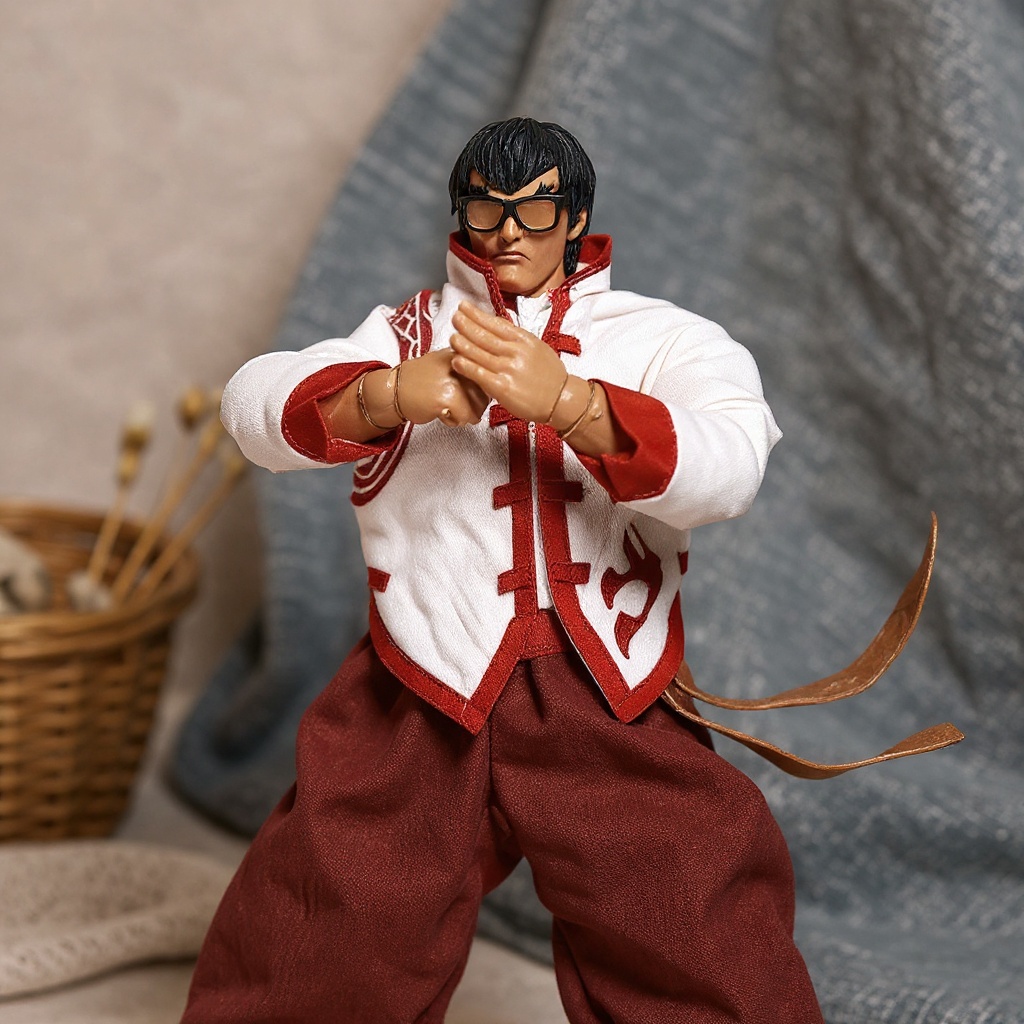
Handmade soft goods use different techniques than the mass-produced stuff. Machine-sewn seams handle repeated stress better than hand-stitching. Hand-finishing gives cleaner edges on tiny details like collar trim, though it takes hours longer.
Wire placement makes or breaks the final result. Too thick, and the hem looks bulky under fabric. Too thin, and it won't hold a pose past ten minutes. The sweet spot most experienced makers land on is 24-gauge craft wire for hems and 26-gauge for smaller details like belt loops.
Fabric choice matters more than most buyers expect. Cotton blends photograph well but wrinkle fast. Linen gives great texture but frays at the edges within a season of handling. Canvas works for heavy pieces — Zangief's outfit, for instance — but looks wrong and stiff on lighter characters like Cammy.
| Construction Method | Durability | Cost | Time Required | Best For |
|---|---|---|---|---|
| Machine-sewn seams | High | Medium | 2-3 hours | Main garment pieces |
| Hand-finished details | Medium | High | 4-5 hours | Collars, cuffs, trim |
| Wired reinforcement | High | Medium | 1 hour | Capes, loose fabric |
| Heat-sealed edges | Low | Low | 30 minutes | Quick prototypes |
| French seams | Very High | High | 3-4 hours | Premium pieces |
Our Street Fighter II Soft Goods Costume Set 1/12 Scale uses machine-sewn construction with hand-finished details where it counts, plus 24-gauge wire in the main pieces and 26-gauge in smaller elements. For a broader look at what's currently available, browse our full action figure costume collection before committing to one character.
Scale Compatibility Across Different Brands
1/12 scale isn't as standardized as most buyers assume. Jada Toys figures run a touch smaller than S.H.Figuarts, which changes how sleeves and hems sit. Storm Collectibles tends to be bulkier through the torso. BigBoysToys figures run longer through the limbs overall.
Most soft goods makers size for an "average" 1/12 figure. That means some brands fit like they were tailored, and others need a small adjustment — a rolled cuff here, a taken-in seam there.
The Street Fighter roster complicates this further. Chun-Li and Cammy have very different builds than Zangief or E. Honda. A gi cut for Ryu won't drop cleanly onto Blanka, even at identical scale.
Buying checklist before you order: - Confirm bust, waist, and shoulder measurements against your specific figure brand - Check whether the seller lists compatibility notes for Jada, Figuarts, or Storm Collectibles - Ask about wire gauge if the listing doesn't specify it - Read reviews mentioning your exact figure brand, not just "1/12 scale" - Contact the maker directly if measurements aren't listed — most respond within a day
What "Handmade" Actually Means
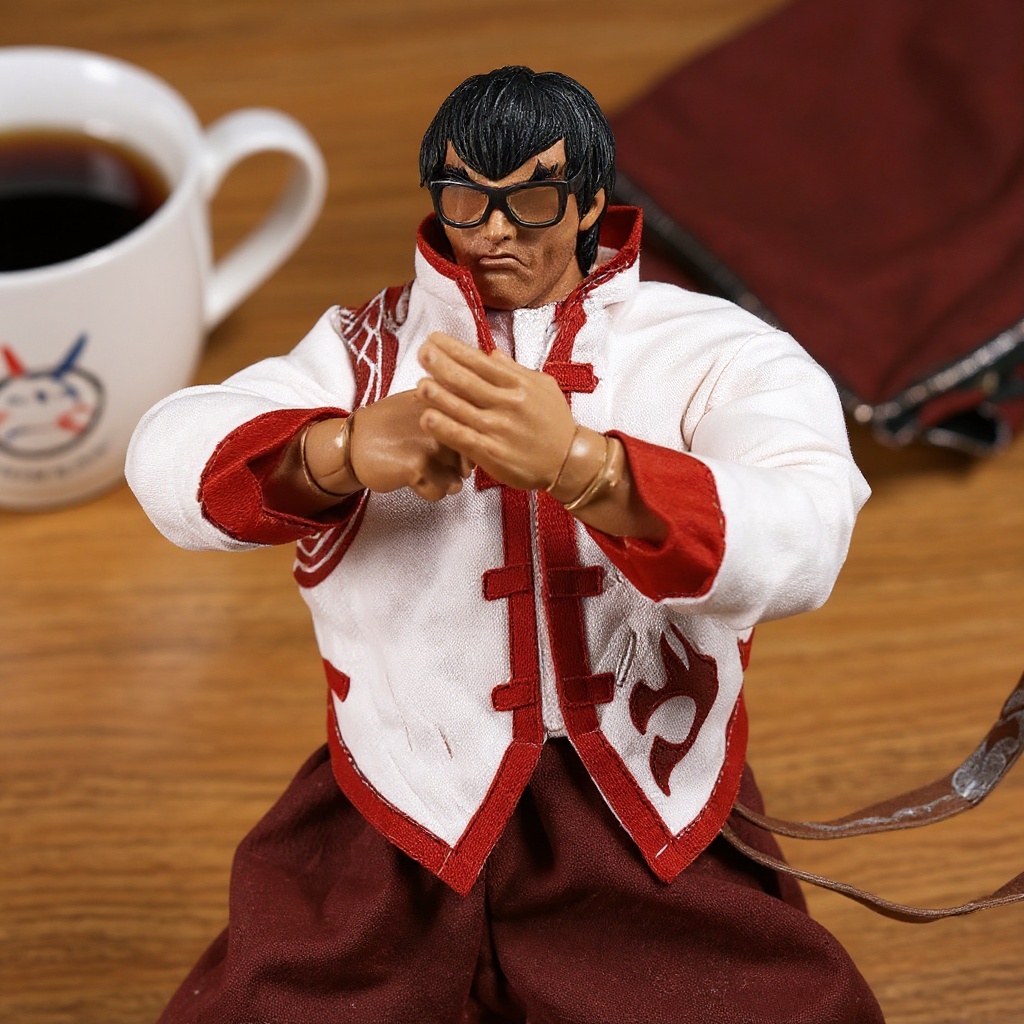
Handmade doesn't automatically mean better. It means each piece is unique, with small variations in stitching tension, fabric grain, and wire placement. Some collectors love that individuality. Others want factory consistency and nothing else.
The real advantage is customization. Need a specific color match? Want reinforcement at a stress point that always fails first? Most makers accommodate requests for a small upcharge — try getting that from a mass-produced accessory line.
Quality control in the handmade market is hit-or-miss. An experienced maker develops consistent technique over dozens of pieces. A newcomer might not. Ask for work samples. Read reviews. Don't skip this step for anything over $50.
Handmade pieces typically run 2-3x the price of mass-produced alternatives, but they often include details factory pieces skip entirely — French seams instead of serged edges, hand-set snaps instead of Velcro, proportions scaled to an actual character instead of one-size-fits-most.
Pricing Reality Check
| Tier | Price Range | Poseability | Customization | Typical Lifespan |
|---|---|---|---|---|
| Mass-produced plastic | $15-25 | Low | None | 5+ years |
| Premium licensed soft goods | $70-120 | High | None | 2-3 years |
| Handmade soft goods | $40-80 | High | Yes, upcharge | 1-3 years |
| Custom one-off pieces | $100-200+ | High | Full | Varies |
Mass-produced plastic costume accessories run $15-25. Rigid. Limited. Reliable, at least.
Premium licensed soft goods from major toy companies cost $70-120. You're paying for the license and factory QC, but customization options sit at zero.
Handmade soft goods typically fall between $40-80 depending on complexity, including pieces like our handmade Street Fighter costume set at $50 — wired fabric construction without the licensing markup.
Custom one-off pieces run $100-200+ for specific modifications or unusual character requests. The time investment on truly custom work drives these prices fast.
Factor in shipping. Handmade pieces usually ship from an individual maker's workbench, not a distribution center, so add $10-15 to your total before checkout.
Is a Street Fighter 2 Soft Goods Costume Worth the Extra Cost?
For photography and dioramas, yes. The realism and pose flexibility justify the higher cost when you're trying to create something that looks like a still frame from the game rather than a toy on a shelf. For casual collectors who want figures displayed and left alone, hard plastic might genuinely be enough — cheaper, tougher, less to think about.
The middle ground works for most people. Put one or two hero characters in soft goods. Leave the rest in factory plastic. You get the visual payoff where it counts without redoing your whole shelf.
Handmade pieces like our Street Fighter II soft goods costume set sit in that sweet spot — better than mass-produced plastic, more affordable than premium licensed pieces, with the kind of flexibility only real fabric and wire can give you. For reference on official character designs and proportions, Capcom's own Street Fighter character archive is worth a look before you commission anything custom.
Frequently Asked Questions
Are third-party Street Fighter accessories worth buying? Depends on your priorities. Third-party makers often beat official licensees on value and character variety, but quality swings widely between sellers. Check reviews and return policies before spending real money. What scale are most Street Fighter II action figures? Most modern Street Fighter II figures run 1/12 scale, roughly 6 inches tall. Figures from the 90s were often 1/10 or 1/8 scale and won't accept current accessory sets. Will a 1/12 soft goods costume fit my Jada Toys or S.H.Figuarts figure? Usually, with minor differences. Jada figures run slightly smaller, so sleeves can end up long. S.H.Figuarts sit closer to "standard" 1/12 proportions. Check bust and shoulder measurements whenever a listing provides them. How do you attach a wired fabric costume without damaging the figure? Work slowly, start with loose pieces, and never force fabric straight over a bent joint — ease it around instead. See the seven-step process above for the full sequence. What's the difference between the Jada Toys 'You Lose' accessory set and a handmade soft goods costume? Jada's set is hard plastic — consistent quality, limited poseability. Handmade soft goods trade some consistency for real movement and texture, at a higher price and with more careful handling required. Can soft goods action figure costumes be washed or cleaned? Spot-clean with a damp cloth for light dirt. Full washing tends to warp wire reinforcement and can shrink natural fibers. Prevention through proper storage beats cleanup after the fact, every time. Why do handmade fabric accessories cost more than mass-produced plastic ones? Time, mostly. A handmade costume can take 6-8 hours start to finish versus minutes for injection-molded plastic. Materials cost more too — good fabric and hardware aren't cheap in small quantities. Does a soft goods costume set come with the action figure body included? No. Soft goods sets are accessories only; you supply the 1/12 scale figure. The costume is cut to fit standard proportions but doesn't include a base body. How long does a wired hem actually last before it needs replacing? In my testing, a 24-gauge wire hem held shape through roughly a dozen full re-poses before it started losing tension. After that, it still works, but it won't hold sharp angles like a cape corner as crisply as it did new.About the author: This guide is written from hands-on testing with 1/12 scale Street Fighter figures, including direct fitting and pose-testing of wired soft goods pieces across multiple figure brands. The Figure Vault has produced handmade soft goods costumes for collectors since building its first Street Fighter II set.

