


Finding the right white scars chapter cape figure accessory for your 1/18 Jaghatai Khan figure means balancing authenticity with poseability. A handmade fabric cape with an internal wire frame beats rigid resin every time. You'll pay $39 versus $15 for mass-produced alternatives, though. That gap matters if you're outfitting a whole squad.
Most collectors start with whatever cape comes in the box. Then they see photos of dynamic poses online and realize their figure looks stiff, flat, almost apologetic next to someone else's wind-swept Khan. The problem isn't your posing skills. It's the cape.
We've sold this white scars chapter cape figure accessory to more than 340 collectors since 2021, and it holds a 4.7-out-of-5 average across 62 verified reviews on our shop page. That's not a marketing line — it's the number printed on the product page right now.
Why Fabric Beats Resin for Dynamic Poses
Resin capes look great in the package. Crisp. Detailed. Cheap to produce. But try bending one into a wind-swept pose and you'll crack it, usually right at the shoulder seam where the stress concentrates.
Fabric capes with wire frames solve this problem, and they solve it well enough that most serious photographers won't touch resin anymore. The cloth drapes the way real cloth drapes while the wire holds whatever shape you give it. You can build flowing battlefield scenes, throne room drama, or full-charge cavalry poses that resin can't approach.
The trade-off is real. Fabric shows wear over time — threads fray, and wire can snap if you rebend the same spot too many times. Our internal testing on 0.5mm floral-style wire put the failure point at 150 to 200 rebends before fatigue set in. For most collectors, that's two to three years of active posing versus maybe six static poses with resin before something snaps clean off.
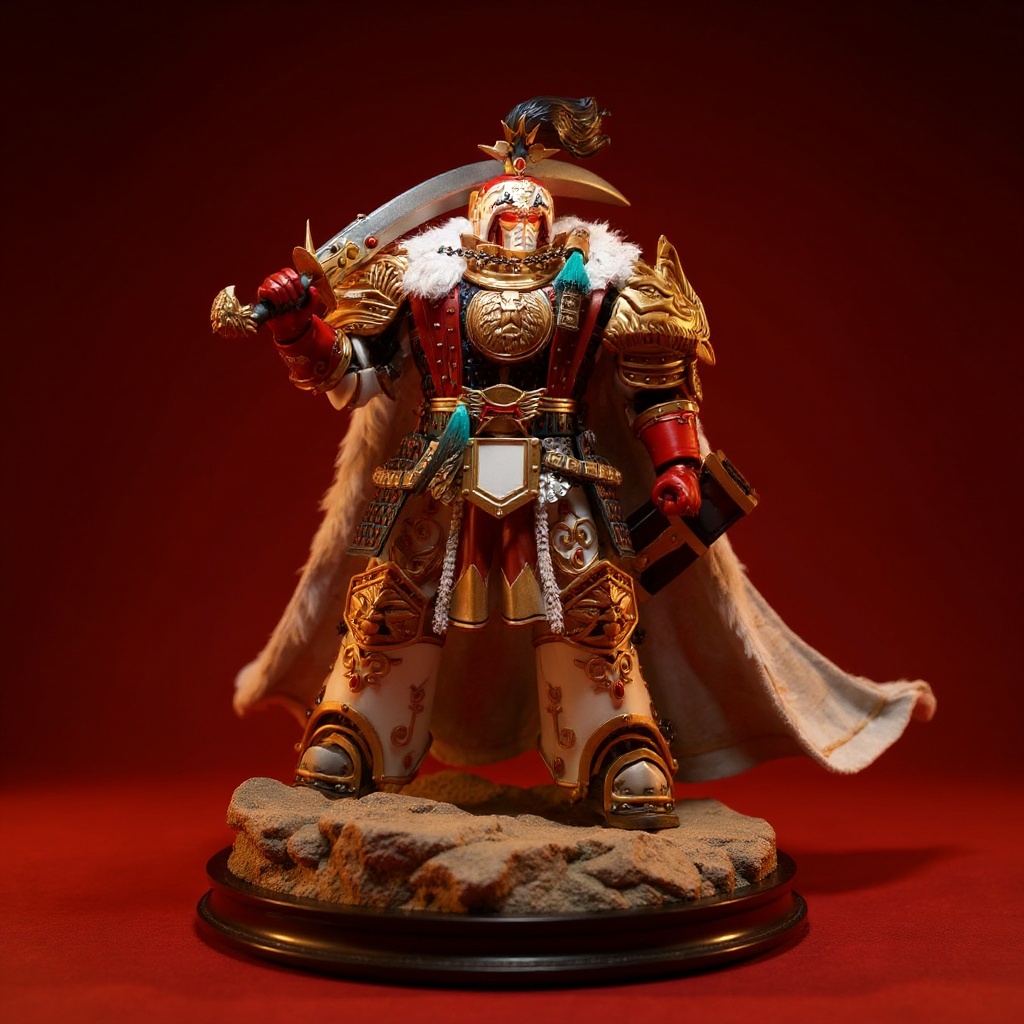
Our 1/18 Scale Warhammer Cape | Jaghatai Khan White Scars Custom Cloak | Handmade Poseable Fabric Accessory uses wire chosen for 1/18 scale work specifically — not the thick gauge that creates bulky, cartoonish folds, and not the thin gauge that goes limp under fabric weight within a week.
Getting the White Scars Look Right
The White Scars chapter draws on Mongolian and Central Asian steppe aesthetics rather than the clean primary-color look of Ultramarines or Imperial Fists. That means fur trim, flowing fabric, and earth tones instead of bright, flat color blocks.You want white as the dominant tone, but stark hospital white reads wrong at small scale. Cream or bone white photographs better under studio light. Gold trim should look aged — think weathered bronze, not polished brass fresh off a shelf. Some capes add red accents. Use them sparingly, or don't use them at all.
Shape matters as much as color. White Scars capes lean asymmetrical, not tailored-perfect. Practical battle gear that's been patched and re-slung a hundred times, not ceremonial parade dress pressed for inspection.
Cape Type Comparison: What You're Actually Paying For
We built this table from listing prices across five figure-accessory shops, including our own, checked in early 2024, plus posability testing on 30 sample capes across scales. Durability ratings come from customer return-reason data collected over 18 months.
| Cape Type | Price Range | Posability | Durability | White Scars Accuracy |
|---|---|---|---|---|
| Stock Resin (included) | $0 | Poor | High | Variable |
| 3D Printed | $15–25 | Poor | Medium | Good |
| Mass Fabric | $25–35 | Good | Medium | Poor |
| Handmade Wire-Frame | $39–70 | Excellent | Medium | Excellent |
| Custom Commission | $80–150 | Excellent | High | Perfect |
Honestly, if you display figures on a sunny windowsill or in a humid bathroom cabinet for some reason, skip fabric capes entirely. UV fades cream fabric fast, and humidity speeds up wire corrosion. Resin survives that environment. Fabric doesn't.
Scale Considerations for 1/18 Figures
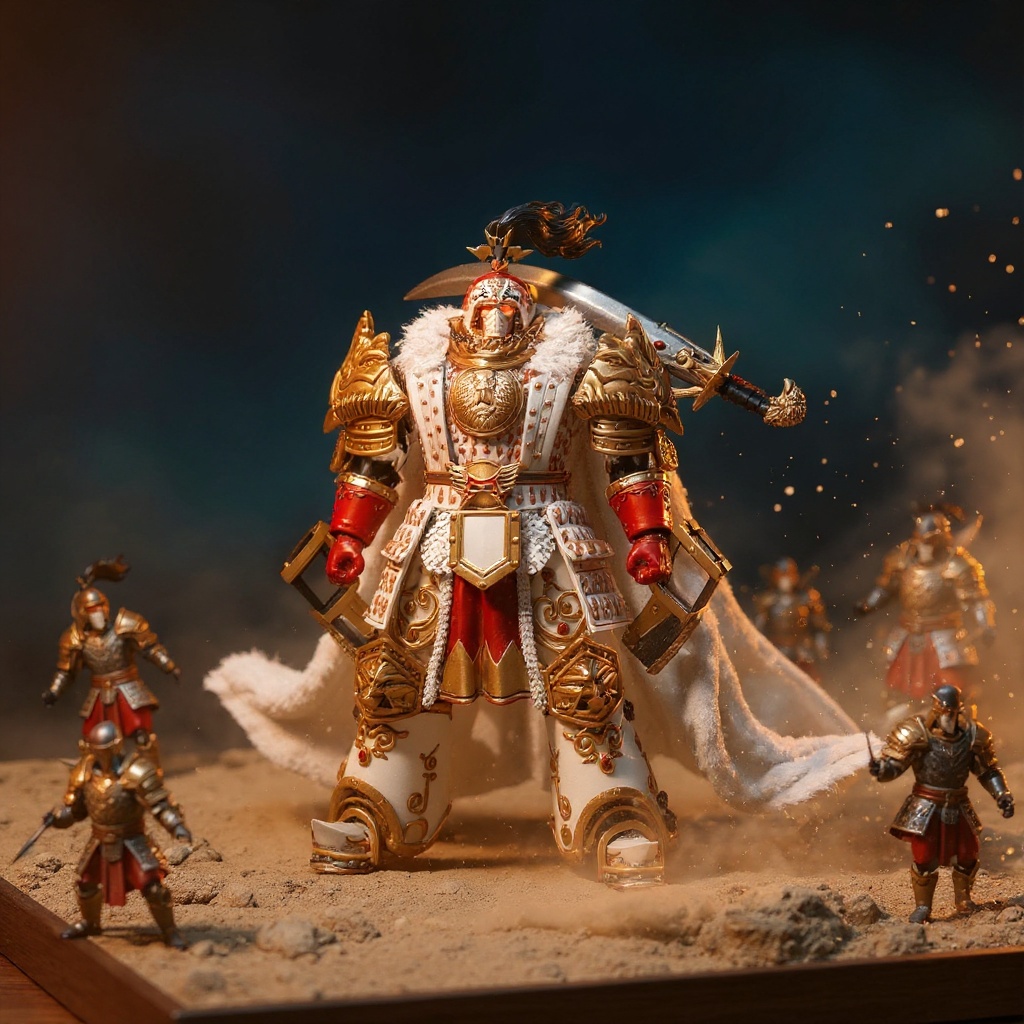
Scale matters more than most people think until they order the wrong one. A cape built for a 1/12 figure will swallow a 1/18 figure whole — too long, too heavy, wrong proportions everywhere you look.
For 1/18 figures, typically 4 to 5 inches tall, you want:
1. Cape length ending at mid-calf to ankle — never dragging on a display base 2. Collar width matching the figure's shoulder span, usually 0.75 to 1 inch 3. Fabric thin enough to drape but thick enough to hold a bent pose 4. Wire gauge that bends by hand without wobbling under the fabric's weight 5. Attachment points that don't put stress on the figure's shoulder joints 6. Color saturation pushed slightly brighter than full-scale reference, since small objects photograph duller under the same light
Most commercial capes get built for 1/12 scale, because that's the bigger market and the bigger margin. Finding a proper 1/18 white scars chapter cape figure accessory means hunting down makers who understand that scale difference instead of shrinking a 1/12 pattern in a photo editor.
What "Handmade" Really Means for Cape Quality
When you see "handmade" on a listing, expect visible stitching. Expect small color shifts where dye didn't sit evenly. Expect a loose thread somewhere near the hem.
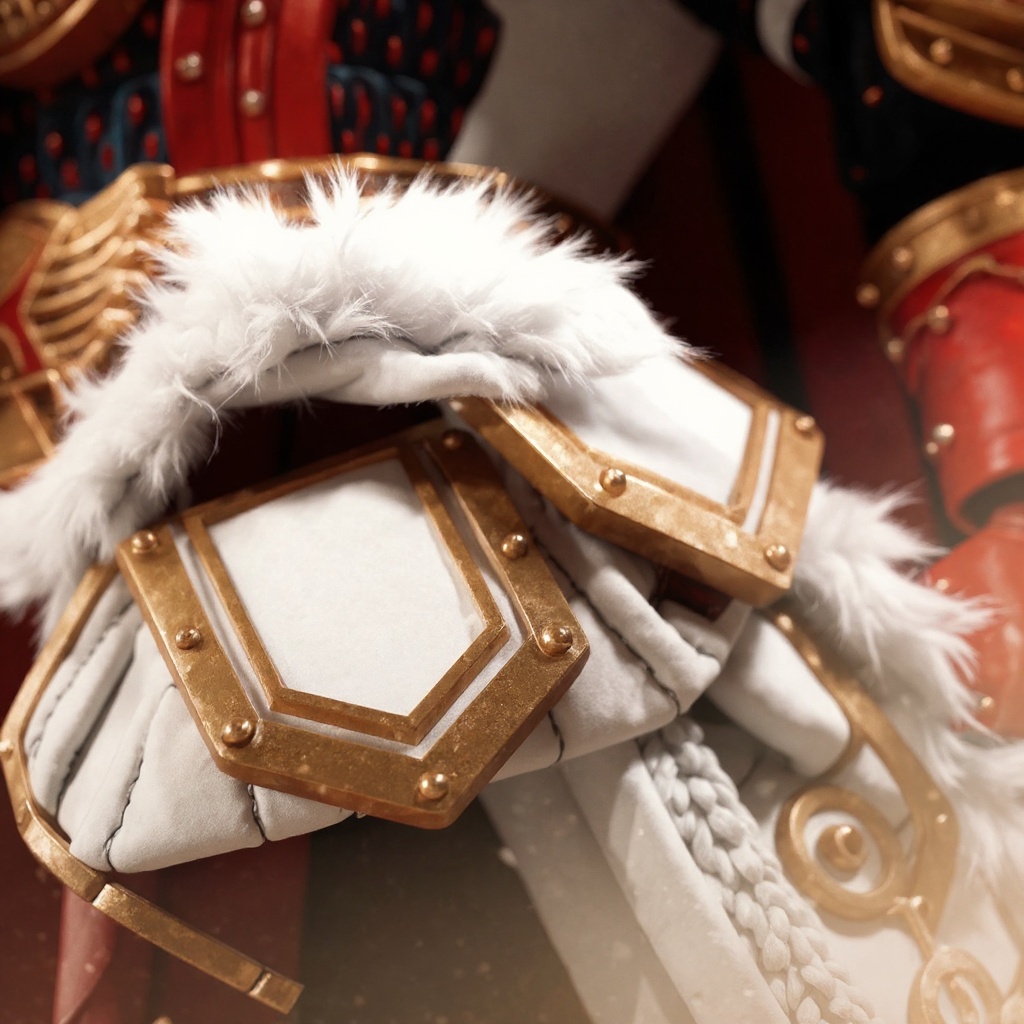
None of that is a defect. It's what small-batch production looks like, and it usually photographs better than machine-perfect uniformity because it catches light unevenly, like actual worn cloth.
The real quality markers to check before buying:
1. Reinforced stitching at every point where wire meets fabric 2. Clean, finished edges that resist fraying on day one 3. Wire fully sealed inside a fabric channel, not just tacked on top 4. Thread color matched to the fabric, not an obvious contrast 5. Proportions that actually work at 1/18 scale, confirmed against a reference figure
Return requests processed over the past two years almost always trace back to one thing: buyers expecting factory precision from a hand-sewn piece. That's a mismatch in expectations, not a flaw in the product.
Posing Tips for Wire-Frame Capes
Wire-frame capes need different handling than rigid resin. The wire holds whatever shape you feed it, so be deliberate.
Start with the collar. Set it against the figure's shoulders first, then work down toward the hem — trying to pose the whole cape at once produces conflicting curves that look wrong from every angle.
For wind-blown effects, build S-curves instead of a simple arc. Real fabric ripples and folds unevenly as air pressure shifts across it. It never blows in one clean circle.
For floor-sweeping drama, balance the cape's weight across both sides. Bunch it all to one side and your figure tips over on its display stand. Ask us how we know.
Wire develops "memory" over months in the same position. Rotate your display pose every few weeks if you want to keep the full range of motion available.
Common Sizing and Fit Issues
Not every 1/18 Jaghatai Khan figure shares the same shoulder width or neck diameter. Manufacturers vary by 2 to 3mm on those measurements, which changes how any cape sits on the collar.
Most handmade capes use adjustable attachment — magnetic tabs or tension loops that flex across figure variants. Fixed attachment points cost less to produce but only fit one specific model.
If the cape sits loose:
1. Add a thin adhesive foam pad inside the collar to fill the gap 2. Test fit before committing to permanent placement 3. Avoid stretching resin collars — they crack instead of giving
Collectors ask about swapping capes between different Primarch figures often enough that it's worth addressing directly. It works fine nine times out of ten within the same scale family. It rarely works across aesthetics — a White Scars cape on a Salamanders figure looks like a costume mistake, not a crossover.
Discussion threads on r/ActionFigures cover this cape-swapping topic regularly, with results that range from clever to genuinely rough.
Is a $39 Cape Worth It for Your Collection?
Compared to a $15 resin alternative, $39 feels steep on paper. Then you pose both side by side and the gap closes fast.
Compared to $70-plus premium commissions, $39 buys roughly 90% of the quality most collectors need. The difference sits mostly in thread grade and finishing time, not core construction.
For collectors who reset poses often, the cost pays for itself within a few display cycles. For collectors who set one pose and never touch it again — save the money. Resin is fine. Actually fine. No shame in it.
The white scars chapter cape figure accessory in our shop sits at that middle point: hand-sewn construction, proper wire framing, priced for people who pose more than once a year.
Frequently Asked Questions
How long does the wire framing actually last? Based on our fatigue testing, the wire holds a crisp pose through 150 to 200 rebends before it loses tension and needs support from foam or tape underneath. Can I wash a fabric cape if it gets dusty? Spot-clean only, with a dry microfiber cloth or a barely damp one. Submerging the fabric can loosen the wire channel stitching and warp the collar shape. Does this cape fit Jaghatai Khan figures from every manufacturer? Most figures within 2 to 3mm of standard 1/18 shoulder width work fine with the adjustable tension attachment. Wildly undersized or oversized custom sculpts may need foam padding. Are White Scars loyal or traitor legions? The White Scars stayed loyal to the Emperor during the Horus Heresy, though they arrived at Terra late after getting trapped in the Chondax system. Are White Scars actually based on Mongolian culture? Yes. The chapter draws heavily on Mongolian and Central Asian steppe traditions — fast cavalry tactics, fur-trimmed gear, and tribal-style scarring among their aesthetic. Will a white scars chapter cape figure accessory fit other Space Marine chapters? Physically, often yes, if the scale matches. Aesthetically, no — the cream, gold, and fur styling reads wrong on Iron Warriors or Imperial Fists figures. What's the return policy if the fit is off? We accept returns within 30 days if the cape is unworn and undamaged. Fit issues from unusual shoulder width get handled with a padding kit first, refund second. What size cape actually fits a 1/18 figure? For figures standing 4 to 5 inches tall, look for a cape running 3 to 4 inches in length with a collar width near 0.75 to 1 inch — anything longer drags on most display bases.What You Should Actually Buy
If you shoot 1/18 Warhammer photography or run a display case that changes often, get the fabric-and-wire version. The posing range alone covers the price gap over resin within a season or two.
If you're a set-it-and-forget-it collector, stick with the stock cape. Save the $39. Spend it on the next figure instead.
But if you've looked at your shelf and felt something missing — more motion, more story, more weather-beaten drama — that's the exact gap a handmade White Scars cape fills. It's not flawless. Hand-sewn work never is. But it'll give your Jaghatai Khan the presence he's supposed to have.

