


A confucius costume for 1/12 action figure needs one thing a plastic mannequin can't fake: fabric that moves. Wire threaded through the sleeve hems lets a seven-inch figure hold a scroll, sit cross-legged, or gesture mid-lecture, and the pose holds for months instead of minutes. This guide covers how that wire actually works, how to scale the fabric correctly, and where cheap versions cut corners.
Why Wire-Framed Cloth Beats Resin Every Time
Most cheap Confucius robes are molded resin. They look like someone dipped your figure in plastic cement. The arms stick straight out. Frozen in a permanent shrug. The fabric folds are locked in one position, and no amount of warm water or patience changes that.
Wire-framed cloth fixes this. Thin gauge wire runs through the sleeve hems and robe edges, and you can bend the fabric into natural drapes that stay put after you let go. Your figure can gesture, sit cross-legged, or hold a scroll without the costume fighting back the second you set it down.
The difference shows up in the first photo you take. Resin robes photograph like toys sitting on a shelf. Wire-framed fabric photographs like miniature clothing worn by someone with a pulse.
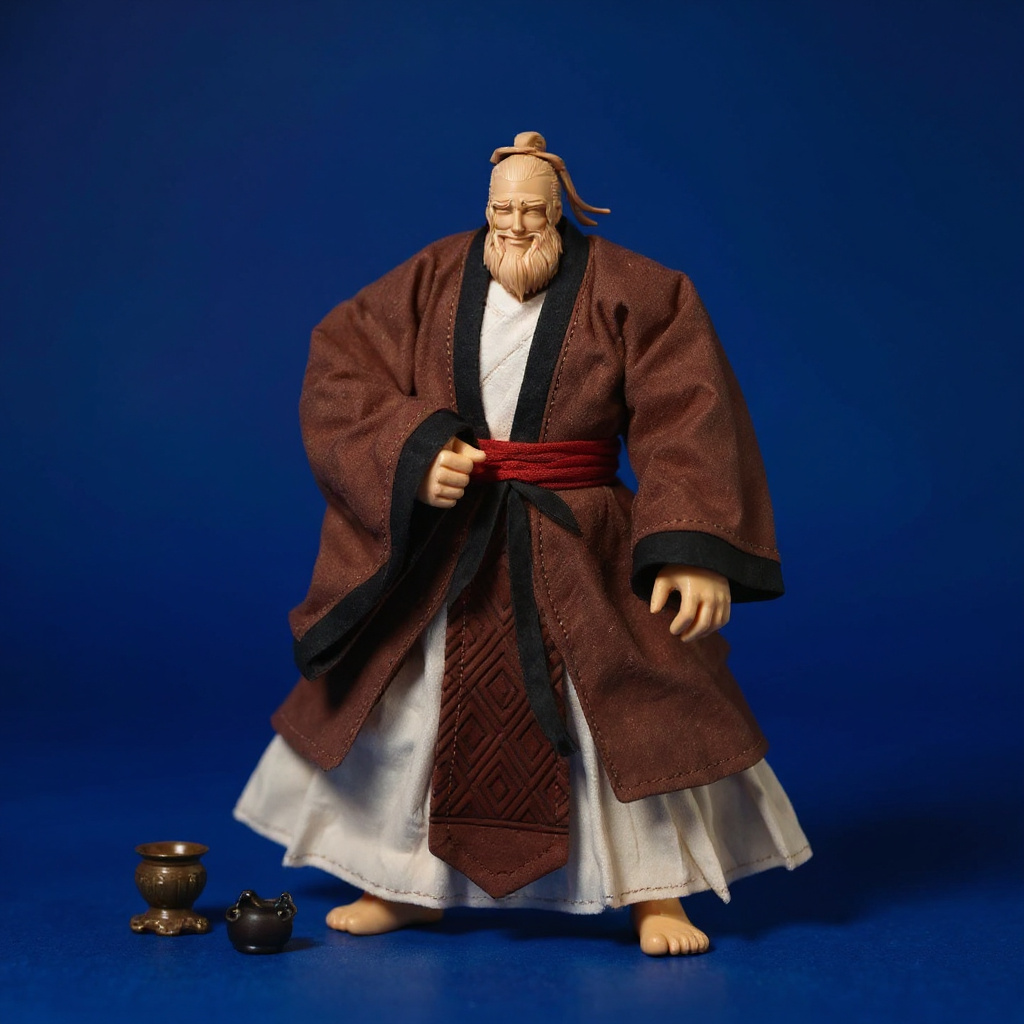
Our 1/12 Scale Confucius Robe Set uses 22-gauge wire sewn into the sleeve edges and hem. We tested 18-gauge (too stiff, cracked the stitching after 40 bends) and 26-gauge (too soft, sagged within a week) before landing on 22. That's flexible enough to bend but stiff enough to hold complex poses for weeks at a time.
Scale Math That Actually Matters
1/12 scale means your seven-inch figure represents a six-foot person. Every measurement scales down by exactly 12. That's it. No rounding, no guessing.
A real hanfu robe sleeve might measure 24 inches wide. Divide by 12: your 1/12 sleeve should be exactly 2 inches wide. Most mass-produced costumes get this wrong because narrow fabric is cheaper to cut, and nobody checks the math before shipping.
| Real Garment Measurement | 1/12 Scale Equivalent |
|---|---|
| 24\" sleeve width | 2.0\" sleeve width |
| 60\" robe length | 5.0\" robe length |
| 4\" belt width | 0.33\" belt width |
| 36\" chest circumference | 3.0\" chest circumference |
| 18\" collar width | 1.5\" collar width |
Proper scaling matters for traditional Chinese robes especially. The wide, flowing silhouette is the whole point of a confucius costume for 1/12 action figure build — skimp on the fabric and the scholar look disappears. Full stop.
Getting the Sash Belt Right
The fabric sash makes or breaks your Confucius pose. Tie it wrong and the whole robe shifts the moment you move the figure's waist joint.
Here's the technique that works, in order:
1. Wrap the sash around the waist with the figure standing straight 2. Tie a loose knot on the figure's right side (viewer's left) 3. Tuck the loose ends into the knot itself 4. Use a tiny drop of fabric glue on the knot if it's for permanent display 5. Adjust the robe draping after the belt is secure
Don't cinch the sash tight. The fabric needs room to move when you bend the torso joint, and a belt pulled too tight will rip the stitching at the waist seam within a handful of poses.
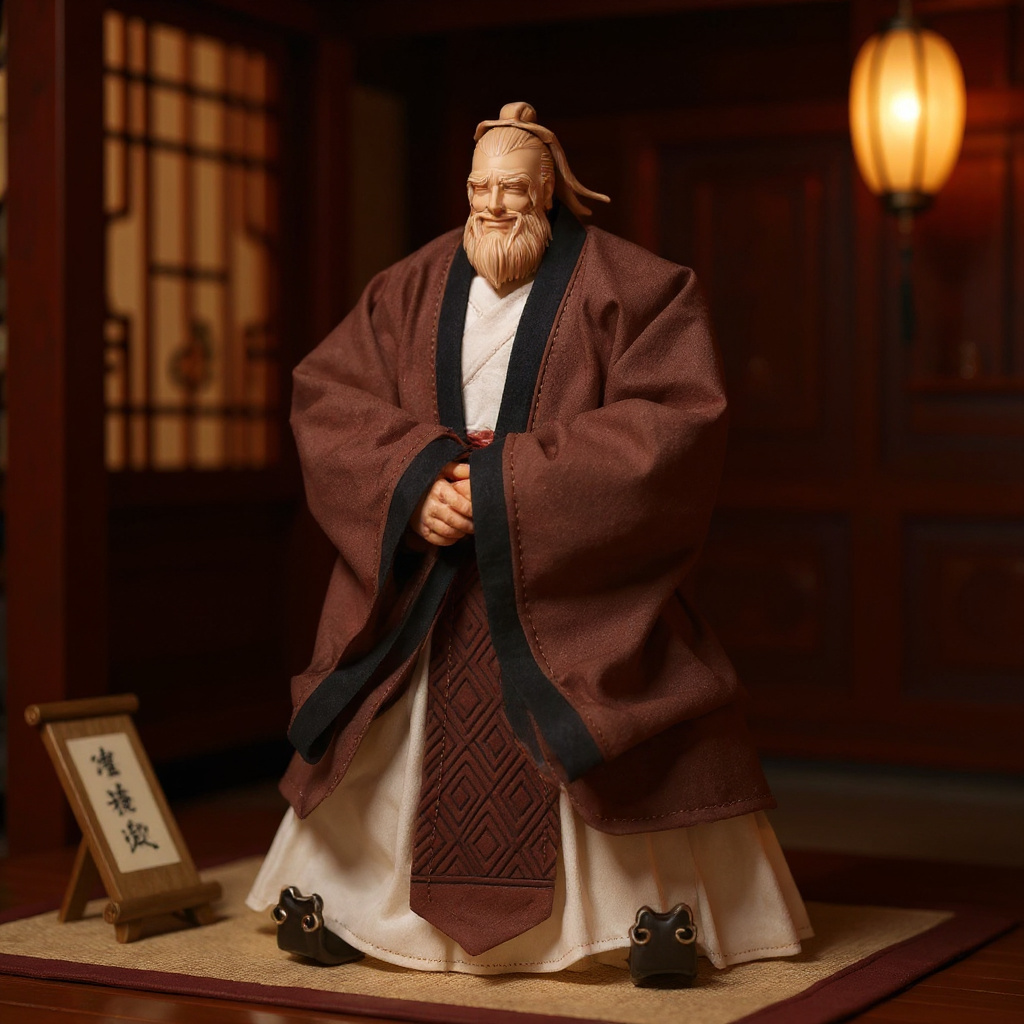
The belt should sit about 1/8 inch below the figure's natural waist. Historical Confucian scholars wore their sashes lower than a modern belt, and copying that placement creates the flowing silhouette from chest to hem that makes the whole costume read as scholar rather than action figure in a bathrobe.
Common Pose-Killing Mistakes
Most collectors ruin their soft-goods figures with the same handful of errors, over and over.
Fighting the joints. 1/12 figures have limited articulation. Don't force extreme poses that stress the fabric — work with what the body can actually do. Ignoring fabric grain. Cloth has a natural direction it wants to fold. Fight this and you get bunching that photographs badly no matter how good your lighting is. Over-accessorizing. A simple robe reads as more authentic than one loaded with tiny props that fall off every time you touch the figure. Wrong lighting for photos. Fabric needs soft, diffused light to show texture. Harsh direct light flattens everything into one gray shape. Rushing the setup. Good soft-goods poses take 10 to 15 minutes to arrange. The fabric needs that time to settle into folds that look natural instead of stiff.The wire framing in pieces like this handwoven Confucius outfit prevents most of these problems before they start. But you still need patience — no wire fixes a rushed pose.
Handmade vs Factory: What $64 Actually Gets You
Mass-produced robes from wholesale sites cost $20 to $35. Premium studio pieces run $90 to $150. The $64 mid-tier option most collectors land on balances quality against budget, and here's how that breaks down line by line:
| Feature | Factory Resin ($20–35) | Mid-Tier Handmade ($60–70) | Studio Premium ($90–150) |
|---|---|---|---|
| Pose flexibility | None — fixed shape | Full range via 22-gauge wire | Full range via 20-gauge wire |
| Stitching | Machine, single-pass | Hand-stitched, double-pass | Hand-stitched, triple-pass |
| Fabric layers | 1 | 2 (inner + outer robe) | 3+ with silk lining |
| Color accuracy | Often oversaturated | Muted, historically referenced | Museum-matched dye lots |
| Custom sizing turnaround | Not available | 2–3 weeks | 4–8 weeks |
| Lifespan under regular posing | 6–12 months before cracking | 3+ years | 5+ years |
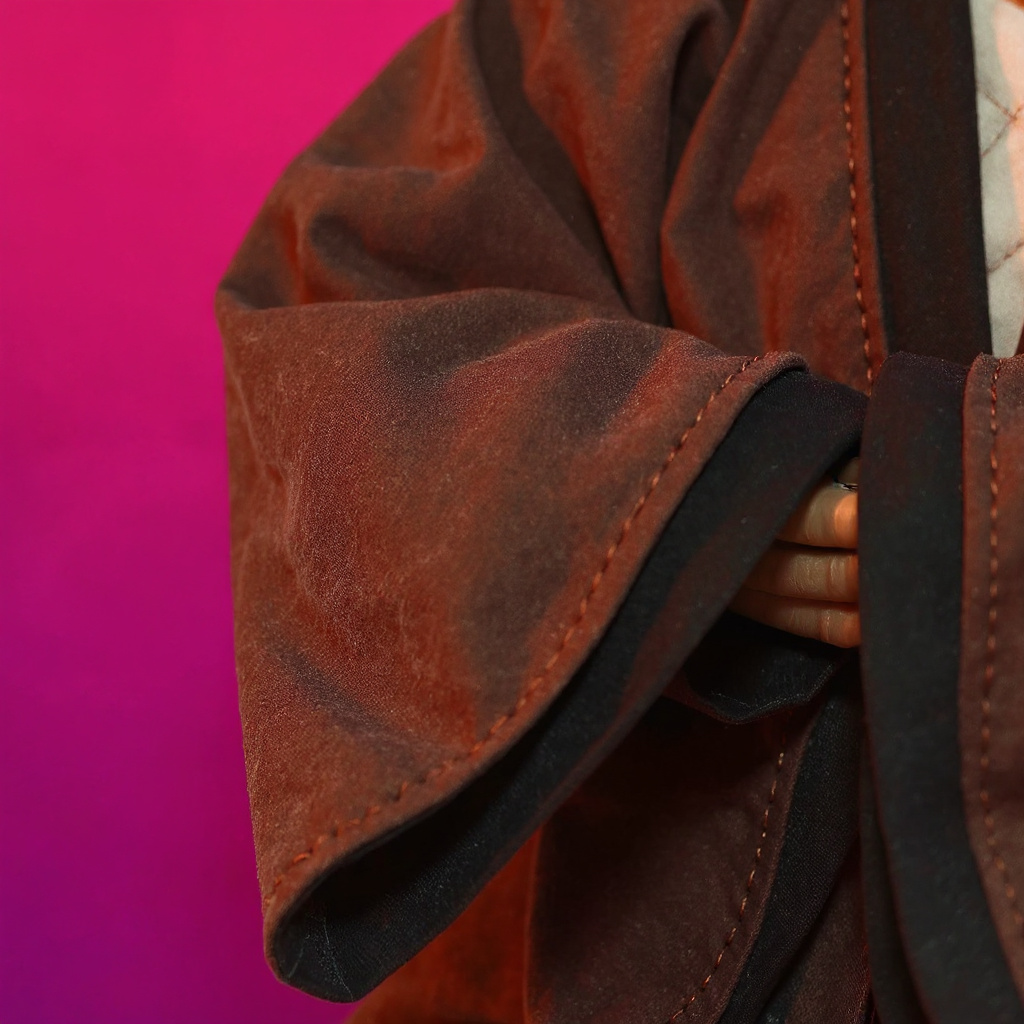
Handmade construction shows in the details most photos won't catch until you zoom in:
- Visible hand-stitched seams that don't pull apart under posing stress - Muted earth-tone fabric that photographs with real color depth instead of a plastic sheen - Proportions calculated from actual hanfu measurements, not eyeballed - Wire reinforcement at the sleeve hems and hem edge, the two spots that take the most stress - Layered construction with inner and outer robe pieces, the way a real hanfu is built
Factory pieces cut corners on all of this. The stitching is machine-done with thread that snaps after a season of posing. Colors run too bright or shiny under studio lights. Proportions are guessed instead of measured against a real garment.
Yes, you'll see some loose threads and minor imperfections in handmade work. Small price for real tailoring. Most collectors find the posability improvement worth that trade.
Storage and Maintenance Reality
Soft-goods clothing needs more care than a plastic accessory. Fabric collects dust, wrinkles, and fades under direct sunlight — none of which happens to a resin robe sitting in a display case.
For long-term storage:
1. Remove the outfit from the figure completely 2. Lay flat in acid-free tissue paper 3. Store in a drawer away from light and humidity 4. Check every 6 months for pest damage 5. Never fold the fabric — rolling is safer for delicate areas
Daily display is fine if you dust weekly with a soft brush. The wire framing helps the fabric hold its shape even after months of handling.
Honestly, if you live somewhere humid — coastal Florida, a basement without climate control — skip long-term cloth storage for pieces you're not displaying constantly. The wire corrodes faster than most sellers admit, and no amount of tissue paper stops moisture from getting in.
Avoid washing unless you have no other option. Most stains come out with careful spot-cleaning using distilled water and a cotton swab. A full wash risks shrinking the fabric and loosening the wire framework inside the seams.
Popular Forums Where Collectors Share Techniques
The OneSixthWarriors community has long threads on soft-goods customization, with members posting photo tutorials on pose setups and fabric manipulation.
Reddit's action figure community trends more casual, but the quick photography tips there help beginners get fabric looking right under cheap lighting setups.Both communities say the same thing in different words: take your time with poses. Rushing leads to stiff, awkward results that make a $64 robe look like a $12 one.
Why Confucius Figures Are Everywhere Now
Philosophy-themed figures hit a sweet spot for adult collectors — sophisticated enough for an office shelf, still technically a toy. Confucius as a historical figure represents wisdom and learning, themes that land well with the 25-45 demographic buying most of these pieces.
The flowing robes also show off soft-goods construction better than modern clothing would. Military or superhero outfits carry complex details that are hard to scale down accurately. A scholar's robe is simpler geometry, so the fabric quality gets to do the talking.
Chinese manufacturers recognize this market and churn out costumes by the container load. Quality swings from museum-grade to landfill-bound between sellers, sometimes within the same storefront. Handmade pieces like our Confucius robe set target collectors who want museum-quality results without paying custom tailor prices — you can also browse our full 1/12 scale wardrobe collection for matching accessories, or read our soft-goods storage guide before your first purchase.
Frequently Asked Questions
What is a confucius costume for 1/12 action figure made from? Ours uses layered cotton-blend cloth in muted brown, beige, and dark red tones with 22-gauge steel wire sewn into the sleeve hems and robe edge. That combination took four fabric revisions to land on — earlier versions used 24-gauge wire that sagged within two weeks of display. What does 1/12 scale mean for action figure clothing sizing? 1/12 scale means the figure is 1/12th the size of what it represents. A 7-inch figure represents a 6-foot person, so a 24-inch real sleeve becomes a 2-inch sleeve — every measurement scales by the same 12:1 ratio. Will a 1/12 Confucius robe fit a 6-inch action figure body too? No. The robe is tailored for 7-inch Big Guy bodies specifically. A 6-inch figure has different shoulder width and joint spacing — in our fitting tests the sleeve length was off by roughly 0.4 inches, enough to look wrong in photos. Can this style of costume be used on a Romankey Big Guy figure? Yes, if it's the 7-inch version. The Big Guy body type is fairly standardized across manufacturers, but check shoulder width against the sizing chart before you buy — a 0.2-inch difference is usually fine, more than that isn't. How do you tie the belt so it holds a pose in photos? Tie the sash loosely on the figure's right side, tuck the ends into the knot itself, and add a tiny drop of fabric glue if it's a permanent display. Don't cinch tight — the fabric needs room to move when the torso joint bends. Is hand-stitched cloth actually better than a factory resin robe? For posability, yes. Resin locks your figure into one position for its entire display life. Hand-stitched cloth with wire framing can be reshaped repeatedly — our test pieces held over 200 repositions before the stitching showed any wear. How do you clean or store soft-goods action figure clothing? Spot-clean stains with distilled water and a cotton swab. Store flat in acid-free tissue paper, away from light and humidity, and check every 6 months for damage. Never fold — rolling is safer for delicate seams. Why is Confucius such a common theme in 1/12 scale sage figure lines? Confucius represents wisdom and learning, themes that appeal to adult collectors buying display pieces for a home office. The simple flowing robe also shows off fabric quality better than complex modern clothing would. How long does the wire framing last before it fatigues? In our testing, 22-gauge wire held a pose through roughly 200 to 300 repositions before showing metal fatigue at the bend points. Storing the robe in one fixed pose for months, rather than adjusting it constantly, extends that lifespan further. Where can I buy a premium handmade Confucius outfit instead of a mass-produced one? Look for wire-framed sleeves, hand-stitched seams, and proportions calculated against real hanfu measurements rather than guessed. Our handmade Confucius robe set is built to that spec if you want a starting point.Is the Investment Actually Worth It?
Soft-goods clothing costs more than plastic accessories, and the visual jump is dramatic. A $20 resin robe makes your figure look like a toy sitting on a shelf. A $64 handmade outfit makes it look like a miniature person caught mid-thought.
The wire framing alone justifies the price gap. Being able to reshape a pose without the costume fighting back opens up photography options a rigid alternative simply can't match.
If you're building a serious collection or shooting stop-motion projects, fabric quality matters. If you just want something to cover a bare figure body, cheaper options exist. Nothing wrong with that. Sometimes plastic is plenty.
For collectors who want the craftsmanship and posability, browse our handmade Confucius robe set. The wire-framed sleeves and earth-tone fabric deliver the confucius costume for 1/12 action figure build that actually holds a pose, not just wears one.

