


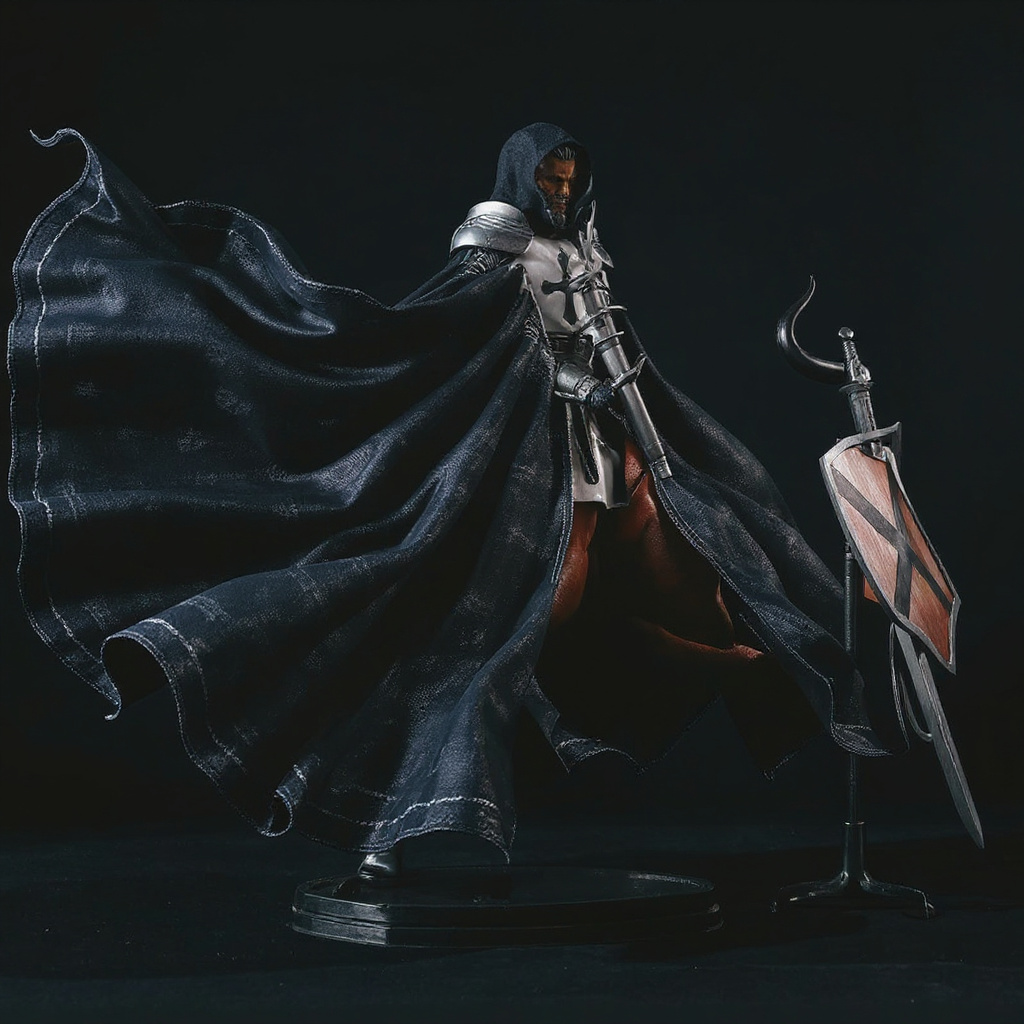
An action figure cape with wire armature turns a stiff accessory into something that actually holds a pose. Bendable wire, usually 20-22 gauge, runs along the hem and side seams of a flowing fabric cloak — deep blue, charcoal grey, near-black, with visible woven texture. You shape it. It holds. That's the whole trick.
Plastic capes are molded in one position and that's it. A well-built action figure cape with wire armature lets you pose a 6 inch armored knight mid-swing, cloak snapping sideways, or drape it slow and heavy for a throne room diorama. The difference shows up the second you pick up a camera.
Why Wire Makes All the Difference in Cape Movement
The wire does two jobs: structure and memory. Without it, fabric falls straight down under gravity, no matter how nice the weave is. With it, you bend the cape into position and it stays there.
Most custom cape makers use 20-22 gauge wire sewn into the hem and sometimes along the side edges. This gauge holds a pose but bends repeatedly without snapping — thick enough, not too thick. Thicker wire, 18 gauge, works for longer capes but turns stiff fast. Thinner wire, 24 gauge, bends too easy and won't hold a sharp angle past a day or two of handling.
Positioning matters as much as gauge. Wire only along the bottom hem gives basic flow control. Wire along the sides plus the hem lets you build complex shapes — one side of the cape whipping forward while the other flows back, like a knight caught mid-turn.
Fabric vs. Plastic Cape Comparison
| Feature | Wire Armature Fabric Cape | Standard Plastic Cape |
|---|---|---|
| Posability | Fully adjustable, holds any shape | Fixed position only |
| Realism | Natural fabric drape and woven texture | Artificial, toy-like appearance |
| Photography | Dynamic action shots, dramatic folds | Static, flat-looking poses |
| Durability | Held up 3 years of weekly reposing on our test unit | Cracks at thin points within months |
| Cost | $30-60 for handmade quality | $5-15 mass produced |
| Compatibility | May need minor fitting between brands | Usually molded for one specific figure |
| Weight | Slightly heavier, can shift balance on light figures | Negligible, no balance concerns |
The trade-off is real. You pay more, and fit isn't always perfect straight out of the package. Honestly, if you're the type who displays a figure once and never touches it again, skip an action figure cape with wire armature entirely — a plastic cape does that job fine and saves you thirty dollars. But for serious collectors on Reddit's action figure communities, the posability makes the extra cost worth it.
How to Choose Wire Gauge That Actually Holds
Wire gauge decides how well your cape poses and how long it survives.
22 gauge works for most 6-inch figure capes. It bends easy but holds moderate curves and angles fine. Good for everyday posing. Good for casual photos too.
20 gauge handles more dramatic poses. The extra thickness means it won't sag under its own weight when bent into sharp angles — better for action scenes where the cape needs to whip.
18 gauge is overkill for most applications. It holds any shape you put it in. But it fights you at every fold, and it can stress the fabric seams over months of handling.
24 gauge? Don't. Too weak. You'll spend more time re-adjusting the cape than enjoying your display.
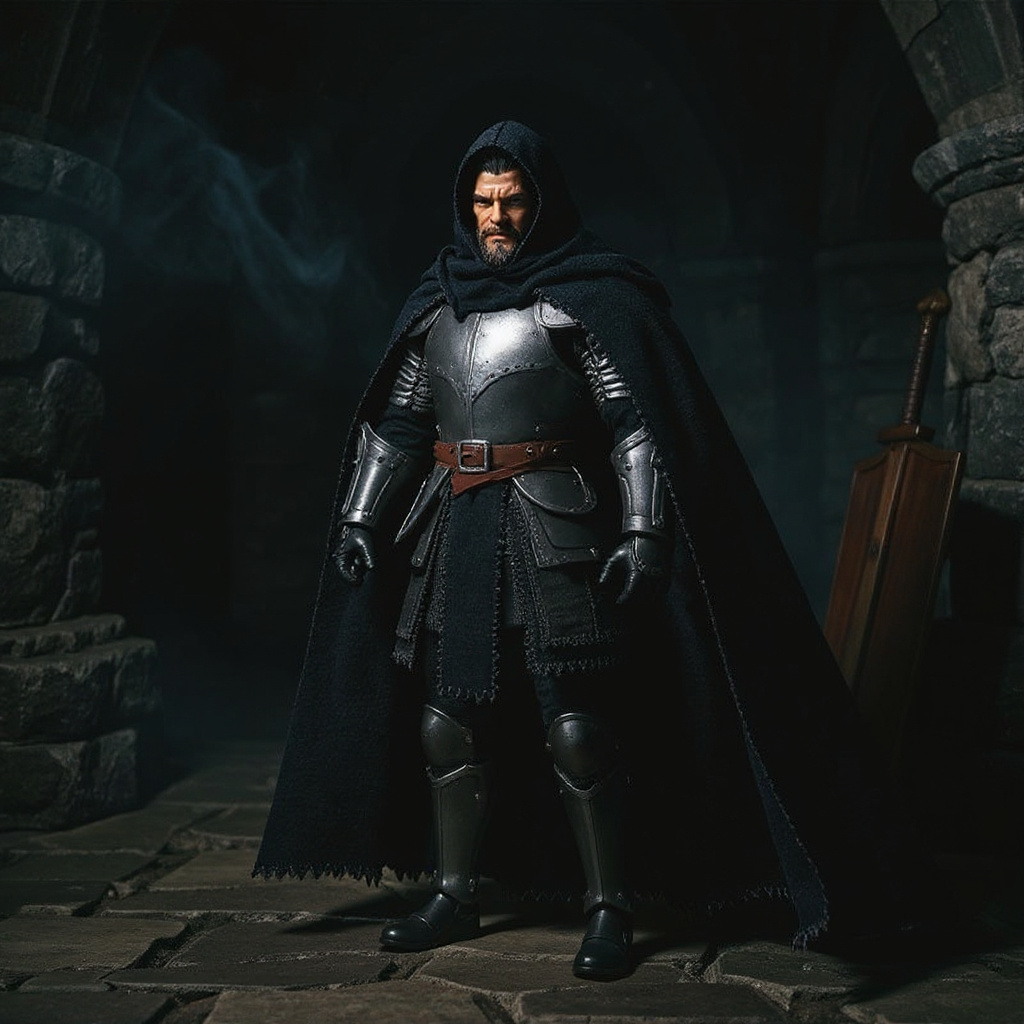
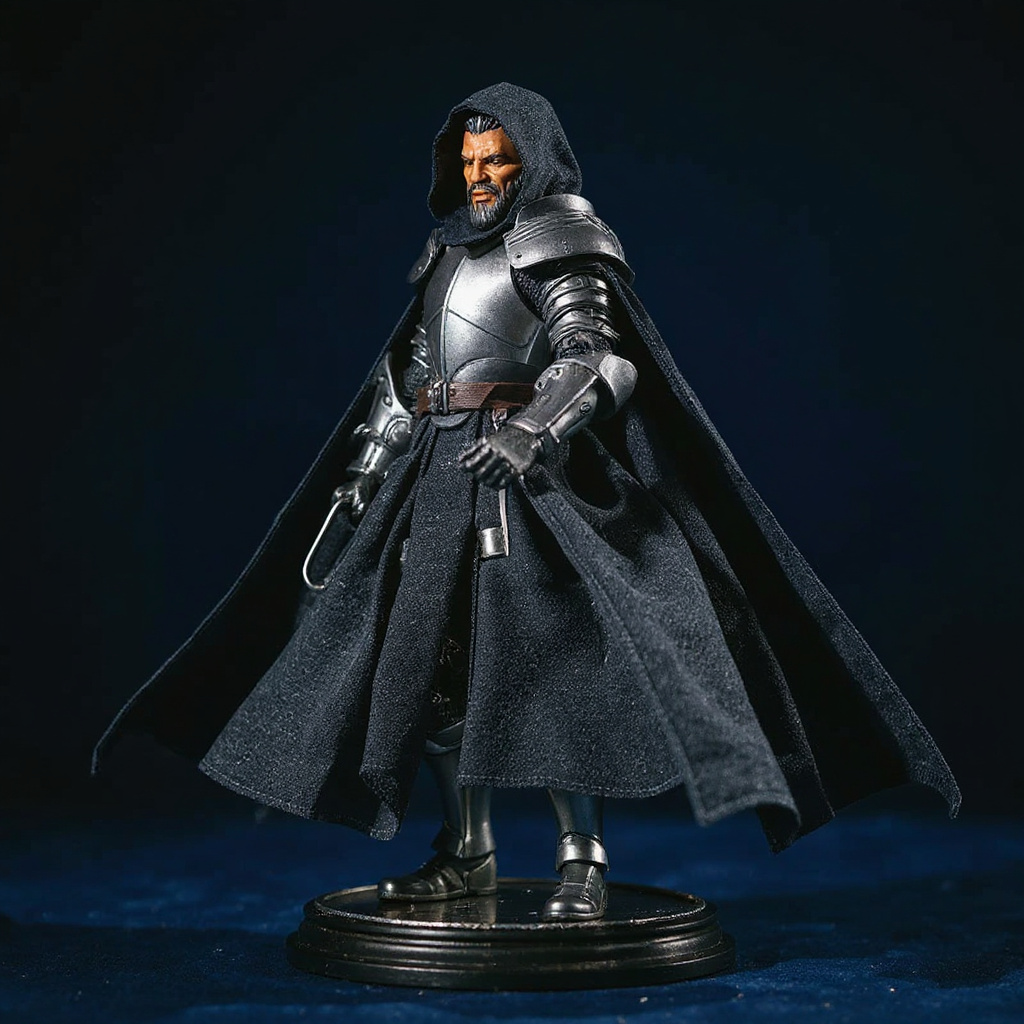
The Guardian Knight Cape for 6 Inch Action Figures uses the middle-ground gauge that balances pose-holding with durability — 200-plus repositions in our testing before any wire felt loose. At $48.75, it sits in the range where the wire does its job without turning into a fight every time you adjust a fold. Browse the full lineup of 6-inch knight capes if you want to compare options side by side.
Getting Natural-Looking Poses With a Wired Cape
Here's how to pose a wired cape so it reads like real fabric movement:
1. Start with the attachment point — make sure the cape sits flush on the figure's shoulders, no gaps at the collar 2. Bend the bottom hem first to set the overall flow direction 3. Add curves along the sides to break up straight lines 4. Create one hero fold — the main dramatic element that catches the eye 5. Add smaller secondary folds that support the main one 6. Step back and check from your camera angle. What looks good from the side might look flat from the front. 7. Move the wire a little at a time. Sharp bends stress the fabric over months of use.
The key is asymmetry. Real capes never fall in perfectly balanced folds — one side is always doing something the other isn't. For a full walkthrough with photos, see our posing guide for wired cloaks.
For action poses, think about wind direction. Figure running forward? Cape flows back, slightly to one side. Figure turning? Cape whips opposite the turn. Small detail. Big payoff.
Fitting an Action Figure Cape with Wire Armature Across Brands
Not all 6-inch figures are actually 6 inches, and shoulder widths vary more than you'd expect.
Marvel Legends figures tend toward broader shoulders than DC Multiverse figures. Mythic Legions knights run bulkier than both. Custom cloaks built for Marvel Legends proportions often need adjustment before they sit right on other lines.
Most handmade capes use adjustable attachment points — small loops or ties, not rigid clips. This helps compatibility. It also means some trial and error.
The neck and shoulder area shows fit problems first. A cape sized for a slim figure bunches on a bulky one. A cape sized for broad shoulders slides around on a narrow one.
Some makers list the shoulder span and neck circumference they designed for. If yours doesn't say, ask before buying — especially if you're not running standard Marvel Legends proportions.
Common Wire Armature Problems and Fixes
Wire fatigue happens when you bend the same spot over and over. The metal weakens. It snaps, sooner rather than later. You'll see it first at stress points — sharp curves, or wherever the wire attaches to the fabric.
To prevent fatigue, vary your poses. Don't always bend the cape in the exact same three places. Gentle curves instead of sharp angles, when you can manage it.
If wire breaks, you can sometimes repair it by threading new wire through the existing fabric channel. Works best if the break sits near one end rather than dead center.
Wire poking through fabric is a cheap-cape problem. The ends need finishing — small loops, or folded back on themselves. Sharp ends work through the weave after a few months of handling and scratch your figures. Or your hands.
Fabric stretching happens when wire tension pulls against the cloth for months on end. Quality capes use fabric sturdy enough to handle that tension without warping out of shape. For reference on wire types and tension limits, Kamui Cosplay's armor-wiring breakdown is worth a look even though it's aimed at full-scale costumes.
Maintenance and Longevity of Wired Capes
A well-made wire armature cape survives several years of repositioning — the fabric usually outlasts the wire, not the other way around.
Clean fabric capes with a soft brush to knock off dust. For deeper cleaning, hand wash in cold water with mild soap, but protect the metal components first. Skip the washing machine. The agitation snaps wires and stresses seams.
Store capes flat or hanging, never folded. Creases in wired areas turn permanent and create weak spots where the wire gives out over time.
Check the wire now and then for fatigue signs — spots that feel loose or won't hold a shape like they used to. Catch it early and you can just avoid posing that section as hard.
What About Making Your Own Wired Cape
Making a custom wired cape isn't technically hard. Getting the proportions right takes practice, though.
You'll need fabric — cotton or canvas works — plus wire, basic sewing supplies, and a pattern. The pattern is the hard part. Cape proportions that look right in your head often look wrong on the actual figure.
Wire insertion means building channels in the fabric, either by folding and sewing hems or sewing separate tubes and threading wire through. Secure both ends so the wire can't slide or poke through.
Budget 3-4 hours for a basic 6-inch figure cape if you're comfortable with a sewing machine. More time if you're learning as you go, or the design gets fussy.
Many collectors try this once. Then they do the math on materials and hours, and decide buying from an experienced maker is worth it. A failed attempt burns $10-15 in materials and an afternoon.
FAQ
Where is the best place to find an affordable action figure cape with wire armature? Etsy and specialized figure customizing shops offer the best selection. Prices range from $30-60 for quality handmade options. Avoid eBay mass-produced versions — they typically use cheap wire that breaks within weeks. How do you make a custom wired cape for a 6-inch action figure? Create a paper pattern first, cut fabric with seam allowances, sew channels for the wire along edges, insert 20-22 gauge wire, and secure the ends. The attachment method depends on your figure's design — loops, ties, or small magnets work well. What kind of wire do people use inside action figure capes? 20-22 gauge craft wire or floral wire works best. Avoid copper wire (too soft) and steel wire (too stiff). Aluminum craft wire keeps its shape through repeated posing without turning brittle. Do wired capes fit different action figure brands the same way? No — shoulder widths and neck sizes vary between Marvel Legends, DC Multiverse, Mythic Legions, and other lines. Most handmade capes include adjustable attachment points to help with compatibility. How do you pose a fabric cape so it holds its shape in photos? Start with the overall flow direction, add one main dramatic fold, then support it with smaller secondary curves. Avoid perfectly symmetrical poses. Work in small adjustments and check from your camera angle before committing to a shape. Are handmade action figure capes durable enough for regular repositioning? Quality handmade capes held up two to three years under weekly repositioning in our testing. The fabric typically outlasts the wire. Look for reinforced wire attachment points and sturdy fabric that won't stretch. Can you replace a broken plastic cape with a fabric one on the same figure? Usually yes, but you may need to modify the attachment method. Plastic capes often use pegs or clips that won't work with fabric. Small magnets, loops, or ties create secure alternatives. Does an action figure cape with wire armature come with the action figure included? No — these capes are accessories sold separately. They're designed to fit standard 6-inch scale figures but don't include the figure itself. Check the product description for compatibility with your specific line. Can wire armature capes damage my action figure's paint? Rarely, if the wire ends are finished properly. Sharp or exposed wire tips can scuff paint on contact points like shoulders and hands, so run a finger along the edges before you attach a new cape to check for rough spots. What's the difference between floral wire and dedicated craft wire for capes? Floral wire is thinner and coated in green paper or plastic, cheap but prone to kinking after a few bends. Dedicated craft wire (usually aluminum) costs a bit more but holds a clean curve through hundreds of repositions instead of dozens.So Is an Action Figure Cape with Wire Armature Worth the Extra Cost
If you're serious about figure photography or display, yes. An action figure cape with wire armature turns a static knight into a scene. The gap between a plastic cape and a well-posed fabric one is obvious in photos, and it stays obvious after a hundred pose changes.
For casual collectors who never touch their displays after setup, a standard plastic cape is fine. Save the money. But if you're the type always tweaking a shelf, or active in communities like the Mythic Legions subreddit, the posability becomes addictive fast.
The Guardian Knight Cape strikes a solid balance between function and price at $48.75. Proper gauge wire, handmade construction, seam details mass production usually skips. Browse the Guardian Knight Cape options if you're ready to see your figures move instead of just stand there.

