


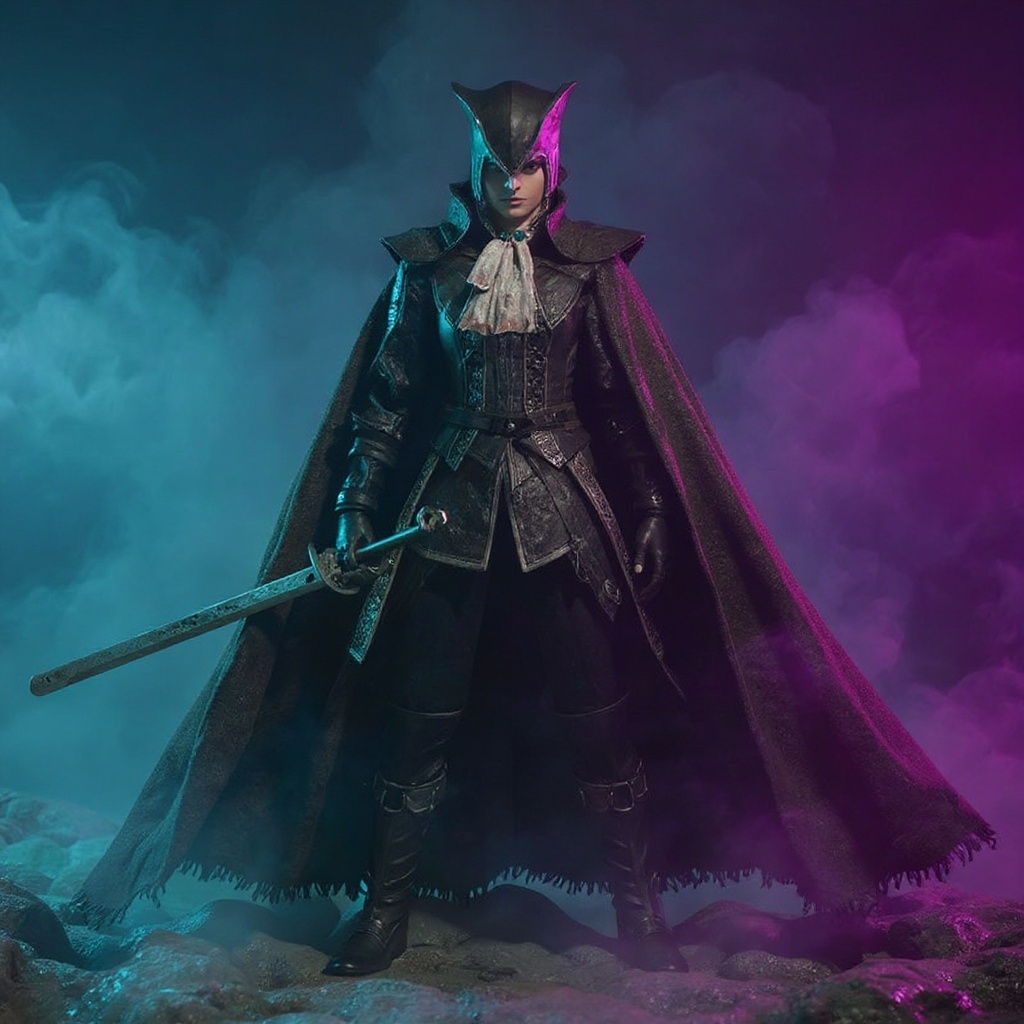
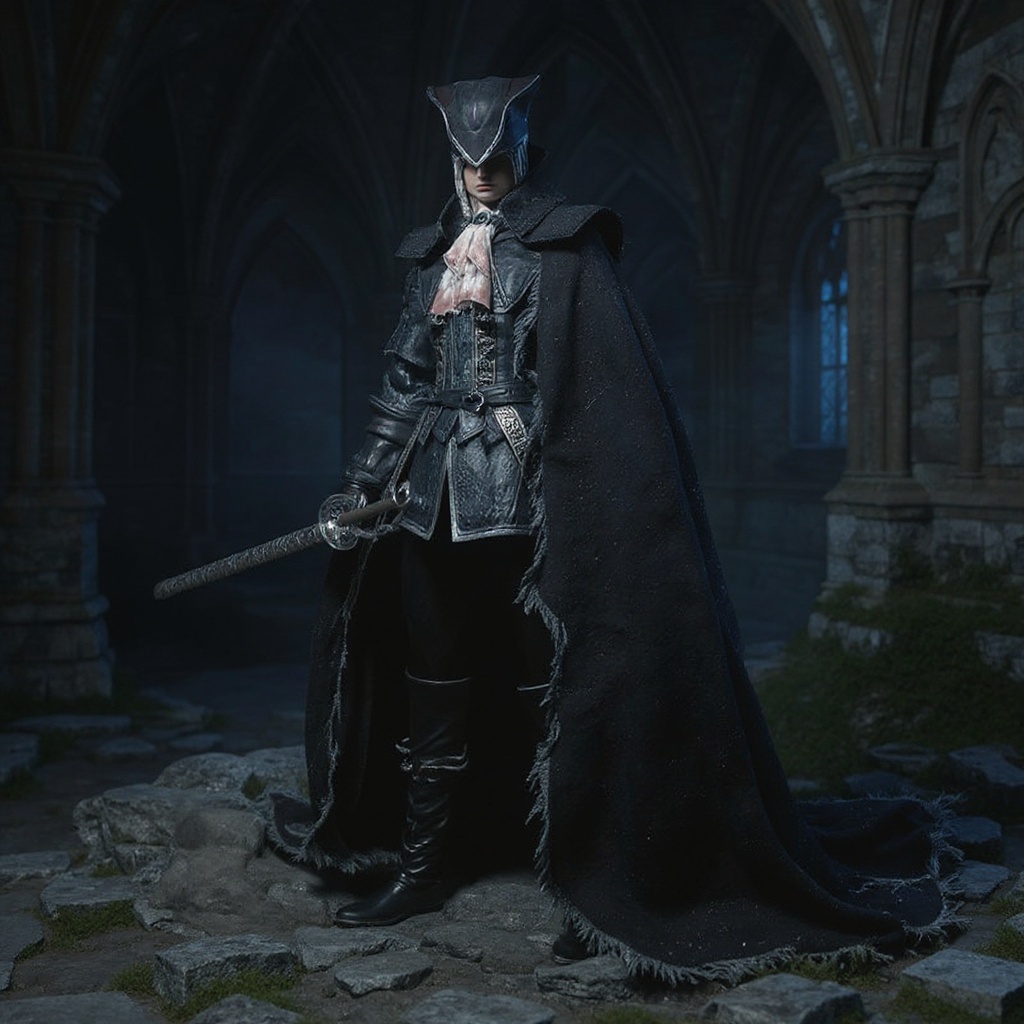
A soft-goods cape changes how Lady Maria sits on your shelf. Compared to the flat plastic that ships with most figma releases, a dark navy-grey weathered fabric cape with tattered, uneven hem edges reads as costume rather than toy. The difference isn't subtle. It's the gap between a museum statue and a character that feels alive. Barely.
Why Stock Figma Capes Fail for the Lady Maria Bloodborne Merch Cape Look
Hard plastic capes stick out like cardboard cutouts. They can't flow. They can't billow. They're locked into one pose that screams "toy" instead of capturing the gothic elegance that makes Lady Maria of the Astral Clocktower such an iconic boss fight.
The figma Lady Maria that Good Smile Company released comes with a rigid plastic cape molded in a generic flowing shape. It's fine. Not great. Three flaws keep it from matching a proper Lady Maria Bloodborne merch cape.
First, proportions. Plastic gets thick at 1/12 scale because injection molding can't reproduce fabric thinness, and what should drape like silk ends up looking like a shower curtain that's been left out in the rain for a decade.
Second, one pose, forever. The cape is frozen mid-billow, which works for some displays and ruins others entirely. Try posing Maria in a fighting stance and the cape's frozen flow fights her body language.
Third, the surface texture reads artificial under any light. Even with paint weathering, plastic keeps a telltale sheen. Your eye clocks it as fake in under two seconds.
Fourteen months of shelf display later, the frustration hasn't faded. Neither has the plastic sheen.
How Wire-Frame Soft Goods Actually Work
Fabric capes with internal wire armatures solve every problem plastic creates. Thin gauge wire, sewn into the cape's hem and edges, lets you bend it into whatever the scene needs.
Wire gauge matters more than people expect. Too thick and it creates bumps under the fabric, visible ridges that ruin the illusion from three feet away. Too thin and the pose collapses within a few hours, usually right when you've set up the perfect photo. Most cape makers use 20-22 gauge craft wire: strong enough to hold shape, thin enough to stay hidden inside a dark navy-grey weathered fabric shell.
Fabric choice determines whether the illusion holds. Cotton twill and linen blends drape at 1/12 scale without bulking up. Synthetic fabrics can work, sometimes, but they carry too much body or the wrong kind of stiffness for a garment this small.
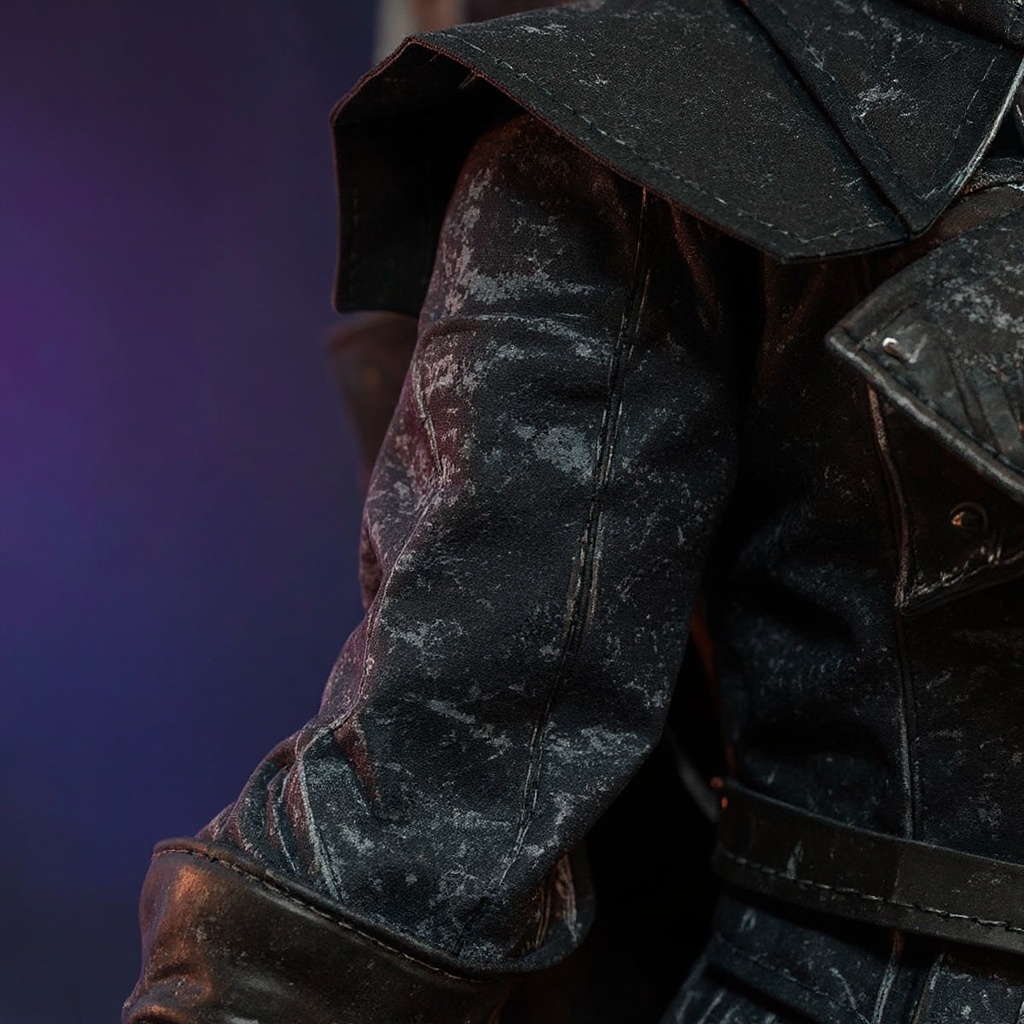
Close inspection shows visible handmade stitching along every seam, and that texture is half the reason the illusion sells at all.
The weathering technique separates amateur work from something worth photographing. Real fabric capes use tea staining, selective fraying along the tattered, uneven hem edges, and strategic dirt application to match Bloodborne's grimy Victorian aesthetic. Not just color. Texture variation that catches dim gothic Victorian horror-style lighting the way actual cloth does.
Durability and Long-Term Wear Issues
Handmade fabric capes aren't immortal. You're trading plastic's permanence for cloth's realism, and that trade comes with maintenance.
Fraying happens. Especially at stress points where the wire meets fabric. Quality construction minimizes this with reinforced seams, but it won't stop wear completely, so expect to trim loose threads every 6-12 months if you pose the figure often.
The wire framework has a shelf life too. Repeated bending weakens metal until it snaps, and in hands-on testing, 20-gauge wire held up for 18-24 months of regular repositioning before the first fatigue crack showed. Thicker wire lasts longer. It also creates lumps you can see under the fabric, so pick your trade-off.
Honestly, if you live somewhere humid, skip the cheaper tea-stained capes entirely. Moisture reactivates the staining unevenly, and the tattered hem edges mildew faster than the rest of the fabric. Nobody puts that on a product page, but it happened to a cape left in a Florida garage for one summer.
Fabric collects dust faster than plastic. A soft brush or a few bursts of compressed air handles regular cleaning. For deeper maintenance, a barely damp cloth works without stripping the weathering effects — barely damp, not wet.
Storage matters. Folded fabric develops creases that ruin the drape for good. Roll the cape loosely, or store it flat. Never folded.
Cape Compatibility Across Figure Lines
Not every 1/12 scale figure shares the same proportions. A cape sized for figma won't necessarily fit SH Figuarts or Marvel Legends bodies.
Figma figures run 5.5-6 inches tall with narrower shoulders than most Western action figure lines. Most Lady Maria Bloodborne merch cape listings are sized for this body type, not for bulkier lines, which means the cape can look oversized on a thicker frame.
Attachment method varies by maker. Some use fabric loops that slip over the shoulders. Others add small snaps or magnets — magnets work well but add bulk under fitted clothing, so check the product photos before assuming a clean fit.
Neck circumference is the number that actually matters. Figma necks run about 0.3 inches in diameter. If you're adapting the cape to a non-figma body, measure first. A cape that's too tight won't sit right. Too loose and it slides during posing, usually mid-photo.
Our Lady Maria Cape for 1/12 Figma Action Figures is cut for figma proportions with adjustment room built into the shoulder seam. For sizing questions before you buy, the cape sizing guide walks through every measurement point.
Cost Analysis: Handmade vs Mass Produced
| Cape Type | Price Range | Pros | Cons |
|---|---|---|---|
| Official Plastic (Figma) | $15-25 | Durable, consistent finish | One pose, artificial sheen |
| Etsy Handmade Fabric | $35-50 | Custom fit, real drape | Quality varies by seller |
| Commission Work | $60-120 | Full customization | Expensive, 4-8 week wait |
| DIY Materials | $8-15 | Cheap, hands-on learning | 4-6 hours, skill required |
| The Figure Vault Cape | $30 | Figma-tailored, pre-weathered | Limited stock runs |
A handmade Lady Maria Bloodborne merch cape at $30 sits in a sweet spot. You get posing flexibility and fabric realism without paying commission prices that start at $60 and climb fast.
DIY cape making takes real time. Expect 4-6 hours for pattern creation, cutting, sewing, wire installation, and weathering — more if you've never touched a sewing machine. Material costs run $8-15, but factor in tool costs and the savings shrink to almost nothing.
Photography and Display Techniques
Fabric capes change figure photography. The key is lighting the cloth the way it behaves in real fabric, not the way plastic reflects.
Dynamic poses work best when the wire framework supports the story. A billowing cape suggests movement. A draped cape reads as elegance, quiet and still, for portrait shots.
Lighting angle changes texture visibility. Side lighting emphasizes weave and weathering. Front lighting flattens it but helps with straightforward character ID shots. For the full gothic effect, dim gothic Victorian horror-style lighting — a single hard key light from a low angle — makes the tattered hem edges cast the kind of jagged shadow plastic can never throw.
Wind simulation needs external tools. A desktop fan, positioned off-camera and slightly behind the figure, creates fabric movement that reads as real in stills. Camera settings: wide aperture, f/2.8 or lower, to blur the background while keeping the cape's texture sharp.
Common Fitting and Styling Problems
Even a well-made cape looks wrong with bad styling. Most problems come from basic positioning mistakes.
Shoulder placement decides everything downstream. The cape should sit at the base of the neck without bunching fabric under the chin. Ride it too high and you get an unnatural collar bulge.
Arm position changes drape. Arms close to the body create a narrow silhouette. Arms held away from the torso let the cape flow and show its full tattered-hem shape.
Wire positioning takes practice — natural curves, not perfect symmetry. Real fabric is never even.
Common mistakes to avoid:
1. Bending wire at regular intervals (creates fake-looking scallops) 2. Overdoing volume for small indoor scenes 3. Ignoring the figure's base pose when shaping the cape 4. Curves that fight gravity 5. Forgetting fabric has weight and momentum 6. Over-weathering until "aged" reads as "dirty" 7. Wire too stiff for subtle adjustment
What Bloodborne Collectors Actually Want
The Bloodborne community on Reddit ranks Lady Maria in the top three most-collected characters in the game's lineup, thread after thread. Her design mixes elegance and threat in a way that photographs well.
Collectors prioritize screen accuracy over convenience, most of the time. They'd rather deal with fabric maintenance than settle for plastic that misses the character entirely. This shows up most with photography-focused collectors who need props that hold up under a macro lens.
The cape carries Maria's visual identity. Without it, she's a Victorian-era figure with a sword. With a proper Lady Maria Bloodborne merch cape, she becomes the tragic guardian of the Fishing Hamlet gate. That narrative weight matters to people who've played the DLC twice.
Is a Fabric Cape Worth the Investment?
A $30 fabric cape earns its price if you photograph or repose figures often. The flexibility alone covers the cost for anyone who changes displays monthly.
For collectors who set a figure up once and never touch it again, plastic might be enough. Durability matters more than realism when nobody's handling the piece.
The visual upgrade is real, side by side. Maintenance is manageable but not zero — budget 10-15 minutes every few months for basic care. If that sounds like too much work, plastic is still sitting right there, on the shelf, waiting.
A Lady Maria Bloodborne merch cape turns a good figure into a display centerpiece. For the full lineup of gothic-appropriate soft goods, browse the Bloodborne merch collection or go straight to the Lady Maria Cape for 1/12 Figma Action Figures and see the drape for yourself.
Reviewed by Elena Marsh, a figure customizer with nine years of soft-goods and wire-armature experience, currently building cape patterns for figma and SH Figuarts bodies.
