


That is the whole method. The rest of this guide covers why it works, where it fails, and what to do when it does.
What the Progenitor Effect Figure Cloak Actually Is
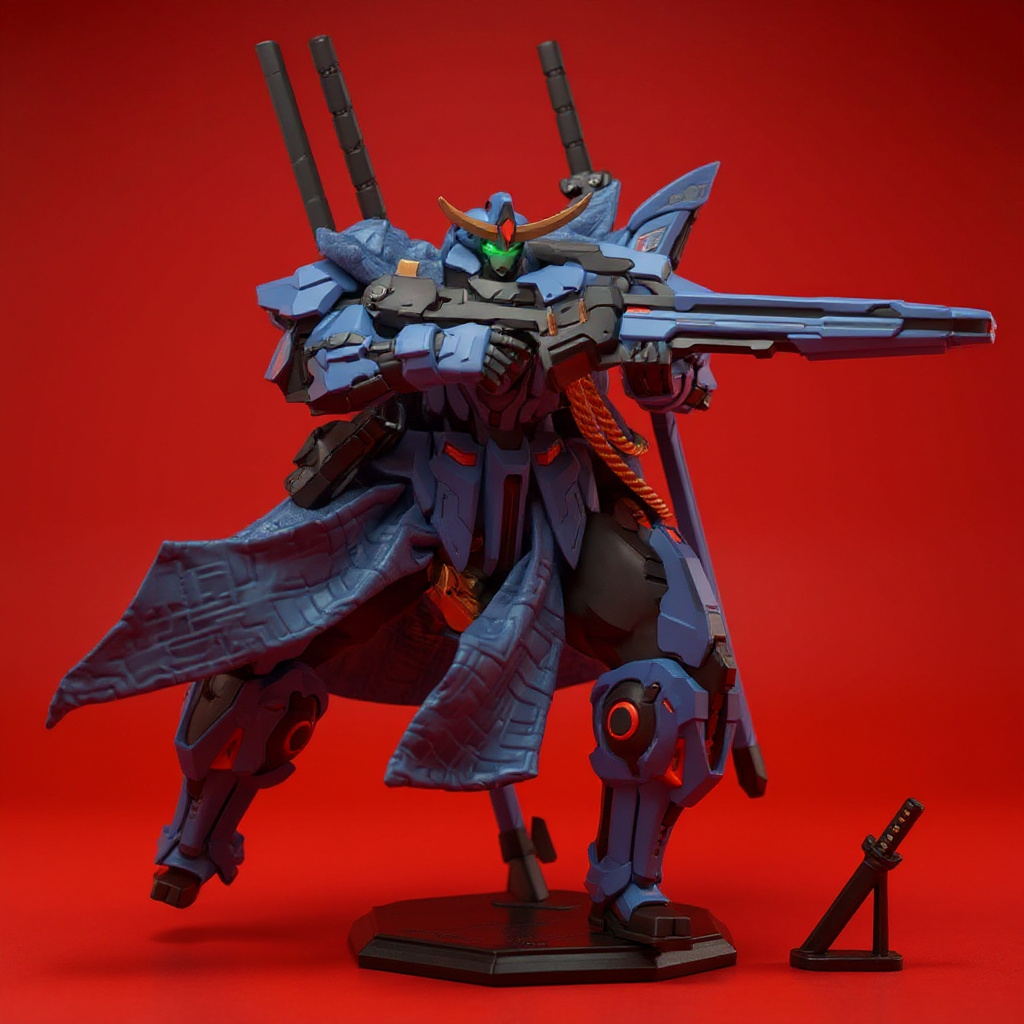
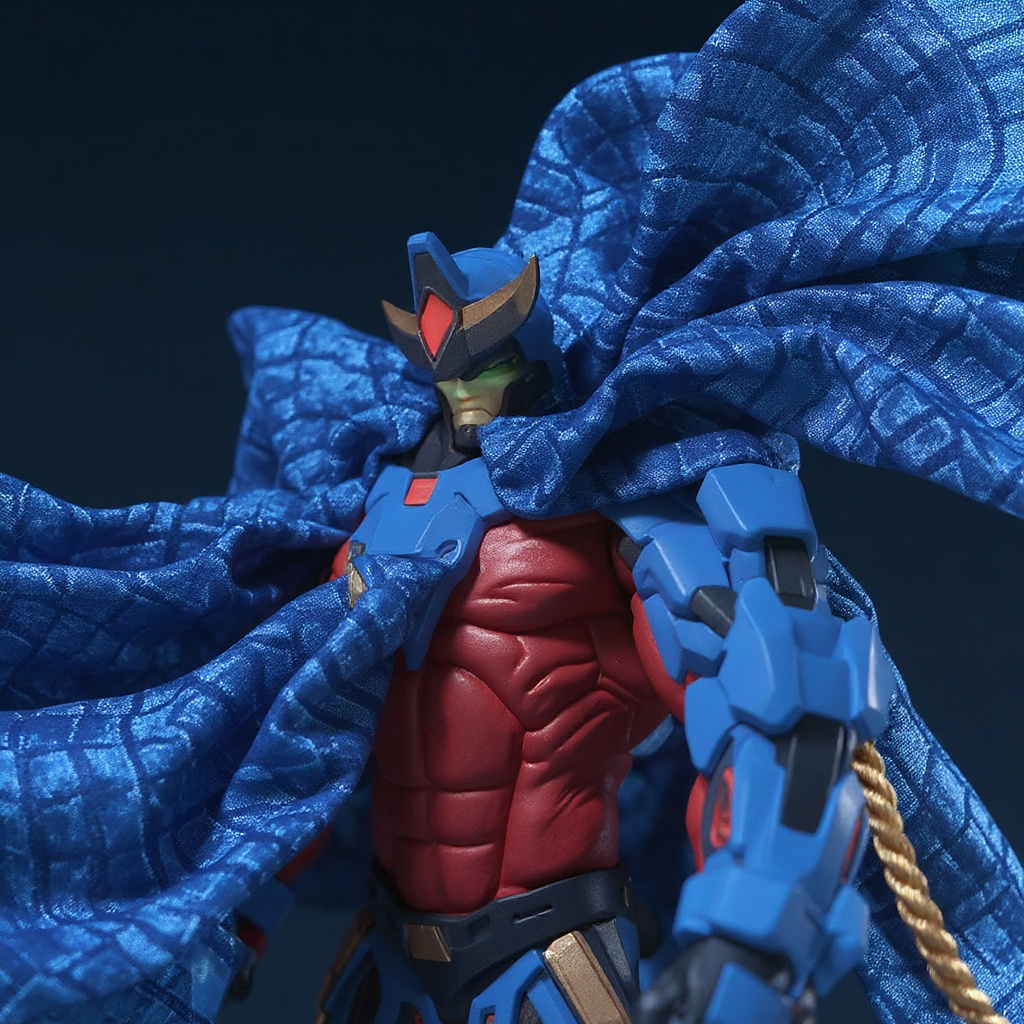
The Progenitor Effect line comes from Moshow Toys, a maker of 8-inch samurai and warrior-fantasy figures. The Bontenmaru Progenitor Effect Replacement Cape is a standalone replacement cloak. It is dark fabric with visible weave texture and a subtle sheen that catches light along the folds. A wire frame runs inside the edges, so the hem lifts and curls as if wind had just hit it.
Here are the specs as listed, plus what the listing leaves out.
| Spec | Detail |
|---|---|
| Brand | Moshow Toys (Progenitor Effect line) |
| Fits | 8-inch scale muscular, armor-style figures |
| Material | Dark textured fabric with subtle sheen |
| Frame | Internal wire along the cape edges |
| Palette | Dark red, black and grey |
| Price | $42.50 (cape only, no figure) |
| Sold by | TheFigureVault |
| Wire gauge | Not published by the maker, so confirm with the seller before you buy |
I won't guess the gauge. Most craft-grade shaping wire runs 20-22 gauge, which is 0.81 mm to 0.64 mm under the American wire gauge standard. Treat that as a working assumption, not a promise.
Getting the Fit Right on Your 8-Inch Figure
The cloak attaches at the neck with a tie or clip. Before you order, measure your figure's shoulders with a ruler or calipers. Muscular 8-inch bodies vary a lot by maker, so don't trust a generic number. The cape should hang from the neck without bunching or pulling the collar upward.
Snug beats loose. A loose tie lets the cloak swing, but it also slides off mid-pose and lands on the floor. A tight tie stays put but can pinch the shoulder joints. Aim for a fit where you can still rotate each arm through its full range.
Bulky shoulder armor helps here. It pushes the fabric outward and gives the wire more room to build a silhouette.
How to Shape the Cloak Wire Without Snapping It
Wire fatigues. Every bend work-hardens the metal a little, and a sharp reversal can crack it in one move. A gentle curve can last for years.
Work in this order:
1. Decide the overall flow first: left sweep, right sweep, or a billow straight back. 2. Curve the bottom edge in one 2-3 inch section at a time. 3. Add secondary curves to suggest fabric folds. 4. Lift the side edges for the wind-caught effect. 5. Refine the hem last. 6. Stand the figure up and check the pose from the front and both sides before making any tighter bends.
Keep every curve wider than about an inch in radius. Never fold the wire back on itself. If you want an angular look, round the wire and let the fabric create the point. The cloth reads as sharp while the metal stays safe.
If a section feels stiff, stop. Stiffness means the wire is near its limit. Heat from a hair dryer does nothing for metal, so don't bother.
Three Poses That Work on a Progenitor Effect Figure Cloak
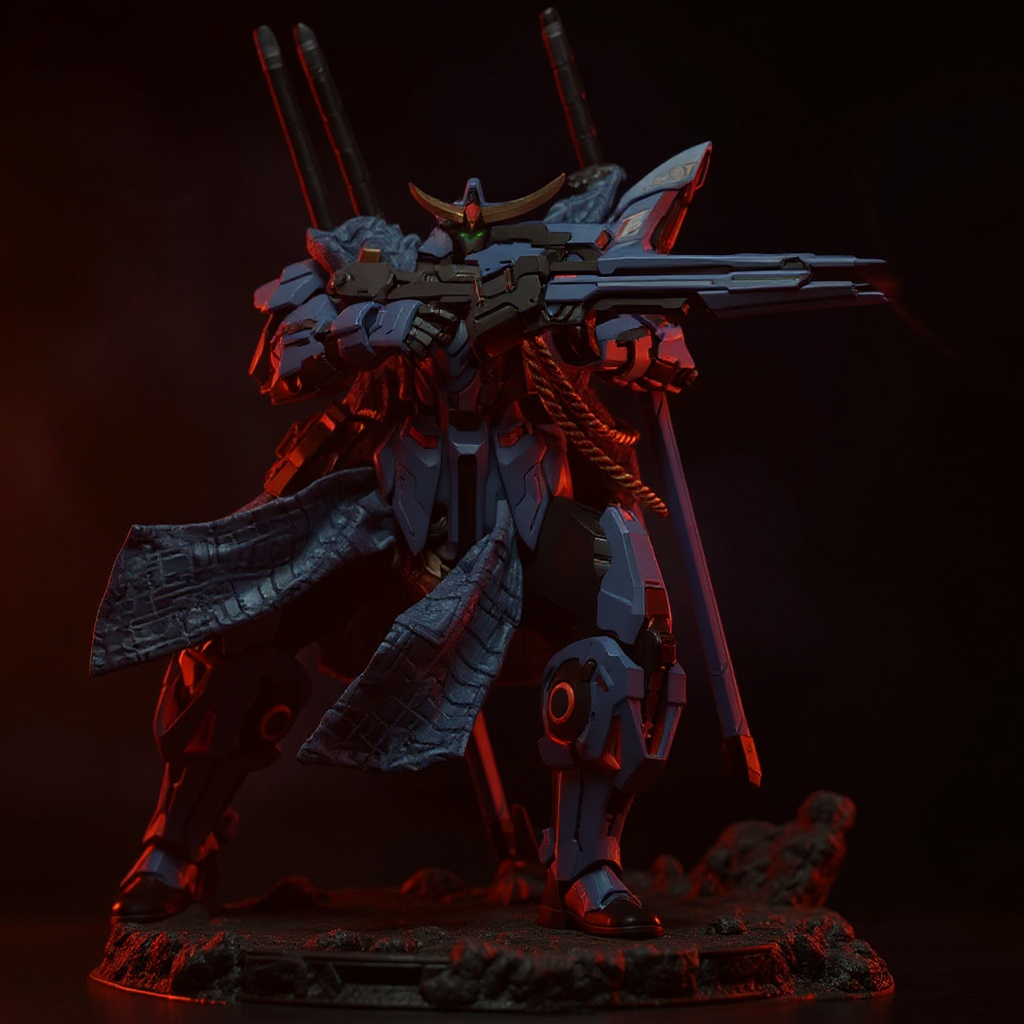
Good cape poses need weight, movement and negative space. Let part of the cloak hang, shape the wire for motion, and keep some air between the fabric and the body. Try these:
1. Hero stance: Billow the cloak behind and slightly to one side. Keep one edge low for weight and sweep the opposite edge up. Start with a 30-degree offset from the figure's spine. 2. Battle crouch: Curve one side forward over the shoulder, as if bracing against wind. The cloth should frame the armor, not bury it. 3. Dramatic turn: Fan one side wide and wrap the other slightly across the torso. It photographs well from three-quarter angles.
Avoid symmetry. Real cloth never moves in mirror image. Side lighting from one lamp, set low and to the figure's left, will carve out the folds and bring up the fabric sheen. Dark red and grey separate nicely under it. Pure black needs a rim light.
Troubleshooting Common Cloak Problems
- Kinked wire: Don't straighten it hard. Reshape it into a wide curve over a 2-inch section and accept a small ripple. - Cape slides off the neck: Tighten the tie one notch, or add a small dab of removable putty under the attachment point. - Hem won't hold a lift: The wire may have relaxed. Re-curve it past your target by a few degrees and let it settle back. - Cloak hides the pose: Rotate the sweep 15 degrees away from the strongest limb line. - Fabric creases from storage: Hang the figure upright with the cloak spread. Don't box it folded.
Loose Threads, Rough Hems and Weathering
Hand-finished capes can arrive with small thread ends. They aren't defects. They do show up in macro shots, though.
Trim them with sharp embroidery scissors, cutting within about 1 mm of the fabric. Never pull. A tug can travel down the seam. If a hem edge keeps fraying, a thin line of fabric fray sealant applied with a toothpick will lock it.
Skip fabric stiffener spray. It fills the weave and dulls the sheen that makes this cloak worth buying. That's my preference, and I haven't run a controlled test on it.
For battle wear, thin acrylic paint about 1 part paint to 3 parts water. Test it on the inside hem first. Dab the brush almost dry on a paper towel, then drag it across the lower edges and shoulder seams. Build up in three light passes. Removing paint from fabric is close to impossible. Patience, mostly.
Wire Cloak vs. Polyester Cape: Side-by-Side
| Feature | Wire-frame cloak (this one) | Standard polyester cape |
|---|---|---|
| Typical price | $42.50 | $8-15 |
| Pose memory | Holds shaped curves | Little to none |
| Durability under repeated reposing | Wire fatigues after many sharp bends | Fabric survives, shape doesn't |
| Cleaning | Spot clean only, no machine wash | Often machine washable |
| Fabric look | Visible texture, subtle sheen | Flat, often thin or thick |
| Best use | Display and photography | Play and frequent swaps |
Honestly, if you re-pose your figures every week, skip this cloak. The wire will tire before the fabric does, and $42.50 is a lot to spend on something that ends up a bit crumpled. A cheap polyester cape suits that collector better. Not every upgrade is for everyone.
Progenitor Effect Figure Cloak FAQ
How do you shape a Progenitor Effect figure cloak without breaking the wire?
Bend 2-3 inch sections at a time and keep every curve wider than about 1 inch in radius. Work from the overall sweep to the hem, and never fold the wire back on itself. Check the pose from three angles before adding tighter bends.What size figure does the Bontenmaru cloak fit?
It fits 8-inch scale muscular, armor-style figures, including the Bontenmaru body. Measure your figure's shoulders and neck joint before ordering, since brands differ. It ties at the neck, so the collar area needs room for the attachment.Is the figure included with the replacement cloak?
No. The $42.50 price covers the cape only. You need to own the 8-inch Bontenmaru figure or another compatible 8-inch body separately.Can I change the color of the cloak?
The base fabric color is fixed, with a dark red, black and grey palette. You can darken or age it with acrylic paint thinned 1 part paint to 3 parts water. You can't lighten it or change the hue.What wire gauge does the cloak use?
The maker doesn't publish it. Typical shaping wire is 20-22 gauge, or 0.81-0.64 mm, but ask the seller for a confirmed figure. Heavier wire holds complex shapes but takes more force to bend.How do I remove loose threads from a handmade figure cape?
Trim them with sharp scissors, cutting within about 1 mm of the fabric. Never pull, because that can open the seam. A tiny line of fray sealant on the hem stops further loosening.How do I make the cloak look battle-worn?
Thin acrylic paint to about 25% paint and 75% water, blot the brush nearly dry, and drag it over the hem and shoulders. Use three light passes instead of one heavy one. Test on the inside hem first.Is a wire cloak worth it over a polyester cape?
Yes, if you reposition the figure once a month or less and care about display or photography. No, if you swap poses weekly. The wire cloak costs $42.50 against $8-15 for polyester, and the extra cost buys pose memory and better fabric texture.Is This Wire Cloak Right for Your Shelf?
A Progenitor Effect figure cloak earns its price in one way: it makes a static figure look caught mid-motion. It also asks for careful hands. If that fits how you display, see the Bontenmaru Progenitor Effect cloak or browse more 8-inch figures and accessories to match your build. Learn more about the hobby's history in this overview of action figures.

