


Replacement clothing for 6 inch action figures should match 1/12 scale, fit shoulders of roughly 2.1-2.4 inches, close around a neck about 0.4-0.6 inches across, and use fabric thinner than about 0.5 mm. Miss any of those and the garment bunches, gapes, or hangs like a tent. This guide gives you the numbers, a five-minute caliper method, and a fabric shortlist. It also covers one garment that suits the scale well: the woven, wire-shaped cape.
First, Get the Scale Straight: 1/12 vs 1/6
A 6 inch figure is 1/12 scale. A 12 inch figure is 1/6 scale. Barbie-type fashion dolls and 12 inch collectible figures sit at 1/6, so their clothes are about twice the linear size you need.
One more catch. The label says 6 inch, but real figures vary. Manufacturer listings for Marvel Legends, Mythic Legions and similar lines commonly give heights between roughly 6 and 7 inches, depending on the sculpt and the headgear. So ignore the number on the box and measure the body in front of you.
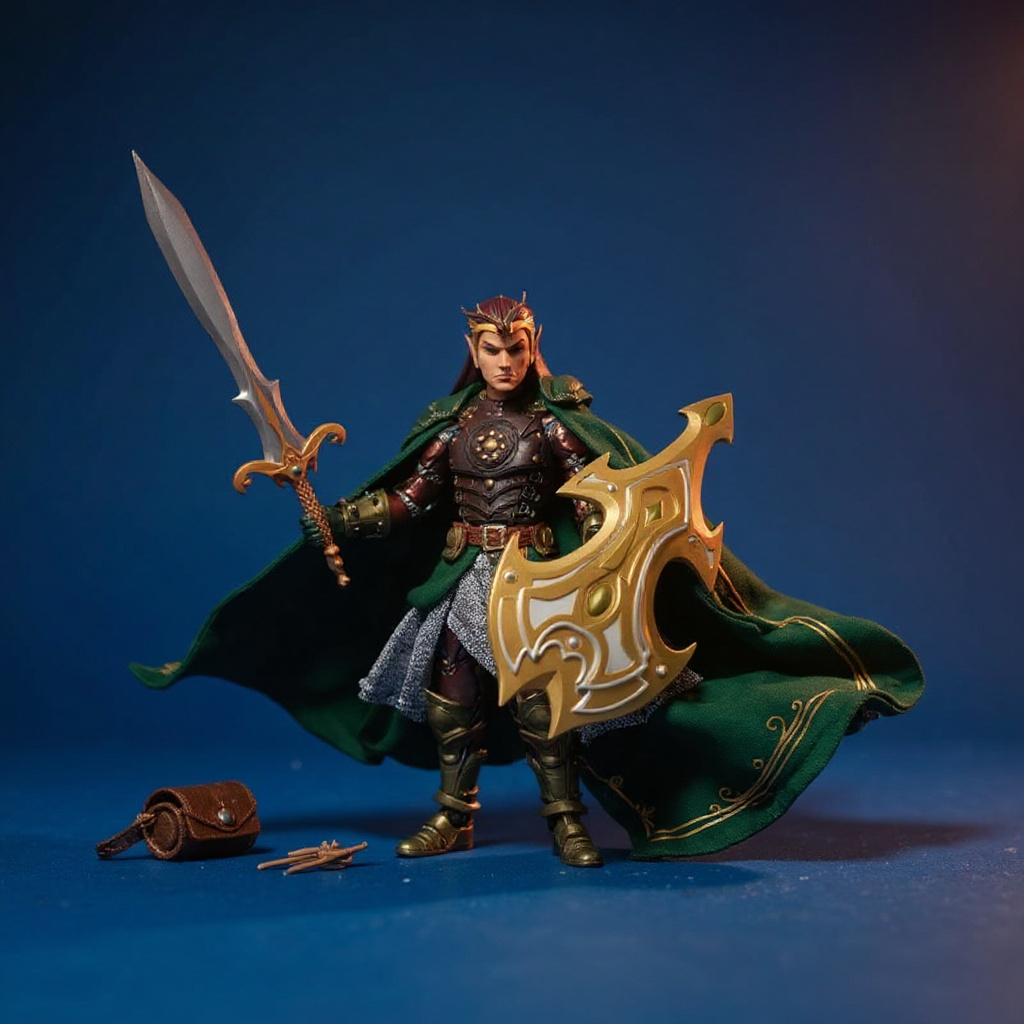
Scale Math for Replacement Clothing for 6 Inch Action Figures
Divide real-world sizes by 12 and you get true 1/12 dimensions. Action figures, though, are not true scale humans. They are built heroic, with wide shoulders and thick necks, so the finished garment must be larger than the pure math suggests.
| Real-world measure | Pure 1/12 result | Typical heroic figure | Why they differ |
|---|---|---|---|
| Shoulder width, 18 in | 1.5 in | 2.1-2.4 in | Sculpts exaggerate the upper body; 2.1-2.4 in equals about 25-29 in at human scale |
| Neck circumference, 15 in | 1.25 in around | 0.4-0.6 in across (1.3-1.9 in around) | Circumference = 3.14 x diameter, so 0.4 in across is about 1.26 in around |
| Cape, shoulder to mid-calf, about 36 in | 3.0 in | 3.0-3.5 in | Extra length allows for fold and hem curl |
| Collar height, 3 in | 0.25 in | 0.25-0.4 in | Taller collars crowd the head sculpt |
| Fabric thickness, 6 mm | 0.5 mm | 0.2-0.4 mm works best | Thicker cloth will not fold at this size |
The neck row trips up many buyers. A neck opening quoted as a diameter and one quoted as a circumference differ by a factor of about three. Check which one a seller is giving you.
How to Measure Your Figure (5 Minutes, One Tool)
Use digital calipers if you have them. A soft tape and a steel ruler also work, but calipers give 0.01 in resolution.
1. Shoulder width: Measure across the widest point of the deltoids, with arms hanging straight down. 2. Neck diameter: Measure where fabric would sit, at the base of the neck. The thinnest point is not the right one. 3. Torso depth: Measure front to back at the chest. 4. Cape drop: Run a tape from the base of the neck to where you want the hem, such as mid-calf. 5. Arm swing: Raise the arms to 90 degrees and see whether the shoulder joint pushes outward. Add that to your width.
Write the numbers down. Guessing is how a 0.2 in error becomes a garment that will not close. Not fun.
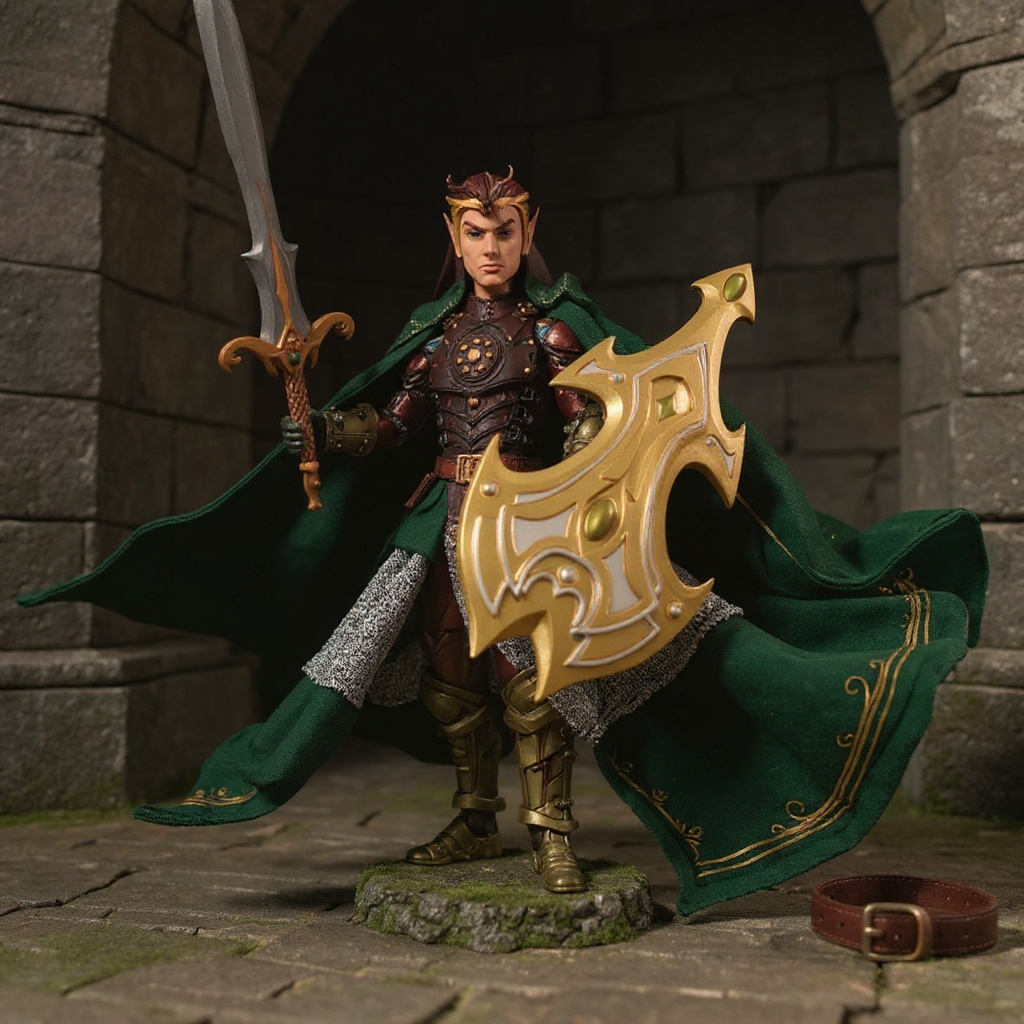
Shoulder Widths by Figure Line
The ranges below are starting points. They combine manufacturer-listed dimensions with collector-reported caliper readings, and individual figures can vary by about 0.1 in. Verify with your own measurements before ordering.
| Figure line | Approx. shoulder width | Build notes |
|---|---|---|
| Mythic Legions (Four Horsemen Studios) | 2.2-2.3 in | Consistent body across the line |
| Marvel Legends (Hasbro) | 2.1-2.5 in | Varies a lot by character |
| DC Multiverse (McFarlane Toys) | 2.3-2.6 in | Often bulkier than Marvel Legends figures |
| Storm Collectibles | about 2.4 in | Broader, with a deeper chest |
| S.H.Figuarts (Tamashii Nations) | 2.0-2.3 in | Slimmer and more articulated |
For specs, start with the makers: Four Horsemen Studios, Hasbro, McFarlane Toys and Tamashii Nations. Be careful with the idea that clothes designed for one Marvel Legends body will fit another. A slim Spider-Man and a bulky Thor are the same scale and different shapes.
Fabrics That Work for Replacement Clothing at 1/12 Scale
Fabric weight decides whether a garment drapes or sticks out. As a rule of thumb, aim for 0.2-0.4 mm thickness. Anything above roughly 0.5 mm resists folding at this size.
- Cotton voile or lawn: Light, takes dye well, and hems cleanly. - Silk habotai: Superb drape, higher cost, and it frays fast. - Polyester chiffon: Holds a fold and resists wrinkles, though it can look shiny. - Fine linen blend: Good for vests and tunics that need some structure. - Thin wool crepe: Suits winter or medieval looks. - Poor choices: Fleece, terry cloth, denim and canvas. They add bulk the shoulders cannot carry, and in my experience they look like a sleeping bag on a toy.
Weave matters as much as weight. A woven fabric holds its shape, while a knit stretches and sags within weeks. And texture scales up. A weave you cannot see on a coat at human size reads as a coarse pattern at 1/12, which can look great on a rugged cloak and wrong on a silk shirt.
Dark colors photograph more forgivingly than light ones. Light fabric shows every wrinkle and every gap at the neck.
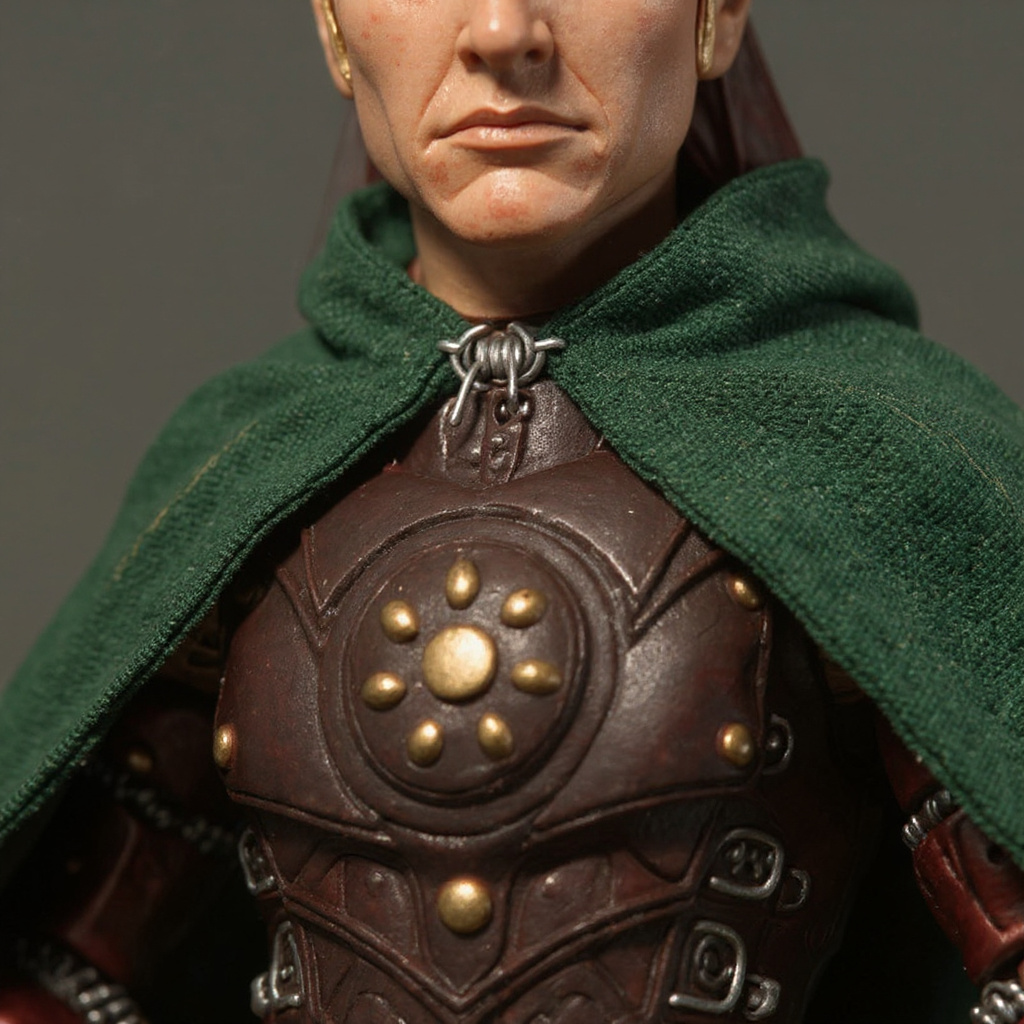
Capes: Where Wire-Shaped Folds Earn Their Keep
Of all replacement clothing for 6 inch action figures, the cape is the piece that changes a photo the most. It frames the silhouette, hides a plain back sculpt, and adds motion to a static pose.
Plain fabric hangs straight down. Gravity wins. A thin wire sewn into the hem or edge lets you sweep the cloth sideways, lift a corner, or fake wind, and the shape stays put.
The design we make is a medium-length woven cape in dark green and brown tones. You can see the weave. It ties at the neck with a cord, so the opening adjusts to the 0.4-0.6 in neck range above, and the wire lets you pose the folds. It sits on 6-7 inch figure shoulders and looks natural against a plain gray backdrop or a painted fantasy scene.
Disclosure: this is our product. The Elven Guard Cape for 6-7 Inch Action Figures is listed at $44. Browse the rest of our action figure accessories to compare other options, or visit The Figure Vault for the full catalog.Two cautions apply to any wire-edged cape. Wire can show through very thin fabric, so pick cloth with some body. And repeated bending at one crease work-hardens the wire, so move your fold points around.
Stock Plastic vs. Generic Soft Goods vs. Handmade
| Option | Typical price | Posability | Fit risk |
|---|---|---|---|
| Stock plastic cape (included or accessory pack) | Often $15-25 for a pack | Fixed shape | Low, since it is made for that line |
| Generic marketplace cloth set | $20-35 | Hangs limp | Medium to high; patterns often come from fashion dolls |
| Handmade wire-edged cape | About $40-50 | Holds custom poses | Low if you give the seller your measurements |
Prices vary by seller and region, so treat these as ranges, not quotes.
Common Fit Problems and Fixes
Shoulders too tight. The garment rides up and blocks arm movement. Look for extra ease or raglan-style sleeves. Neck too wide. The piece slides off or looks oversized. Choose tie closures or an elastic casing. Hem too long. A long cape fights leg poses and drags. Too short looks juvenile. Measure from the attachment point to the target hem. Fabric too thick. The figure looks padded. Pick material in the 0.2-0.4 mm range. Wire shows through. Choose denser cloth or a wire finished in a matching color.Is Handmade Worth the Premium? An Honest Take
Honestly, if you pose a figure once and leave it on the shelf, buy the stock plastic cape and keep your money. It is cheaper and it fits. Soft goods only pay off if you rearrange poses, shoot photos, or build dioramas.
And if you live somewhere humid, think twice. Natural fibers can pick up mildew, and plain steel wire can rust inside a damp display case. Store capes dry, away from direct sun, and consider polyester if your air is wet.
Durability depends on stitching. A well-finished hem lasts years of handling. A raw edge frays in weeks.
Frequently Asked Questions
What size clothes fit a 6 inch action figure?
Look for garments sized for shoulders about 2.1-2.4 in wide, a neck opening 0.4-0.6 in across, and fabric 0.2-0.4 mm thick. Because lines differ, measure your own figure first.Are 6 inch action figures 1/12 or 1/6 scale?
Six inch figures are 1/12 scale. Twelve inch figures are 1/6 scale. Clothing for 1/6 figures is about twice as large and will not fit a 6 inch body.Can I use doll clothes on a 6 inch action figure?
Usually not. Most doll clothing assumes slim fashion-doll bodies, while action figures have broader shoulders, deeper chests and thicker joints. Capes and cloaks with tie closures are the easiest items to adapt.What fabric is best for an action figure cape?
A woven cotton voile, fine linen blend or polyester chiffon, 0.2-0.4 mm thick, drapes well at 1/12 scale. Avoid fleece and canvas, which are too bulky to fold.How do I measure an action figure for clothes?
Measure shoulder width across the deltoids, neck diameter at the base, chest depth, and cape drop from neck to hem. Calipers give the best accuracy, and the whole job takes about five minutes.How much does replacement clothing for 6 inch figures cost?
Stock plastic accessory packs often run $15-25, generic marketplace soft goods about $20-35, and handmade wire-edged capes roughly $40-50. Our own cape is $44.How long does a wired cape hold its pose?
A thin craft wire holds a shape until you bend it again. Repeated bends at the same crease can fatigue it, so re-shape in different spots and store the cape unfolded.The Short Version
Measure first. Match 1/12 scale, not the box label. Pick thin woven cloth. For replacement clothing for 6 inch action figures, a tied, wire-shaped cape gives the biggest visual upgrade for the least bulk. If you want a ready-made example, see the Elven Guard Cape.

