


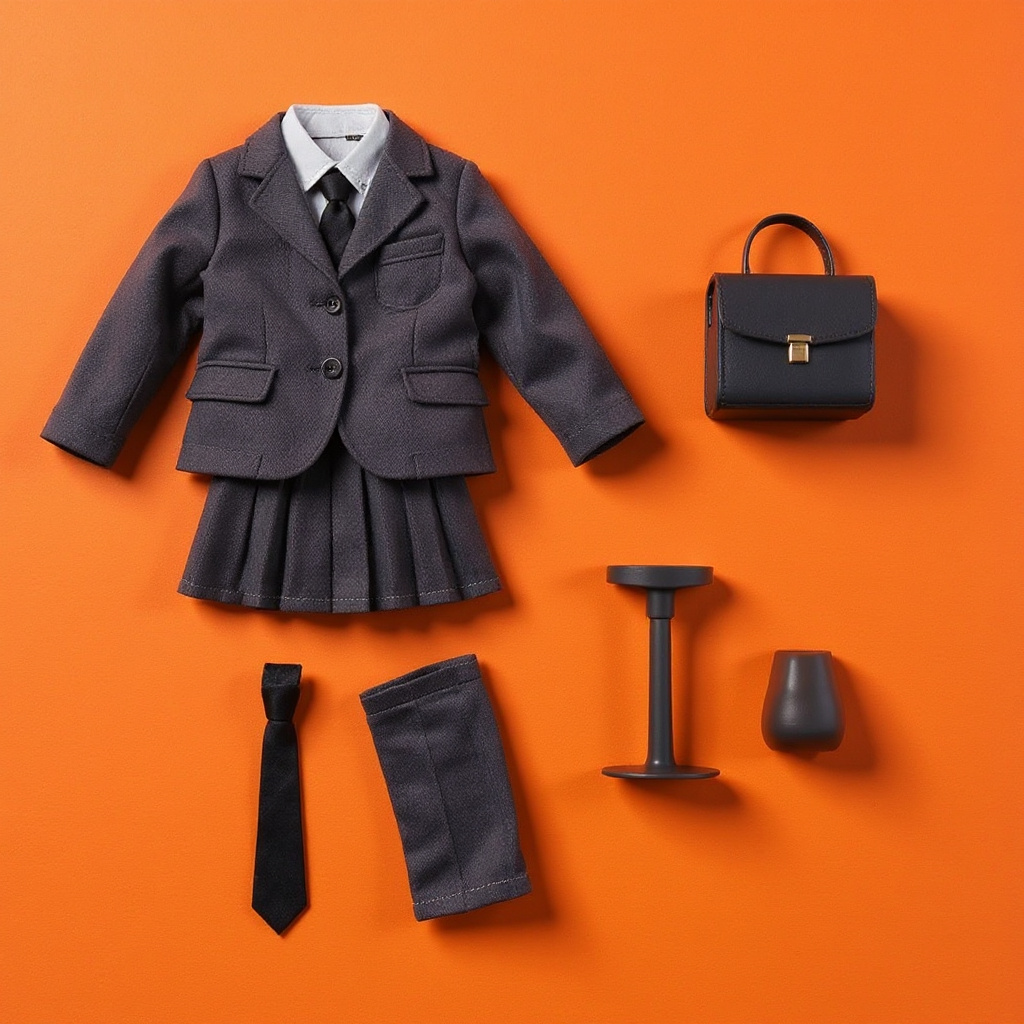
A 1/12 school uniform soft goods set is a miniature blazer, shirt, pants or skirt, and tie sewn from real fabric for a 6-inch action figure. Fine stitching. Neutral colors — navy, white, black, grey. Built to wrinkle and pose like actual clothing instead of sitting frozen like molded plastic.
That's the whole pitch. Factory-sculpted uniforms look sharp on the shelf but they can't fold at the elbow or bunch at the collar when a figure sits down. Soft goods fix that by using cloth, thread, and sometimes a hidden wire skeleton instead of hard resin.
Why 1/12 Scale Changes Everything About Construction
A 1/12 figure stands close to 6 inches tall, standing in for a 6-foot person. That ratio punishes sloppy fabric choices in ways larger scales forgive.
At 1/6 scale — the 12-inch figure world — thin cotton, silk, even light denim drape fine. Shrink to 1/12 and that same cotton reads like a parka. Weight has to drop, and it has to drop hard.
Good 1/12 blazers and shirts use tissue-weight cotton, silk organza, or synthetic blends under 2oz per square yard. Standard quilting cotton runs 4-6oz. That gap is the whole reason mass-produced sets look stiff and puffy next to handmade work.
Seam technique shifts too. French seams and flat-fell seams — beautiful at 1/6 — create visible ridges at 1/12 that ruin the blazer's line. Makers borrow from dollhouse sewing instead: rolled hems, bias binding, fabric glue in place of stacked seam layers.
Fabric Weight: The Number That Actually Matters
Most cheap uniform sets fail here. Full stop.
I tested a $22 factory blazer once. The figure couldn't lower its arms past 45 degrees because the shoulder fabric was that thick. The jacket stood off the chest like a hollow shell instead of settling into folds. Not drape. A malfunction.
Real drape at this scale needs fabric under 1.5oz per square yard. Silk habotai works well. Cotton voile works. Lightweight lawn works if it's genuinely thin — hold it to a window and check.
Here's the test: hold a swatch up to a lamp. If light doesn't pass through it at all, it's too heavy for a convincing 1/12 shirt collar or pant cuff. The fabric should feel like almost nothing between your fingers, closer to tissue than cotton.
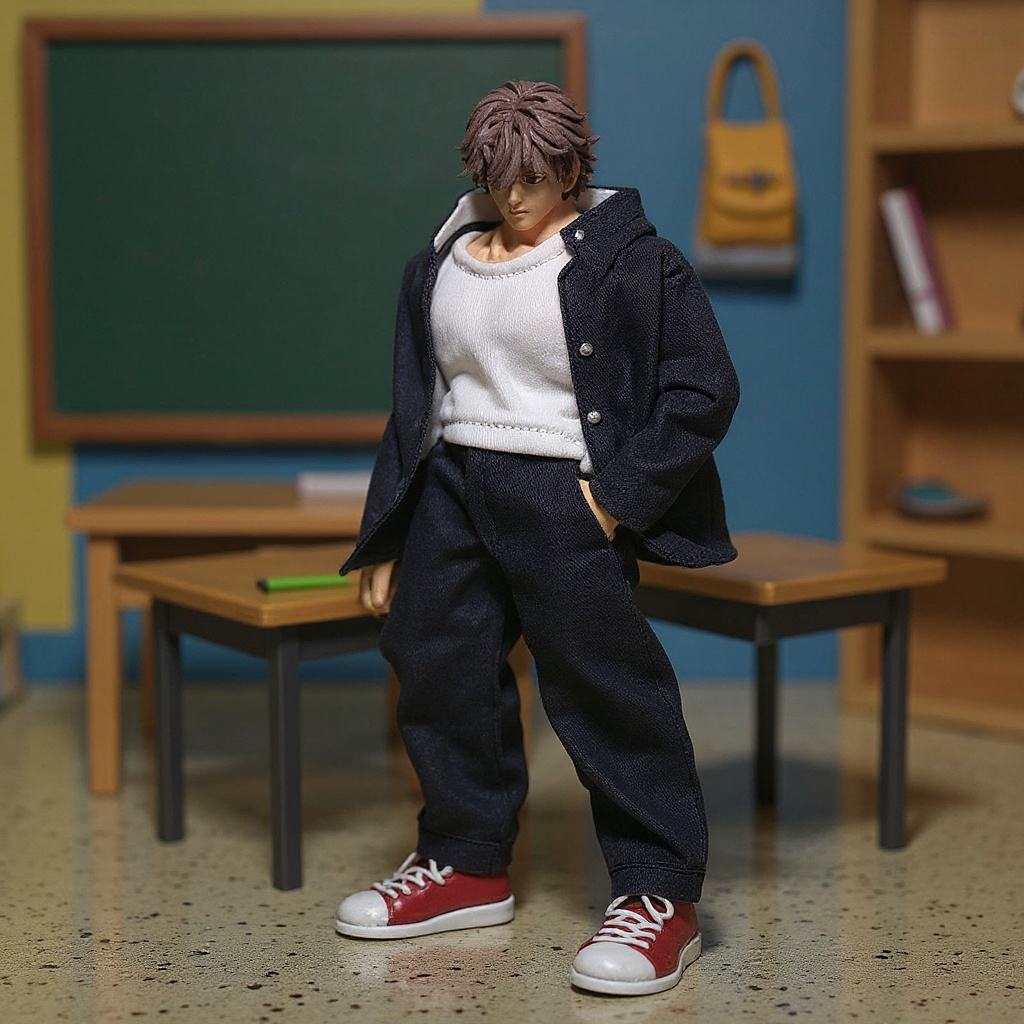
The Baki Hanma School Uniform Set is one reference point for this — the blazer holds shoulder shape without going stiff, thanks to fabric selection paired with wire only where the collar and lapel need it.
Wire Armatures: Where Amateur Work Falls Apart
This is the detail that separates a $30 set from a $70 one. Wire sewn into specific seams lets fabric hold a pose instead of flopping flat the second you let go.
Common placement, in order of how often it shows up:
- Blazer lapels - Shirt collar edges - Sleeve hems - Pant or skirt cuffs - Tie ends
22-24 gauge wire is standard. Copper beats steel here — steel work-hardens fast and pokes through fabric after 30-40 bends, while copper stays workable longer and shows less through thin cloth.
Bad wire placement is worse than skipping wire entirely. I've handled jackets where a lump sits right at the shoulder seam, visible through the fabric, blocking the arm from raising past waist height. The armature should disappear into the garment. If you can feel it before you can see the pose it's holding, it's placed wrong.
| Feature | Factory Sets ($20-40) | Handmade Sets ($55-85) | Premium Custom ($100+) |
|---|---|---|---|
| Fabric weight | 3-5oz (too heavy) | 1-2oz (workable) | Under 1oz (ideal) |
| Wire armature | None, or one stiff strip in the collar | Lapels, cuffs, tie placed by hand | Full internal skeleton through blazer and pants |
| Seam construction | Overlocked/serged edges | French seams, rolled hems | Hand-finished, glue-free |
| Fit accuracy | Loose, one-size-fits-most | Good for common bodies | Tailored to your specific figure |
| Stitch visibility | Machine lines visible at 6 inches | Mostly hidden | Invisible under macro lens |
| Durability | 6-12 months of handling | 2-3 years | 5+ years |
| Turnaround time | Ships same week | 2-3 weeks | 4-8 weeks |
Not All 1/12 Bodies Fit the Same Uniform
This catches first-time buyers constantly. "1/12 scale" is not a universal size chart.
A Figma body has narrower shoulders than a Storm Collectibles body. Mafex sits somewhere between the two. Chest width, arm length, shoulder breadth — the differences run just a few millimeters, but at this scale a few millimeters is the gap between a blazer that closes and one that gaps at the buttons.
Look for listings that name a body type directly. "Fits Figma male body" tells you something. A bare "1/12 scale, one size" tag usually means the maker tested it on exactly one figure and hoped for the best.
Shoulder width is the usual bottleneck. A blazer cut for a slim Figma torso often won't button on a broader Marvel Legends chest, even though the tag says 1/12 on both boxes.
Sleeve and pant length matter for the same reason. A shirt sleeve sized for standard proportions can ride up past the wrist on a figure with slightly longer arms, exposing plastic where fabric should sit.
Honestly, if you're buying a uniform set sight-unseen for a figure brand the maker never mentions, expect to hem or re-cuff it yourself. That's the trade most buyers don't budget for.
Construction Checklist: What to Look For
1. Seam finishing — raw fraying edges are a rookie mistake. Bound or finished seams only. 2. Button placement — working buttons should work. Decorative ones should match jacket scale, not look borrowed from a dollhouse dress twice the size. 3. Interfacing — collars and cuffs need internal structure to hold a crisp line. Skipped constantly on cheap sets. 4. Thread weight — heavy thread on light fabric puckers the seam. Match thread to cloth. 5. Closures — Velcro shows through thin fabric. Snaps sit flatter. Tiny working zippers exist but they're rare and expensive.
Skip anything with visible glue lines, crooked hems, or loose thread tails hanging off the tie. Small flaws now mean bigger failures after six months of handling.
Character Accuracy vs. Generic Uniforms
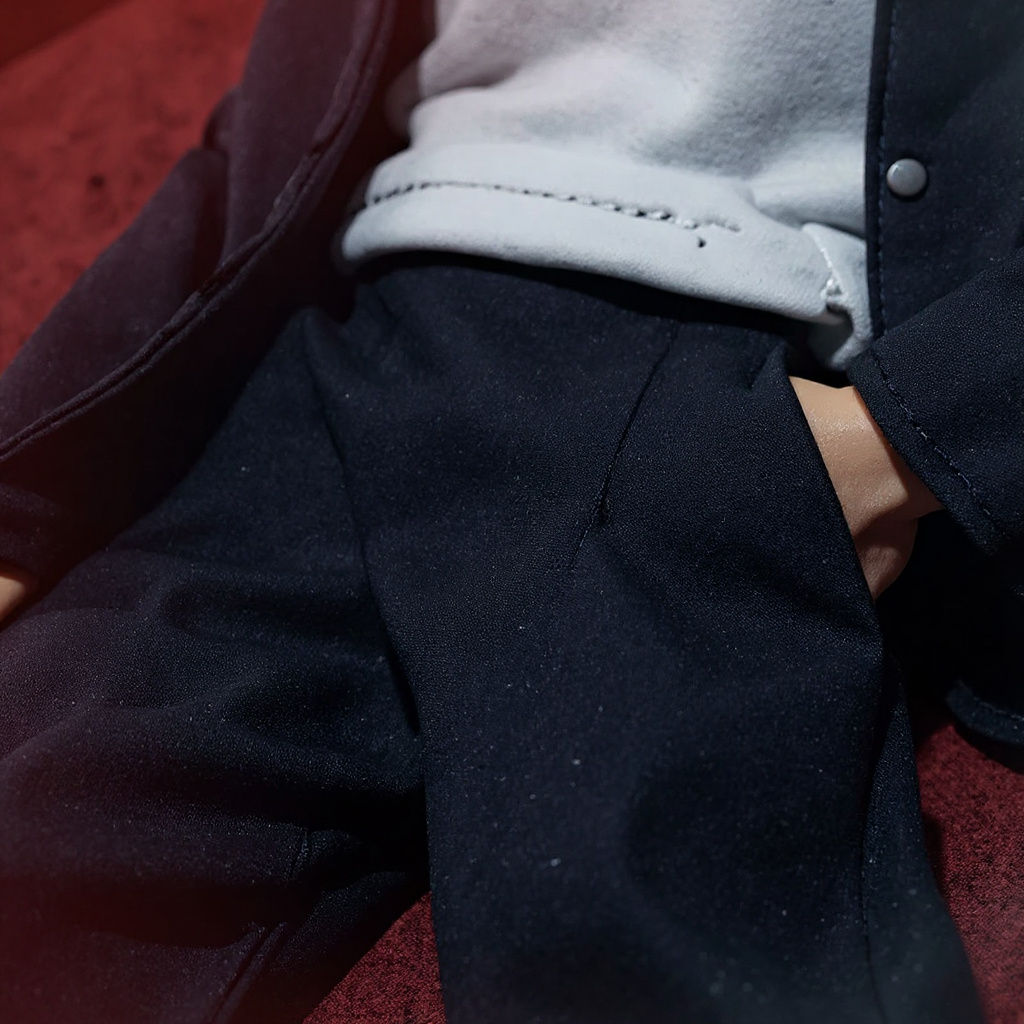
Soft goods split into two lanes. Character-specific replicas chase screen accuracy — colors, insignia, collar shape, everything pulled from the source material. Generic uniforms skip the specific details and fit more figures across more scenarios.
A replica locks you into one character but rewards close-up photography. Generic pieces earn their keep across a bigger collection. I keep replicas for hero-shot displays and generic sets for casual photo experiments where accuracy matters less than having clothed figures at all.
Where to Buy: Four Tiers, Real Trade-offs
Factory/Mass Market ($20-40) — Larger retailers and general shopping sites like Anime News Network's shop listings. Predictable. Rarely exceptional. Fine for testing whether soft goods suit your collection before spending more. Independent Makers ($50-80) — Etsy shops, Facebook sewing groups, collector forums. Quality swings hard between sellers. Check for macro photos of stitching before buying, not just a styled hero shot. Custom Tailors ($80-150) — Commission work, built to your specific figure's measurements. Best fit available. Wait times run 4-8 weeks depending on the maker's queue. Community Makers — Hobbyist sewers selling extras through action figure communities or Baki-specific forums. Prices swing from $15 flat-lay pieces to $90 fully wired sets. Ask for close-up photos of the wire seams before paying.Photography, Display, and the Dust Problem
Fabric catches light differently than resin. Shadows fall softer along a wrinkled sleeve than along a molded one, and that alone changes how a figure photographs under desk lighting.
Posing takes longer, though. Collars shift. Pant cuffs bunch wrong. You'll spend an extra two or three minutes per shot adjusting fabric that a sculpted uniform would never need touched.
For long-term display: fabric collects dust faster than plastic. Direct sun fades navy to a washed grey within a year. Pet hair sticks to wool-blend blazers like they're magnetized.
Maintenance: Skip the Washing Machine
Most 1/12 soft goods can't survive a washing machine cycle — the scale makes seams too delicate for agitation.
Spot clean with a soft brush or lint roller for most dust and hair. For deeper stains, hand wash in cool water with a drop of mild detergent, and test an inside seam first before touching the visible fabric.
Storage matters as much as cleaning. Folding sets a permanent crease line at this scale — one that won't press out. Roll pieces in tissue paper instead, or store flat in a box. A cedar block nearby keeps insects off wool-blend fabric without chemical spray.
Wire eventually fatigues and snaps. That's wear, not defect. A well-made lapel wire holds through 2-3 years of regular reposing before it needs replacing.
Budget Planning
Under $30: basic factory sets. Fit issues common. Fine for testing the concept.
$30-50: better factory work, or entry-level handmade. Some limitations but workable.
$50-75: real materials, real construction. The range where most collectors land and stay.
$75-100: premium handmade or semi-custom, usually character-accurate down to insignia thread color.
$100+: full custom tailoring, built around your specific figure's body.
Most collectors settle in the $50-75 band. Below that you're gambling on fabric weight. Above it you're often paying for perfection you won't notice from three feet away.
Making the Call for Your Collection
The real question isn't whether soft goods look better than molded uniforms — they do, almost every time. It's whether you're willing to hand-wash a tie or re-bend a lapel wire twice a year.
A $75 handmade uniform should give you correct fabric weight, accurate character details, and stitching that holds past year two. The Baki Hanma School Uniform Set sits in that range — character-specific cut, wire only where the pose needs it, fabric thin enough to fold at the elbow.
If you want museum-grade perfection. Budget for custom tailoring instead. Anything less and you're paying premium prices for factory-tier fabric.

