


The best soft goods cape for collectible figures uses 22-24 gauge wire sewn into fabric channels along the hem and edges, paired with a matte cloth that won't fight your display lighting. That's it. No dishrag metaphors required. For 1/10 scale pieces built to sit on a stand or mannequin form rather than drape over a full figure body, the wire needs to run thinner and the fabric needs to weigh less than anything cut for 1/6 scale — otherwise the cape reads as a tarp, not a cloak.
Most collectors learn the wire-versus-no-wire lesson the hard way. You buy a figure with a cloth cape, try to pose it for photos, and the fabric just sits there. Flat. Lifeless. Or it's stiff vinyl that cracks after six months on a shelf. A cloth cape for action figures has to balance flexibility with structure, and that balance comes down almost entirely to two things: wire gauge and fabric weight.
How to Choose the Best Soft Goods Cape for Collectible Figures
Start with the wire. Then check the fabric weight against your figure's scale. Everything else — stitching, closures, color-matching — matters less if those two things are wrong.
Why Wire Structure Defines a Good Soft Goods Cape
The wire embedded in a quality soft goods cape works like a skeleton you're not supposed to notice. Without it, fabric obeys gravity and nothing else. With it, you get wind-swept poses, dramatic swooshes, or that one action shot where the cape trails behind the figure mid-stride.
Not all wire is equal, though. Too thick, and it shows through the fabric as a ridge you can spot from three feet away. Too thin, and it won't hold a pose past the first photo. Not even close. The sweet spot sits at 22-24 gauge craft wire — thin enough to disappear under matte cloth, sturdy enough to survive somewhere around 50-100 pose changes before it fatigues and needs reshaping.
I've handled capes where the wire was sewn into channels along the hem and edges, spreading the support without creating obvious bumps. Factory capes skip this step more often than not. They either go wireless or use wire that's too thick and dropped in the wrong spot — usually just the outer edge instead of the full hemline.
Material Choices for Wired Capes
| Material | Durability (avg. lifespan) | Posability | Price Range | Best Scale Fit |
|---|---|---|---|---|
| Cotton Canvas | 3-5 years with regular handling | Medium | $25-$45 | 1/6 and larger |
| Silk Blend | 1-2 years before edges fray | High | $35-$65 | 1/10 and smaller |
| Vinyl/Pleather | 6-12 months before cracking | Low | $15-$25 | Not recommended below 1/6 |
| Synthetic Satin | 2-3 years | Medium | $20-$35 | 1/12 and up |
| Wool Felt | 5+ years | Low | $30-$50 | 1/6 and larger only |
| Cotton Voile | 2 years, thins with washing | High | $28-$40 | 1/10 and 1/12 |
Cotton canvas holds up well but weighs too much for smaller scales — a canvas cape on a 6-inch figure will pull the figure backward off its stand. Silk blends drape well and take wire without fighting it, but they fray if you're rough with them. Vinyl looks cheap and cracks with age. Skip it unless the budget genuinely has no room for anything else.
Matte finishes photograph better under display lights, full stop. Shiny materials create hot spots that ruin photos — a satin cape under a single overhead LED will blow out into a white blob in half your shots. Action figures deserve better than reflective plastic that screams "toy" the second the light hits it.
Scale Proportions Nobody Talks About
A 1/6 scale cape pattern won't work for 1/12 figures, and scaling down isn't as simple as shrinking every dimension by half. Fabric thickness doesn't scale down with the figure — a cotton weave that reads as delicate at 12 inches reads as a bedsheet at 6 inches. A cape that looks perfect on a 1/6 figure will look bulky and oversized on a 1/10 one.
Weight matters even more at smaller scales. What feels light and flowing on a 1/6 figure can tip a 1/10 figure right off its stand. I've watched collectors try to repurpose a cape between scale lines and end up with a figure lying face-down on the shelf.
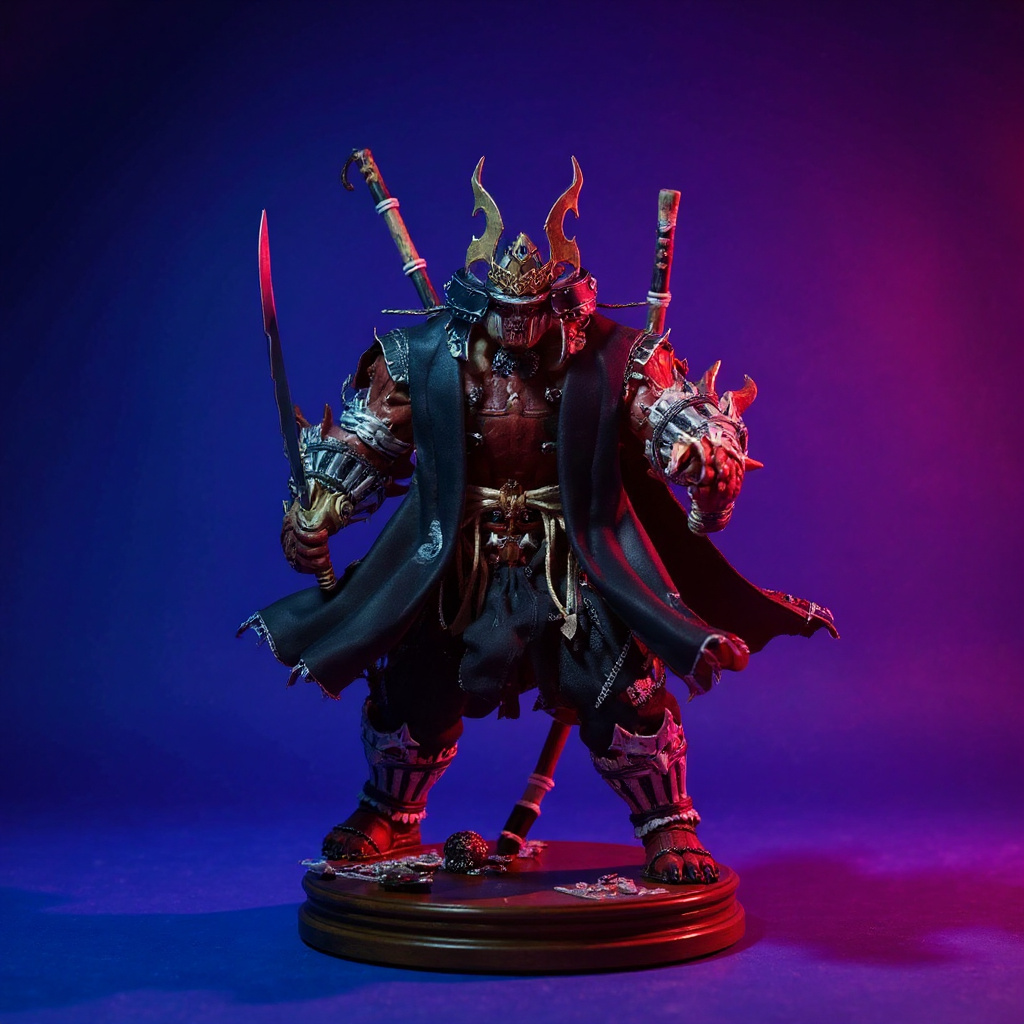
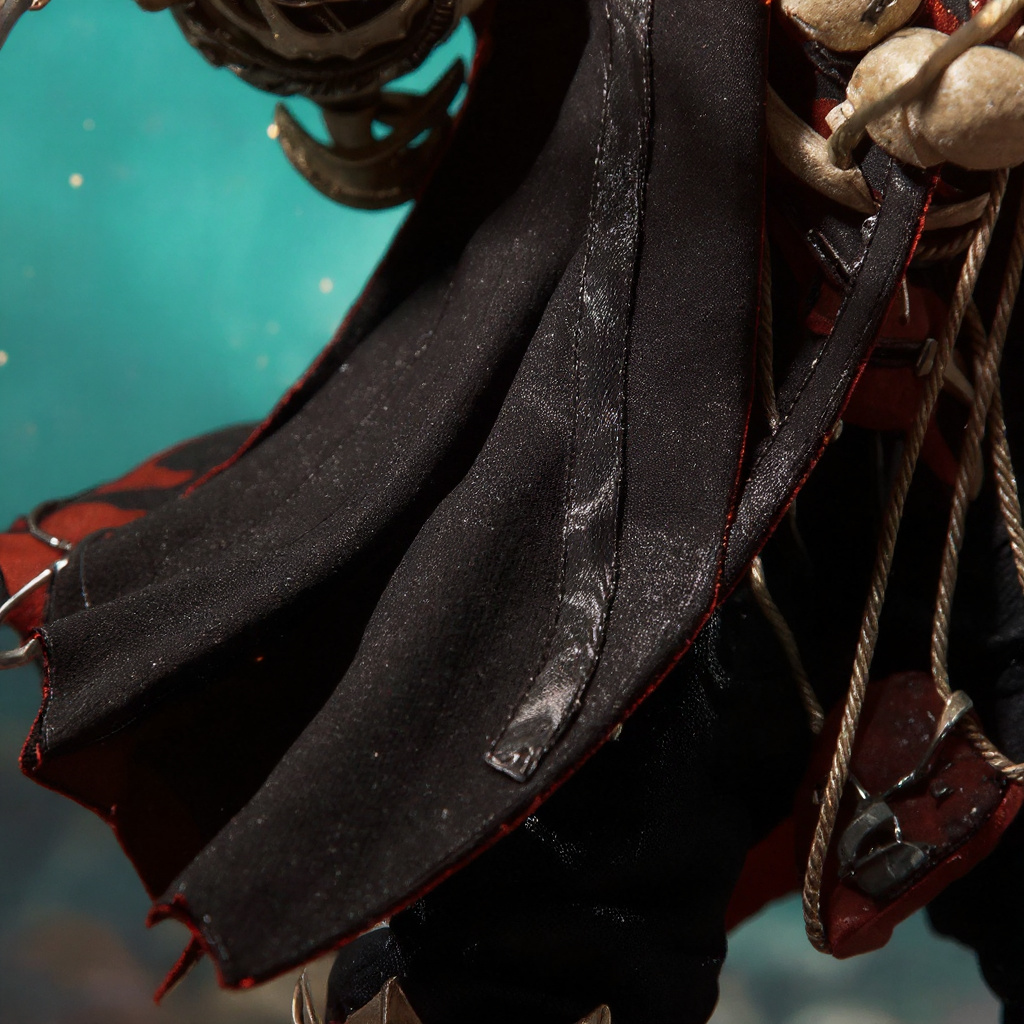
For 1/10 scale specifically, you want a lightweight fabric with minimal bulk at the attachment point. The 1/10 Scale Replacement Cape for Oni-Faced Shura Takigawa uses dark cloth fabric with fine, visible seams and subtle wire-shaped folds built into the drape — it photographs well without the bulk problems common at smaller scales.
A Note on How These Ship
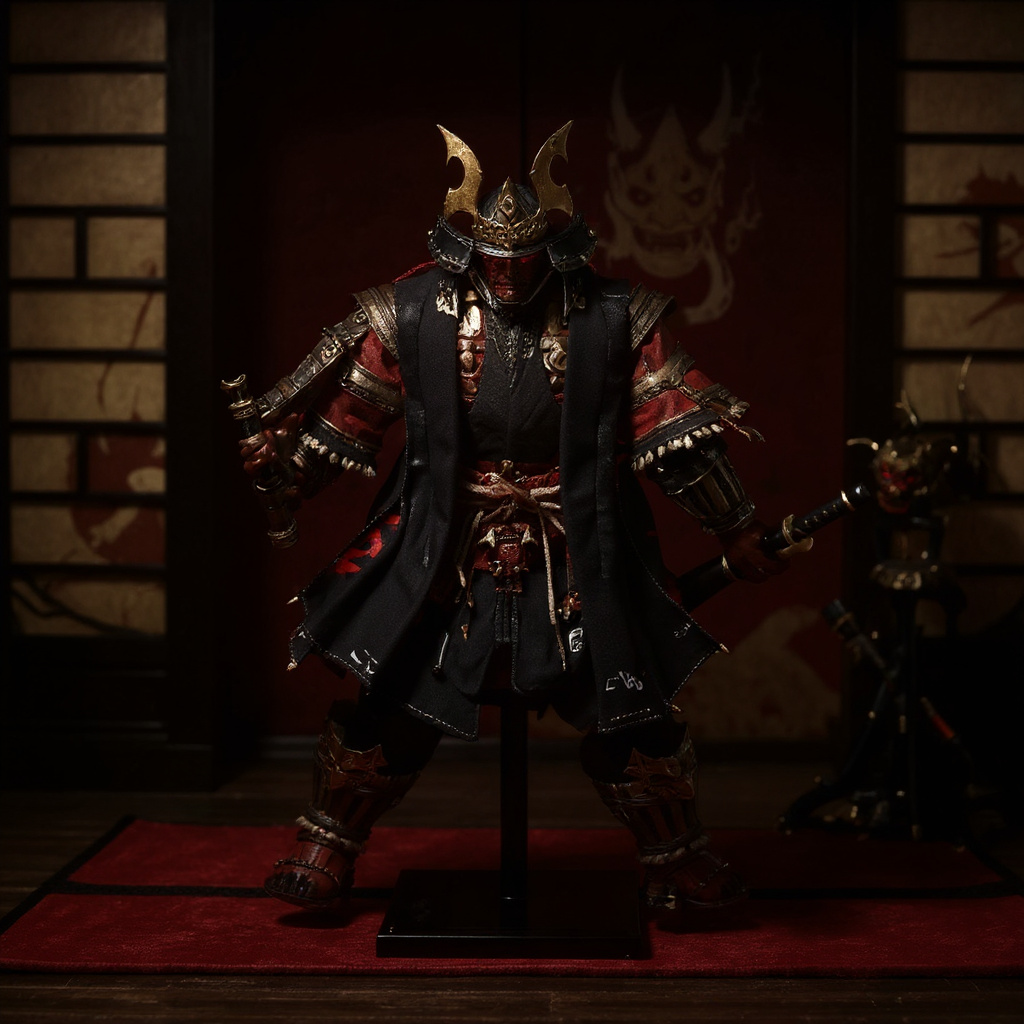
Here's something most product pages don't mention: this particular cape doesn't arrive attached to a full figure. It ships mounted on a small display stand shaped like a mannequin form — just enough structure to hold the shoulders and collar so you can see the fold pattern and stitching before you attach it to anything. That matters if you're buying it mainly to photograph on its own, which a fair number of collectors do.
Construction Details That Show Quality
1. Clean seam finishing — Raw edges that fray right out of the package mark cheap construction 2. Reinforced attachment points — Where the cape connects takes the most repeated stress 3. Consistent wire placement — Evenly spaced, tensioned enough to hold a fold, without visible bumps 4. Appropriate closure method — Velcro, snaps, or ties that won't scuff or stress a figure's paint 5. Color-matched thread — Visible contrasting stitches look amateur, even on an otherwise solid cape 6. Proper hem weight — Enough to drape without pulling a small figure over 7. Washable construction — Dust happens, and you'll want a way to clean it eventually
Handmade items show slight irregularities. That's normal. It often adds character. But straight seams and secure attachment points shouldn't be optional, no matter who made it.
Factory Shortcuts vs. Handmade Quality Markers
Factory capes and handmade capes fail — and succeed — in different, fairly predictable ways. Here's what to actually check before buying either one.
Factory cape shortcuts, ranked by how often you'll run into them:1. No wire at all — the fabric relies on gravity and nothing else 2. Vinyl or pleather that cracks within 6-12 months on a shelf 3. Glue-based attachment points instead of stitched loops 4. One fabric weight used across every scale line the factory sells 5. Plastic snap closures that stress delicate joint pegs over time
Handmade cape quality markers — check for these before buying:1. A wire channel you can only feel when you flex the fabric, not at rest 2. Hem weight distributed evenly, with no side hanging heavier than the other 3. Thread color matched within one shade of the base fabric 4. Attachment loops reinforced with a second pass of stitching 5. Seller photos showing the cape posed in at least three different positions, not laid flat on a table
Honestly, most $60 handmade capes use the same wire gauge and the same fabric bolt as $35 ones from the same maker. You're often paying for reputation and turnaround speed, not better materials. Worth knowing before you assume price tracks quality — because it doesn't, not reliably.
The middle ground is small-batch makers who've locked in a reliable supplier and a repeatable technique. They charge more than a factory and less than a big-name custom shop, and for a 1/10 scale piece, that's usually the smartest place to spend.
Getting the Most From Your Display Setup
Even the best cape falls flat under bad lighting. Oni figures in particular benefit from lighting that emphasizes the cape's flow instead of washing it out.
Position lights to create depth. A cape lit head-on looks flat. Every time. Side lighting or backlighting throws shadows that define the fabric's shape and movement — this is the single easiest photography fix collectors skip. LED strips run cheap and give you control over direction and color temperature; look for 6500K if you want the fabric's true color instead of a warm cast.
Support matters too. Clear acrylic stands let you position figures mid-action without a visible crutch holding them up. The cape flows the way it's built to while the figure holds a pose gravity would otherwise ruin.
Dust is the enemy here. Fabric capes collect it faster than molded plastic accessories, and cleaning them takes more care. A soft brush handles light dust. Deeper cleaning means detaching the cape entirely — and if you live somewhere humid, that's not optional, it's routine maintenance every few months.
Honestly, if you're in a humid climate, silk blends are a bad bet no matter how well they're wired — they'll absorb moisture, sag, and hold a musty smell that no amount of brushing fixes. Cotton canvas or synthetic satin handle humidity better, even though they score lower on posability.
FAQ
What is the best material for a soft goods cape for collectible figures? Cotton-poly blends with 22-24 gauge wire sewn into the hem hold shape best for figures under 7 inches. Vinyl cracks at the fold line within 6-12 months of shelf display — avoid it. What is the best display case for figurines? The IKEA Detolf (15.75" x 15.75" x 64.5", roughly $80-100) shows up constantly in collector forums for its glass panels and adjustable shelves. Pair it with a 6500K LED strip for accurate fabric color. Where can I find custom clothing for my action figures? Etsy shops tagged "1/12 scale clothing" or "1/6 soft goods" list dozens of makers. Check for at least 10 completed sales and photos of the cape posed, not laid flat, before buying. r/actionfigures also runs a maker-recommendation thread. What should I do with collectible figures once I stop displaying them? Store them in original packaging if you kept it. Otherwise wrap in acid-free tissue and keep the storage space between 40-55% relative humidity — higher than that invites mold on fabric capes specifically. What are the best places to buy 1/12 wired capes? Small-batch Etsy makers charging $28-$45 tend to use one consistent wire gauge across their whole catalog. Check three to five buyer photos before ordering, since listing photos often show the cape flat and unwired. Is One:12 Props a good company to buy from? For hero figures, yes. Capes run $45-$70, above mass-market pricing, but collector reports put wire placement and seam finishing holding up past 3 years of regular handling. How do you weather a soft goods cape without ruining the fabric? Mix acrylic paint with water at roughly a 1:8 ratio and test on a hidden scrap first. Dry-brush instead of wet-brush — wet techniques soak into cloth fibers and won't lift back out once you've gone too far. Looking for a good waist cape — any recommendations? Waist capes need a reinforced belt channel, not a tied ribbon. Look for double-stitched loop points rated to survive at least 50 pose changes without fraying at the corner. What exactly is a soft goods cape? It's a cloth accessory — not molded plastic or vinyl — usually reinforced with thin wire, built to drape and hold a pose on an action figure or a dedicated display stand. Can a soft goods cape be displayed without the full figure body? Yes. A growing number of 1/10 scale capes ship mounted on a small stand or mannequin form built just for the shoulders and collar, so you can photograph the fold structure and seams before attaching it to a figure at all.What Actually Makes It Worth the Money
A quality soft goods cape changes how a figure photographs. Static poses turn into scenes that look mid-motion. That's worth paying for if display quality matters to you.
You don't need to spend $60 on every cape, though. Mass-market options work fine for background figures. Save the premium pieces for the hero figures on your main shelf.
The 1/10 Scale Replacement Cape for Oni-Faced Shura Takigawa sits in that middle ground — handmade, wired, dark matte fabric with fine seams, priced at $39. That's reasonable for the construction level and the scale-specific proportions, and it ships on its own display stand so you can see the fold work before you commit it to a figure.
Browse the full soft goods cape collection if you want to compare options, or check the fabric care guide before your first wash. And if you want a wire gauge reference outside our own recommendations, the American Wire Gauge standard is a decent independent check on what "22-24 gauge" actually means in thickness.
If factory capes that won't hold a pose have been annoying you, moving to a wired soft goods cape is a small upgrade that shows up in every photo afterward. See the handmade replacement cape here and judge the seam work for yourself.

