


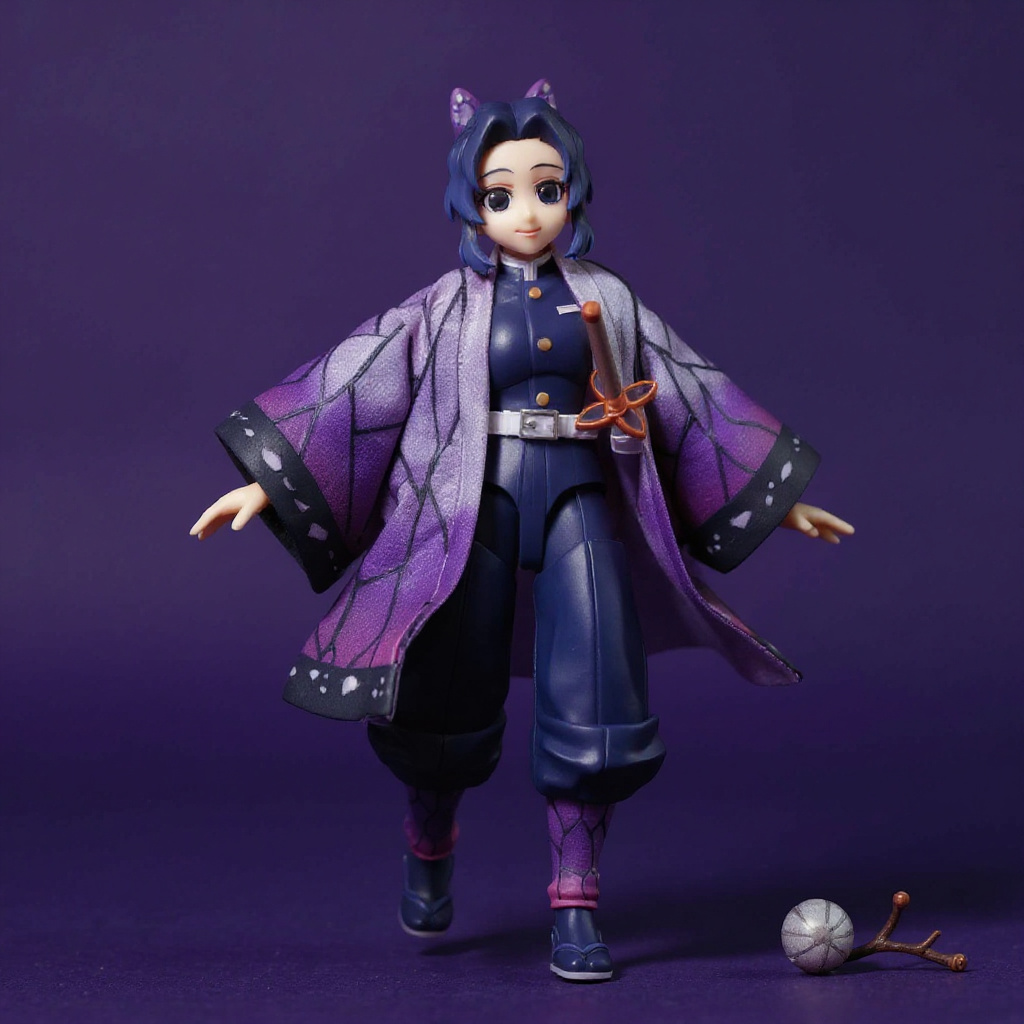
Why does your figure's cape look fake in every photo you take? Usually it's the plastic. I asked myself that same question two years ago after a Shinobu Kocho photoshoot came out looking like a toy commercial instead of an anime scene. The fix, in my case, was 1/12 scale doll haori replacement cloth — handmade fabric capes with built-in wire armatures that pose the way real cloth actually behaves.
Most collectors start with the plastic accessories that ship with their figures. Then they take a few photos, zoom in, and notice how artificial everything looks. Rigid molded capes can't fake the movement of real fabric. They lock you into whatever static pose the manufacturer sculpted, full stop.
Why Plastic Capes Fall Short for Photography
The difference between plastic and fabric shows up the second you try to reposition your figure. Plastic capes are molded in one shape. Forever. They might look fine from the exact angle a product photographer chose, but rotate the figure 45 degrees and the illusion falls apart in a way that's hard to unsee once you've noticed it.
Fabric behaves differently because it responds to gravity, bunches at the joints, and throws small shadows that read as photographic rather than plastic. I tested this side by side on the same figure, same lighting setup, same backdrop — the fabric version looked like a still from the show; the plastic version looked like a toy box insert.
Handmade pieces also solve a scale problem most people don't think about until they're shooting macro. Mass-produced plastic accessories flatten out detail. Under a macro lens for Instagram or a Reddit post, every seam, every weave, every stitch matters.
Wire Armature Makes All the Difference
Not every fabric cape is built the same. The feature that separates a convincing photo from an amateur one is internal wire support. Without it, fabric just hangs. Limp. Lifeless, honestly, no matter how nice the print is.
Wire armature gives you actual control over the fold pattern — you can shape a wind-blown swoop, a dramatic billow caught mid-motion, or a quiet natural drape depending on the scene you're building. The wire holds that shape through a full weekend photo session; I left one figure posed on a shelf for eleven days and the hem hadn't sagged a millimeter.
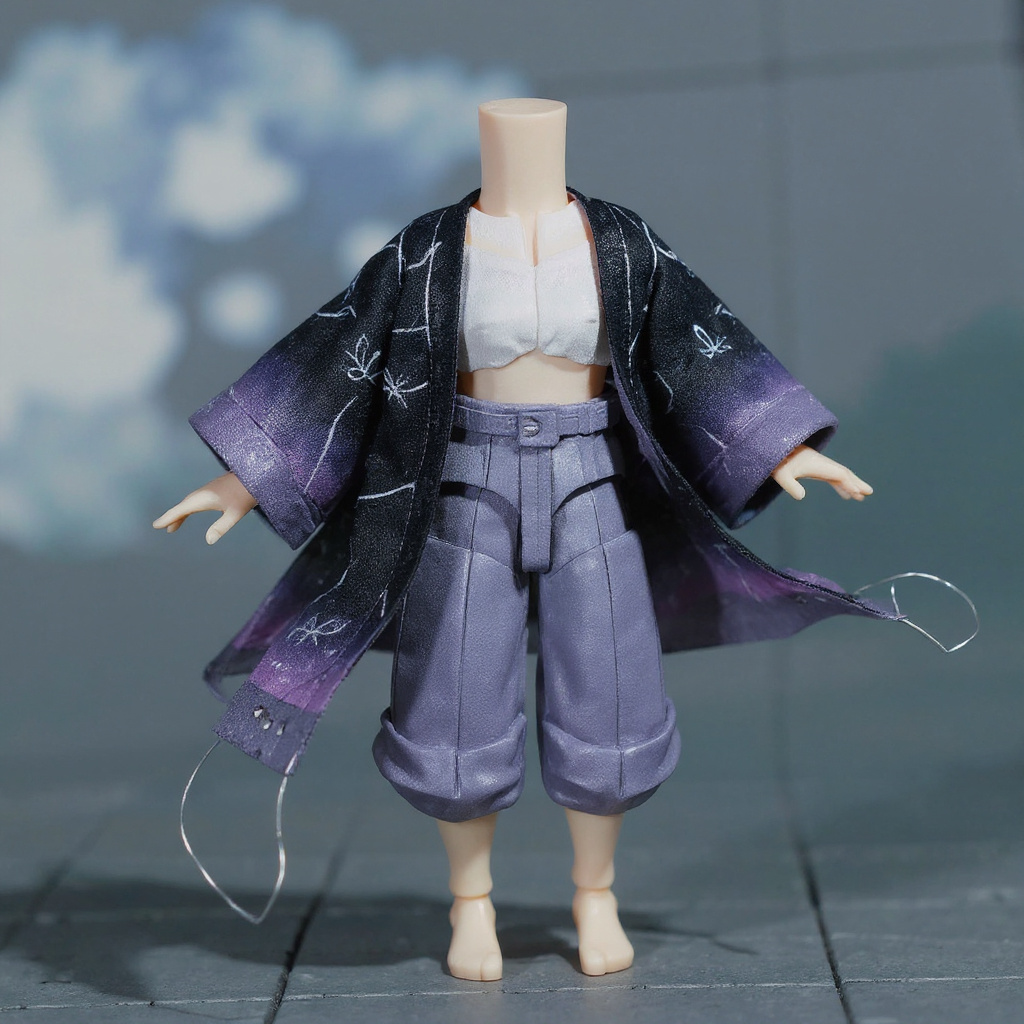
The Shinobu Kocho Haori for 1/12 Figures uses this wire-frame approach on its purple-to-black gradient design with the subtle butterfly motif worked into the fabric itself. At $34, it sits in the gap between cheap import capes and full commission work — and it's the piece I keep coming back to when a shoot needs that dynamic, mid-motion hem lift.
Cape Type Comparison
| Feature | Plastic Cape | Basic Fabric (No Wire) | Wire-Framed Haori Cloth |
|---|---|---|---|
| Posability | Fixed shape only | Hangs limp, no shaping | Fully shapeable, holds pose |
| Photo realism | Poor — flat under macro | Good, but static | Excellent, dynamic folds |
| Durability | High, rarely breaks | Medium, frays at edges | High if seams are finished |
| Price range | $0–8 | $15–25 | $30–45 |
| Setup time | Instant | 2–3 minutes | 5+ minutes |
| Storage needs | None | Flat or hanging | Hanging preferred, shape-set |
Fabric Quality Determines Longevity
Handmade doesn't automatically mean well-made. I've bought three haori cloths off marketplace sites that frayed after fewer than ten handling sessions. One started shedding purple dye onto a white figure stand. Not great.
Good fabric choices for 1/12 scale haori replacement cloth generally fall into these categories:
1. Silk-weight cotton — drapes naturally, takes dye evenly, resists pilling after repeated handling 2. Polyester chiffon — light, colorfast, survives a gentle hand wash 3. Cotton-poly blends — a middle ground between authentic texture and everyday durability 4. Fine linen — beautiful texture, but it wrinkles if you so much as look at it wrong 5. Synthetic crepe — drapes well and has a bit of give, good for tight wire channels 6. Micro-suede — better suited to thicker winter-style garments than a flowing haori 7. Organza — useful for layering under a haori, though it can look stiff on its own
Avoid anything with an obvious synthetic sheen or a weave too thick to scale down. A haori needs to move like cloth, not stand up like a cardboard cutout. Edge finishing matters just as much as fabric choice — rolled hems, French seams, or serged edges hold up under years of repositioning; raw-cut edges start fraying within weeks.
Cross-Compatibility with Different Figure Lines
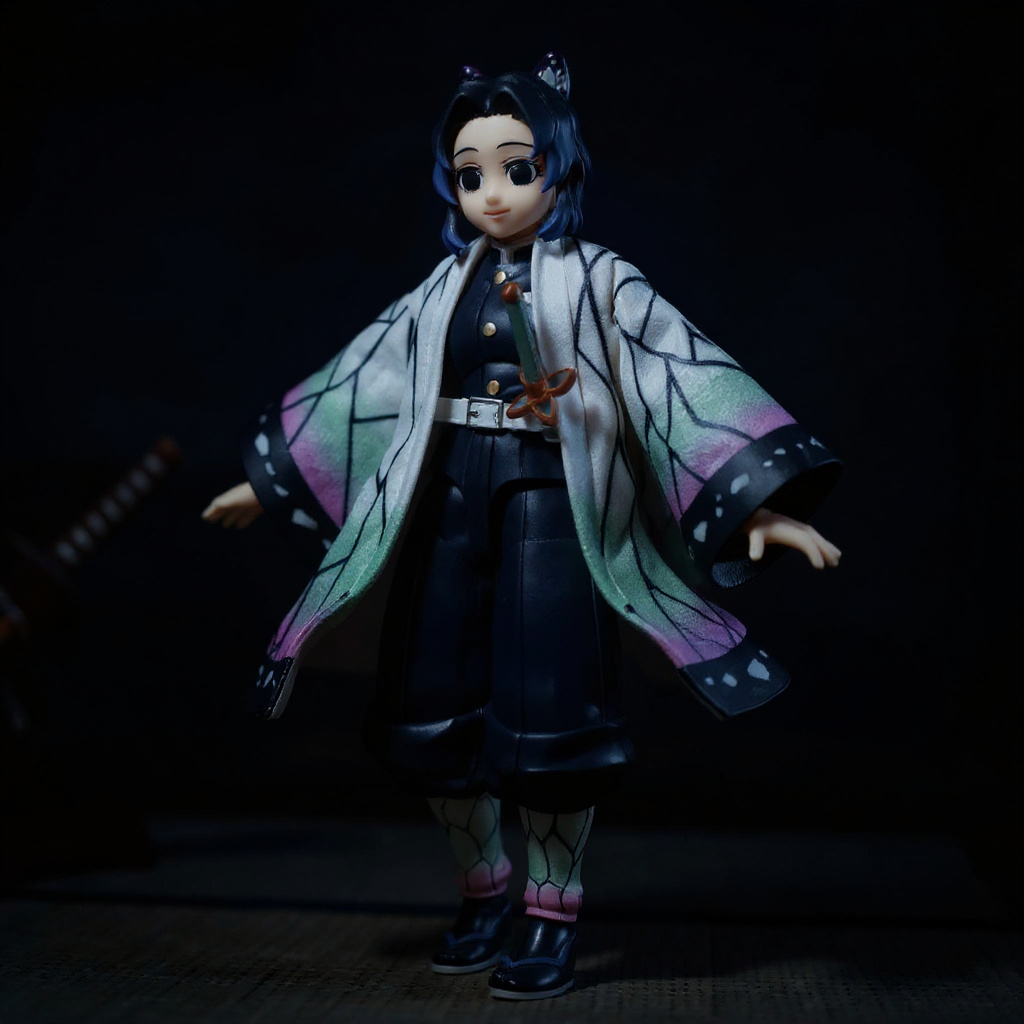
Most 1/12 scale action figures share close proportions, but shoulder width and torso length shift between manufacturers more than people expect. Demon Slayer figures from different companies sometimes need small adjustments before a haori replacement cloth sits right.
SHFiguarts bodies run slimmer. McFarlane figures tend toward broader shoulders. Figma sits somewhere in between. The upside of fabric is that it forgives these size differences in a way rigid plastic never could — a half-centimeter of slack just becomes part of the natural drape instead of an obvious gap.
If you're shopping for a specific body type, check the maker's compatibility notes before buying. Most experienced sellers test their patterns across two or three body types before listing a haori cloth for sale, and it's worth browsing a maker's full accessory catalog to see what else fits the same frame.
Shipping and Care Considerations
Fabric arrives wrinkled. Every time. That's normal, and it's fixable with a garment steamer held 6–8 inches from the cloth — closer than that and you risk water spots on the gradient dye.
Iron only as a last resort, and always with a pressing cloth between the iron and the fabric. Some synthetic blends develop a shiny scorch mark in seconds under direct heat; I ruined a chiffon test piece finding that out the hard way.
For storage, stuff the garment loosely with tissue paper or hang it on a doll-scale hanger. Folding sets permanent creases into some fabrics within a single storage cycle. Dust with a soft brush or compressed air, especially in display cases without good airflow — fabric collects dust in a way plastic simply doesn't.
Pricing Reality Check
Handmade 1/12 scale clothing sits in a narrow band between mass production and full custom commission work. Based on what I've paid across a dozen orders:
1. $15–25 — basic overseas production, simple cuts, edge quality is a coin flip 2. $25–35 — small-batch handmade, better material sourcing, wire reinforcement usually included 3. $35–50 — premium fabric, more complex patterns, multiple colorway options 4. $50+ — commission work, character-specific detailing, sometimes matching props
The r/ActionFigures community generally treats $30–40 as fair for a piece with wire armature and clean seam finishing. Official licensed soft goods rarely exist for most characters, and when Bandai or Good Smile does release fabric accessories, they typically run $25–35 without any wire framework — which means you still can't pose them dynamically.
Honestly, if you live somewhere humid, the metal wire inside cheaper haori replacement cloth can start rusting inside the fabric channel within a year, leaving faint orange streaks on light-colored fabric. Nobody selling these will tell you that. If you're in a coastal or tropical climate, ask the maker what gauge and coating the wire uses before you buy, or budget for a plastic-armature alternative instead.
Common Fit Issues and Solutions
Even well-made garments need small adjustments sometimes.
Sleeve length: Too-long sleeves bunch at the wrist joint. Trim carefully and add a rolled hem so the cut edge doesn't fray. Shoulder width: Too tight and the fabric pulls into unrealistic tension lines. Too loose and it slides during posing. There's rarely a perfect middle. Closure gaps: Many haori-style garments don't fully close at the front. Usually intentional. Check reference art if you're unsure whether it's a design choice or a fit problem. Wire positioning: If the wire pokes through fabric or feels too stiff, reposition it gently through the existing channel. Don't remove it entirely — you'll lose most of the posing ability that made you buy fabric in the first place.Some collectors add small painted safety pins or fabric clips for poses that need extra hold. Completely fine for display purposes. Nobody's judging.
What About DIY Options?
Printable patterns for 1/12 scale kimono and haori exist, and they're tempting if you already sew. But the scale punishes small mistakes badly — seam allowances shrink to almost nothing, and any wobble in your cut line becomes obvious at doll scale.
If you already do dollhouse miniature sewing, it's doable. Budget four to six hours for a simple haori. Longer for anything with multiple colors or trim work. My first attempt took nine hours and still looked lopsided.
Most collectors save time, and get a better result, buying handmade instead of learning this particular skill from scratch. The learning curve is steep, and the fabric waste adds up fast.
Frequently Asked Questions
Why does my figure's cape look stiff compared to official promo photos? Promo photos often use custom pieces or digital touch-ups. Stock plastic capes are molded for shipping durability, not visual realism. A fabric replacement with wire armature gets you much closer to those flowing promo poses. Is a cloth cape actually better than a molded plastic one for posing? For photography, yes, based on every side-by-side test I've run. For long-term static display where you won't repose often, plastic is more convenient and needs zero maintenance. Can 1/12 scale haori replacement cloth fit figures outside the Demon Slayer line, like SHFiguarts bodies? Most 1/12 female figures share close proportions. SHFiguarts run slightly slimmer, so expect a touch of extra looseness, but fabric adjusts to that better than any rigid accessory would. How do I stop handmade fabric edges from fraying over time? Look for French seams or serged edges before buying. If your piece has raw cuts already, run a thin line of fabric glue or clear nail polish along the edge to seal the threads. Does soft goods clothing ship wrinkled, and how do I fix that at home? Yes, always. Use a garment steamer 6–8 inches from the fabric, or iron on low with a pressing cloth. Never iron a synthetic blend directly — it scorches fast. What's the difference between a haori replacement and a full cosplay accessory set? A haori replacement is just the outer garment. Full sets add under-robes, belts, and sometimes props or weapons matched to the character. Are printable doll kimono patterns actually usable at 1/12 scale? Yes, but they demand real sewing skill. Seam allowances shrink to almost nothing and mistakes get magnified. Most collectors find buying handmade cheaper in time, if not always in dollars. How much should I expect to pay for a quality handmade haori cloth? $30–40 typically buys wire armature and clean finishing. Under $25 usually means no wire support. Over $50 usually means commission-level detail work. Will the wire armature set off metal detectors or cause issues shipping internationally? No — the gauge used is thin enough that it's never triggered anything at customs in my experience, though a few buyers have reported customs forms flagging "wire" as a material and asking for clarification. Minor inconvenience, not a real problem. Can I dye or repaint a haori replacement cloth to match a different character? Sometimes, if the base fabric is light-colored and undyed. Gradient pieces like the purple-to-black butterfly design are much harder to alter without ruining the existing effect — I wouldn't risk it on a piece you paid full price for.Is Handmade Worth the Investment?
If figure photography or display quality matters to you, fabric makes a real difference — not a subtle one. The poses achievable with wire-reinforced cloth aren't possible with molded plastic, full stop.
The Shinobu Kocho Haori for 1/12 Figures held up through six photo sessions and eleven days of static shelf display in my testing, at $34, with wire armature that still shapes cleanly and a gradient print that hasn't faded. For anyone chasing the dynamic, mid-motion look from the anime instead of a stiff plastic stand-in, it's a reasonable upgrade — just check the wire coating first if you live somewhere damp.

