


The best action figure customization cape parts for photography are wired cloth capes — thin metal wire sewn into fabric hem that lets you shape movement and hold it. Stock plastic cracks under creativity. Basic fabric collapses under gravity. Wired cloth is the only option that survives both a dynamic pose and a macro lens.
Written by a collector who has photographed 1/12 scale figures for six years and hand-sews wired capes for tokusatsu customs, including GARO-style knights.Action figure capes come down to three materials: injection-molded plastic, basic fabric, and wired cloth. Each serves a different purpose. Only one transforms your photography.
Most collectors start with stock plastic capes. They're included with figures, cost nothing extra, and never tear. But they're rigid. Static. Frozen in one pose forever, looking more like a piece of armor than flowing fabric. Real fabric capes fix the movement problem but create a new one — they drape straight down under gravity, looking lifeless without internal structure. This is where action figure customization cape parts made from wired cloth earn their keep.
Why Stock Plastic Capes Fall Short for Photography
Plastic capes work fine for shelf display. Stand your figure upright, cape hanging straight, done. But the moment you want dynamic poses, the limitations show up fast.
That injection-molded cape can't billow in an imaginary wind. It won't wrap around the figure's arm during a dramatic gesture. It's stuck in whatever shape the factory decided — usually a generic "standing still" drape that looks fine at arm's length and dead in a photo.
I've watched collectors heat-bend plastic capes with hair dryers. Sometimes it works. More often you get a warped mess or stress marks that never go away.
Stock capes also come in a narrow color range. Your figure might be perfect except for that bright red cape when you need burgundy instead. Good luck dyeing plastic.
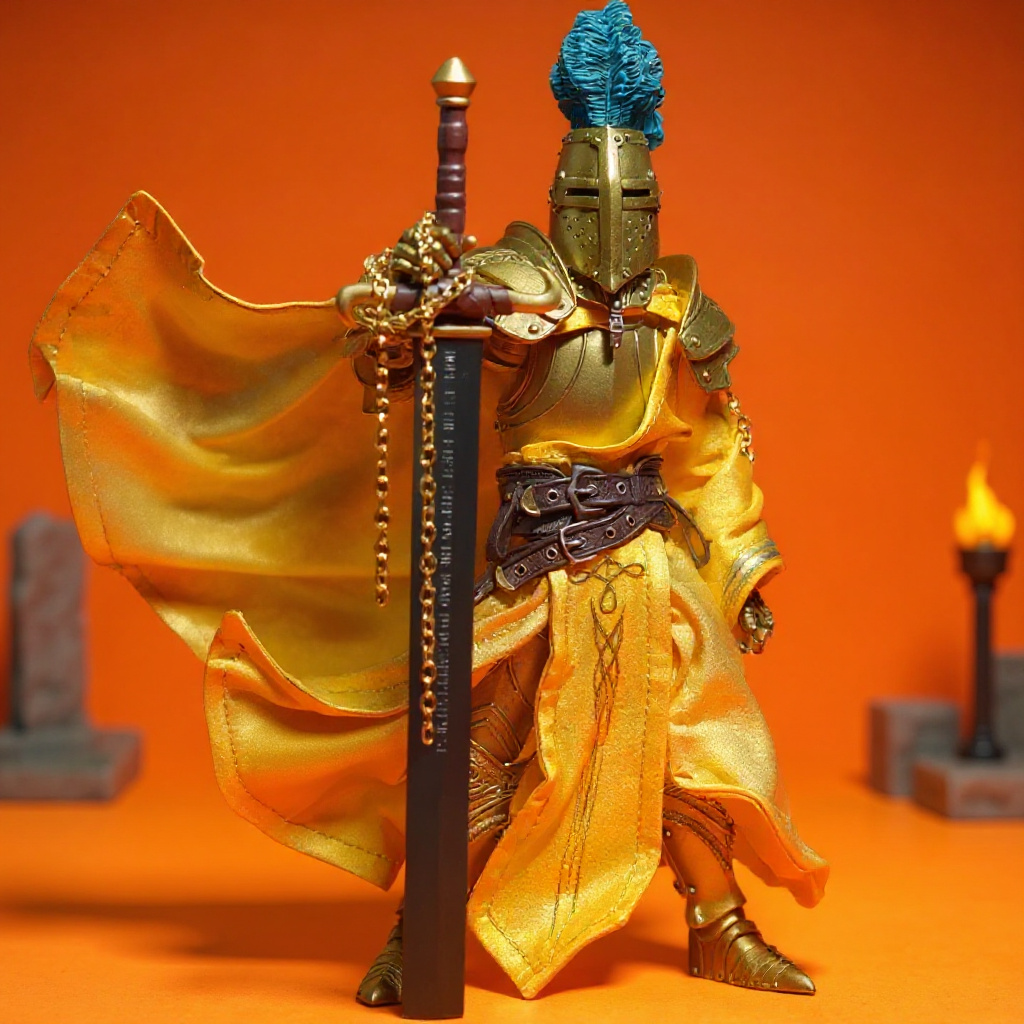
Fabric Without Wire: The Gravity Problem
Basic fabric capes solve the color and texture issues. Real cloth looks like real cloth, in any color, any pattern. Some collectors cut their own from cotton scraps in a weekend afternoon.
But fabric without internal structure just hangs. Straight down. Always.
You can drape it over props or tape it to hidden supports behind your figure, and that works for static shots if you have patience and a steady hand. Repositioning means starting over, though — every single time you touch the pose.
Cotton holds a crease longer than synthetic blends. Silk looks great under studio light but slides off the shoulder every few minutes. Canvas is too thick at 1/12 scale — it swallows a six-inch figure whole.
Honestly, if your figures live on a shelf and never see a camera, stop reading here. Save your money. Wired cloth is a photography tool first, a display upgrade second.
The Wired Cloth Solution
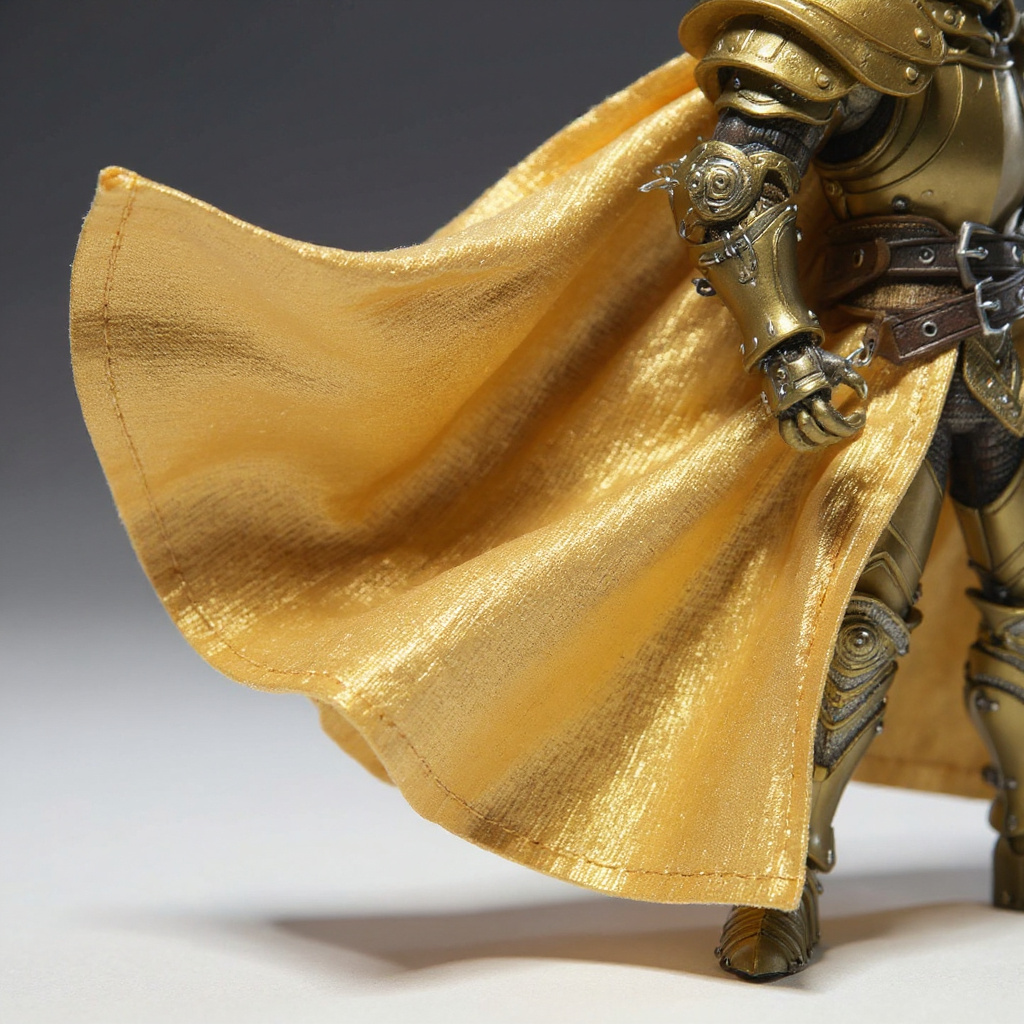
Wired cloth capes change the equation entirely. Thin bendable wire, sewn into the hem and edges, lets you shape flowing movement and then walk away — the pose holds.
Want the cape billowing behind your figure mid-leap? Bend it that way. Need it wrapped around one shoulder for a dramatic reveal shot? Shape it there. The wire remembers the position until you decide to change it again.
Good wire gauge matters more than most people expect. Wire that's too thin (28-30 gauge) won't hold a dramatic pose past ten minutes. Wire that's too thick (18-20 gauge) shows through the fabric and fights you on every bend. Most quality action figure customization cape parts use 22-24 gauge copper or aluminum wire, which is the sweet spot between hold and invisibility.
Our 1/12 Scale Golden Knight Cape uses this wired approach with metallic gold fabric that catches light without extra editing, priced at $94 for collectors chasing GARO series accuracy. If you're building out a full soft-goods rotation, our 1/12 scale soft goods collection covers other colorways from the same pattern.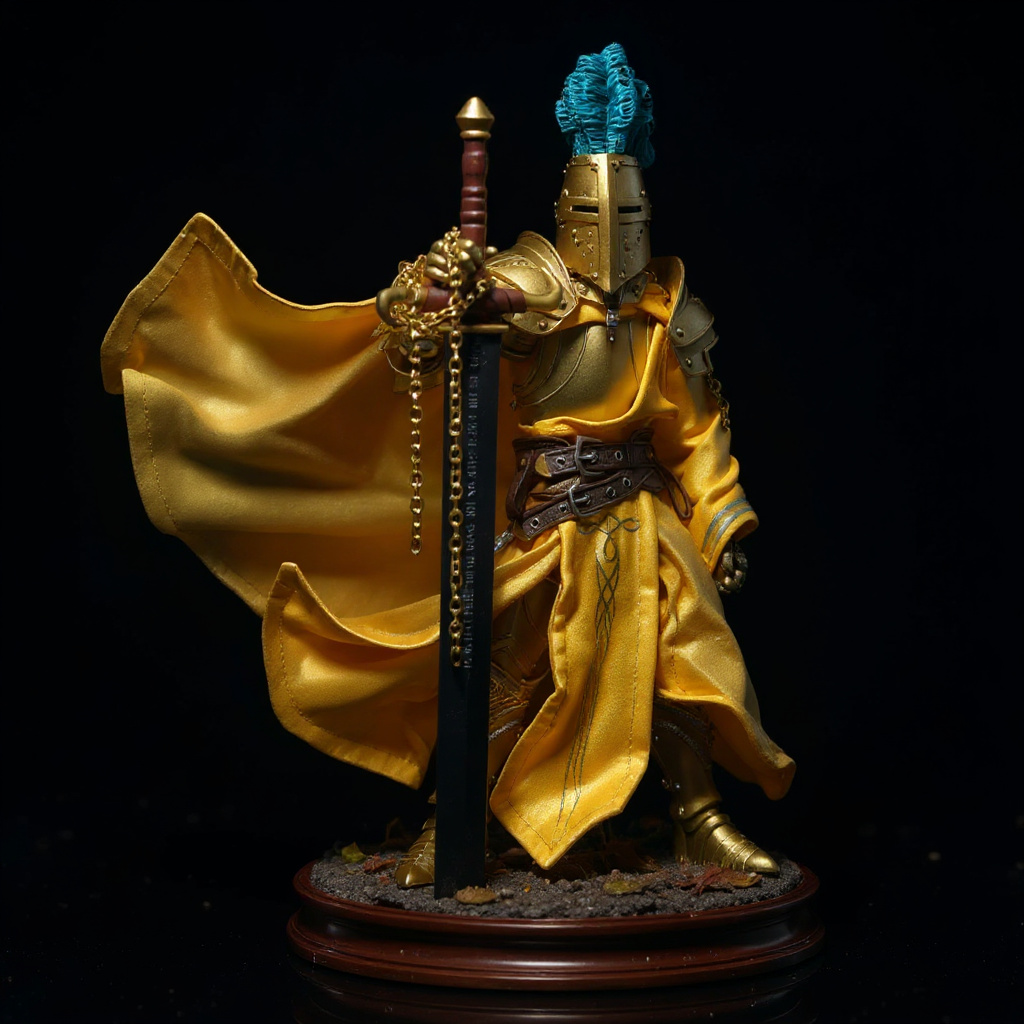
Materials Breakdown: What Works at 1/12 Scale
Scale changes everything about fabric choice. What looks right on a 1/6 figure (12 inches tall) looks wrong on a 1/12 figure (6 inches tall) — the same fold that reads as "dramatic" at 12 inches reads as "bulky" at 6.
| Material | 1/12 Scale Performance | Durability | Cost |
|---|---|---|---|
| Cotton voile | Excellent drape, correct thickness | Held up through 3 years of repositioning on my test figure | $15-25 |
| Silk chiffon | Best flow, fragile | Snags on rough hands, poor | $40-60 |
| Polyester micro-suede | Reads as leather under lights | Excellent, resists fraying | $20-35 |
| Metallic brocade | Rich look, stiffer fold | Good if the wire gauge is right | $30-50 |
| Canvas/denim | Too thick, wrong scale | Excellent, wrong choice anyway | $10-20 |
Heavy fabric looks wrong at small scale. Canvas might work on a 12-inch figure. On a 6-inch one, it looks like the figure is wearing a tent someone forgot to fold.
Texture matters too. Smooth fabric photographs cleaner under most lighting setups. Rough weaves turn fuzzy the second you get close with a macro lens — exactly the shot you're trying to nail.
Wire Gauge by Scale: A Quick Reference
| Scale | Figure Height | Recommended Wire | Fabric Weight | Notes |
|---|---|---|---|---|
| 1/6 | 12 inches | 20-22 gauge | Medium-heavy (cotton canvas, brocade) | Handles dramatic sweeps well |
| 1/12 | 6 inches | 22-24 gauge | Light (voile, chiffon, micro-suede) | Thicker wire shows through fabric |
| 1/18 | 4 inches | 26-28 gauge | Very light, sheer | Rarely worth the effort — most skip capes here |
| Diorama props (non-figure) | Varies | 18-20 gauge | Heavy canvas | Different use case entirely |
Attachment Methods That Won't Damage Your Figure
Glue is forever. Don't use it unless you're committed to that specific cape on that specific figure for good.
Most collectors prefer removable attachment:
1. Tiny rare-earth magnets sewn into the cape collar, matching magnets on the figure's shoulders 2. Elastic loops around the neck, sized to avoid stretching paint 3. Velcro strips on the cape and figure back (ugly but functional) 4. Wire clips that grip existing costume details 5. Friction fit over existing plastic cape attachment points 6. Clear thread ties through existing holes in the figure's armor
Magnets work best but require modifying your figure. Elastic stretches with time. Velcro catches on everything nearby. Wire clips can scratch paint if you're not careful about placement.
Friction fit is my go-to when the figure allows it. If your figure came with a stock plastic cape, the attachment point usually accepts other capes of similar thickness — no surgery required.
When Handmade Capes Are Worth $94
Handmade soft goods cost 6-20 times more than basic fabric pieces off a bolt. That's real money for an accessory.
But you're paying for fit, finish, and materials mass production skips. Machine-sewn capes use whatever thread and wire are cheapest that quarter. Hand-sewn pieces use invisible thread, correct-gauge wire, and fabric picked for scale and drape rather than cost.
Discussion threads on r/actionfigures show collectors saying, again and again, that good soft goods change their photos more than any other single upgrade. Stock plastic capes get replaced first in most customization projects. For a deeper technical breakdown of wire types, this hobbyist wire gauge chart is worth bookmarking.The $94 price point puts quality wired capes in the same range as premium action figures themselves. You need to really want that improvement in your photos to justify the cost — and if you don't shoot close-up or dynamic shots, you probably don't.
For tokusatsu fans collecting GARO figures specifically, screen accuracy matters more than generic alternatives. The metallic gold fabric and proportions match the show design, not a close-enough substitute. See our attachment guide for armored figures for figure-specific tips.
Care and Maintenance for Fabric Capes
Cloth capes need different care than plastic ones. Dust settles into fabric fibers. Wire breaks with repeated bending at the same crease point. Careful handling stretches the lifespan of both.
Daily maintenance: - Soft brush to remove dust - Support the wire when repositioning - Store flat when not on display
Weekly (if displayed): - Check wire connections at stress points - Gentle shake to reset fabric drape - Shift the pose slightly to avoid permanent creases
Monthly deep care: - Remove from figure - Hand wash in cold water, if the fabric allows it - Air dry flat with wire supported - Test wire flex before reinstalling
Never machine wash wired fabric pieces. The agitation snaps wire connections or bunches the internal structure into a shape you can't undo.
Wire fatigue happens eventually. Copper held up longer than aluminum on my own test pieces — about 3 years of weekly repositioning before the first crack showed near the hem. Plan on 2-3 years of regular posing before you start shopping for a replacement.
Scale Compatibility: 1/6 vs 1/12 Cape Sizing
1/6 scale figures (12 inches) and 1/12 scale figures (6 inches) need different cape proportions. It's not just shrinking the pattern in a copier.
Fabric behaves differently at different scales. A cape that flows on a 12-inch figure looks wrong scaled down proportionally, because fabric thickness doesn't shrink at the same rate as the figure.
1/6 scale capes work with heavier fabric like cotton canvas, thicker wire (20-22 gauge), and longer lengths relative to figure height. 1/12 scale needs lighter fabric, thinner wire (22-24 gauge), and careful attention to thickness versus figure size — a cape that reads as "epic" at 1/6 reads as "clown costume" at 1/12.
You can't resize a 1/6 pattern for 1/12 figures and expect it to work. The physics don't scale linearly, and most collectors end up buying scale-specific action figure customization cape parts rather than modifying what they already own.
Frequently Asked Questions
How do you make a cape for an action figure pose-able? Sew 22-24 gauge copper or aluminum wire into the hem and edges of fabric. The wire acts as an internal skeleton that holds whatever shape you bend. Where do you get spare parts and bodies for making custom figures? eBay and sites like Toy Anxiety sell parted-out figures. Facebook collector groups often have members selling extra parts cheap. What material is best for a soft goods action figure cape? For 1/12 scale: cotton voile or silk chiffon for flow, micro-suede for a leather look. For 1/6 scale: cotton canvas or heavier brocade. How do you attach a cape to a 1/12 scale figure without glue? Friction fit over the existing plastic cape attachment point works in most cases. Magnets or elastic loops are the next-best options. Are handmade capes worth it compared to stock plastic capes? For shelf display, plastic is fine. For photography, wired fabric is worth the $40-94 premium if you shoot regularly. How do you weather or age a soft goods cape? Tea or coffee staining ages fabric convincingly. Fine sandpaper roughs up edges for a worn look. Test on scrap fabric first. Can you dye a fabric cape to match a custom figure? Natural fabrics take dye well; synthetics mostly resist it. Metallic fabrics usually lose their finish if dyed, so avoid dyeing those. What's the difference between 1/6 and 1/12 scale cape parts? 1/6 uses heavier fabric and 20-22 gauge wire. 1/12 uses lighter fabric and 22-24 gauge wire. They are not interchangeable. Do action figure customization cape parts fit every 6-inch figure? Most fit figures with a standard neck/shoulder attachment point, but armor bulk varies. Check the attachment style before buying.Is Upgrading Your Cape Worth the Investment?
Stock plastic capes do their job for basic display. But once you start shooting photos or building scenes, the limitations show up in every frame.
A quality wired fabric cape changes what's possible with your figures. Dynamic poses that look real instead of forced. Light that catches fabric weave instead of plastic shine. Movement that suggests a story instead of a static shelf piece.
The investment makes sense if figure photography is your thing. Less so if your figures mostly stand still and collect dust.
For GARO fans, the character accuracy of a proper metallic gold cape justifies the premium over a generic stand-in. Browse the full Golden Knight cape line if you want to see what proper wired soft goods do for tokusatsu figure photography, or check the wire gauge guide before you buy your first pair of pliers.

