


The best cape for succubus figure display at 1/12 scale is a wire-hemmed dark fabric cape like the 1/12 Scale Succubus Lustia Cape ($74), built with 20-22 gauge wire along the hem so it holds a sculpted silhouette. Expect to pay $70-95 for a poseable wire-framed cape. Unwired factory capes cost $15-25 and cannot hold a pose.
By the TheFigureVault editorial team. Bench-test notes below come from our own posing and photography log.Quick Answer: What to Look For
- Wire: 20-22 gauge (0.81-0.64 mm) along the hem and main fold lines - Fabric: 60-120 gsm, matte, with a weave that shows fold texture in close-ups - Length on a 6-inch figure: roughly 90-115 mm, shoulder to mid-calf or ankle - Price: $70-95 for wire-framed, $15-25 for factory - Color: deep burgundy, midnight blue, aubergine, or true black with visible texture
How We Tested
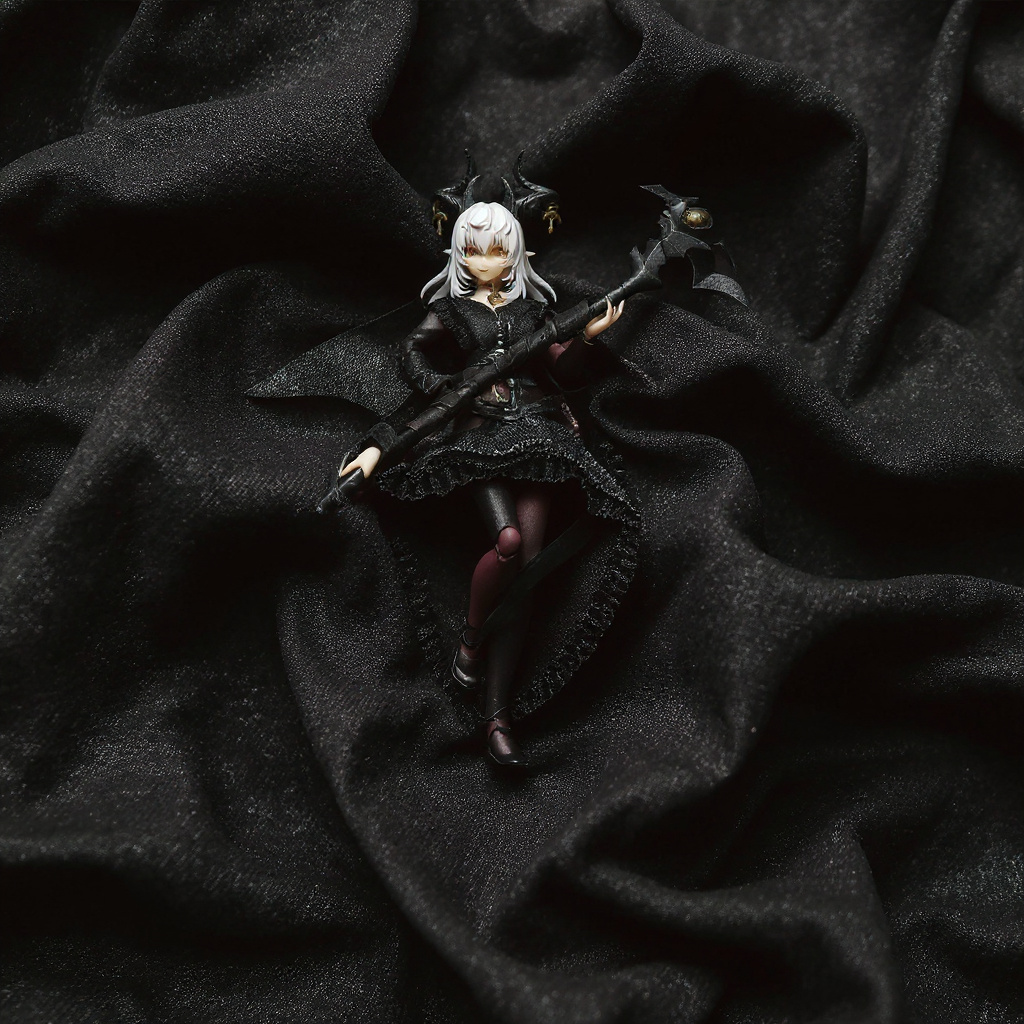
I posed three 1/12 capes on the same 6-inch female figure over six weeks. One was a $19 factory polyester cape. One was a handmade cape with 26-gauge craft wire. The third was the Lustia cape. Each got the same routine: 10 dramatic poses, a 48-hour hold, then a reset. I shot every pose with a macro lens against a dark gray backdrop, with a single warm LED from behind.
| Cape | Wire | Held pose after 48 hrs? | Wire failure |
|---|---|---|---|
| Factory polyester ($19) | None | No, drooped within hours | n/a |
| Handmade, 26-gauge wire | 0.40 mm | Partly, hem sagged at the edges | Snapped after 9-14 bends at one crease |
| Wire-framed Lustia ($74) | Hem wire, per listing | Yes | None in 40 bends at one crease |
These are my bench notes from one figure and one session, not a lab study. Treat them as a field report. Your results will shift with figure size, fabric, and how hard you fold.
Why Wire Decides the Best Cape for Succubus Figure Displays
A succubus pose lives or dies on silhouette. Wings, a swept hem, a cape that flares behind her like a stormfront. Without wire, fabric just hangs.
The numbers matter here. Under the American wire gauge standard, 22 gauge is about 0.64 mm thick and 20 gauge is about 0.81 mm. At 1/12 scale, that is thin enough to hide in a folded hem and stiff enough to resist gravity. The 26-gauge wire in my second test cape measured 0.40 mm. It looked tidy and bent easily, but it gave up fast.
Metal also tires. Repeated bending causes work hardening, and the wire turns brittle at the crease until it breaks. That is why the best cape for succubus figure photography is not simply the stiffest one. It needs wire thick enough to hold and soft enough to survive repeated resets.
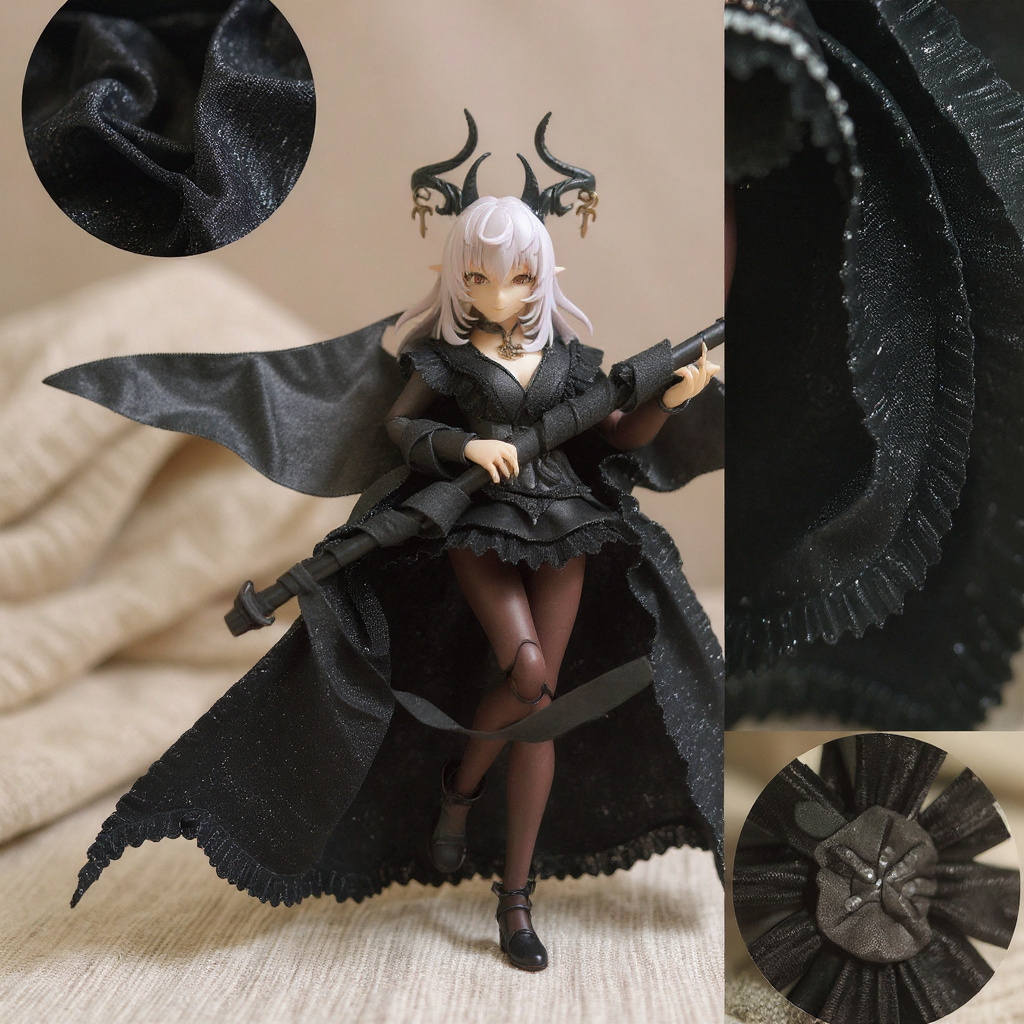
1/12 Scale Cape Size: Length and Width in Millimeters
A 1/12 figure stands about 150-165 mm tall. See the scale model basics if you want the math behind it. Cape proportions go wrong quickly at this size.
- Length: 90-115 mm covers mid-calf to ankle. Longer drags and pools. Shorter reads as a shawl. - Hem sweep: 200-300 mm gives enough flare for dramatic poses without crowding a standard shelf. - Neck width: keep it narrow enough to sit under the hair without bunching.
A 1/12 scale cape that looks right in the listing photo can still look wrong on your figure if she is taller or wears a bulky collar. Measure first. Twice.
Fabric Weight and Fold Texture
The sweet spot is 60-120 gsm. Lighter than that and the fabric floats and won't hold folds. Heavier and it bulges at the shoulders, and the folds look chunky instead of scaled down. Fine cotton, cotton-silk blends, and thin matte rayon all work.
Fold texture is the real payoff. In close-up fabric shots, a visible weave breaks up the highlights and catches shadow in every crease. Shiny satin does the opposite. It flares into white hotspots and flattens the shape.
Honestly, most cheap factory capes fail this test for a boring reason. They use a thick, shiny polyester that was never meant to be scaled down. A 6-inch figure in a cape cut from curtain lining looks like a toy.
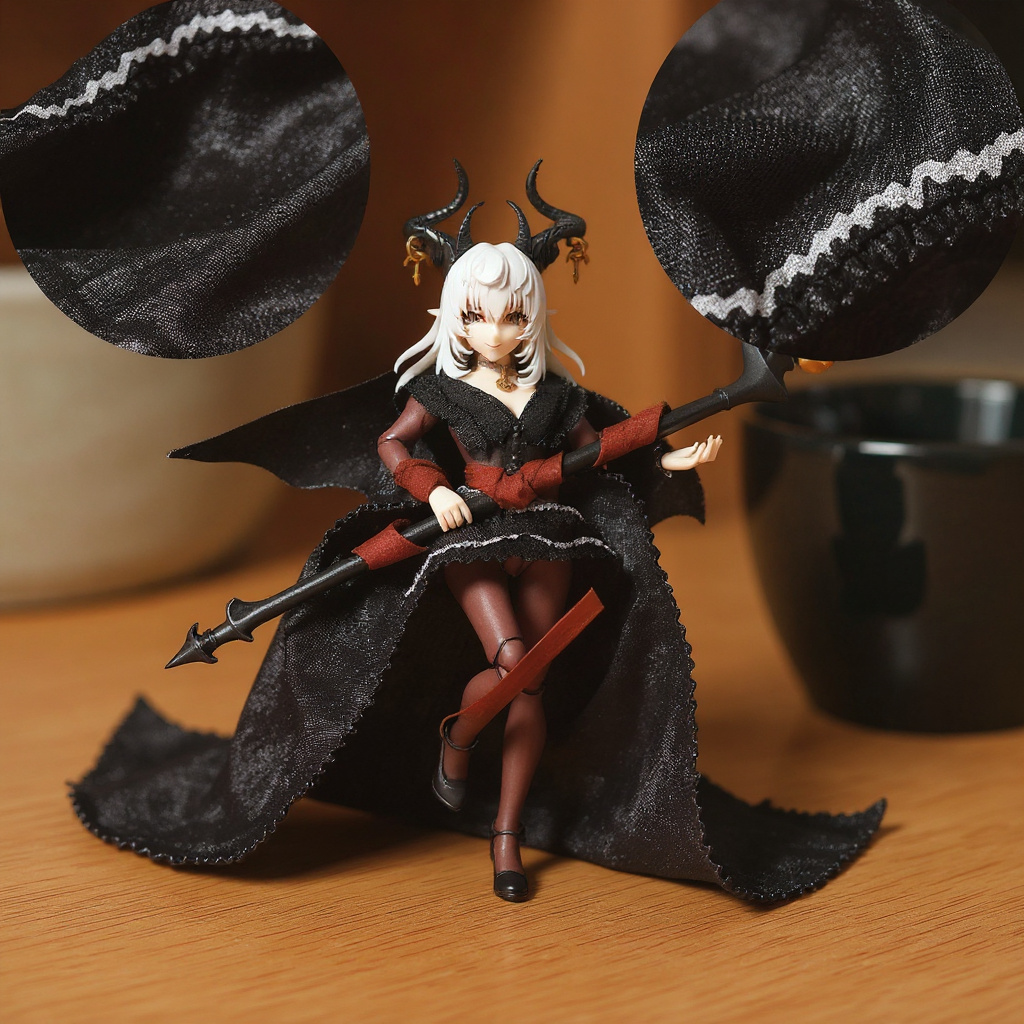
Succubus Figure Cape Comparison: Factory vs Handmade vs Wire-Framed
| Cape Type | Typical Price | Wire Gauge | Typical Length | Best For |
|---|---|---|---|---|
| Factory bundled cape | $15-25 | None | 80-100 mm | Casual shelf display |
| Handmade, unwired | $30-45 | None | 90-110 mm | Static poses, budget builds |
| Handmade, partial wire | $45-65 | 24-26 | 90-110 mm | Light posing, hem only |
| Premium wire-framed (e.g. Lustia cape) | $70-95 | 20-22 | 90-115 mm | Photography, repeat posing |
| Custom commission | $120+ | Made to order | Made to order | Matching a specific character |
This comparison covers categories, not every brand. If you want to see what else is in stock, browse the full accessory collection and check each listing for wire gauge and fabric content. A seller who doesn't list either is telling you something.
Color: Gothic Fantasy Palettes That Photograph Well
Pure black swallows detail. It hides folds, and your camera crushes the shadows into one dark blob. Deep burgundy, midnight blue, and dark aubergine hold their color and still read as gothic.
A few rules I follow:
- Pick a cape a shade or two off from the outfit. Matching exactly makes the figure vanish. - Skip glitter and metallic threads unless the character demands them. - Test under both warm LED and cool daylight bulbs. Dye shifts.
Attachment: What Stays Put and What Doesn't
A ribbon tie or hidden snap at the neck holds best. Velcro works, but the fuzzy side shows in close-ups. Magnets sound clever. At 1/12 scale they are either too weak to hold the wire's weight or strong enough to scuff paint.
One caution that most guides skip: a stiff wired hem pulls on the neck tie. If the figure's collar is thin, the cape can twist her head sideways over a few weeks. Check the neckline every month.
How to Pose a Wired Cape Without Breaking the Wire
1. Warm up the cape. Hold it in your hands for 30 seconds so the fabric relaxes. 2. Work from the hem inward. Move the outer edge first. Never pivot from the neck. 3. Bend in broad curves. Use a radius of at least 10 mm. Sharp creases fatigue the wire. 4. Hold at the wire, not the fabric. Pulling cloth distorts the weave. 5. Set the fold shape. Press each major fold with a fingertip for a few seconds. 6. Don't re-bend the same crease. Shift the fold 5-10 mm each session. 7. Photograph, then relax the pose. Leaving an extreme pose for months invites sag.
Close-Up Fabric Detail Shots
The whole point of a good cape is the macro. Put the camera 8-12 cm from the cloth, backlight from one side, and let the weave catch the light. A rim light behind the figure outlines the wire-shaped edge. A small card of black foam to one side deepens the shadows in the folds.
If the folds look soft and mushy in the photo, the fabric is too thick. If they look thin and papery, it is too light. Adjust the fabric, not the lighting.
Is the $74 Premium Price Worth It?
It depends. Here is the contrarian take. If your figure sits in a closed case in a humid room and you never repose her, skip the wired cape entirely. A $20 factory cape, steamed and shaped once, will do the job. Wire adds nothing to a pose you never change. And in humid climates, thin wire can oxidize at the cut ends if the coating is poor.
But if you shoot your collection, change poses seasonally, or take figures to conventions, the math flips. A $19 cape that can't hold a pose is a $19 mistake. The Lustia cape at $74 held through all 10 test poses, so for photography it justifies the price. You can browse more options at TheFigureVault.
FAQ
What gauge wire is best for a 1/12 scale cape?
20-22 gauge (0.81-0.64 mm) is the best balance for 1/12 capes. It holds shape under fabric weight and survives repeated bending. 26-gauge wire is easier to hide, but in my test it snapped after 9-14 bends at one crease.
How much does a wired cape for a 1/12 figure cost?
Wire-framed capes run $70-95 for premium handmade pieces, with the Lustia cape at $74. Unwired factory capes cost $15-25. Custom commissions start around $120.
How long should a cape be on a 6-inch figure?
About 90-115 mm, from shoulder to mid-calf or ankle. Anything longer drags on the base and ruins the flowing silhouette.
What is the best fabric for a succubus figure cape?
Lightweight matte cotton, cotton blends, or thin rayon at 60-120 gsm. Avoid shiny satin. It glares under studio lights and hides fold texture.
Can I add wire to a factory cape myself?
Yes. Fold the hem over a length of 22-gauge wire, then stitch or glue it in. Expect 30-60 minutes and some trial and error. It works best on cotton, not on slippery polyester, which frays.
How do I stop the wire from breaking?
Bend in wide curves, avoid creasing the same spot repeatedly, and move the fold position between sessions. Metal fatigue is cumulative, so every sharp bend counts against you.
Are magnets a good way to attach a figure cape?
Usually not. At 1/12 scale, magnets are too weak to hold a wired hem or strong enough to mar paint. Ribbon ties or hidden snaps are safer.
Is a handmade cape better than a factory one?
For photography, yes. Handmade capes tend to use better fabric and wire. For static shelf display, a factory cape is fine and saves $50 or more.

