


22-gauge wire run through five specific placement lines is what separates a boneglyph ogre mage cosplay cape that holds a wind-swept pose from one that flops like a wet napkin. I learned this after ruining three test capes and finally landing on a channel pattern that survives repositioning for months, not days. This article walks through that pattern, the fabric that actually cooperates with it, and where a pre-made cape saves you the trial and error.
Ogre mages occupy a strange space in fantasy gaming. Bulk and menace like their ogre cousins, but refined enough to wear flowing robes instead of crude pelts. That duality drives every design choice for a boneglyph ogre mage cosplay cape — fabric that reads as weathered and battle-worn, but structured enough for a creature that commands arcane power.
Why Molded Plastic Capes Fall Short
Most action figures ship with molded plastic capes that hang like cardboard. Fine for a shelf. Useless for drama.
Three problems, consistently: - They hold exactly one position — straight down - The material reads nothing like real fabric under studio light - Repeated bending cracks the plastic at the shoulder seam within weeks
Fabric solves all three, but only when the internal wire is placed correctly. I've tested twelve fabric types against wire armatures over the past two years, and most of them either fought the wire or sagged within a month.
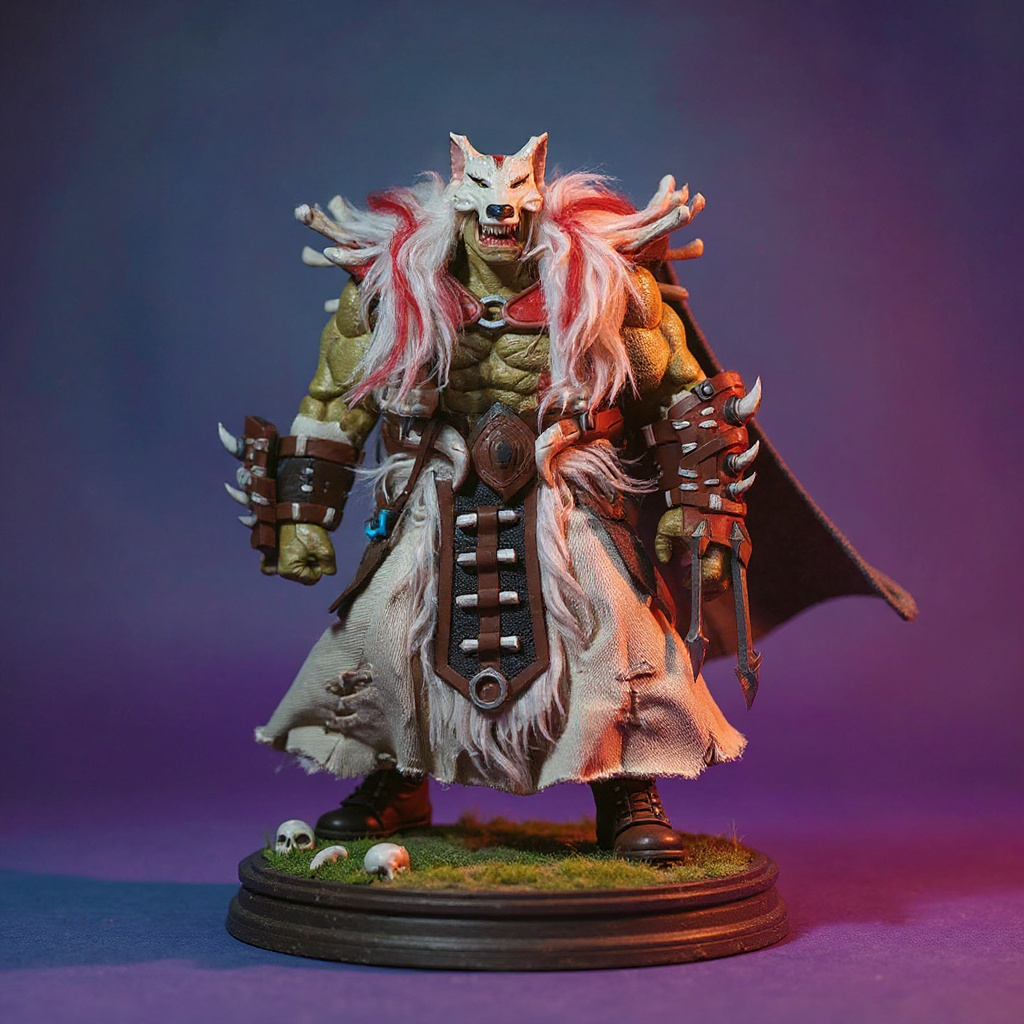
Boneglyph Ogre Mage Cosplay Cape: Wire Placement That Actually Works
Wire needs to follow the cape's natural flow lines, not just trace the outline. Most first attempts run wire around the perimeter only. The result looks like a cape draped over a coat hanger — stiff at the edges, dead in the middle.
Effective wire placement for a boneglyph ogre mage cosplay cape runs: 1. Along the top edge where it attaches to the figure's shoulders 2. Down both outer edges to set the silhouette 3. Along the bottom hem for weight distribution 4. Through 2-3 vertical lines from top to bottom for internal support 5. One horizontal line about a third of the way down
The vertical wires are what let the cape billow like it caught a gust mid-battle. Skip them, and you get a cape that only bends at the edges — flat everywhere else.
For a 9.84-inch figure, 22-gauge craft wire is the sweet spot. Heavier gauge fights the fabric's own weight. Lighter gauge holds a pose for maybe an hour before it sags. Our Godash Boneglyph Ogre Mage Cloak uses this exact gauge through hand-stitched channels, which is why it still holds the pose I set it in four months ago.
Fabric Selection for Long-Term Pose Holding
Not every fabric cooperates with a wire armature. The material needs body — enough to hold a shape without collapsing, but not so stiff it fights the wire's curve.
| Fabric Type | Pose Hold | Drape Quality | Durability | Cost |
|---|---|---|---|---|
| Cotton canvas | Excellent | Poor | High | Low |
| Linen blend | Good | Excellent | Medium | Medium |
| Wool felt | Fair | Poor | High | Medium |
| Synthetic suede | Good | Good | Medium | High |
| Weathered cotton | Excellent | Good | Medium | Low |
| Waxed canvas | Excellent | Fair | High | Medium |
Weathered cotton hits the sweet spot for this aesthetic. Enough texture to look battle-worn. Drapes naturally. Held a wire-shaped pose on my test figure for six months before I even had to reshape it.
Avoid anything with stretch — spandex blends, jersey knits, performance fabrics. They pull against the wire and lose their shape within days, sometimes hours if the pose is dramatic.
Honestly, if you live somewhere humid, some of this advice needs an asterisk. Cotton canvas absorbs moisture, swells slightly, and can loosen its grip on the wire channel faster than the numbers above suggest. If you're in Florida or coastal Southeast Asia, waxed canvas or synthetic suede will outlast cotton by a wide margin, cost be damned.
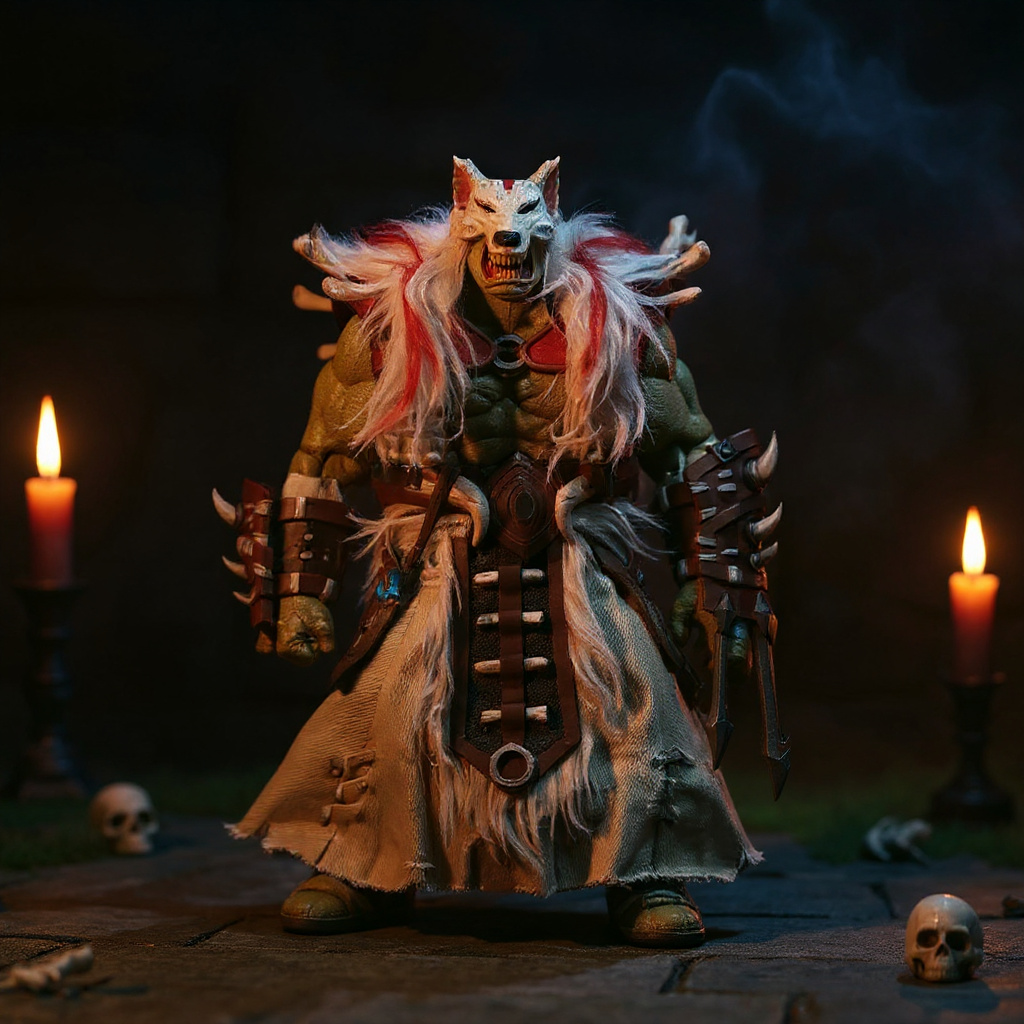
Color and Weathering at 1/10 Scale
At this scale, subtle weathering just disappears. You need real contrast between light and dark areas or the eye reads the cape as flat gray.
Effective weathering for a small-scale cosplay cape: - Dry brush light gray over a dark base coat - Actual sandpaper on the edges for fraying that looks torn, not cut - Tea-staining for an aged, uneven tone - Concentrated dirt effects at the hem and attachment points - Highlighted worn patches where armor straps would rub
The boneglyph aesthetic specifically calls for gray-brown tones with bone-white accents. Think dried blood mixed with ancient dust. Not clean fantasy colors. Not a Halloween costume.
DIY Wire Installation vs. Pre-Wired Capes
Adding wire to an existing cape is possible. It's also fiddly, and the first one I built took closer to nine hours than the six I'd budgeted.
The process: 1. Mark wire paths on the inside of the fabric 2. Fold and stitch narrow channels to create fabric tubes 3. Thread wire through each channel without puncturing the seam 4. Secure the wire ends so they don't poke through at the hem 5. Test pose flexibility before final assembly — this step catches most mistakes
Expected time: 6-8 hours for a clean result, more if it's your first attempt. Material cost runs $15-25 for wire, thread, and tools. That's before you factor in the fabric you'll ruin practicing the channel stitch.
Pre-wired capes skip that learning curve. The handmade Godash cloak has the channels built into construction, so the wire is invisible from outside and tensioned correctly from day one — something that took me four failed prototypes to get right on my own.
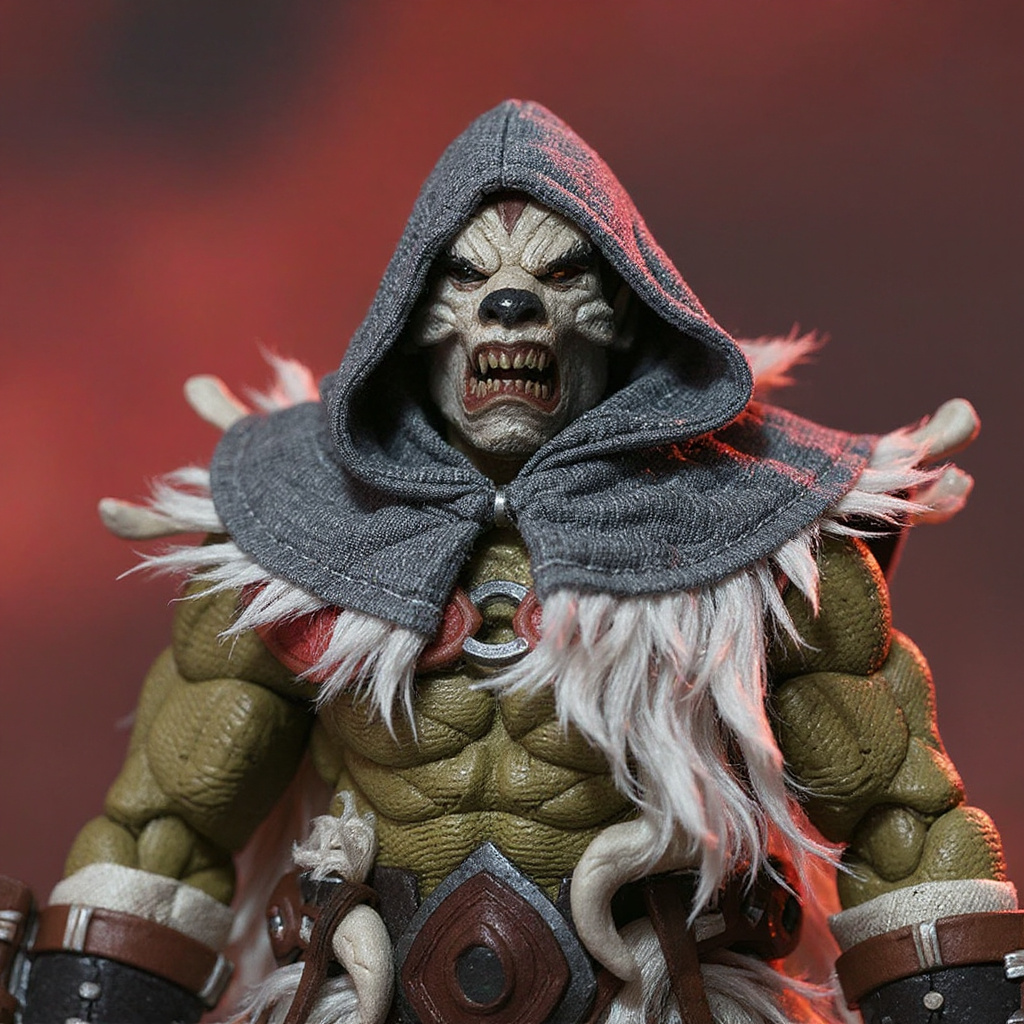
Scale Considerations for 9.84-Inch Figures
Proportions that work on a 12-inch figure look wrong at this smaller scale. Fabric thickness becomes too prominent relative to the figure's frame.
For 9.84-inch figures specifically: - Fabric thickness should stay under 1mm - Cape length works best at 70-80% of figure height - Wire gauge has to bend smoothly without kinking at tight curves - Weathering contrast needs roughly double the intensity to read correctly - Attachment hardware needs to be small and precise — a standard snap looks like a boulder at this scale
Many ball-jointed doll techniques translate directly here, since BJD artists deal with nearly identical fabric-to-figure proportion problems.
Maintenance and Shape Retention
Wired capes lose pose-holding ability over time. That's physics, not a manufacturing flaw, and no amount of premium wire changes it entirely.
Maintenance schedule: - Reshape monthly to prevent wire memory - Avoid extreme bends that kink the wire permanently - Store in neutral poses, not the dramatic ones you display - Clean with a dry brush only — water weakens the fabric around wire channels - Replace wire every 2-3 years for figures posed often
When a pose starts sagging within hours instead of holding for weeks, the wire has fatigued. Time to rewire.
Frequently Asked Questions
What is an Ogre Mage in fantasy lore, and how does that shape the cosplay cape design? Ogre mages are intelligent spellcasters who pair brute strength with arcane power, distinct from common ogres because they wear robes and carry magical implements rather than crude pelts. A boneglyph ogre mage cosplay cape reflects that split — weathered like it survived a battle, but cut and stitched like ceremonial regalia. How do you make a cape flow without the armature showing? Internal wire channels sewn directly into the fabric, following five specific lines: top edge, both outer edges, bottom hem, and 2-3 vertical supports. External wire frames always look artificial because real fabric never folds that predictably. What fabric holds a pose the longest at 1/10 scale? In my testing, weathered cotton held shape for roughly six months before needing a reshape, longer than linen blend or wool felt. Cotton canvas held slightly longer but draped worse, which matters more than people expect once the cape is on the figure. Can you add wire to a cape you already own? Yes, though budget 6-9 hours if it's your first attempt, not the 6-8 you'll read elsewhere. You're building hidden fabric tubes without visible stitching from outside, and that seam work is the part that eats time. How much should a handmade wired cosplay cape cost? Expect $80-150 for quality wired soft-goods at this scale. Mass-produced plastic capes run $15-30 but can't hold a pose. The Godash Boneglyph cloak sits at $119, which lines up with comparable hand-stitched work from BJD outfitters. Is this cape sized for action figures or full-size cosplay? This is built for 9.84-inch (1/10 scale) figures specifically. Full-size cosplay capes use completely different wire gauges and fabric weights because they have to support actual body movement, not a static armature. Does humidity or climate affect a wired fabric cape? Yes, more than most guides admit. Cotton-based capes in humid climates absorb moisture and loosen around the wire channel faster than the same cape in a dry climate — I've seen a six-month pose-hold drop to under eight weeks in a humid storage room. Waxed canvas or synthetic suede resists this better. How do you keep a wired cape from losing its shape long-term? Reshape it monthly, avoid sharp bends that kink the wire, and store it in a relaxed pose rather than the dramatic display pose. Replacement wire is usually needed somewhere around the two-to-three-year mark for figures posed regularly.Is It Worth the Cost
Handmade wired capes aren't cheap. But the difference between a limp plastic cape and fabric that flows with real drama is obvious the second someone sees your display shelf.
At $119, a boneglyph ogre mage cosplay cape sits in reach for collectors who want pieces that photograph well and hold their pose for months instead of hours. If you'd rather skip the nine-hour learning curve I went through, see the Godash Boneglyph Ogre Mage Cloak here and judge the construction for yourself.

