


What the Ryo Saeba Jacket Is (and Isn't)
Picture a bare 1/12 male body with nothing on it. Now drape the jacket over it. The fabric falls from the shoulders, bunches at the elbows when you bend an arm, and shows its stitching in raw-edge detail. That is the whole pitch.
It is a jacket. It is not a full outfit, and it comes without a figure, shirt, tie or Colt Python.
| Spec | Detail |
|---|---|
| Item | Trench-style jacket, soft goods |
| Scale | 1/12 (male bodies, about 6.1 in / 155 mm tall) |
| Color | Cream/tan with a slight fabric sheen |
| Construction | Visible stitching, standing collar, functional buttons |
| Posing feature | Wire-shaped collar tips |
| Price | $55 |
| Not included | Figure, shirt, tie, firearm |
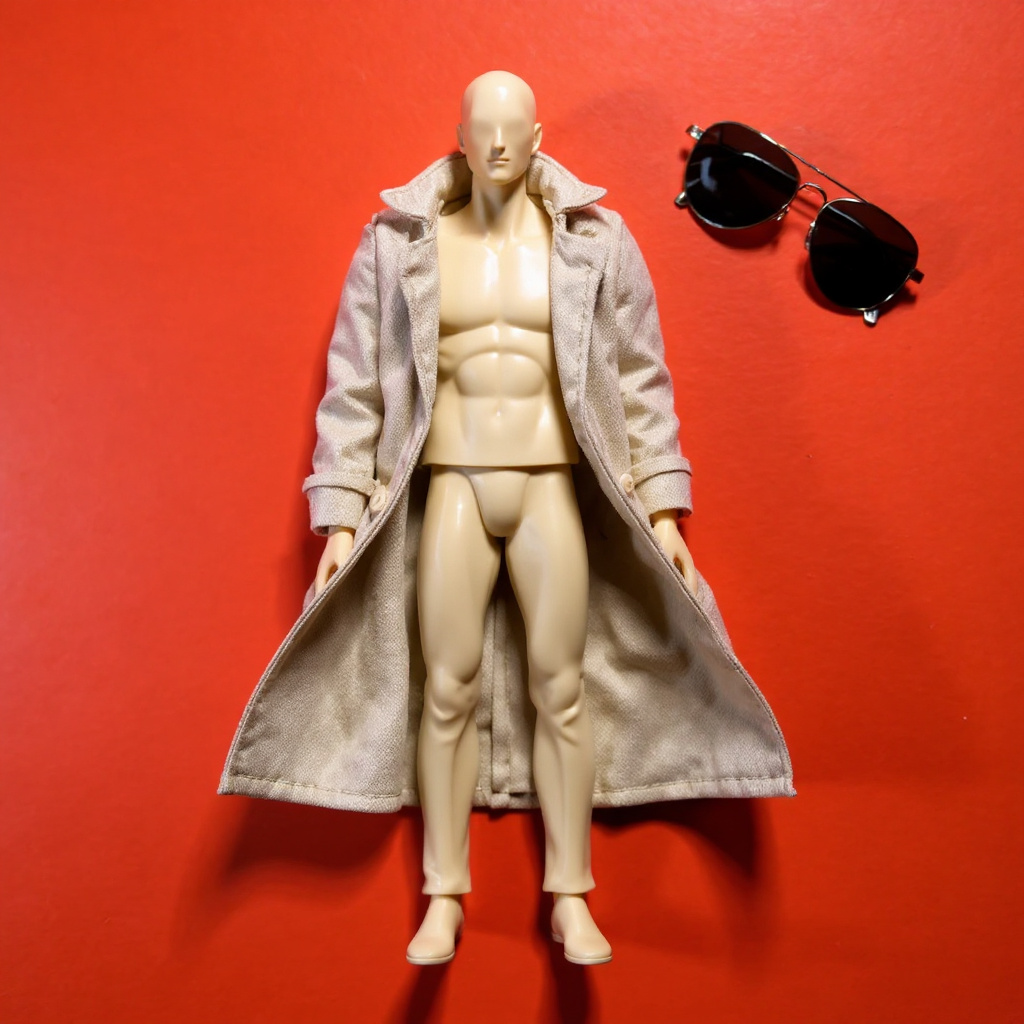
City Hunter 1/12 Scale Clothes: Sizing and Compatibility
"1/12" is a target, not a guarantee. Two figures sold as 1/12 can differ by half an inch in height and by more in chest depth. Most 1/12 male bodies measure roughly 1.4 to 1.9 inches (35 to 48 mm) across the shoulders. Calipers settle the question in ten seconds.
The table below gives expected fit by body type. These are our estimates from published heights and general build, and we have not confirmed every body.
| Body type | Typical height | Build | Expected fit with the jacket |
|---|---|---|---|
| Slim 1/12 (Mafex-style) | 6.0–6.3 in | Narrow shoulders | Good; a little roomy at the waist |
| Standard 1/12 | About 6.1 in | Average | Intended fit |
| Broad 1/12 (Storm-style) | 6.3–7.0 in | Wide chest and shoulders | Tight across the back; buttons may strain |
| Tall 1/12 (Mezco One:12-style) | 6.5–7.0 in | Taller torso | Sleeves and hem may run short |
How to measure your figure in 5 steps
1. Stand the figure upright in a neutral pose with the arms at its sides. 2. Measure shoulder width with calipers or a millimeter ruler, edge to edge across the back. 3. Measure chest depth at the widest point, front to back. 4. Measure from the base of the neck to the wrist with the arm slightly bent. 5. Compare all three numbers with the seller's listed dimensions, and message the seller if any is off by more than 3 mm.
Tight at the shoulders. Loose at the waist. Those are the two fit problems we see most often. Fabric forgives a loose waist, but it won't forgive a shoulder seam that can't close.
Wire-Shaped Collar Tips: What to Check
The standing collar is what makes this jacket pose. A thin wire inside the collar tips lets you flip them up for a hard-boiled look or lay them flat for a casual one. As a rule of thumb, hobby wire between 24 and 28 AWG (0.32–0.51 mm) bends easily and still holds its shape. That is our working guideline, not an industry standard.
1. Flex each collar tip once and watch for a clean bend with no springback. 2. Pose the collar up, then down, then up again, and check that it holds each position. 3. Run a fingertip along the collar edge and feel for wire ends poking through the seam. 4. Check that the stitching around the collar is intact after the test. 5. Button the jacket and make sure the collar still sits straight.
Expect some relaxation over months. Wire fatigue is the usual failure point on any posable soft goods piece. Bend the same spot twenty times in a day and the metal will quit. Re-pose gently and sparingly.
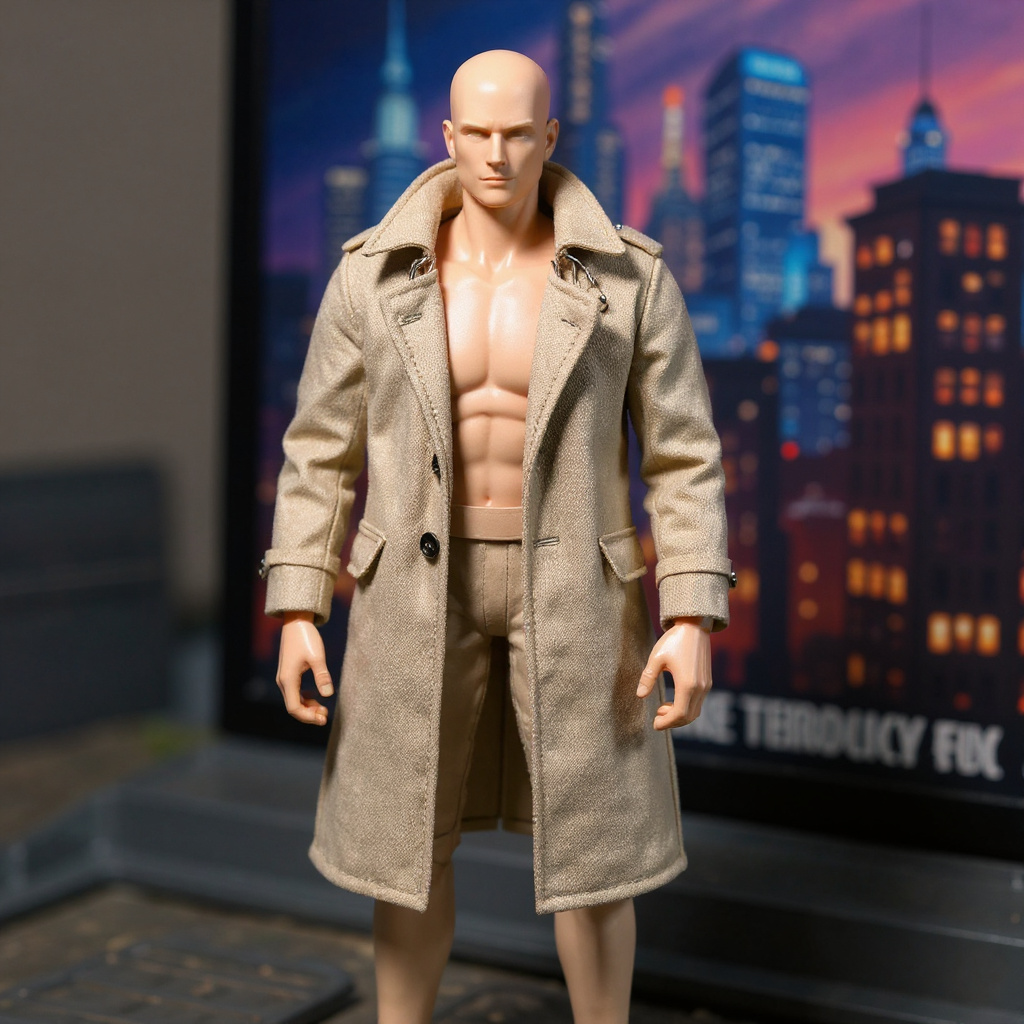
Soft Goods vs Molded Plastic Clothing
Molded clothing is fixed. The folds are sculpted, the buttons are painted, and nothing changes when the figure moves. Fabric reacts to the pose. A bent elbow wrinkles the sleeve, and a turned torso pulls the front panels across the chest.
| Feature | Molded plastic clothing | Fabric jacket (soft goods) |
|---|---|---|
| Reposing | Fixed | Drapes and shifts with the pose |
| Collar | Sculpted, fixed angle | Wire-shaped tips, adjustable |
| Buttons | Painted or molded | Functional |
| Surface | Painted texture | Visible stitching, slight sheen |
| Scale issue | None | Fabric weave can look thick at 1/12 |
| Cost | Included with figure | $55 for this jacket |
There is one real tradeoff in that table. At 1/12, even thin fabric can look bulky, so a jacket with a heavy weave will never look as crisp as a sculpted one. Good soft goods use a fine weave to keep that bulk down.
Screen Accuracy for Ryo Saeba Soft Goods
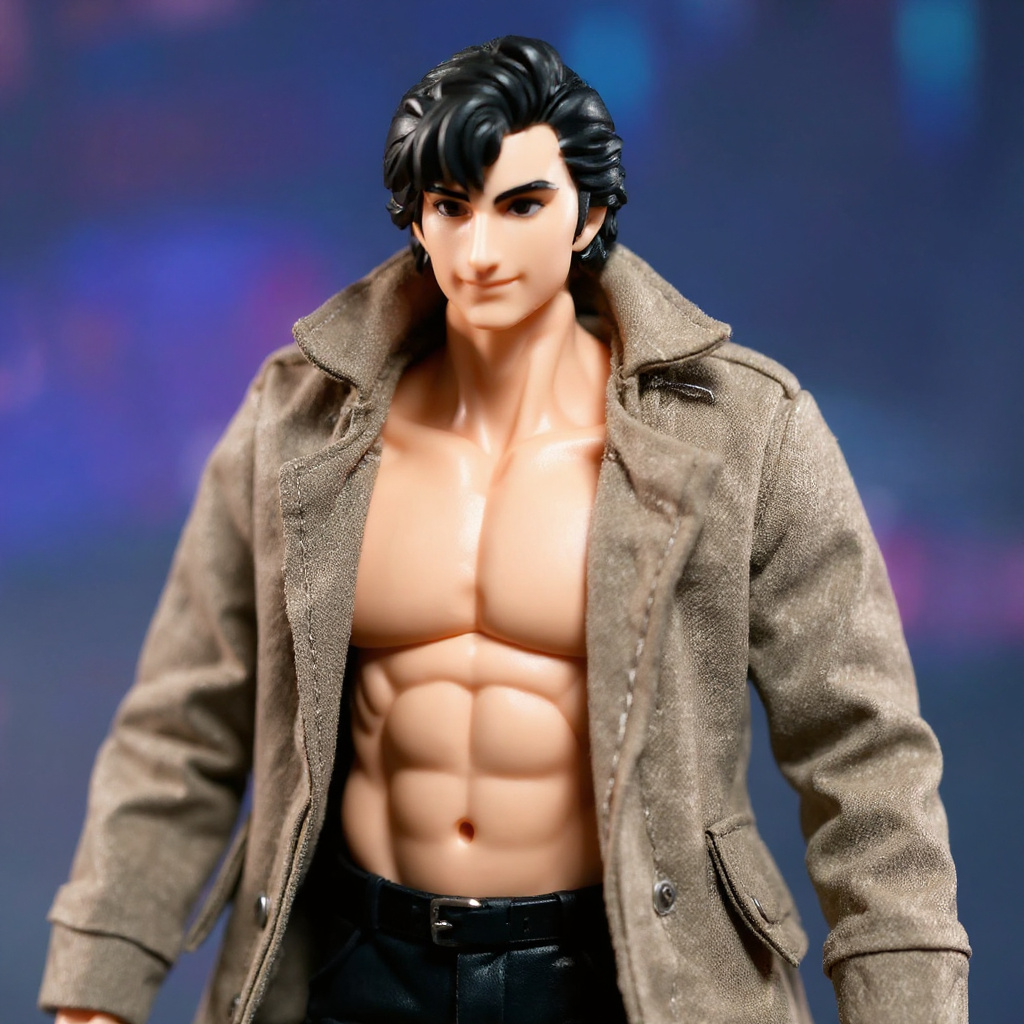
City Hunter has run in many forms since the 1980s, and Ryo Saeba wears different outfits across manga covers, anime seasons and films. No single jacket is "the" jacket. This one is a cream/tan trench-style interpretation. It captures the silhouette and the standing collar rather than a frame-by-frame copy.If you need exact screen accuracy, pick your reference art first. Then compare color, hem length and pocket placement against it. The jacket is a strong base for a custom Ryo, but it is not a replica of one specific frame.
The Honest Part
Honestly, if your figures live on a sunny windowsill or in a humid room, skip fabric clothing entirely. Sunlight fades cream and tan dyes, and damp air can warp wire-shaped collars and leave stitching limp. Molded plastic will outlast fabric there.
A $55 jacket also won't fix a figure with a bad head sculpt or a weak body. Clothes upgrade a good figure. They don't rescue a poor one.
Care and Photography Tips
Fabric catches light differently from plastic. A hard single light carves deep shadows into every fold, so we shoot with two diffused sources placed at 45 degrees to the figure. A neutral gray or white backdrop shows the cream color without a color cast.
For dust, use a soft brush or a low-tack lint roller. Skip the compressed air, which can push grit into the weave. Avoid washing. Water can leave rings on sheened fabric and rust the wire.
Is the $55 Jacket Worth It?
It depends on what you want. If you pose and photograph your figure, the jacket earns its price through drape, buttons and an adjustable collar. If your figure sits untouched on a shelf, the gain is mostly visual, and you should weigh $55 against that.
The City Hunter Ryo Saeba jacket lists its dimensions on the product page, so you can compare them with your own measurements before ordering. For more on the fabric and fit details, see the Ryo Saeba soft goods jacket page. Note: this guide covers the anime and manga character, not the Predator 2 creature sometimes called "City Hunter."

