


I have sewn and fitted figure capes for years. This guide collects what I measured, what failed, and what I would buy again. It also uses one product as a worked example: a dark blue and teal cape with icy white accents, built for 7-inch figures.
What Custom Cloth Clothing for Action Figures Covers
The category is called soft goods. It means any garment sewn from real fabric instead of molded from PVC or ABS. Capes are the most popular item, followed by hooded cloaks, long coats, and tabards.
Most pieces come from independent makers rather than from the figure brands. That is the appeal. A brand ships one cape per figure, and a maker can ship twenty colors.
The DC Multiverse) line from McFarlane Toys is built around 7-inch figures, so it is one of the most common targets for 1:12 fabric work.
How I Tested the Fit
I fitted five capes across four bodies: a 6-inch Marvel Legends figure, a 7-inch McFarlane DC Multiverse figure, a 6-inch Star Wars Black Series figure, and an 8-inch NECA figure. I measured shoulder width with digital calipers and cape drop with a soft tape. Then I posed each figure for a week on an open shelf.
Three results stood out:
- A wire-edged cape kept its windblown shape through a week of dusting and shelf bumps. - An unwired cotton cape of the same size sagged flat the first time I nudged the shelf. - A cape cut for a 6-inch body looked short and tight on the 8-inch NECA figure. The hem sat about an inch above where it should.
These are bench notes from my own shelf, not lab data. Your bodies will differ.
Fabric Cape vs. Plastic Cape: A Direct Comparison
| Cape type | Typical price | Pose holding | Drape | Best use |
|---|---|---|---|---|
| Stock molded plastic | Bundled with figure | Fixed shape | Stiff, flat edges | Out-of-box display |
| Unwired fabric cape | $25-35 | Slumps within days | Soft, hangs straight | Standing poses |
| Wire-edge fabric cape | $35-60 | Holds until re-bent | Soft with sculpted folds | Dioramas, photography |
| Thick felt or fleece cape | $15-30 | Poor | Bulky, wrong scale | Not recommended |
Stiff. Flat. Lifeless. That is how a molded cape reads under a camera light. Fabric catches light in soft gradients and throws no hard shadow, which is why diorama photographers switch.
The 3-3-3 Rule: Definition and Limits
The 3-3-3 rule is an informal doll-clothing shorthand for checking three body measurements (bust, waist, hip) before sewing or buying, and it is not a standard for action figures.Action figures have broad shoulders, narrow waists, and no hips worth measuring. So swap in a different three: shoulder width, chest depth, and cape drop. Measure each with calipers or a soft tape and write the numbers down before you order anything.
That is the same advice I give in the FAQ below, so the two sections agree.
Scale and Size Chart
I took these ranges from my own measurements and from the nominal scale math (a 72-inch person divided by the scale ratio). Treat each as a starting point, since bodies vary by about 0.3 inch within one line.
| Scale | Figure height | Shoulder width (widest point, front view) | Cape drop, collar to hem |
|---|---|---|---|
| 1:12 | 6 in (Marvel Legends) | 2.0-2.4 in | 4.5-6.5 in |
| 1:12 | 7 in (DC Multiverse) | 2.3-2.8 in | 5-7 in |
| 1:10 | 7.5-8 in (some NECA) | 2.6-3.1 in | 5.5-7.5 in |
| 1:8 | 9 in | 3.0-3.5 in | 7-9 in |
| 1:6 | 12 in (classic G.I. Joe size) | 3.8-4.6 in | 9-12 in |
Measuring Checklist
1. Remove the head accessory, hair, or helmet crest. Measure the body, not the extras. 2. Measure shoulder width at the widest point, front view. 3. Measure chest depth from front to back at nipple height. 4. Measure collar to ankle along the spine for cape drop. 5. Note the figure's real height, because some listed 6-inch figures measure 6.5-7 inches. 6. Send all four numbers to the maker before ordering.
Best Fabrics for Figure Scale
Weight matters more than fiber. At 1:12, fabric between 60 and 120 gsm drapes well. Anything heavier bunches at the collar.
- Cotton lawn or voile: crisp, holds a fold, takes dye well. - Silk habotai (5-8 momme): flows like water, frays fast, needs a rolled hem. - Rayon challis: soft drape at a low price. - Short-pile velvet: gives a royal look. Long pile reads as fur at this size. - Thin faux suede: works for jackets and boots, and it resists fraying.
High-sheen polyester satin looks like plastic in photos, so choose a matte weave. For an ocean palette, I like a fine woven texture in deep blue or teal with icy white trim. The texture breaks up light and hides tiny stitch wobble.
Worked Example: The Aquaman Endless Winter Cape
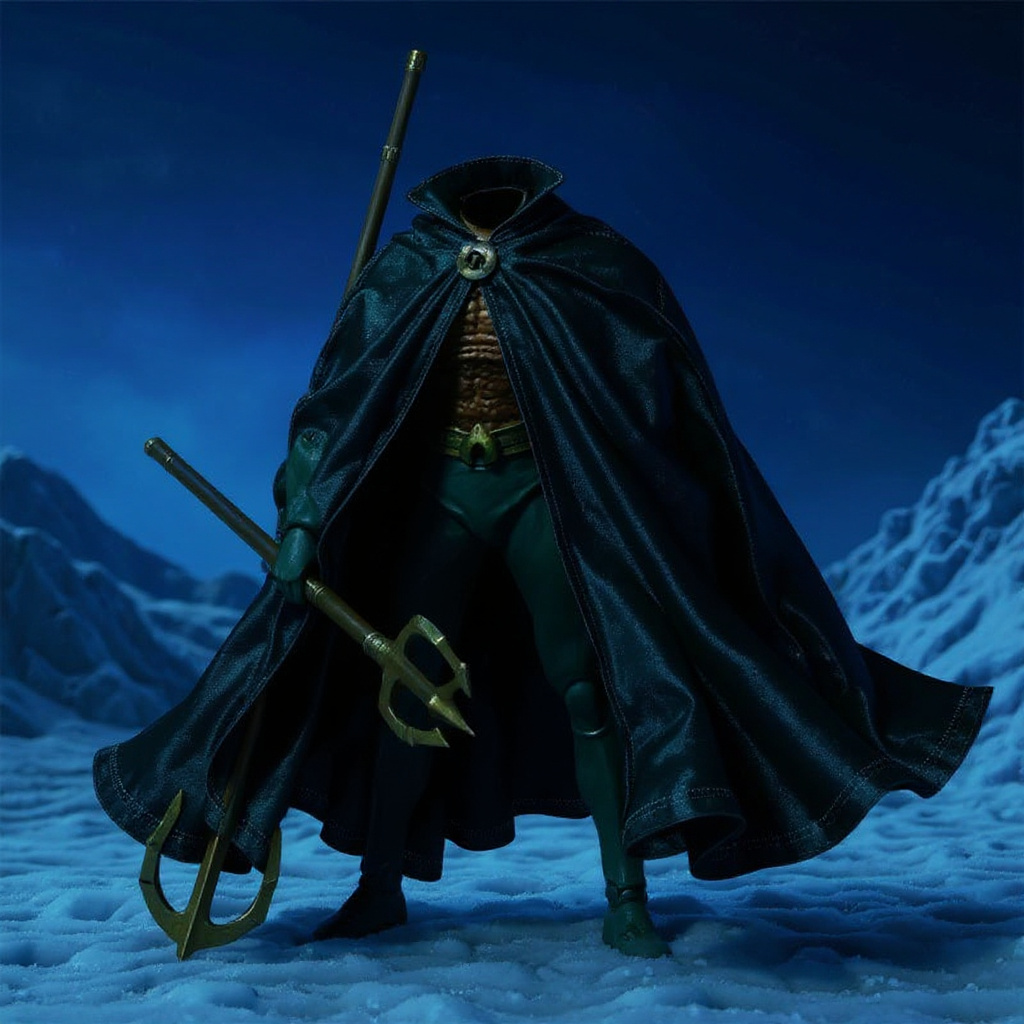
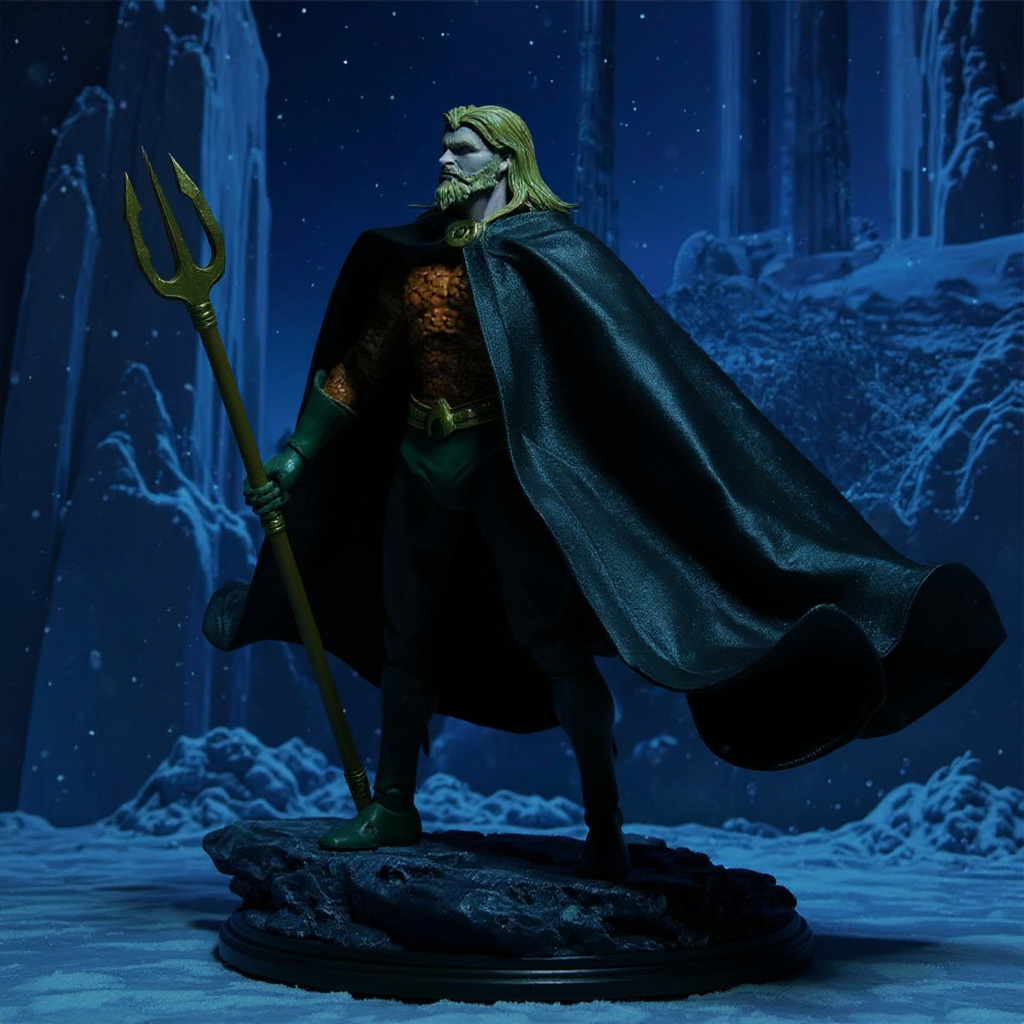
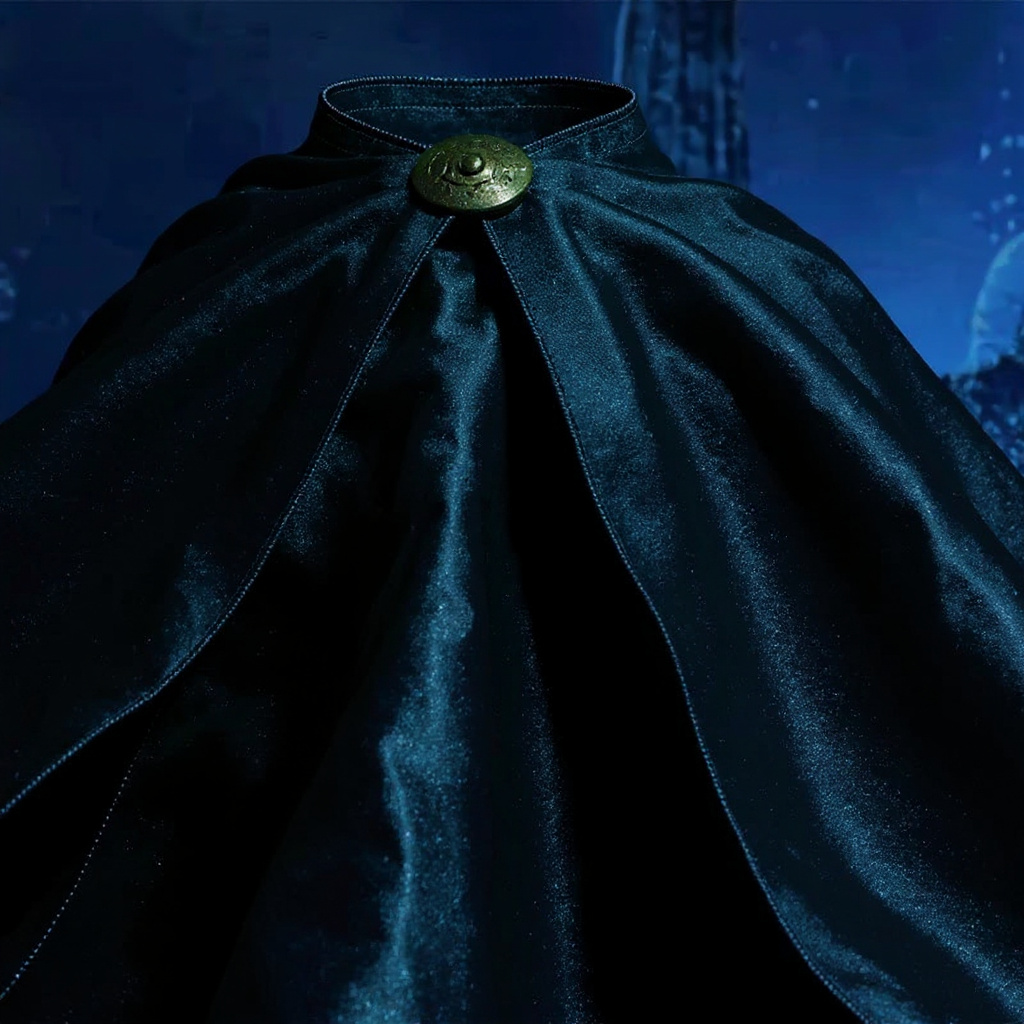
The Aquaman Endless Winter Cape is a single flowing dark blue and teal cape with icy white accents, a nod to the deep-ocean look of DC's Aquaman. Fine wire runs along the edges and stays visible. The cloth is handmade with a fine texture, and a small clasp or strap closes at the collar. It is shown windblown on a mannequin stand and on a 7-inch figure body.
The listed price at time of writing is $44, which sits inside the $25-60 range above. The Figure Vault (thefigurevault.com) sells it as a handmade piece. The listing does not state the wire gauge, so I would ask the maker before ordering if that matters to you.
Here is the honest part. Wire fatigues. Re-bend the same crease twenty times and it will weaken, then snap. Re-pose in new spots and the cape lasts far longer.
The cape also suits 6-inch figures if you accept a longer hem. Both sizes are 1:12 nominal, but the 6-inch body is narrower at the shoulders.
Where to Buy Custom Cloth Clothing for Action Figures
1. Etsy: the widest selection. Search for your scale (1:12 scale cape) plus your figure line. Expect $25-60 for a cape. 2. Direct from makers: shop sites often offer custom sizing and quicker replies than marketplaces. 3. Collector forums: classifieds sections where members sell finished work, often with build photos. 4. Convention vendors: you can handle the fabric and test the fit. Prices run a little higher. 5. eBay: a mix of custom work and vintage doll clothes, but check the listed measurements.
Amazon listings are hit-or-miss for this category. I found several that listed no measurements at all.
Making Your Own Wire-Hem Cape
Sewing at 1:12 is a different craft from full-size sewing. Seams are tiny. Mistakes show.
1. Cut a half-circle from lightweight fabric. For a 7-inch figure, use a 6-inch radius as a starting point. 2. Press a 1/8-inch hem along the curved edge. 3. Lay thin craft wire inside the hem fold and stitch around it by hand. 4. Fold the straight edge into a small channel and gather it to fit the neck. 5. Attach a snap, a small hook, or a short strap at the collar. 6. Shape the wire into your pose, then check the fit on the figure. 7. Re-adjust the folds before you photograph.
Skip tiny buttons and zippers. Use snaps, velcro, or ties. Hand-sew when you can, because a machine chews the edge of tiny cloth.
Common Sizing Mistakes
Buying by the box scale alone is the biggest one. Not every 6-inch figure is the same body.
Check shoulder width, not just height. A bulky McFarlane body needs a wider cape than a slim Marvel Legends body at the same height. Read each listing for stated measurements. If it says only fits Marvel Legends, ask which body.
Handmade pieces vary a little. Fit is perfect on one figure and needs a nudge on the next.
The Honest Caveat
If you never re-pose your figures and keep them in a sunny, dusty room, skip fabric. Dyed cloth fades in direct light, and dust shows on fibers far more than on plastic. A $44 cape is wasted on a figure that stays in one stance behind glass. Plastic is cheaper and fine for that job.
For dioramas, photography, and anyone who likes to tinker, though, fabric earns its place.
Frequently Asked Questions
What is custom cloth clothing for action figures?
It is sewn fabric apparel such as capes, coats, and trousers, made to fit a specific scale like 1:12, 1:10, or 1:6. Capes are the most common item, and prices usually fall between $25 and $60.What is the 3-3-3 rule for clothing?
It is an informal doll-clothing shorthand for bust, waist, and hip checks. It does not apply to action figures. Measure shoulder width, chest depth, and cape drop instead.How much does a custom figure cape cost?
A handmade fabric cape runs $25-60. Unwired designs sit at the low end ($25-35), and wire-edge designs cost $35-60. The Aquaman Endless Winter Cape is listed at $44.Does 1:12 clothing fit 1:10 figures?
Not well. A 1:10 figure is about 20% larger than a 1:12 figure. A 1:12 cape will look short by about an inch and narrow by about 0.4 inch at the shoulders. Buy the scale that matches the body.How do I make a wire-hem cape?
Cut a half-circle from 60-120 gsm fabric, hem the curved edge around thin craft wire, gather the neck edge, and add a snap or strap. The full steps are in the sewing section above.Where can I buy custom soft goods for action figures?
Etsy has the broadest selection. Maker websites, collector forums, convention vendors, and eBay also carry them. Always check listed measurements before you order.How do I clean a fabric figure cape?
Dust it with a soft brush. Spot-clean with a damp cloth. Do not machine wash, because the wire can warp and the dye can bleed.Is Custom Cloth Clothing Worth It?
For display and photography, yes. A wire-edge fabric cape gives you control of shape and light that plastic cannot match. For a figure that never moves, no.
If you want to see the details described above (the fine edge wire, the collar clasp, the blue and teal cloth), view the cape's product page and check the listed dimensions against your own figure's measurements. If you prefer the DIY route, this handmade wire-edge cape is a good reference for how the finished piece should look.

