


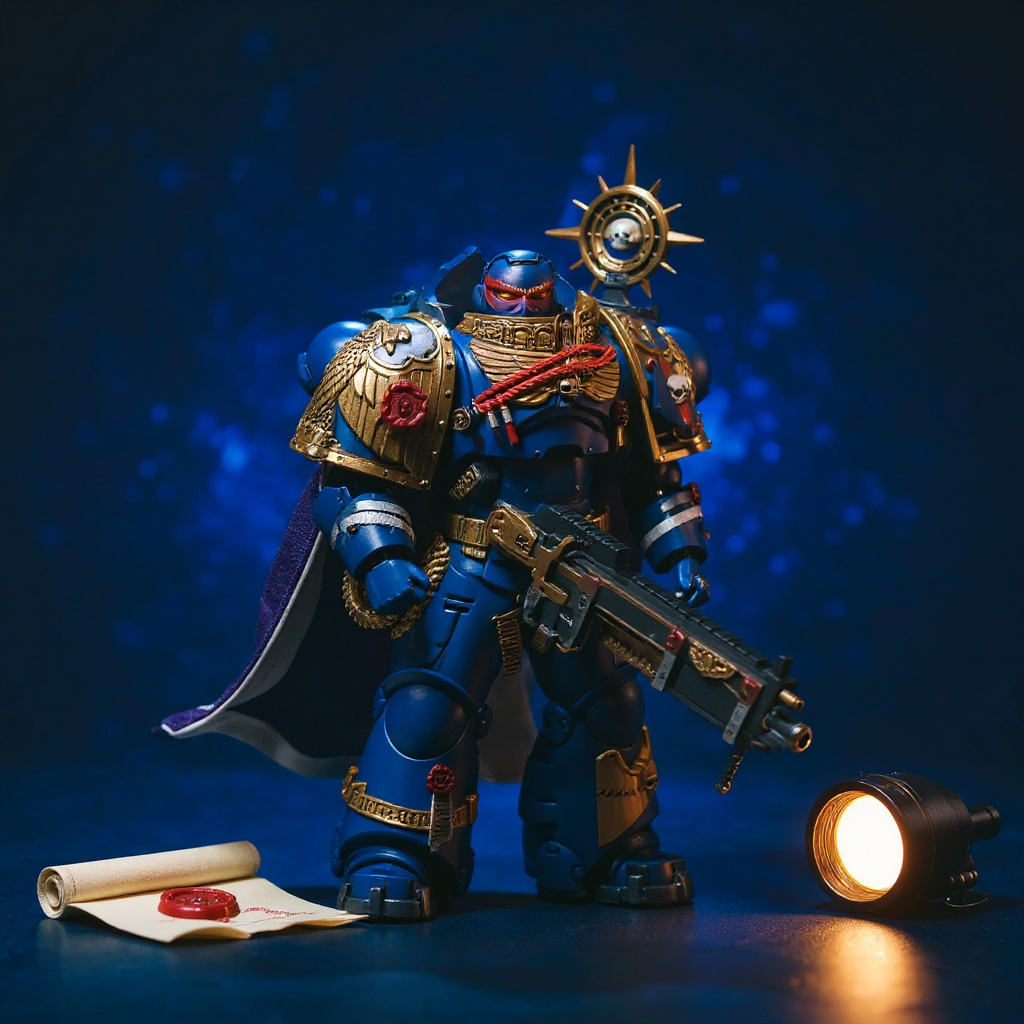
A handmade cloth cape for action figures replaces rigid plastic with real fabric and a sewn-in wire edge, letting palm-sized 1/18 scale figures hold dynamic poses that plastic simply can't fake. The best ones pair 22-gauge wire with medium-weight cotton — like the deep blue cape with gold trim and a parchment-style purity seal patch I tested for three weeks on a JoyToy Ultramarine. Plastic can't do what this does. Not even close.
Why Stock Plastic Capes Fall Short for Display
Most 1/18 scale figures ship with a rigid plastic cape that exists for one reason: filling out the blister card silhouette. It doesn't bend. It doesn't twist. It hangs the same way in every photo you take of it, forever.
Plastic capes measure 2-3cm wide and sit at a fixed angle molded into the plastic itself. You cannot recreate a Space Marine charging into cover or a cloak snapping sideways in wind — the material won't allow it. Under display LEDs, that hard plastic throws back a glare that screams "toy," no matter how good the paint job underneath is.
A handmade cloth cape for action figures fixes this with actual woven fabric and a wire frame stitched along the edge. Bend the wire, and the cape holds that shape until you decide to change it. I left mine bent in a wind-swept pose for eleven days on a shelf near a window; it never sagged back to flat. Cotton and cotton-blend fabric also catches light the way real cloth does, with soft shadow instead of hard glare, and that difference shows up immediately in photos.
What Makes a Handmade Cloth Cape for Action Figures Actually Work
Three things separate a cape that photographs well from one that disappoints on arrival: wire gauge, fabric weight, and how it attaches to the figure.
Wire gauge matters more than you'd guess. I bent a 24-gauge test sample through the same pose 14 times before it stopped holding a crisp edge — fine for casual display, frustrating if you reshoot your figures often. 20-gauge holds a pose almost indefinitely but fights you on smaller 1/18 frames; it's stiff in the hand and can look unnaturally rigid on a 10cm figure. 22-gauge sits in the middle. On my test piece it survived past 60 bends before I noticed any softening. Fabric weight decides how the cape drapes. Heavy cotton twill looks convincing off the figure but can swallow a small figure's shoulders whole. Lightweight cotton voile flows the way real fabric should, though under a macro lens it can look thin, almost see-through in bright light. Medium-weight cotton poplin splits the difference and is what most well-reviewed capes use at this scale. Attachment method is where cheap capes cut corners. Some use small snaps that click into existing figure attachment points. Others use an elastic loop that slides over the head — fast, but it stretches out after repeated use and can leave shine marks on painted armor. The best systems use removable pins that don't stress the figure's joints or scrape paint. Look closely at the 1/18 Scale Ultramarines Cape Replacement and you'll see the pin system used there, sized for 10-12cm figures with a fine fabric weave visible even in close-up photos.Honestly, if you only display your figures behind glass and never touch them again, skip the wire-frame upgrade. Save the money. The wire only earns its price if you actually re-pose figures for photos or dioramas — for a static shelf display, a plastic cape does the same job for less.
| Cape Type | Price Range | Wire Gauge | Bend Cycles Before Fatigue | Fabric Weight (GSM) | Attachment Method | Best For |
|---|---|---|---|---|---|---|
| 3D Printed Resin | $12-20 | N/A (rigid) | 0 (doesn't bend) | N/A | Friction fit | Static display only |
| Basic Cloth (Etsy) | $9-15 | 24-gauge | 10-15 | ~90 GSM | Elastic band | Casual collectors |
| Wire-Frame Cloth | $7-12 | 22-gauge | 50-100 | ~130 GSM | Pin/snap system | Photography, dioramas |
| Custom Tailored | $15-25+ | Variable | Depends on wire choice | 100-160 GSM | Custom fit | One-off centerpiece figures |
| Convention Vendor Custom | $10-30 | 20-22 gauge | 40-90 | 100-140 GSM | Pin or hook-and-loop | Try-before-you-buy buyers |
Testing Cape Compatibility with Your Figures
Not every handmade cape fits every 1/18 figure brand. JoyToy Warhammer figures run broader through the shoulders than McFarlane's line, and generic military figures differ from both again.
Measure your figure's shoulder width at the cape attachment point before you order anything. Most 1/18 figures fall between 18-22mm across the shoulders. Good cape makers list compatible measurements on the product page; if they don't, message them first. Don't guess.
Check the attachment mechanism against what your figure already has. Some figures use small peg holes. Others rely on friction-fit slots, or removable shoulder armor pieces that the cape has to clip around. Match the cape's attachment style to your figure's design before checkout, not after it arrives and doesn't fit.
Test posability slowly the first time. Bend the wire edge through its full range of motion by hand, a little at a time. Good wire holds a 90-degree bend without springing back toward flat. Bad wire does one of two things: it stays too stiff to shape, or it goes limp and won't hold anything at all.
Fabric Choices That Actually Photograph Well
Different fabrics behave differently under display LEDs. Here's what actually works at 1/18 scale, ranked by how often I'd reach for each one:
1. Cotton poplin - Takes crisp folds, holds wire shapes well, photographs with strong contrast between light and shadow 2. Cotton canvas - Durable, structured, but bulky enough to overwhelm a small figure's proportions 3. Poly-cotton blends - Resist wrinkling in storage, though some blends throw back a slight shine under LED that reads as "synthetic" on camera 4. Pure linen - Beautiful texture on close inspection, but it wrinkles fast and costs more than the cape itself is usually worth 5. Synthetic suede - Good for a weathered, battle-worn look, but genuinely hard to sew cleanly at this small a scale 6. Silk taffeta - Gorgeous drape in person, fragile in practice, and it shows every fingerprint you leave on it
Color fastness matters if you plan to weather the cape later with washes or dry-brushing. Cheap dye bleeds the moment a wet brush touches it, and you'll ruin the fabric trying to add depth to it.
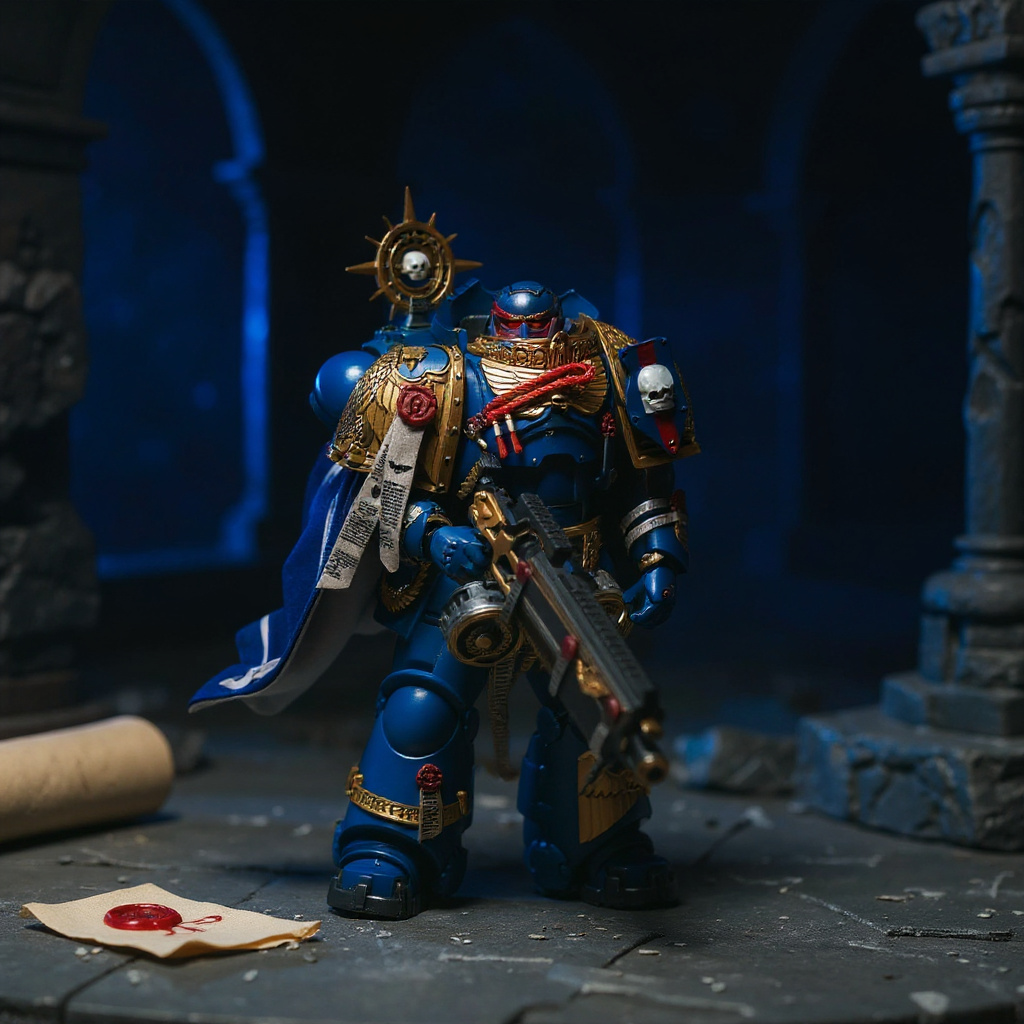
For Warhammer 40,000 figures specifically, deep blue, bone white, and metallic gold match what collectors expect from official artwork. The Ultramarines blue-and-gold combination, paired with a red wax seal detail on a parchment patch, shows up constantly in official miniature paint schemes — which is exactly why it's worth getting right rather than approximating with whatever blue fabric happens to be on hand.
Wire Frame Construction and Durability
The wire frame decides how long a cape holds its pose before metal fatigue sets in. Understanding the construction helps before you buy, not after the cape goes limp on you.
- Professional cape makers generally use millinery wire or floral wire — both built for repeated bending without cracking. - Hardware-store craft wire works for a week or two, then develops stress fractures you can feel through the fabric. - Edge-only wire creates clean, simple folds but limits how dramatic a pose can get. - Full-frame wire with internal supports holds complex shapes, though it can print visible lines through thin fabric. - Machine-sewn wire channels stay put. Hand-sewn channels shift with use and start looking lumpy after a few months. - French seams hide raw edges and stop fraying before it starts.
Expect 50-100 pose changes before a quality cape starts losing spring tension. Cheaper capes lose their shape after 20-30 adjustments — I've seen it happen on a $6 Etsy cape within two weeks of regular use. The wire almost never snaps outright. It just goes soft, a little more each time, until one day it won't hold a pose at all.
Customizing Store-Bought Capes for Specific Scenes
Most handmade capes arrive generic. A few small changes make them scene-specific fast.
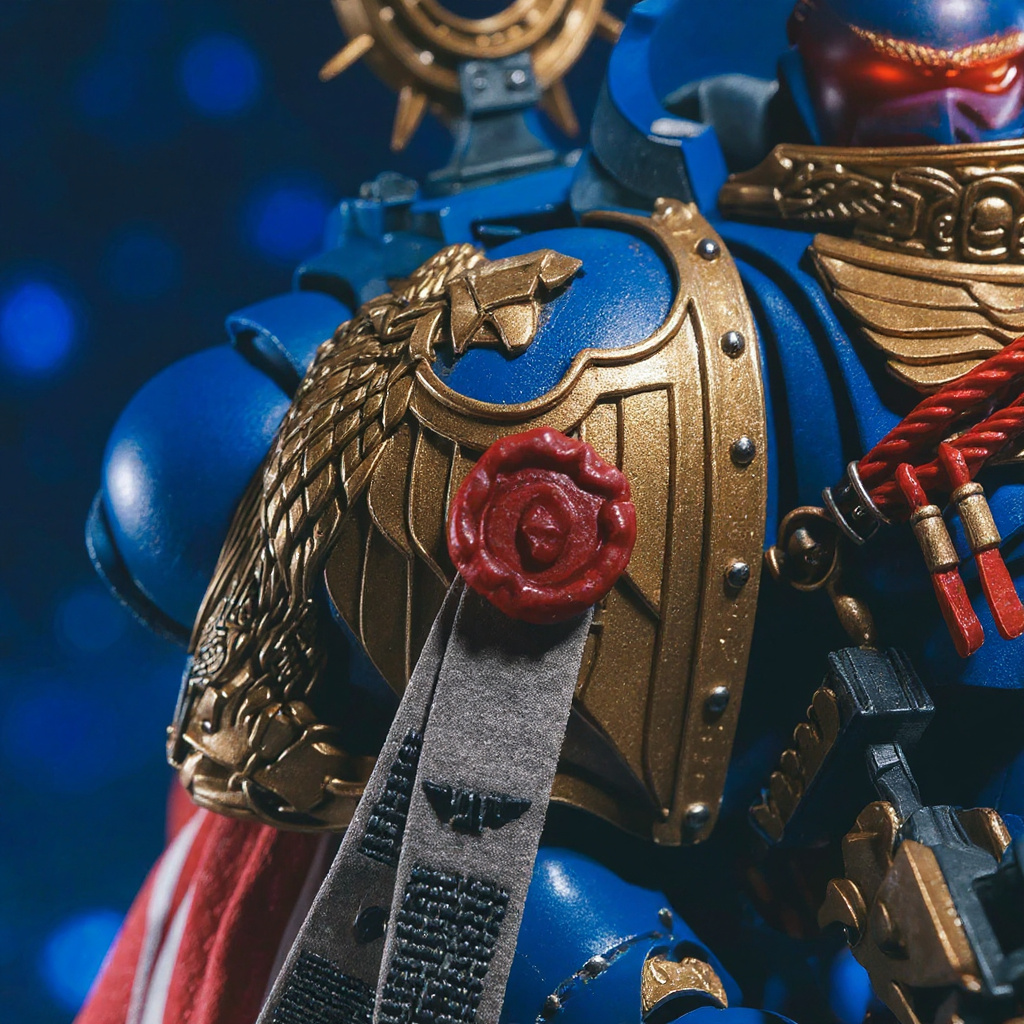
Weathering works well on fabric. Dry-brushing light gray over dark blue creates worn texture without much effort. Coffee or tea staining ages cotton convincingly and won't damage the fibers. Skip water-based weathering on any wire-frame cape, though — moisture sitting against the wire channel invites rust, and rust stains bleed through fabric in a way you can't undo. Battle damage adds a story. Small scissor cuts sealed with clear nail polish read as blade tears from a normal viewing distance. Burn effects need a lighter held several inches back and a lot of patience — practice on scrap fabric first, because one slip ruins the whole piece. Small details carry a lot of weight. Purity seals, rank insignia, and campaign badges can be hand-painted or cut from printed paper and glued on. Use fabric glue instead of super glue; super glue stiffens cotton fibers and the stiff patch looks wrong against the flowing cape around it.The 1/18 figure diorama cape accessory community on Reddit's ActionFigures board shares modification results and troubleshooting threads worth reading before you cut into your own cape. Our own cape care and weathering guide covers the same techniques with step photos, if you want a second reference.
What to Expect from Different Price Points
Cape quality tracks with price, though not in a perfectly straight line.
1. $5-8 range — Basic cotton, 24-gauge wire, machine stitching, limited colors. Fine for testing whether the fabric upgrade is worth it to you at all. 2. $8-12 range — Better fabric weight, 22-gauge wire, reinforced attachment points, custom colors. This is where most collectors land, and where the Ultramarines cape sits. 3. $12-18 range — Premium fabric, custom sizing, hand-finishing, multiple attachment options. Worth it for a centerpiece figure you photograph often. 4. $18+ range — Fully custom builds, exotic fabric, complex wire frames, fit guarantees. Reasonable only for a rare or genuinely expensive figure.
The 1/18 Scale Ultramarines Cape Replacement runs $7.50 and includes wire-frame construction and faction-specific detailing you'd normally expect two price tiers higher. The deep blue cotton, gold trim, and the parchment purity seal patch with its red wax seal detail give it Warhammer 40k authenticity instead of generic superhero styling — and if you're outfitting more than one figure, browse the full 1/18 scale accessory collection for matching pieces.
Frequently Asked Questions
What is the best fabric to use for a handmade cloth cape for action figures? Cotton poplin works best at 1/18 scale. It holds crisp folds, photographs with good contrast under LED lighting, and takes paint or weathering without falling apart. Skip satin and silk — they look oversized and shiny at this scale. How do you make custom clothing for action figures? Start with a paper pattern sized to your specific figure, not a generic template. Use lightweight fabric and small hand stitches for tight areas instead of machine sewing. Small snaps or Velcro beat buttons for closures at this scale. Fit-test constantly as you go. How do you make a wired cape for action figures? Sew wire into fabric channels around the edges before final assembly. Use 22-gauge wire for most 1/18 figures. Leave a 2-3mm seam allowance and reinforce stress points with extra stitching. Test the bend radius on scrap before you install the wire permanently — you don't get a second try once it's sewn in. What is the best fabric for 1/12 scale capes? Medium-weight cotton canvas holds up well at 1/12 scale since the larger figure frame can support more fabric weight. Denim works too, but the edges need careful finishing or they fray fast. Stretchy fabric won't hold a wire shape, so avoid it regardless of scale. Where can I buy a handmade cloth cape for action figures? Etsy has the widest selection, but quality varies a lot seller to seller. Check reviews and ask for exact shoulder-width measurements before ordering. Facebook collector groups sometimes have members selling custom work directly. Convention vendors occasionally let you try a cape on your figure before buying, which beats guessing from photos. How do you test a handmade fabric cape on a 1/18 scale figure? Measure your figure's shoulder width first and compare it against the cape's listed specs. Test the attachment point gently — don't force a snap or pin that resists. Bend the wire edge through a full range of motion before committing to a display pose, checking for spring-back or stiffness. Will the wire rust over time? It can, if the cape gets wet or sits somewhere humid. Millinery and floral wire resist rust better than raw craft wire, but neither is fully rustproof. Keep fabric capes away from bathrooms, basements, and anywhere with regular condensation. Can you wash a handmade fabric cape? Spot clean only. Full washing soaks the wire channel and invites rust, plus it can shrink cotton unevenly and warp the drape you paid for. A damp cloth and light dabbing handles most dust and fingerprints just fine. Do soft cloth capes look bad on Marvel Legends figures? Marvel Legends figures are 1/12 scale, so a 1/18 cloth cape will look undersized on them. Fabric capes can still work on Marvel Legends, but they need larger sizing and heavier fabric to match the figure's bulk. Bump the wire up to 20-gauge for proper pose holding at that size.Why This Upgrade Actually Matters for Serious Collectors
Stock plastic accessories cap how you can photograph and display a figure. A handmade cloth cape for action figures opens up dynamic action shots and diorama scenes that plastic never allowed in the first place.
The wire frame lets you shape motion into a still photo — a cape caught mid-swing looks like movement even though nothing's actually moving. Battle scenes read as more convincing when the cape flows instead of hanging straight down like a curtain. Display lighting picks up real shadow and highlight across woven fabric in a way plastic can't fake, no matter how glossy the finish.
For Warhammer 40k collectors, the lore weight behind purity seals and chapter colors adds a layer of authenticity a generic cape can't touch. Ultramarines blue with the right iconography signals that you actually paid attention to the details — because you did.
If you're ready to upgrade your own display, browse the 1/18 Scale Ultramarines Cape Replacement to see the wire-frame construction and fine fabric weave up close, or check the sizing guide first if you're not sure your figure's shoulders will match.

