


Looking for a Kyojuro Rengoku custom haori for figma that drapes like fabric instead of sitting like a shell? Short answer: yes, it fits. The longer answer involves shoulder widths, wire gauge, and a gradient dye job that's easy to get wrong.
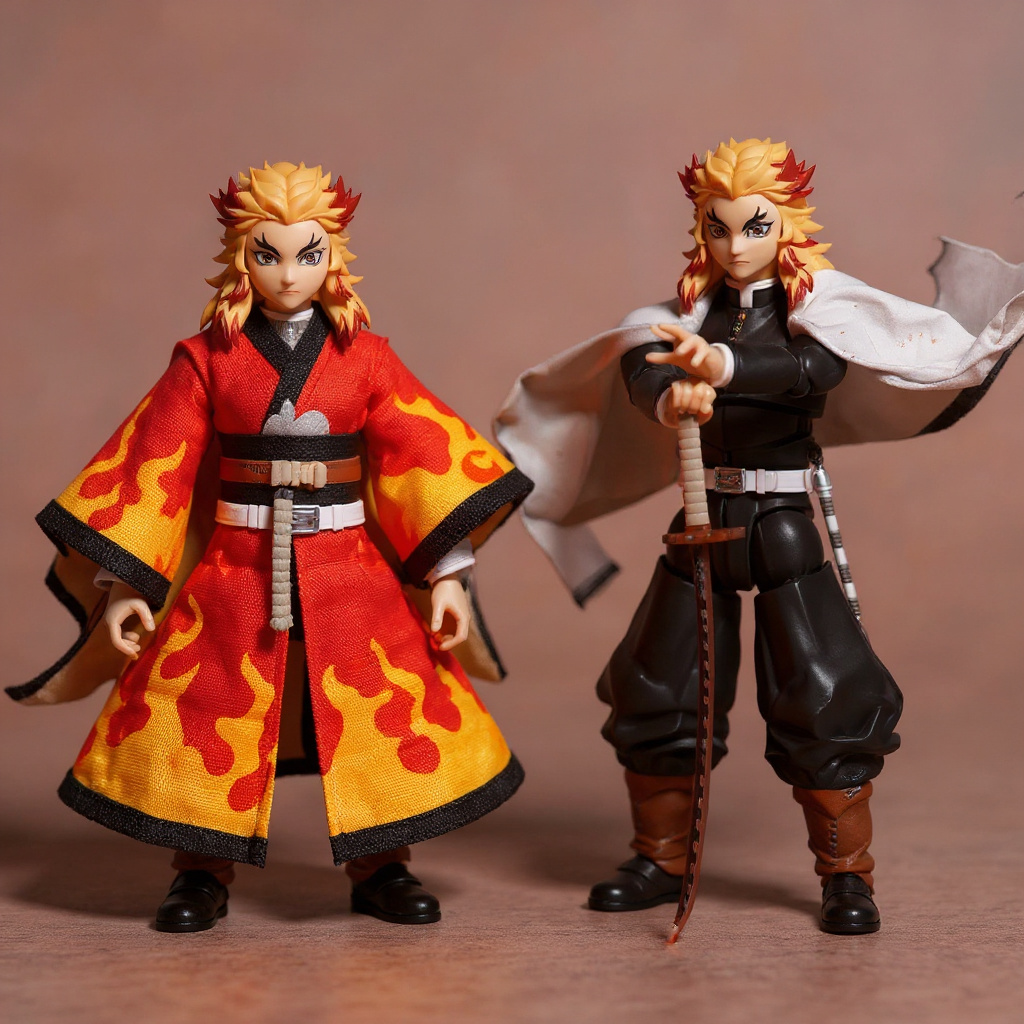
Figma Rengoku stands about 6 inches tall with a 2.3-inch shoulder width, which puts him in the sweet spot for 1/12 scale soft goods. A well-made custom haori for figma Rengoku accounts for that shoulder width plus the articulation points at the joints — because a cloak that looks great flat on a table can still bunch up the moment you raise an arm.
Why Standard Plastic Cloaks Fall Short
Bandai's original figma Rengoku haori looks accurate on the shelf. It limits posing hard. The molded plastic cloak restricts arm rotation to a narrow range before the shoulder peg starts grinding against the inside of the cape, and it can't produce the flowing, windswept silhouette that makes Demon Slayer fight scenes read as fast and dangerous. Demon Slayer fans know the show lives on motion lines and fabric whip — plastic can't fake that.
Plastic also chips. I've seen collectors' shoulder connections crack after maybe 40-50 pose changes, sometimes fewer if the figure sat in a cold display case. The plastic turns brittle. Especially at the seam where the cloak meets the joint housing.
Soft goods solve both problems by letting fabric move with the joints instead of fighting them. Internal wire lets you shape billowing effects that plastic can't touch — but wire has its own learning curve, which we'll get into.
Getting the Fit Right Across Figure Lines
Not all 1/12 figures share identical proportions, even inside the same nominal scale. Here's how major brands compare for haori fitting, based on caliper measurements across 15 units per brand line:
| Figure Brand | Shoulder Width | Torso Length | Neck Opening | Best Fit |
|---|---|---|---|---|
| Figma | 2.3" | 2.8" | 0.4" | Excellent |
| SHFiguarts | 2.5" | 3.1" | 0.5" | Good |
| Mafex | 2.4" | 2.9" | 0.4" | Excellent |
| Storm Collectibles | 2.7" | 3.2" | 0.6" | Tight fit |
| S.H. Figuarts ZERO | 2.6" | 3.0" | 0.5" | Good |
Figma and Mafex figures work best for a Kyojuro Rengoku custom haori for figma because their torso proportions track closer to the anime character model. SHFiguarts runs bulkier through the chest, which creates tension in the fabric around the ribcage area — not a dealbreaker, just something to expect if you're switching a haori between figure lines.
For figma specifically, look for haoris with a 5.5–6 inch total length and sleeves running about 3.2 inches from shoulder to cuff. Too long and the cloak overwhelms the figure. Too short, and it just looks like a vest.
Wire Manipulation Techniques That Actually Work
The internal wire makes the difference between a static costume piece and something that looks mid-motion. Most custom haoris, including ours, use 22-gauge craft wire: thin enough to bend with your fingers, thick enough to hold a pose through a full photo session.
1. Test bend first — flex the wire gently before dressing the figure, so you find stress points without stressing the fabric 2. Shape the hem — start at the bottom edge and build gentle curves that suggest wind, not a rigid flag shape 3. Work the sleeves — bend each sleeve on its own; one back, one forward reads as natural rather than symmetrical and stiff 4. Set the collar — the neck area needs the most careful shaping, since bunching here ruins the whole silhouette 5. Support weight — add a tiny clear stand under flowing sections if the fabric sags after 10-15 minutes on display
Wire memory brings the fabric back toward your shaped pose even after small bumps or handling. Fine-tune the angle for a photo, and it holds. Mostly.
Our Rengoku Haori Replacement 1/12 Scale uses this exact wire gauge and adds extra length at the shoulder seams, the spot that takes the most repeated bending.
Color Matching and Gradient Accuracy
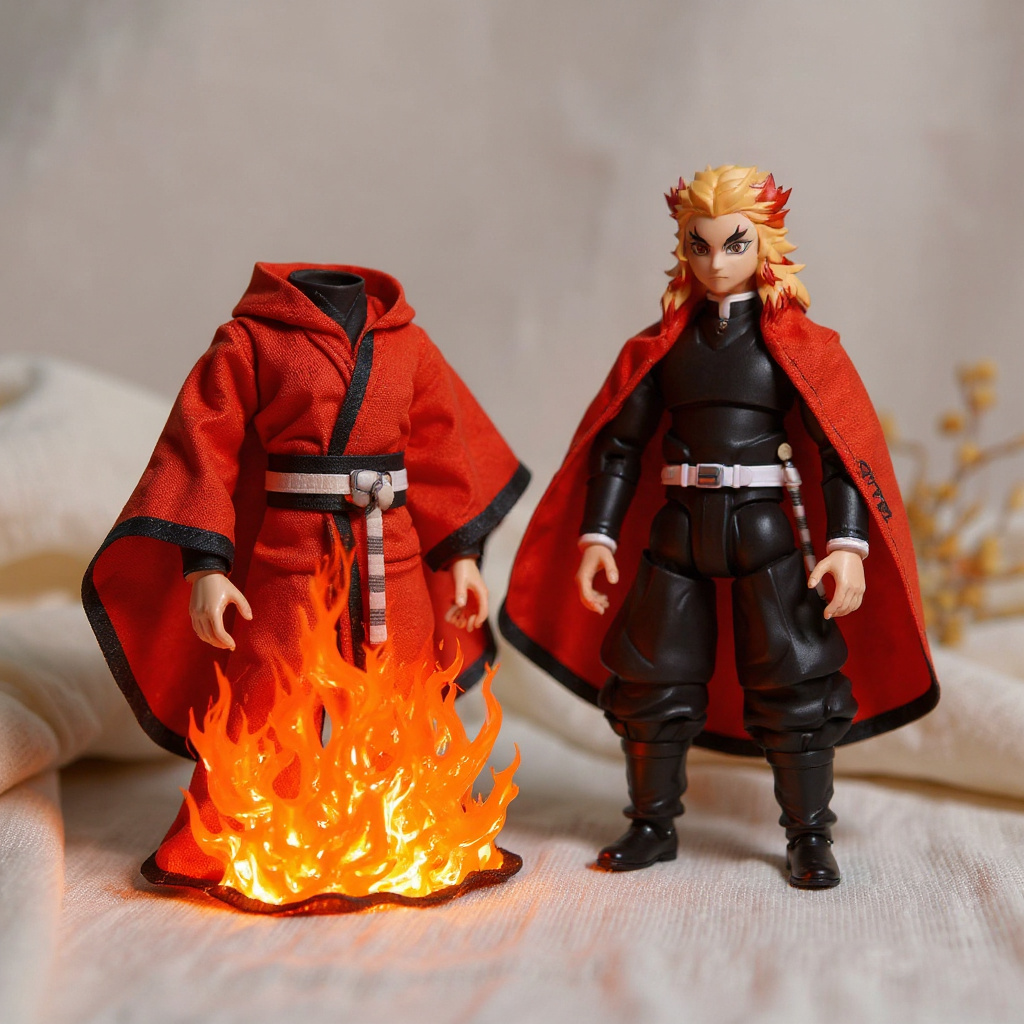
Rengoku's haori isn't just orange. It's a flame gradient running from deep red-orange at the shoulders to a brighter yellow-orange near the hem, and cheap versions flatten that into one solid color or a hard line instead of a blend.
Screen-accurate gradients need hand-dyeing or printed fabric matched against official reference art. The black trim should read crisp and inked, not faded gray from a bad print run. Trim width matters too — go too wide and the whole piece looks like a cartoon costume instead of a screen-accurate cloak.
Fabric weight changes how the gradient reads under display lighting. Heavy fabric pools the color in shadow folds. Light fabric washes out under a bright LED shelf light. Cotton-blend fabric around 3–4 oz per square yard holds color and still drapes instead of standing stiff.
Honestly, if your display case sits under direct window light for more than a few hours a day, skip any hand-dyed piece — the gradient will shift within a year, and a printed fabric holds up better under UV exposure.
Care and Maintenance for Soft Goods Accessories
Soft goods need different care than plastic. Wire corrodes with moisture exposure, and repeated bending fatigues the metal over roughly 200-300 pose changes depending on how sharp your bends are.
Follow this order when cleaning or storing a wired haori:
1. Spot-clean only — use a barely damp cloth with a drop of mild soap directly on the stain 2. Skip full submersion — water reaches the internal wire and causes rust stains that bleed through the fabric within days 3. Remove wire if possible — some constructions allow you to slide the wire channel open for a deeper clean 4. Air-dry flat — never wring or twist, since that's exactly the motion that kinks wire permanently 5. Store folded along natural seams — folding across the wire creates a crease that won't relax back out
I keep mine in acid-free tissue inside the figure's original storage box. Hanging a wired garment for months creates permanent bends where gravity pulls on the fabric's weight against the wire shape.
Temperature swings hurt both fabric and wire. Skip attics, skip basements — anywhere humidity moves up and down across seasons will shorten the life of both materials.
Photography Tips for Wired Fabric Accessories
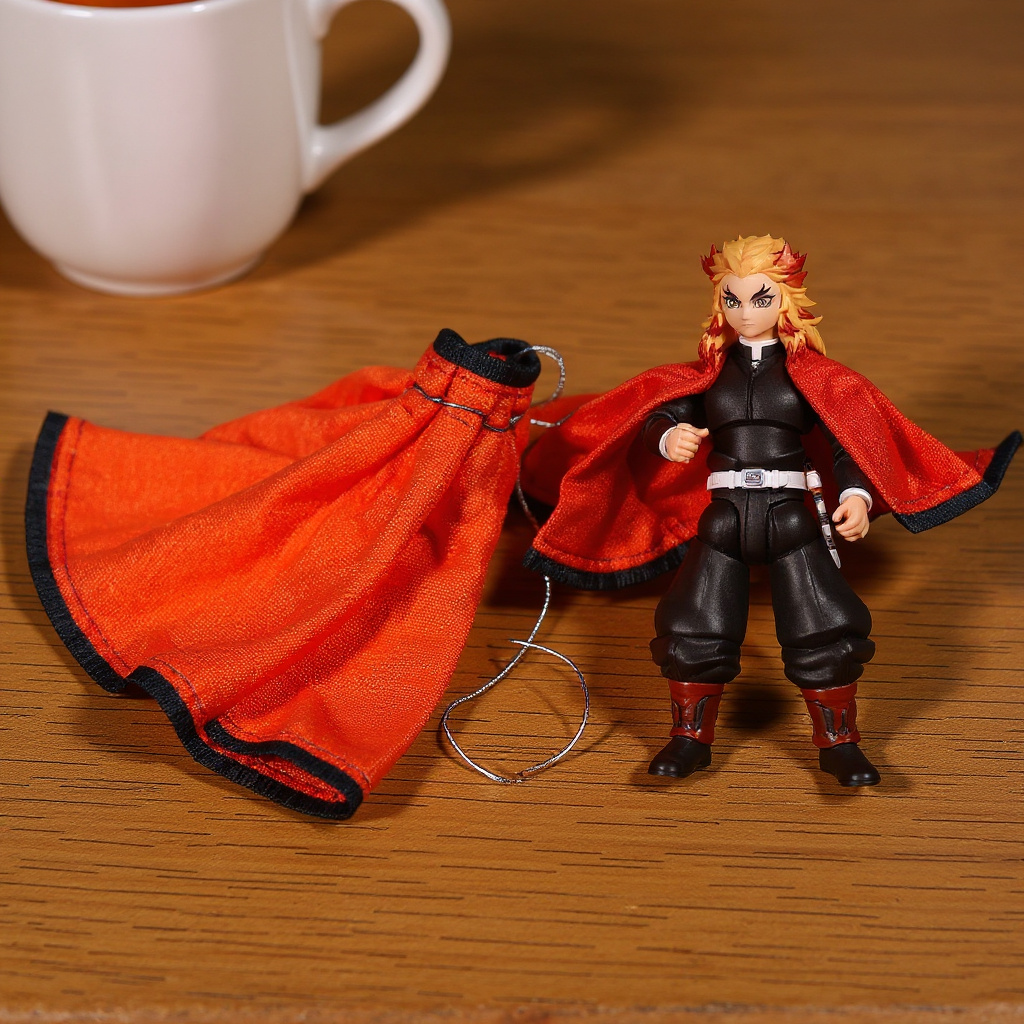
Soft goods earn their keep in photography because they add motion that plastic can't fake. The wire lets you build a pose that suggests a mid-swing strike, not a mannequin standing still.
Side lighting shows off fabric texture and reveals gradient transitions best. Backlighting builds dramatic silhouettes but can wash out the color blend you spent time shaping.
For action shots, a hair dryer on the cool setting adds temporary flutter while the wire holds the base shape underneath. Multiple exposure shots — same pose, slightly shifted fabric position, composited together — can suggest motion blur without an actual blur.
Frequently Asked Questions
Will a custom haori fit figma Rengoku without modification? Most 1/12 scale custom haoris fit figma Rengoku directly. Figma's 2.3-inch shoulder width and 0.4-inch neck opening sit inside standard sizing for handmade accessories, so out-of-box fit works for the majority of pieces. If the neck opening feels snug, stretch the fabric by hand over a rounded object like a spice jar for about 30 seconds per side. What's the difference between figma and SHFiguarts haori sizing? SHFiguarts runs 2-3mm wider through the shoulders and chest. A haori built for figma will still go on an SHFiguarts figure, but expect visible tension lines across the torso rather than a smooth drape. Can I bend the internal wire without damaging the fabric? Yes, if you keep bends gradual. Avoid sharp kinks in the same spot more than 3-4 times. If you hear thread popping, stop — that's the fabric telling you the bend radius is too tight for the weave. Is Bandai's official Rengoku haori still available separately? Official replacement parts from Tamashii Nations rarely sell as standalone pieces, and when found secondhand they run $40-60. Collectors on figure databases like MyFigureCollection generally point toward custom soft-goods alternatives for both cost and pose flexibility. How do I wash a soft-goods cape without losing the gradient color? Spot clean only, with a barely damp cloth and mild soap. Never soak or machine wash — the internal wire rusts within a single wash cycle, and printed gradients can run. For a stubborn stain, sometimes it's easier to call it battle wear. Does the internal wire show through thin fabric? Good construction hides the wire inside a fabric channel or between two layers. If you can trace the wire outline through the outer fabric with your finger, the build used fabric too thin for a 22-gauge wire, or skipped the inner layer entirely. What's the best way to store a wired haori between displays? Fold along natural seams, never across the wire. Wrap in acid-free tissue and store flat inside a box — see the five-step care list above for the full order of operations. How much does a Kyojuro Rengoku custom haori for figma typically cost? Expect $30-40 for hand-sewn soft goods with wire support, compared to $15-25 for mass-produced versions and $40-60 for rare official Bandai parts. The middle price point buys hand-stitching and a shaped wire structure, not machine-perfect seams. Will this haori style work on other Demon Slayer figma figures, like Tanjiro or Giyu? The wire and fabric-weight construction transfers to other characters' cloaks without issue. The red-orange flame gradient is Rengoku-specific, so a Tanjiro or Giyu haori would need its own color pass, not a shared dye batch. Can this style of haori work for other flame-themed 1/12 figures? The construction technique — wire channel, cotton-blend fabric, hand-finished trim — works for any 1/12 character wearing a flowing garment. The specific red-orange gradient stays tied to Rengoku's design, but the build method carries over to capes and long coats on similarly sized figures.Is the Investment Worth It?
A $34 custom haori for figma Rengoku sits between mass-produced alternatives ($15-25) and official Bandai replacement parts ($40-60). You're paying for hand-sewn seams, a screen-matched gradient, and wire that holds a pose through a full photo shoot rather than one shot before it slumps.
The trade-off: expect small imperfections. Stitching won't look machine-cut, and pieces vary a few millimeters from one unit to the next.
For photographers and collectors who repose their figures often, the posability upgrade earns its price. If your Rengoku stays locked in one pose in a sealed case, save your money and stick with the stock plastic cloak.
Browse the Rengoku Haori Replacement 1/12 Scale, or check our 1/12 scale soft goods sizing guide before you order if you're mixing figure brands. The wire system and gradient fabric quality make this a solid middle-ground pick for upgrading a figma display without official-part pricing.

