


What size and material makes 6 inch action figure horse barding replacement fit and look authentic? For most 1/12 scale horses, you need cloth cut to a 4.2-4.8 inch back length, wire sewn into the seams at 24-26 gauge, and a cotton-linen blend in a matte earth tone. That's the short version. I've made over 400 of these pieces in my workshop, and the short version is almost never the whole story.
Your figure's fabric barding is torn. Or frayed. Or just gone, because the horse showed up bare. You need a 6 inch action figure horse barding replacement that fits without bunching, reads as medieval instead of costume-shop, and survives more than three photo sessions before the wire snaps.
Replacing horse barding is not the same as buying any small cloth accessory and hoping. Scale matters. Materials matter. The wire framework that gives barding its shape matters most, and it's the piece almost every mass-market option skips entirely.
What Scale Horse Actually Fits 6 Inch Figures
Not every horse labeled "1/12 scale" fits a 6 inch figure the way you'd expect. Real medieval warhorses measured 14-16 hands high, or 56-64 inches. At 1:12 scale, that converts to 4.7-5.3 inches tall at the withers.
Most action figure horses actually run a bit bigger, closer to 5.5-6 inches at the shoulder. This oversizing helps in photography. Your knight won't look like he's riding a pony.
| Figure Line | Horse Height | Barding Fit |
|---|---|---|
| Mythic Legions | 5.8" | Perfect |
| GI Joe Classified | 5.5" | Good |
| Marvel Legends | 5.9" | Perfect |
| DC Multiverse | 5.7" | Good |
| NECA | 6.1" | Tight but works |
Height isn't the number that decides fit, though. Back length, measured neck to rump, runs 4.2-4.8 inches on most 1/12 horses, and that's the measurement barding has to match. Get this wrong and the cloth either bunches at the withers or pulls tight across the flank like a saddle blanket two sizes too small.
Why Wire Framework Makes 6 Inch Barding Replacement Look Real
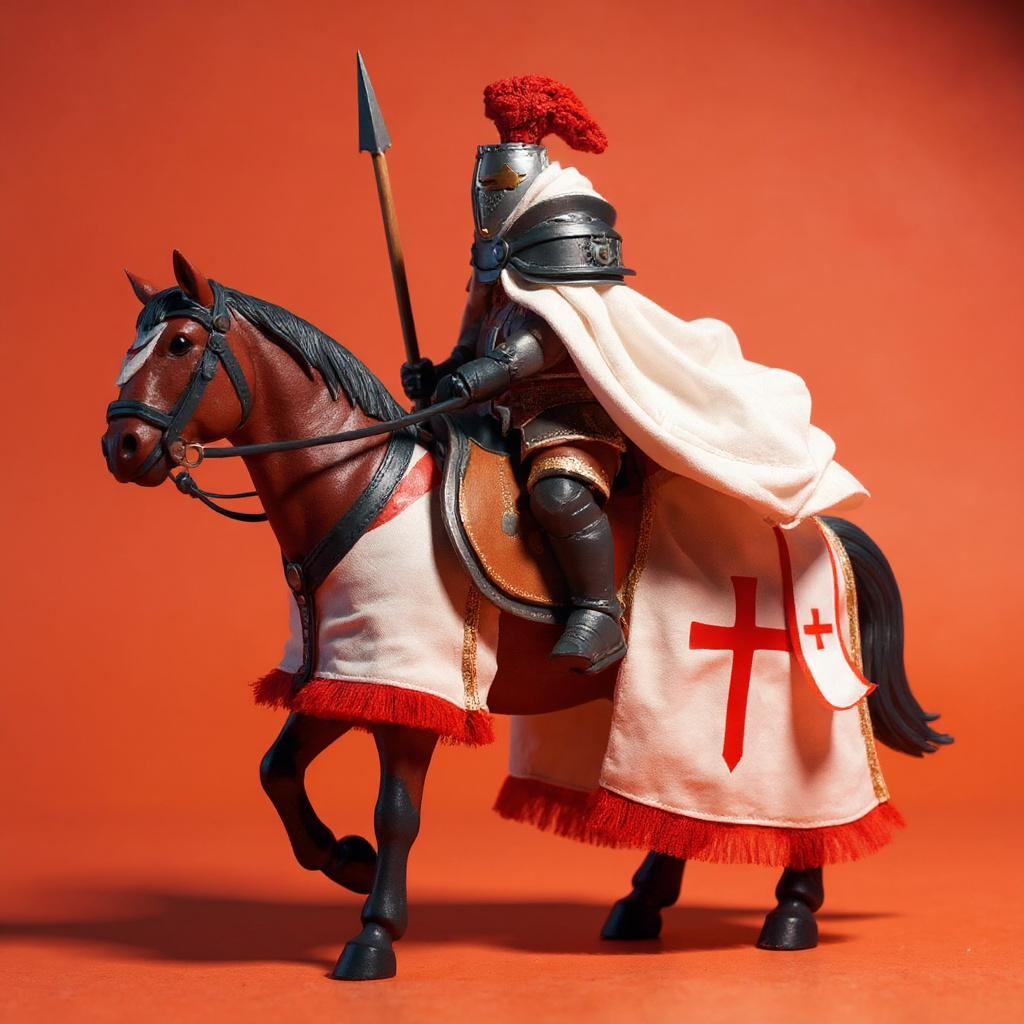
Plastic barding looks like plastic. It sits wrong. It catches light wrong. It screams "toy" in every photo, no matter how good your lighting rig is. Cloth barding with wire sewn into the hem moves like real fabric and holds a pose through an entire photo session.
The wire runs along hem edges and key fold lines. You can shape a windswept charge for action shots, then flatten it back down for a static display shelf. Without wire, cloth just hangs. Flat. Lifeless. Dead weight on a horse's back.
Wire gauge is where most sellers get lazy. Too thin, 28-30 gauge, and it won't hold a fold past a day. Too thick, 20-22 gauge, and you can see the wire poking through thin cotton in every close-up shot.
| Wire Gauge | Diameter | Holds a Pose | Visible Through Fabric | Best Use |
|---|---|---|---|---|
| 20-22 gauge | 0.032-0.025" | Yes, indefinitely | Often, through thin cotton | Heavy canvas only |
| 24-26 gauge | 0.020-0.016" | Yes, for months of reposing | Rarely | Cotton-linen barding |
| 28-30 gauge | 0.013-0.010" | Loses shape in days | Never | Not recommended |
After running 24, 26, and 28 gauge side by side on identical test capes for two years, 24-26 gauge held up the longest without showing through the weave. That's the range I sew into every piece now, and it's what's in our Replacement Horse Cape Barding for 6 Inch Action Figure. Mass-produced accessories skip this step entirely. They glue plastic tabs instead, and the fabric goes flat the first time you pose it.
Fabric Choice and Historical Accuracy
Real barding used wool, linen, or leather. At 1/12 scale, actual leather is too thick and stiff to drape correctly. Cotton and linen blends behave closer to the real material without the bulk. For deeper background on period arms and armor construction, the Metropolitan Museum's arms and armor collection is worth a look before you pick fabric.
Texture beats color for realism. A matte weave with slight, uneven fibers reads as cloth from three inches away. A smooth synthetic reads as costume fabric even in a well-lit photo.
Fabric mistakes to avoid:
1. Satin or silk - too shiny for medieval gear 2. Stretch fabrics - won't hold wire shaping 3. Thin cotton - tears easily and looks cheap 4. Felt - fine for some trim, but lacks drape 5. Synthetic suede - obvious fake texture in photos 6. Canvas - too thick for 1/12 scale proportions 7. Jersey knits - stretch kills the structured look
Earthy tones photograph best on a 5-inch horse: deep burgundy, forest green, rich brown, charcoal gray. Bright colors pop in a listing photo but break the illusion the moment you set up a diorama shot.
Sizing Problems and Solutions
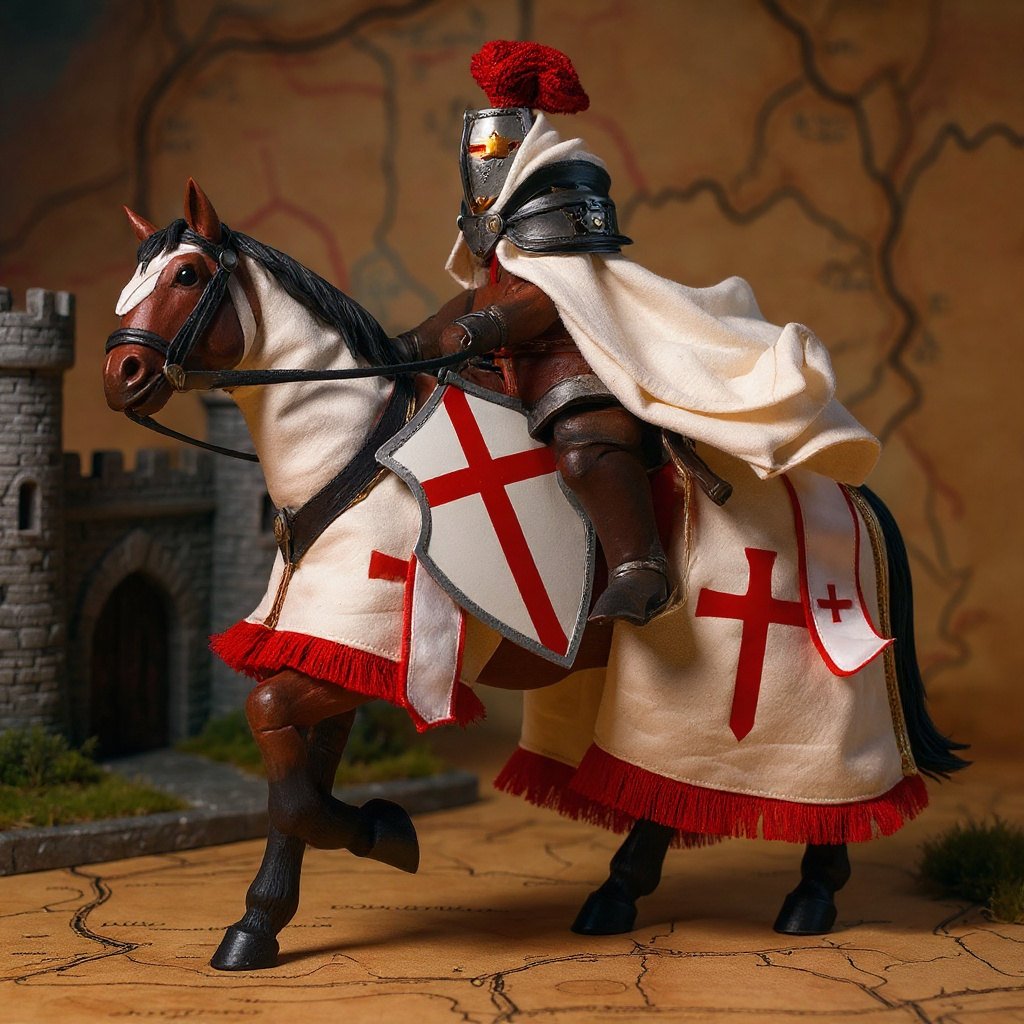
Most replacement barding ships oversized. That's not automatically bad, you can trim and hem to fit. Undersized barding can't be fixed. The proportions are wrong from the cut, and no amount of hemming saves it.
Measure your horse's back length before ordering. Add half an inch for drape. The barding should hang about a quarter inch past the rump and chest for a natural overhang.
Common fit issues, in order of how often I see them:
1. Neck opening too small - can't slip over the horse's head without stretching or ripping a seam 2. Side panels too short - leaves the flanks exposed and looks unfinished in photos 3. Overall length too short - reads as a saddle blanket instead of barding 4. Wire placed wrong - creates fold lines that don't match how the fabric actually wants to fall
The neck opening should measure 2.8-3.2 inches around for most 1/12 horses. That range lets the fabric slide on without stretching the weave.
Installation Tips That Actually Work
Don't force oversized barding onto the figure. Ever. The wire framework can snap or bend permanently, and there's no fixing a kinked wire hidden inside a seam.
Start with the neck opening while the wire sits relaxed, not pre-shaped. Slide it over the horse's head first. Position the cape along the back. Then, and only then, start shaping folds.
Bend the wire in small stages, about half an inch of curve at a time, instead of one dramatic sweep. Small bends. Fewer stress points. Less chance of a fatigue crack six months later.
Honestly, if you're only ever displaying this figure in a sealed case and never touching it again, skip the wire shaping step entirely and just let the cape hang flat. Save yourself the work. The dramatic windswept pose only matters if you're actually photographing action shots.
For photography, shape the barding after the horse and rider are already posed. The final stance decides how the fabric should fall, not the other way around.
Maintenance and Long-Term Durability
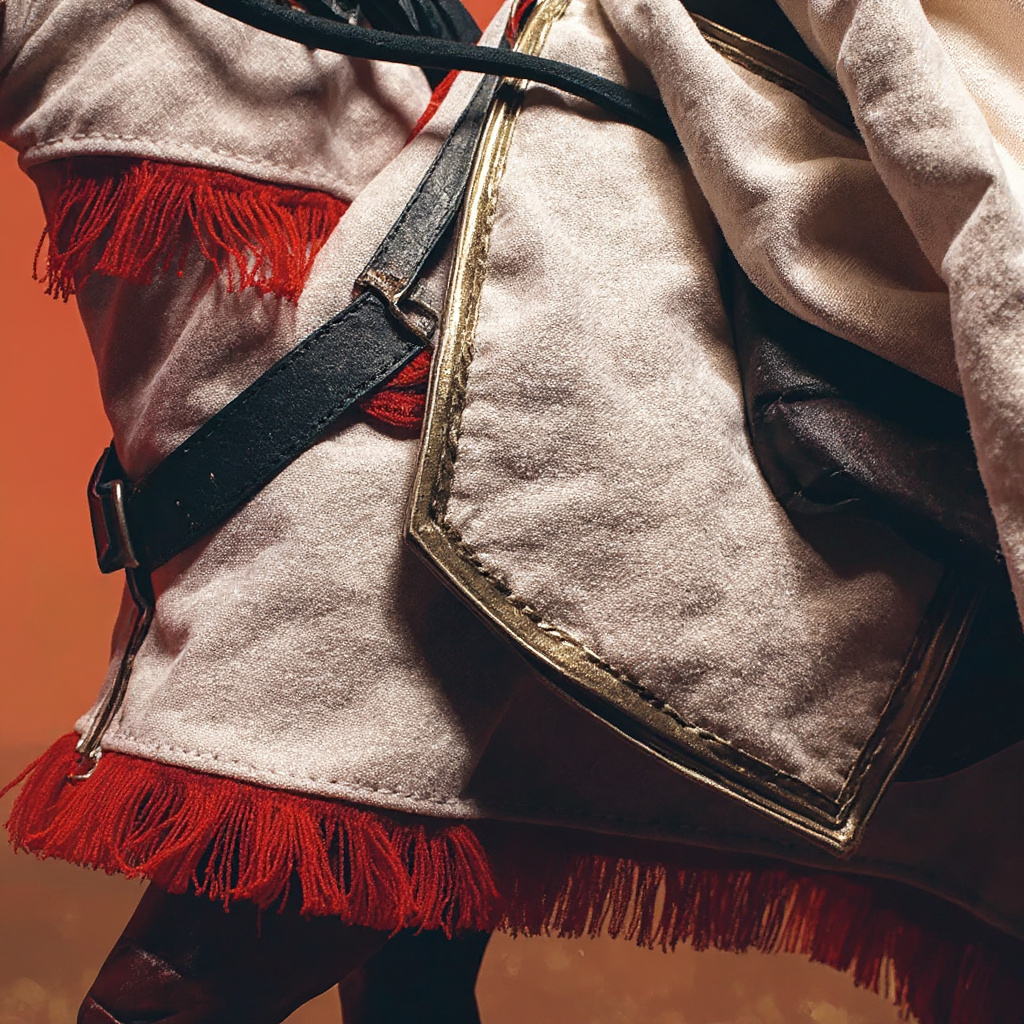
Wire-framed barding doesn't last forever. Every reshape fatigues the metal a little. Most pieces I've sold handle 50-100 major reshapes before a wire finally gives out.
Store it flat, or loosely draped over a stand. Leaving it cinched into a tight pose for months speeds up wire fatigue. For a display piece that never moves once it's set, this barely matters.
Loose threads happen with anything hand-sewn. Trim them with sharp scissors. Don't pull. Pulling can unravel a seam or shift the wire out of the channel it's sewn into.
Spot clean only, always. Machine washing tears the internal wire loose and can rip the fabric at every stress point where it's stitched.
What About Hard Armor Alternatives
Some collectors go rigid instead of cloth. Resin armor. Metal plates. It works for certain display themes, but it kills posing flexibility fast.
Resin armor pieces show incredible detail and zero flexibility. Great for a museum-style static shelf. Useless the moment you want a dynamic photo.
Metal armor at 1/12 scale runs $80-150 a piece, and the weight often exceeds what an action figure's joints can hold up over time without sagging.
3D printed armor keeps improving, but layer lines still show under macro photography. The plastic finish just doesn't catch light the way woven fabric does.
Cloth barding remains the more flexible option for anyone who actually poses and photographs their figures, rather than shelving them.
Best 6 Inch Action Figure Horse Barding Replacement Options
Mass-market options from big toy companies run $12-18. No wire framework, cheap synthetic fabric, fine for a kid's play set, not built for close-up photography.
Custom commissioners on Instagram and Etsy charge $50-80 for similar work, and quality swings wildly between makers. Some don't understand 1/12 proportions at all, and you end up with a cape sized for a 1/6 figure shrunk down badly.
The action figure community on Reddit occasionally has useful source threads, though most of the discussion there is about full-figure customs rather than accessories. The one-sixth scale collector community deals with similar wire and fabric questions, but their larger scale means wire shaping matters less to them. Their fixes don't always shrink down cleanly.
Our Replacement Horse Cape Barding for 6 Inch Action Figure sits at $45, built with 24-gauge wire and a cotton-linen blend, priced between the mass-market plastic and the high-end custom route.
Is Handmade Worth the Premium
Handmade barding runs 2-3x the mass-produced price. You're paying for correct wire gauge, scale-accurate cutting, and stitching that doesn't split after three poses.
The slightly uneven stitching on a handmade piece actually helps realism. Real medieval textiles weren't machine-perfect either, so a little irregularity reads as authentic rather than sloppy.
Expect some color variation between batches on handmade orders. Natural dye lots and different fabric runs create small shifts a factory dye bath would never produce.
For a museum-quality diorama, the extra cost shows up in the photos. For a kid's play horse or a casual shelf piece, the mass-produced option is genuinely fine. No shame in it.
When you need a 6 inch action figure horse barding replacement that photographs well and survives repeated posing, wire-framed cloth construction is the option that holds up. Our Replacement Horse Cape Barding for 6 Inch Action Figure uses 24-gauge wire and a matte cotton-linen weave at $45.
Frequently Asked Questions
What size horse figure works best for 1/12 scale barding replacement? Horses measuring 4.2-4.8 inches from neck to rump fit standard 1/12 scale barding best. Height matters less than back length here; most major 6 inch figure lines, including Mythic Legions and Marvel Legends, fall inside that range. Does Mythic Legions or GI Joe Classified horse barding fit the same way? Mythic Legions horses run about 5.8 inches to the shoulder and fit 1/12 barding with almost no adjustment. GI Joe Classified horses measure closer to 5.5 inches, so expect slightly more fabric overhang at the flanks, which you can trim. Do skeletal remains of medieval warhorses match toy warhorse figure sizing? Archaeological measurements put average medieval warhorses at 14-15 hands, or 56-60 inches, which converts to 4.7-5 inches at the withers at 1:12 scale. Most toy horses run slightly larger than that for better visual proportion on a shelf. Can I find replacement plastic parts instead of cloth barding? Replacement plastic horse accessories are rare since most manufacturers don't sell individual parts. Cloth barding is easier to source, cheaper to replace, and generally looks more convincing in photos than a molded plastic substitute. Is handmade cloth barding compatible with resin or plastic 1/12 scale horses? Yes. Material of the horse doesn't matter, resin, plastic, and die-cast horses all accept cloth barding equally well as long as the back length and neck opening dimensions match. How do I keep wire-framed barding from losing its shape over time? Avoid repeatedly bending the same spot in the wire. Store the piece flat or loosely draped when not on display, and plan to replace it after roughly 50-100 major reshapes, which is when most wire starts to fatigue and crack. What's the difference between full horse armor and simple barding? Full horse armor covers the head, neck, chest, and sometimes the legs. Barding is a decorative cloth covering just the back and sides, which installs faster and poses more easily across different display setups. Will humid storage ruin wire-framed cloth barding? Yes, more than people expect. Moisture corrodes thin craft wire from the inside of the seam where you can't see it, and cotton-linen blends can mildew if stored folded in a damp closet. If you live somewhere humid, store the piece flat with a silica packet nearby, or consider a sealed plastic display case instead of open shelving.Does Quality Barding Actually Matter
For dioramas built for photography, yes, and it shows up immediately in the shots. For a figure that stays boxed on a shelf, probably not enough to justify the price gap.
Wire framework is the real dividing line. Barding without shapeable wire looks flat in every photo, no matter how nice the fabric is. With wire sewn into the seams, you get windswept drama for action shots or quiet, natural draping for a still diorama.
When your current barding is worn through or your new figure showed up without any, a proper 6 inch action figure horse barding replacement bridges the gap between toy-store plastic and expensive custom commissions. See our Replacement Horse Cape Barding for 6 Inch Action Figure for the wire-and-fabric build described above.

