


A 1/12 scale winter coat for action figure use needs to fit a 6-inch body with shoulder measurements of 1.5-2 inches and chest measurements of 2-2.5 inches. That's the baseline. But real fit comes from matching wool-textured panels, a fur-trimmed hood, and tiny brass-style buttons to your specific figure's frame — not just eyeballing "1/12 scale" on a listing and hoping for the best.
Most collectors get this wrong because they measure height and stop there. A stocky 6-inch figure needs a completely different coat pattern than a slim one of the same height. I learned this the hard way after cutting three hoods too small for an Action Hero body whose shoulders ran half an inch wider than my template.
Measuring Your Figure Before You Buy a 1/12 Scale Winter Coat
Start with three numbers: shoulder width, chest circumference, arm length. Use a soft measuring tape. Dental floss with a ruler taped alongside works too, oddly well.
Shoulder width runs from one shoulder edge to the other, across the back. Most 1/12 figures land between 1.5 and 2 inches here. Chest wraps around the widest part of the torso, usually 2 to 2.5 inches for standard builds. Arm length goes from shoulder joint to wrist — measure this last, because sleeve length is where most mass-produced coats fail first.
Write the numbers down. You'll need them.
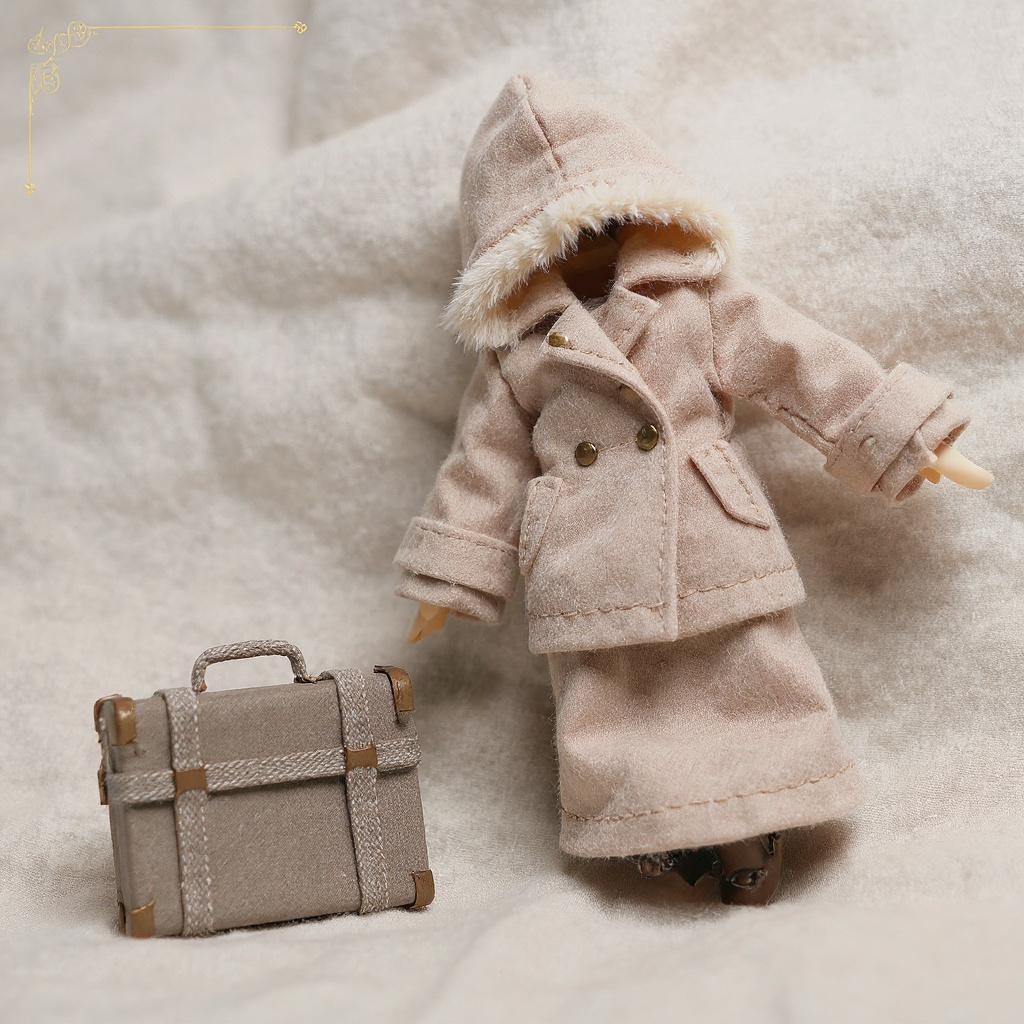
Why "1/12 Scale" on the Label Doesn't Guarantee Fit
Not all 1/12 figures share a body. A muscular superhero figure carries broader shoulders than an anime figure of identical height. The scale number describes height ratio. Nothing else.
I've fitted the same "1/12 scale" coat pattern onto four figure types in one afternoon. Two fit. One hung like a tent. One split a seam at the shoulder within a minute of testing the pose.
| Figure Type | Shoulder Width | Chest Measurement | Coat Fit Notes |
|---|---|---|---|
| Anime Female | 1.3-1.6 in | 1.8-2.2 in | Needs a tailored, narrow cut |
| Anime Male | 1.5-1.8 in | 2.0-2.4 in | Standard proportions work |
| Action Hero | 1.8-2.2 in | 2.4-2.8 in | Requires a broader cut through chest and hood |
| Realistic Figure | 1.6-1.9 in | 2.1-2.5 in | Most versatile sizing |
Handmade coats flex to these differences better than factory ones, mostly because a person is cutting each panel by eye instead of running a die-cut pattern a thousand times. Our 1/12 Scale Winter Coat Outfit for Fern Frieren Action Figure uses shapeable wire in the hem and hood, so you can nudge the fit after it arrives.
The Wool Texture, Fur Trim, and Buttons That Sell the Illusion
A convincing 1/12 scale winter coat for action figure display lives or dies on texture. Real wool-weight fabric, scaled down and cut in muted earth tones — rust, moss, oat, walnut — reads as "coat" from three feet away. Shiny polyester in bright colors reads as "costume."
The fur trim around the hood matters more than people expect. A thin strip of faux fur, trimmed by hand to sit flush against a 15cm hood opening, changes the entire silhouette. Too thick and the hood looks swollen. Too thin and it looks like lint.
Then there are the buttons. Tiny brass-style buttons, sewn on one at a time, catch light differently than a printed-on closure or a strip of velcro hidden under a flap. They're small. They're slow to attach. Worth it anyway.
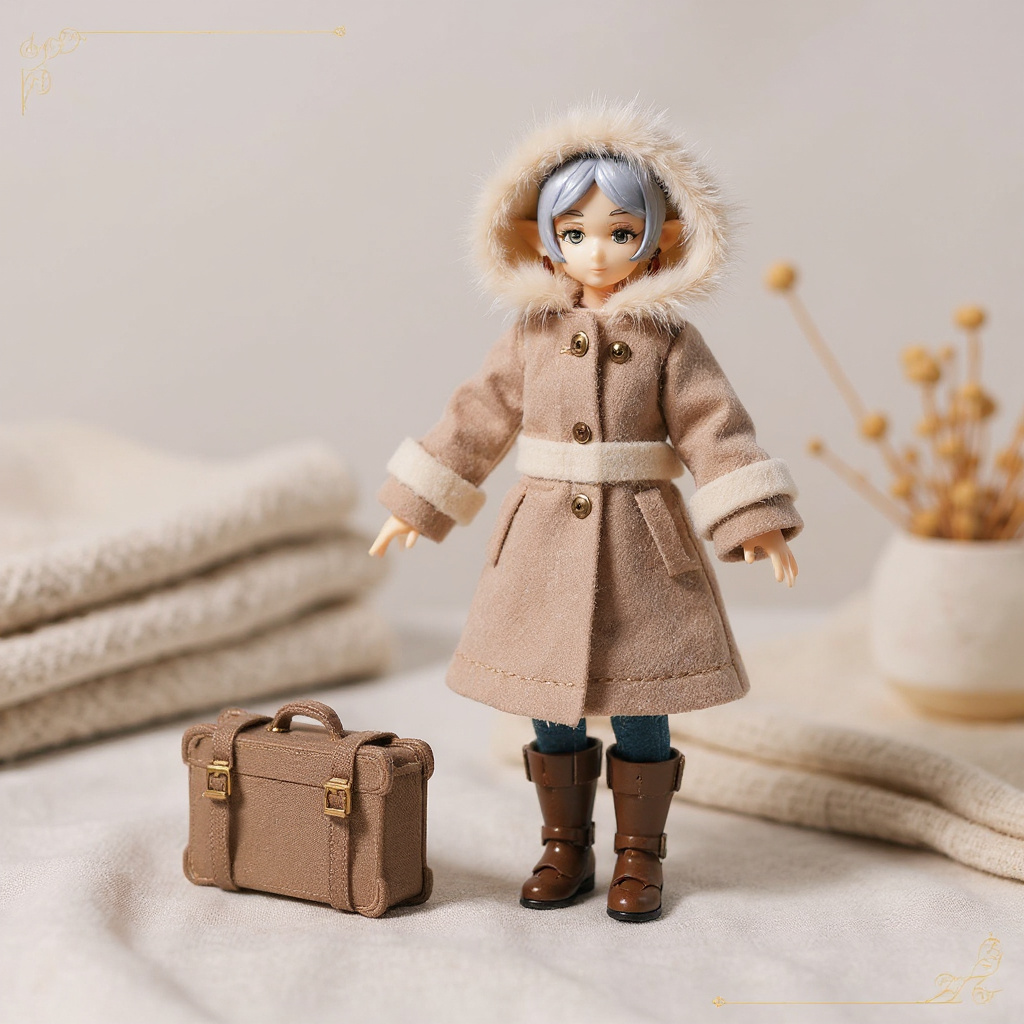
Layered Folds and Hand-Stitched Seams: What to Look For
Handmade 1/12 scale coats show fabric folds factories can't replicate at this size. Look for uneven stitching that's clearly intentional, not sloppy. Look for seams that follow the body instead of running in a flat, straight line down the back.
Real handmade pieces often show a visible thread end or two. That's not a defect. That's proof a person, not a machine, closed that seam by hand. Factory coats look too clean — machine-straight seams, synthetic fabric that photographs flat and shiny under studio light.
Fabric weight matters as much as pattern. A coat built from proper miniature wool-weight material drapes in small, believable folds. Cheap versions use fabric scaled for a doll twice the size, and it sits on a 6-inch figure like a cardboard box with sleeves.
Check the closures. Handmade coats usually carry functional miniature buttons or snaps you can actually open and close. Mass-produced coats leave buttons as flat decoration glued over a velcro strip underneath.
Honestly, if you're building a shelf display that will never be posed or photographed again, you don't need any of this. A stiff-lined $18 coat looks fine standing still behind glass. Save the $40 upgrade for a figure you actually plan to shoot.
Wire Armatures: Why Some Coats Move and Others Don't
The better 1/12 winter coats hide thin wire inside the hem, sleeves, and collar. Bend the hem, and it holds a walking pose. Flip the collar up, and it stays up.
Without wire, fabric coats hang straight down. Flat. Lifeless. Like laundry on a line, not a coat on a moving body.
1. Test wire flexibility in person if you can 2. Look for wire thin enough to bend by hand but stiff enough to hold a pose overnight 3. Check that wire ends are capped or wrapped so they don't poke through the lining 4. Confirm wire runs through hem, sleeves, and collar at minimum 5. Ask the maker if replacement wire is available years down the line
Coats with wire armatures run $40-70. Basic fabric versions without it run $15-25. For photography work, the price difference buys you poses a stiff coat simply can't fake.
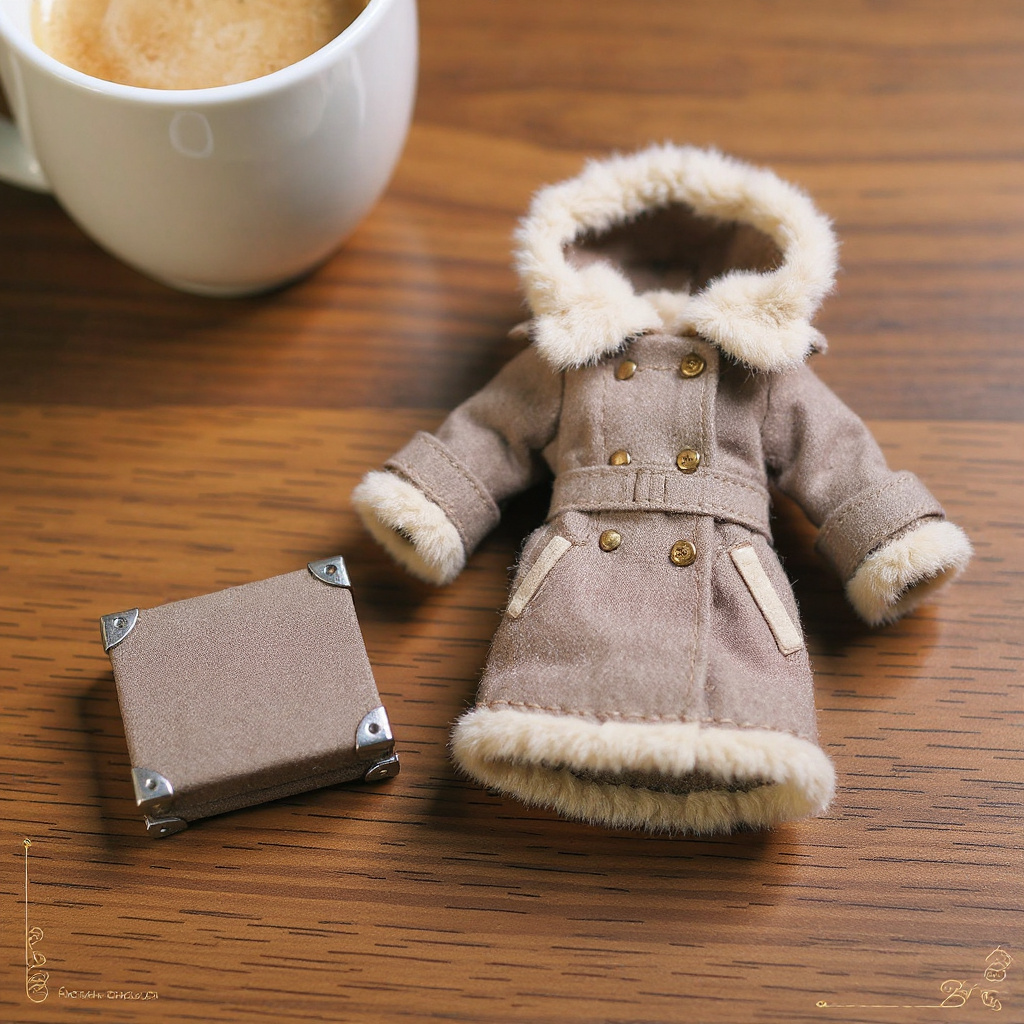
The Fabric Suitcase: A Small Prop That Changes the Whole Scene
A vintage-style fabric suitcase with straps, sized to match the coat, turns a static "figure wearing a coat" photo into a travel story. Set it at the figure's feet, or hand it to them, and the scene suddenly has a destination.
Look for the same construction quality in the suitcase as in the coat: straps that actually buckle, fabric that matches the coat's earth-tone palette, and stitching that survives repeated handling. A suitcase that falls apart after three photo sessions defeats the point of buying one.
Styling for Winter Photography
Winter coats open photography options summer outfits can't touch. Snow scenes. Indoor warming setups. Travel scenarios with the suitcase in frame.
Consider the narrative first. Coming in from the cold? Raise the collar, cross the arms, let the fur trim frame the face. Heading out into snow? Leave the coat open a little to show layered clothing underneath and let the hood sit back.
The anime Frieren: Beyond Journey's End popularized this exact winter-travel aesthetic — characters bundled against mountain weather, carrying packs, moving through snow. It translates directly to figure photography with a coat and a small suitcase in frame.
Lighting matters more in winter scenes than people think. Soft, overcast-style light matches the mood. Harsh direct light breaks it instantly.
Common Sizing Mistakes
The biggest mistake: assuming every 1/12 figure takes the same coat size. Even within one manufacturer's lineup, proportions shift between character types.
Measure twice. Order once. Don't guess based on a coat you already own — different fabric weights and cutting styles change how a labeled size actually fits.
Account for layering. Planning to dress your figure in something under the coat? Add 2-3mm to your chest measurement. Sounds small. Matters a lot at this scale.
Check return policies before ordering handmade or custom pieces. Some sellers exchange sizes. Some don't. Ask first.
Read fit reports from other collectors with similar figures. Communities like the one-sixth scale forums often post detailed measurements next to real photos, which beats guessing from a single product listing image.
Price vs. Quality: What You're Actually Paying For
| Price Range | Construction | Wire Armature | Suitcase Included | Typical Lifespan |
|---|---|---|---|---|
| $15-25 | Machine-sewn, single fabric layer | No | Rarely | A few photo sessions before seams loosen |
| $30-40 | Mixed hand/machine sewing | Sometimes, hem only | Sometimes | 1-2 years with careful handling |
| $44-50 | Fully hand-stitched, layered folds | Yes — hem, sleeve, collar | Yes | Multiple years; mine's held up since 2021 |
| $60-70 | Custom-tailored to figure measurements | Yes, reinforced | Yes, matched fabric | Long-term collector piece |
At $44, our handmade winter coat set sits right in the sweet spot — full wire construction, layered fabric folds, hand-stitched seams, and a matching fabric suitcase. For a closer look at measuring your own figure first, our sizing guide walks through it step by step, and our winter outfit collection shows the full range of muted earth-tone pieces if Frieren and Fern aren't your figures.
What Actually Makes This Worth the Money
You want winter figure photography that looks like a real coat on a real body, not a doll in a costume. That needs cutting and construction built for the scale, materials that hold texture under a camera, and details — the fur trim, the brass-style buttons, the hand-stitched folds — that sell the story on their own.
Mass-produced coats save money today. They also cap what you can do with the figure later. Handmade pieces with wire armatures and scaled wool-weight fabric cost more upfront and open poses a stiff coat can't touch.
Our 1/12 Scale Winter Coat Outfit for Fern Frieren Action Figure was built around exactly this — a coat that holds a pose, photographs like wool instead of plastic, and arrives with the suitcase so you're not sourcing a second prop separately.

