


A Mythic Legions replacement cape needs to fit the specific body type and attach without damaging the figure's armor pegs. Most aftermarket capes fail because they're sized for generic 6-inch figures, not the broader shoulders and thicker torsos of Four Horsemen's knight builds.
The difference between a cape that works and one that frustrates you comes down to three things: attachment method, wire placement, and fabric weight. Get any of these wrong and your $400 Sir Gideon figure ends up looking awkward or won't pose properly.
Why Stock Mythic Legions Capes Break So Often
Mythic Legions figures ship with molded plastic capes that crack at stress points. The shoulder attachment tabs snap off after 3-4 removals. The cape itself develops hairline fractures where it bends.
This happens because the plastic formula prioritizes paint adhesion over flexibility. Four Horsemen wanted capes that could hold fine detail and accept weathering washes, but that meant using harder plastic that can't flex repeatedly.
The attachment system makes things worse. Those tiny shoulder pegs weren't designed for frequent cape swaps. They're 2mm diameter posts that bear all the cape's weight plus any posing stress. When collectors remove capes for photography or storage, the pegs weaken.
Replacement becomes necessary, not optional. A broken cape ruins the figure's silhouette and makes dynamic poses impossible.
Cloth vs. Plastic: The Real Posing Difference
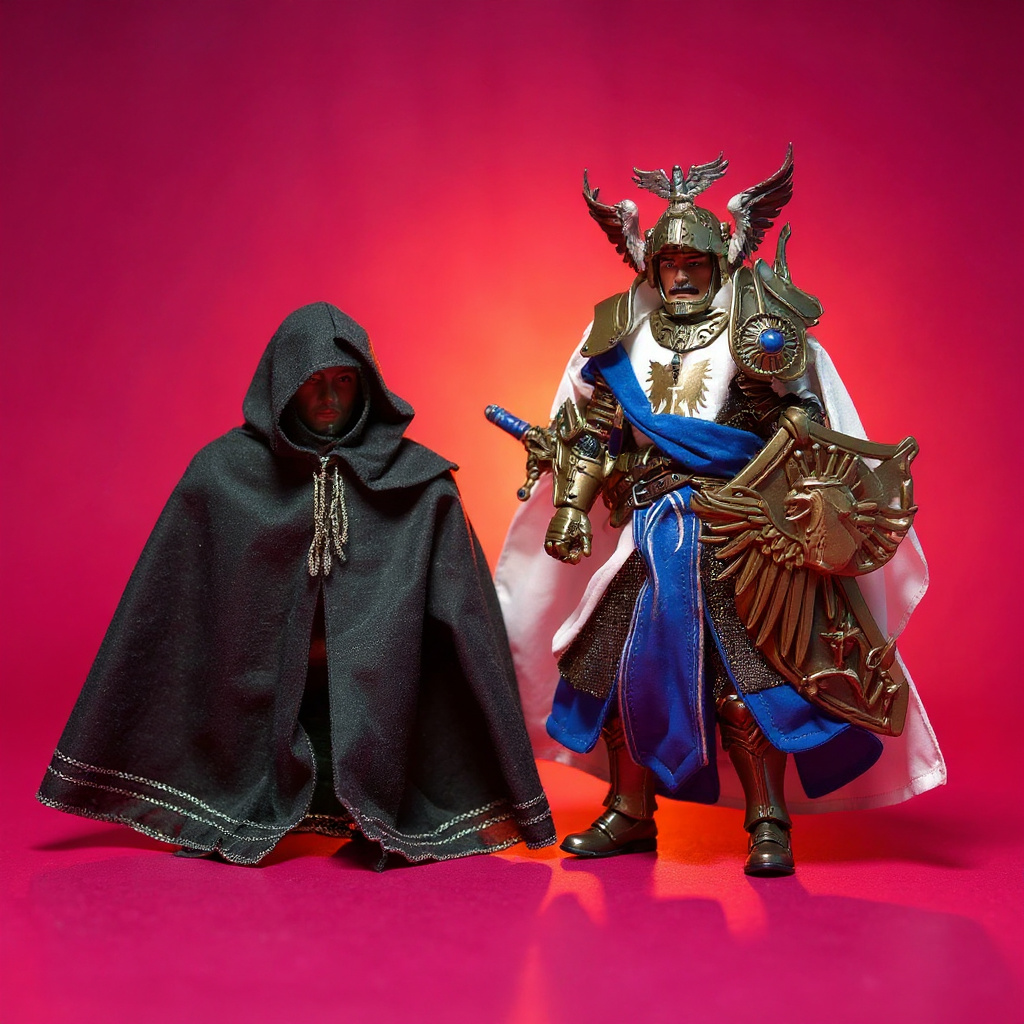
Cloth capes transform static displays into scenes with movement. Where plastic capes have 2-3 preset positions, fabric drapes naturally around the figure's pose and holds complex shapes.
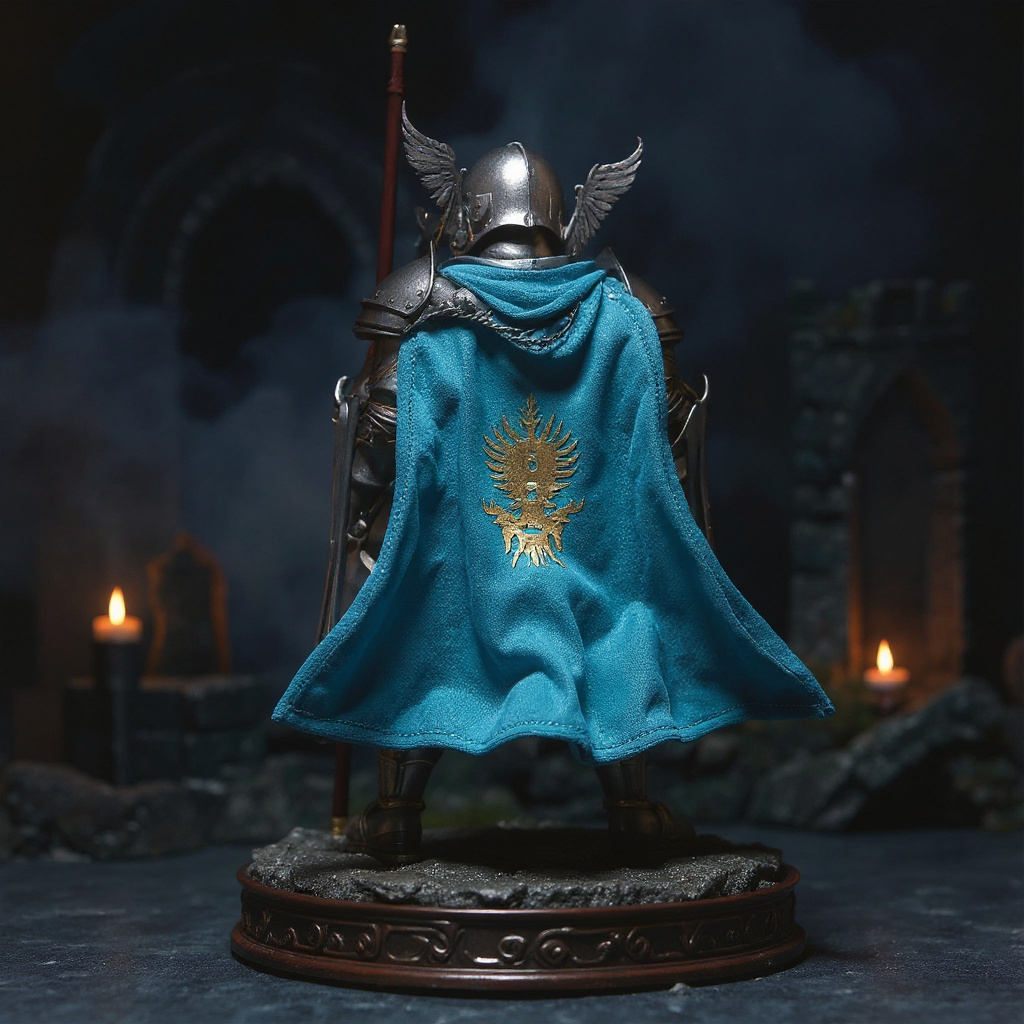
The Sir Gideon Heavensbrand Replacement Cape uses lightweight woven cloth with internal wire along the hem. This creates what photographers call "frozen motion" — the cape appears caught mid-billow even in still shots.
Plastic capes fight against dynamic poses. They have memory and spring back to their molded shape. Cloth capes adapt. Bend the figure's arm and the cape follows the body's new contour.
| Feature | Plastic Cape | Cloth Cape |
|---|---|---|
| Pose flexibility | 2-3 positions | Infinite |
| Durability | Cracks at stress points | Wire may fatigue |
| Detail retention | Sharp molded details | Fabric texture |
| Weight | 8-12g | 3-5g |
| Price | $0 (included) | $35-70 |
Weight matters more than most collectors realize. Heavy plastic capes throw off the figure's balance and stress the hip joints. Cloth reduces back-lean and makes action poses more stable.
Fitting Different Mythic Legions Body Types
Not all Mythic Legions figures use the same body buck. Understanding the variations prevents buying a cape that won't fit.
The 1.0 body (original wave) has narrower shoulders and a more tapered waist. Capes sized for this build look oversized on newer figures. The shoulder span measures 32mm across at the widest point.
2.0 bodies (Advent of Decay forward) added bulk to the chest and shoulders. The shoulder span increased to 36mm. Capes made for 1.0 bodies gap at the neck and don't drape properly.
Faunus and beast-style bodies present their own challenges. The hunched posture and different shoulder angles mean standard capes bunch up or pull tight in awkward places. These figures need capes cut with forward shoulder placement.
The Sir Gideon figure uses the 2.0 body with standard human proportions. A replacement cape sized for him will fit other 2.0 knights like Attlus, Kratos, and most Legion Builders from recent waves.
How Wire Placement Changes Everything
Wired capes need wire in the right places or they pose poorly. Too much wire makes them stiff. Too little and they can't hold dramatic shapes.
The best placement runs wire along the bottom hem only. This lets the cape fall naturally while giving you control over the silhouette. You can curl the hem into wind-blown curves or spread it wide for a dramatic stance.
Some makers put wire around the entire cape perimeter. This sounds better but creates problems. Vertical wires along the sides fight gravity and make unnatural creases. The cape looks geometric instead of flowing.
Internal wire should be 24-gauge craft wire — thick enough to hold position but thin enough to bend repeatedly without fatiguing. Thicker wire breaks fabric fibers. Thinner wire loses its shape after a few poses.
Attachment Methods That Actually Work
Mythic Legions capes attach at two shoulder points, not with a neck collar like medieval cloaks. The attachment method determines how securely the cape stays on and whether it damages the figure.
The original design uses small plastic loops that slide over shoulder pegs. This works but concentrates stress at two tiny contact points. When the cape pulls or twists, all that force goes through the pegs.
Better attachment uses reinforced fabric loops with wider openings. The according to Wikipedia's entry on action figures, stress distribution prevents peg breakage. The loops should be 3mm internal diameter — snug enough to stay put but loose enough for easy removal.
Some aftermarket capes use magnetic closures, but these don't work well with Mythic Legions. The armor details interfere with magnet placement, and the magnetic fields can attract metal paint particles over time.
1. Check shoulder peg condition before attaching any cape 2. Work the fabric loops over pegs slowly — don't force them 3. Support the cape's weight when posing to reduce peg stress 4. Remove capes by grasping the figure's torso, not pulling on the cape 5. Store removed capes flat to prevent wire kinks 6. Test wire flexibility before dramatic poses — old wire can snap 7. Keep spare shoulder pegs if your figures see heavy cape swapping
The Sir Gideon Heavensbrand Replacement Cape uses reinforced loops sized specifically for Four Horsemen's shoulder pegs. At $55, it sits in the premium range but includes proper attachment engineering that protects your figure investment.
Handmade Quality: What to Expect
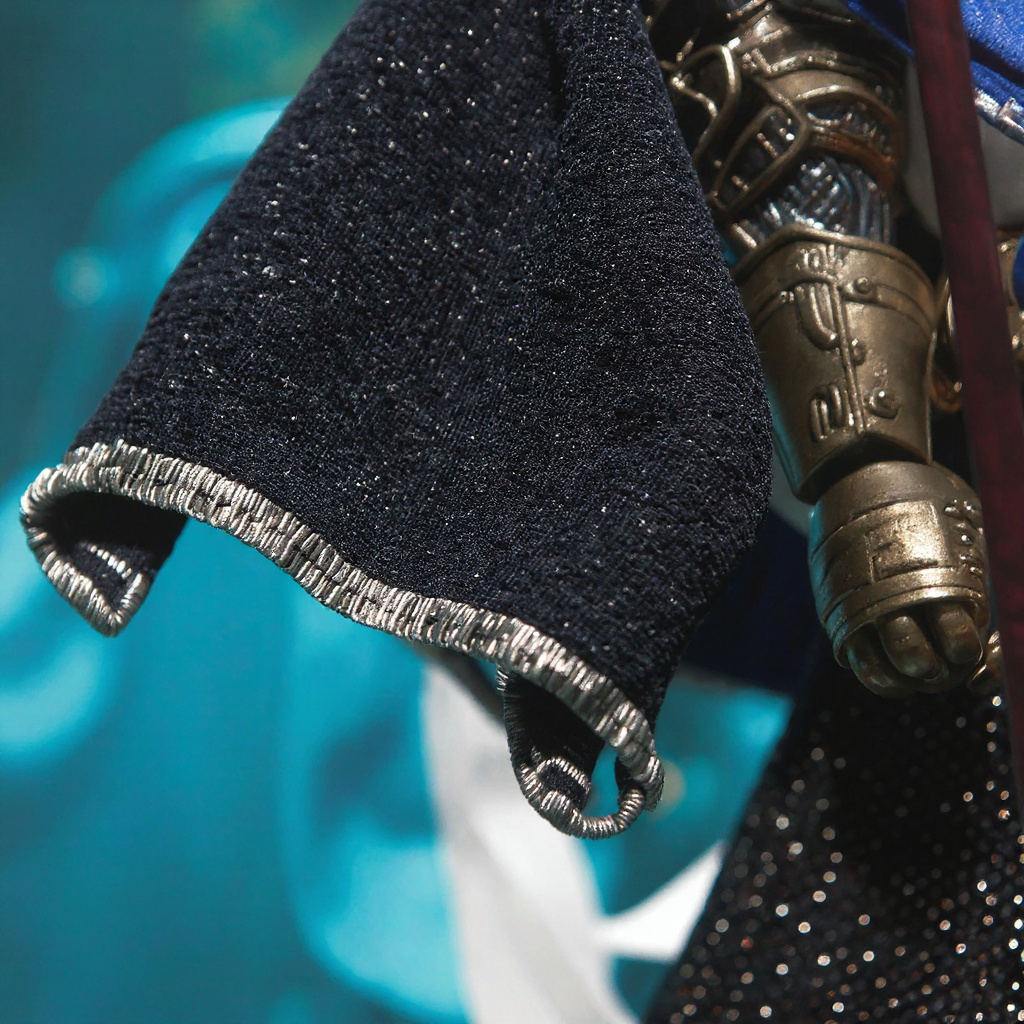
Handmade capes aren't factory-perfect, and that's actually good. Machine-sewn capes look too uniform and geometric. Hand-stitched pieces have the slight irregularities that make fabric look realistic at 1:12 scale.
Loose threads don't indicate poor quality if they're minimal and don't affect structural seams. A few stray fibers actually help break up the cape's outline and prevent that "new fabric" look that screams "toy accessory."
Real quality issues to watch for include: uneven seam allowances that cause puckering, wire that pokes through fabric, attachment loops that are too small or unevenly placed, and fabric that's too thick for the figure's scale.
Expect slight color variations between handmade pieces. Natural fabric dyes aren't perfectly consistent, and different dye lots can vary by several shades. This is normal and often preferred — perfectly matched colors look artificial.
The proper test of a handmade cape is how it performs, not how it looks under magnification. Does it drape naturally? Hold poses without springing back? Attach securely without damaging pegs? These functional qualities matter more than perfect stitching.
Photography and Display Tips
Cloth capes photograph completely differently than plastic ones. Understanding this helps you get better results from figure photography and diorama work.
Fabric catches light instead of reflecting it uniformly. This creates natural highlights and shadows that add depth to photos. The cape becomes part of the composition instead of a flat costume piece.
For dynamic shots, pose the figure first, then adjust the cape. The fabric will conform to the body's position and create natural flow lines. Don't try to pose cape and figure simultaneously — you'll fight the fabric's tendency to settle.
Wind effects work better with cloth capes. A small fan or compressed air can create realistic motion blur in photos. Plastic capes just look like they're being blown by a fan.
Display lighting changes everything. Fabric capes look best with directional lighting that emphasizes texture and creates dramatic shadows. Flat lighting makes them look lifeless.
The discussion threads on r/mythiclegions showcase impressive photography techniques specific to these figures and their fabric accessories.
Is a $55 Replacement Cape Worth It?
For most collectors, a premium replacement cape makes sense only if the original is damaged beyond repair or you're serious about photography. The cost represents 12-15% of a typical Mythic Legions figure's retail price.
The Sir Gideon Heavensbrand Replacement Cape justifies its $55 price through proper sizing, quality attachment engineering, and posability that transforms static displays into dynamic scenes. Cheaper alternatives from general action figure communities often compromise on fit or use generic sizing that doesn't work well with Four Horsemen's specific proportions.
If your stock cape still functions and you're happy with basic poses, the upgrade isn't essential. But for photography, detailed dioramas, or replacing broken pieces, a well-made cloth cape changes how your figures look and pose.
The handmade quality means slight imperfections, but also means custom sizing that actually fits Mythic Legions bodies correctly. Browse our Sir Gideon Heavensbrand Replacement Cape to see detailed photos of the construction and fit.

