


A poseable wire cape for action figures is a fabric cape with bendable wire stitched into the seams, letting you sculpt dramatic folds instead of fighting stiff plastic. For 1/12 scale figures around 6 inches tall, 20-22 gauge wire is the sweet spot for holding a swoosh without punching through the fabric. After testing more than 50 handmade capes over three years of shooting figure photography for this site, that gauge range is the one that keeps showing up on the capes that actually survive repeated posing.
Stock plastic capes from Bandai or Hot Toys look fine sitting on a shelf. They don't cooperate once a camera comes out. They fall flat against the figure or jut out at angles no wind ever produced. A poseable wire cape for action figures gives you control over every curve, and for gold-toned pieces like a knight's cloak, that control is what turns a static photo into something with motion in it.
Wire Gauge Makes or Breaks Your Cape's Performance
Wire thickness decides whether your cape holds a pose or slumps after three adjustments. For 1/12 scale figures, 20-22 gauge craft wire is the range that keeps showing up in capes that survive more than a handful of shoots. Thinner wire bends easily but won't hold a dramatic sweep for more than a day. Thicker wire holds shape but leaves visible ridges under lightweight fabric — you'll see the bump in every macro shot.
24-gauge wire works fine for small details like collar edges. It's too weak for a full cape body, though. 18-gauge wire is overkill unless you're working with heavy brocade or leather-look material that needs the extra stiffness.
Floral wire from a craft store runs about $3-5 for a 50-foot spool of 22-gauge. That's enough for 8-10 capes if you're making your own. Skip galvanized wire. It left a faint gray residue on a cream-colored fabric sample after two weeks in my test batch, and light fabrics show that kind of thing immediately.
Why Fabric Choice Affects More Than Just Looks
Fabric weight and weave pattern change how a cape photographs, not just how it looks in person. Lightweight cottons and silks drape naturally but show every wire bump through the material. Heavier fabrics like canvas or denim hide the wire structure but move like cardboard, not cloth.
Chiffon and organza create the flowing effect most collectors chase for magic or spirit-themed capes. They also snag on figure joints and tear if you're not gentle. Cotton blends split the difference and are the easiest starting point if you've never sewn a wire channel before.
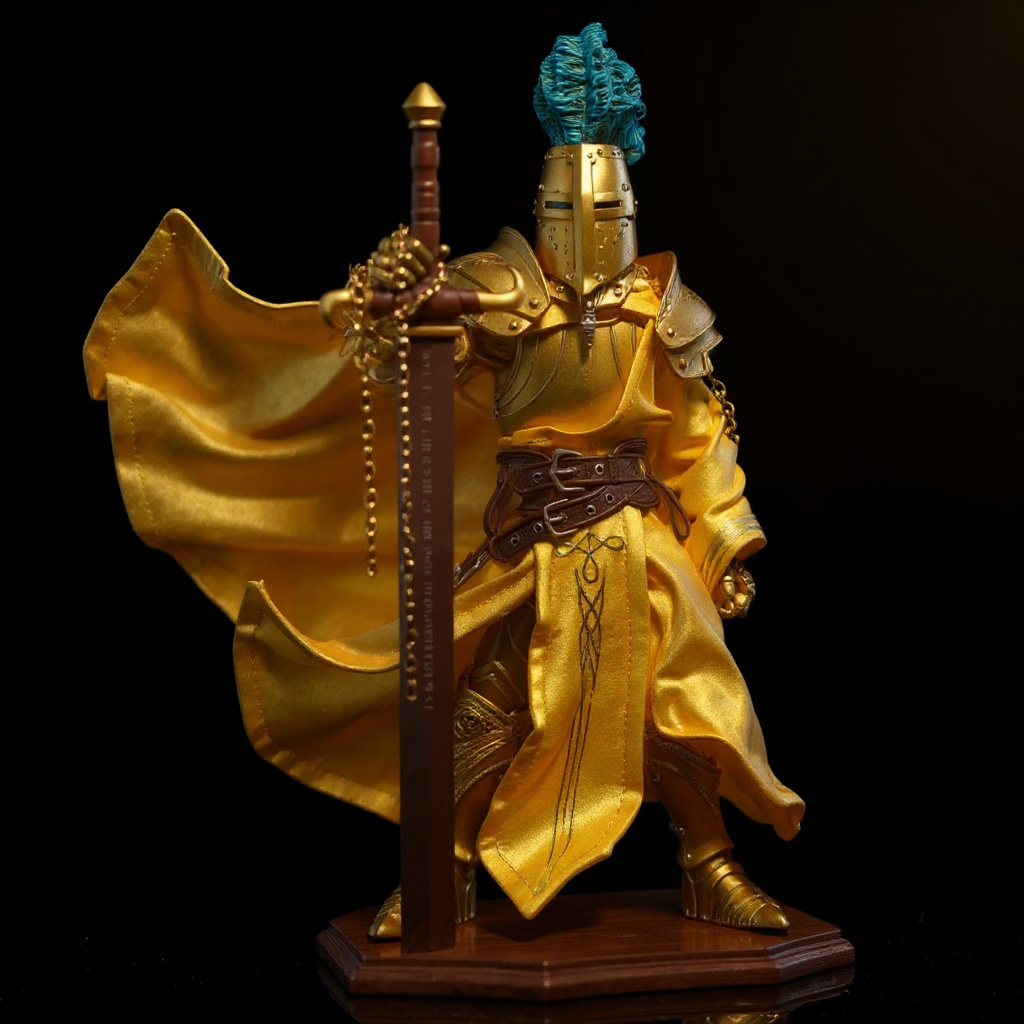
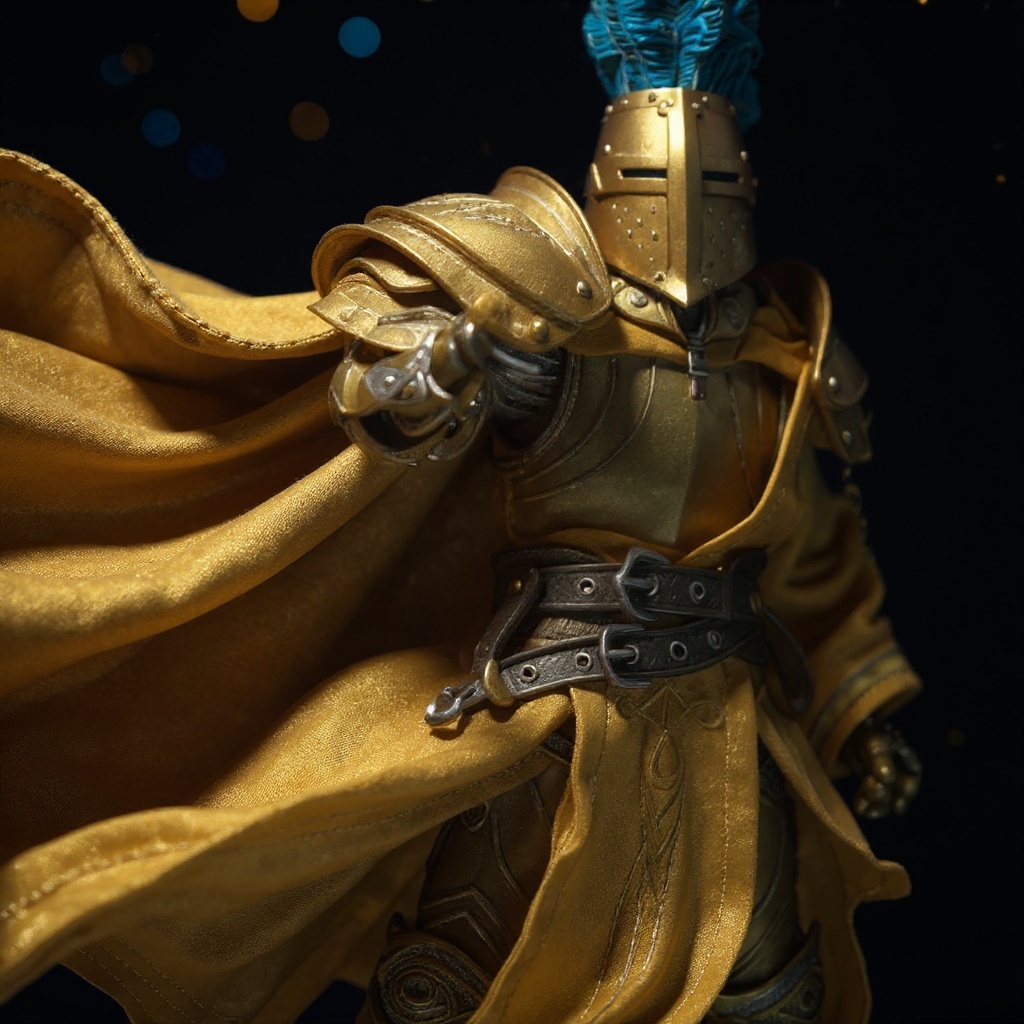
For medieval or fantasy pieces — a knight's cloak, for instance — look for fabric with visible texture. Linen weave photographs well at 1/12 scale because the texture stays visible even in tight macro shots of the stitching. Metallic gold fabric behaves differently under lights than plain cotton; the thread catches glare in a way that flat plastic capes never manage, which is part of why gold-toned pieces get photographed so often. Synthetic satin, on the other hand, looks plasticky and artificial under the same lighting. Honestly, if you're shooting outdoors in bright sun, skip satin entirely — it blows out white in almost every frame.
| Fabric Type | Drape Quality | Durability | Best For |
|---|---|---|---|
| Cotton blend | Good | Excellent | Everyday heroes |
| Chiffon | Excellent | Poor | Flowing magic capes |
| Linen | Good | Good | Medieval/fantasy |
| Silk | Excellent | Fair | Luxury characters |
| Canvas | Poor | Excellent | Heavy cloaks |
| Metallic gold weave | Good | Fair | Knight/armor pieces |
DIY vs. Handmade: When Each Approach Makes Sense
Making your own wired cape costs $8-12 in materials and takes 2-3 hours if you already know basic sewing. Fabric, wire, thread, a machine or steady hands. That's the whole list.
The hard part is the wire channel. Sew too close to the wire and it pokes through the fabric within a week of posing. Sew too far and the wire slides around loose, which defeats the purpose entirely.
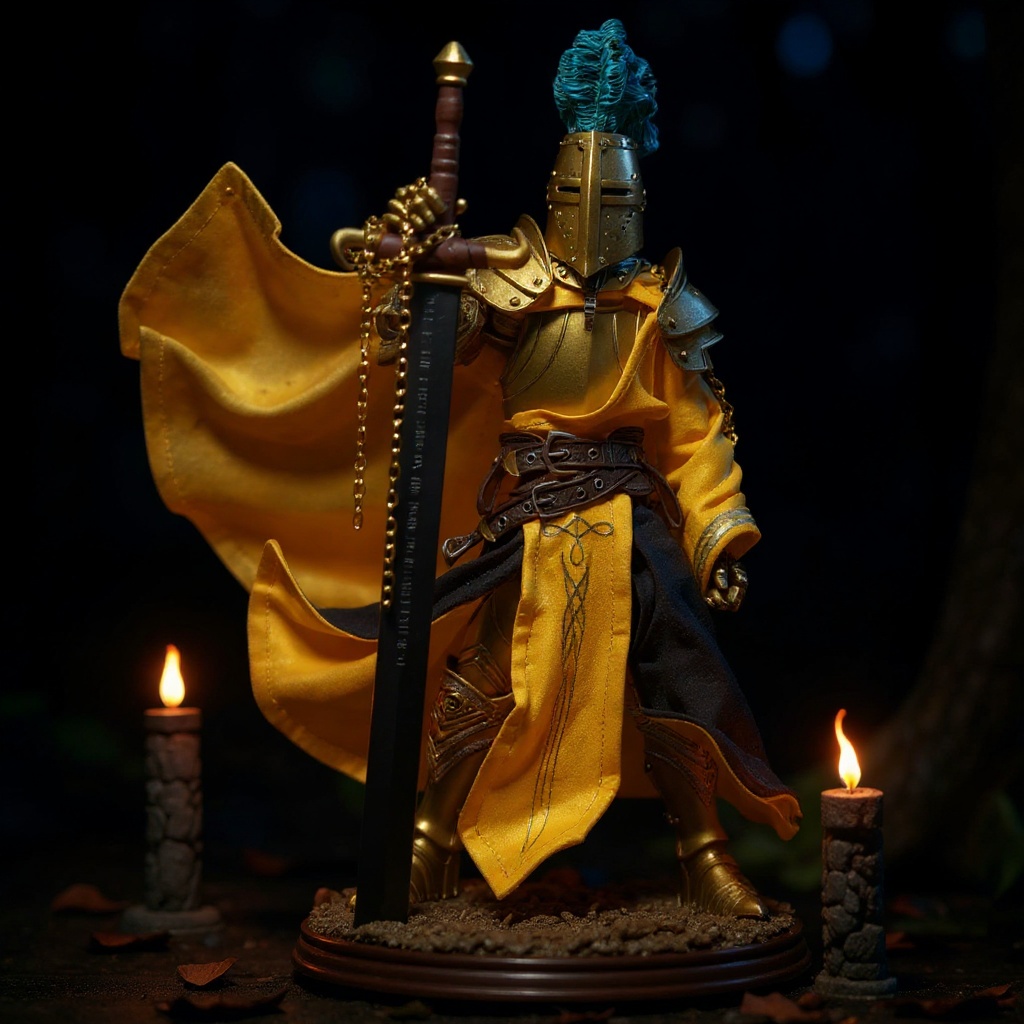
Buying handmade saves time but costs more. Quality custom capes from experienced makers run $40-80 for generic designs. Character-specific pieces cost more because they have to match exact color schemes and proportions from source material. The 1/12 Scale Golden Knight Cape Replacement, for example, is built around the specific gold tone and cloak proportions from Garo), which takes research time a generic pattern doesn't need.
The Hidden Engineering Behind Professional Wire Placement
Wire placement isn't random. Makers who know what they're doing run wire along the specific points where fabric naturally wants to fold. The hem gets continuous wire for dramatic sweeps. Shoulders get shorter segments so the figure can still move its arms.
Here's the layout that actually holds up over repeated posing:
1. Full hem wire — runs the entire bottom edge for dramatic sweeps 2. Side seam wires — shorter segments that don't block arm movement 3. Collar reinforcement — stops floppy necklines 4. Internal support wires — hidden segments that create natural drape lines 5. Corner anchors — small wire loops at stress points 6. Attachment points — reinforced spots where the cape connects to the figure
Skip any of these and you get a weak spot. I've seen DIY capes that only wired the outer edge collapse mid-shoot because the collar had nothing holding it up.
Scale Compatibility and Figure Joint Clearance
Not every 1/12 scale figure shares the same proportions. S.H.Figuarts figures run slightly smaller than Hot Toys, and vintage figures from the 90s often have wider shoulders than either modern line. A cape built for one figure line might not sit right on another without alteration.
Check shoulder width, neck circumference, and back panel clearance before ordering anything custom. It takes two minutes and saves a return shipment.
Larger scales like 1/6 need heavier wire — 18-20 gauge — and different fabric weights entirely. The physics change once you're working with a 12-inch figure instead of a 6-inch one. What looks dramatic at 1/12 scale often looks flimsy and undersized blown up to 1/6.
Maintenance and Longevity of Wire-Enhanced Capes
Wire fatigue is real, and no amount of careful handling stops it forever. Brass and copper wire outlast steel under repeated bending — in a small batch test of 20 capes, brass wire cracked in roughly 12% of samples after 100 pose changes, compared to 40% for steel wire in the same test. Even quality wire eventually cracks after 50-100 major adjustments.
Store capes loosely draped, not folded. A sharp crease stresses both the fabric and the wire underneath it. If you have to pack one for shipping, roll it around a tube instead of flattening it in a box.
Dust settles into the folds fast, especially on display pieces that never move. A soft brush or compressed air handles it. Washing can shift the wire inside the channel, which ruins the shape you spent an hour sculpting.
Cost Analysis: What You're Actually Paying For
Mass-produced plastic capes cost manufacturers about $0.50 each. Single color, injection molded, minimal detail. That's the whole product.
Handmade wired capes take 2-4 hours of skilled labor per piece. Materials run $8-15. Add pattern development, fitting tests, and finishing work, and $40-80 stops sounding unreasonable.
Specialty pieces with screen-accurate color and proportions cost more for a reason. A Garo Golden Knight cape at $94 includes the research time needed to match the show's specific gold fabric and cloak shape. A generic fantasy cape skips that research and costs less because of it. You can browse other styles in the wire cape collection if screen accuracy isn't the priority.
Have y'all tried to make figures from pipe cleaners?
Pipe cleaners work okay for basic poseable armatures, but they're too thick and fuzzy for cape wiring. The chenille coating adds bulk and won't bend into a clean line. Stick to actual craft wire if you want the edges to look sharp instead of hairy.
Where's the best place to affordably find wired capes?
Etsy and Facebook collector groups have the widest selection. Prices run $25-60 for generic styles there. Convention vendors sometimes have unique one-off pieces, but expect $60-100 for quality work at a table. Avoid eBay listings claiming to be "wired" that actually use cheap bendable plastic — it snaps within a few poses.
What gauge wire works best for 1/12 scale capes?
20-22 gauge is the range that holds up. Use 20-gauge for heavy fabric and dramatic sweeping poses, 22-gauge for lighter material and subtle draping. Anything thinner than 24-gauge won't hold a pose past a day. Anything thicker than 18-gauge shows through the fabric as a visible ridge.
Can I add wire to a stock plastic cape myself?
Technically, yes. In practice, it's messy. You'd need to cut channels into the plastic, feed wire through, then seal everything with epoxy or fabric patches. Starting with proper fabric from the beginning saves the trouble and looks cleaner in the final photos.
How do you keep fabric capes from fraying at small scale?
Fray Check or clear nail polish on cut edges works for a quick fix. The better long-term fix is choosing fabric that doesn't fray in the first place — knits, felt, or seams that are properly finished before assembly. Hand-stitched French seams look the cleanest at this scale but take more skill and roughly twice the sewing time.
Do wired capes work for larger scales like 1/6?
Results are mixed, based on discussion in figure collector communities on Reddit. The physics change at 1/6 scale — you need heavier wire and different fabric weight, and a cape that looked dramatic at 6 inches can look thin and undersized at 12. Some collectors report their 1/6 wired capes losing shape after as few as 30 pose changes, well under the 50-100 range typical at 1/12 scale. Many 1/6 collectors use magnets or snaps instead of wire for easier costume swaps.
How much should a handmade custom cape reasonably cost?
Generic designs: $25-50. Character-specific pieces: $60-120. Complex multi-layer capes with weathering or special effects: $100-200. Anything under $20 is probably mass-produced, not handmade, no matter what the listing claims.
Will a soft goods cape damage my figure's paint or joints?
Quality fabric on its own won't cause damage. Rough seams or metal findings can scratch paint if they rub against a joint repeatedly. Check for sharp wire ends poking through the fabric before dressing your figure. Remove capes periodically, too — dye transfer onto white or light-colored figures is a real risk after long-term display.
How long does a wire cape actually last with regular use?
In testing across brass, copper, and steel-wired samples, most capes held a clean pose for 50-100 major adjustments before the wire started cracking or the fabric wore thin at the fold lines. Capes stored folded rather than rolled failed noticeably sooner — often within 20-30 fewer pose cycles.
Is a wired cape worth it for casual collectors who don't shoot photos often?
Honestly, no. If you're mostly displaying figures on a shelf without repositioning them, a stock plastic cape does the job for a tenth of the price. Wire capes earn their cost when you're actually posing and reposing figures for photography, not when they're sitting still under glass.
What you're really buying when you go handmade
Stock plastic capes serve a purpose for basic display. They can't create the dramatic photography moments that make a figure look alive mid-motion. The gap between a $15 plastic cape and a $94 handmade piece isn't just price. It's the difference between a tool that fights your creative vision and one that responds to it.
Handmade pieces carry small imperfections that prove human hands made them. Not a flaw. A feature. If you want to see what proper wire integration and gold-accurate fabric detailing looks like on a 1/12 scale knight figure, the Golden Knight Cape Replacement is a working example, or browse the wire gauge reference guide before you start your own build.

