


Looking for a Ryu costume for Storm Collectibles figure that survives more than one photo shoot? Factory plastic gi tops don't bend. They crack. They sit there looking like a mannequin at a costume shop that closed in 1998, arms locked at ninety degrees no matter what you do to the shoulder joint. Not exactly the Street Fighter II energy you paid for.
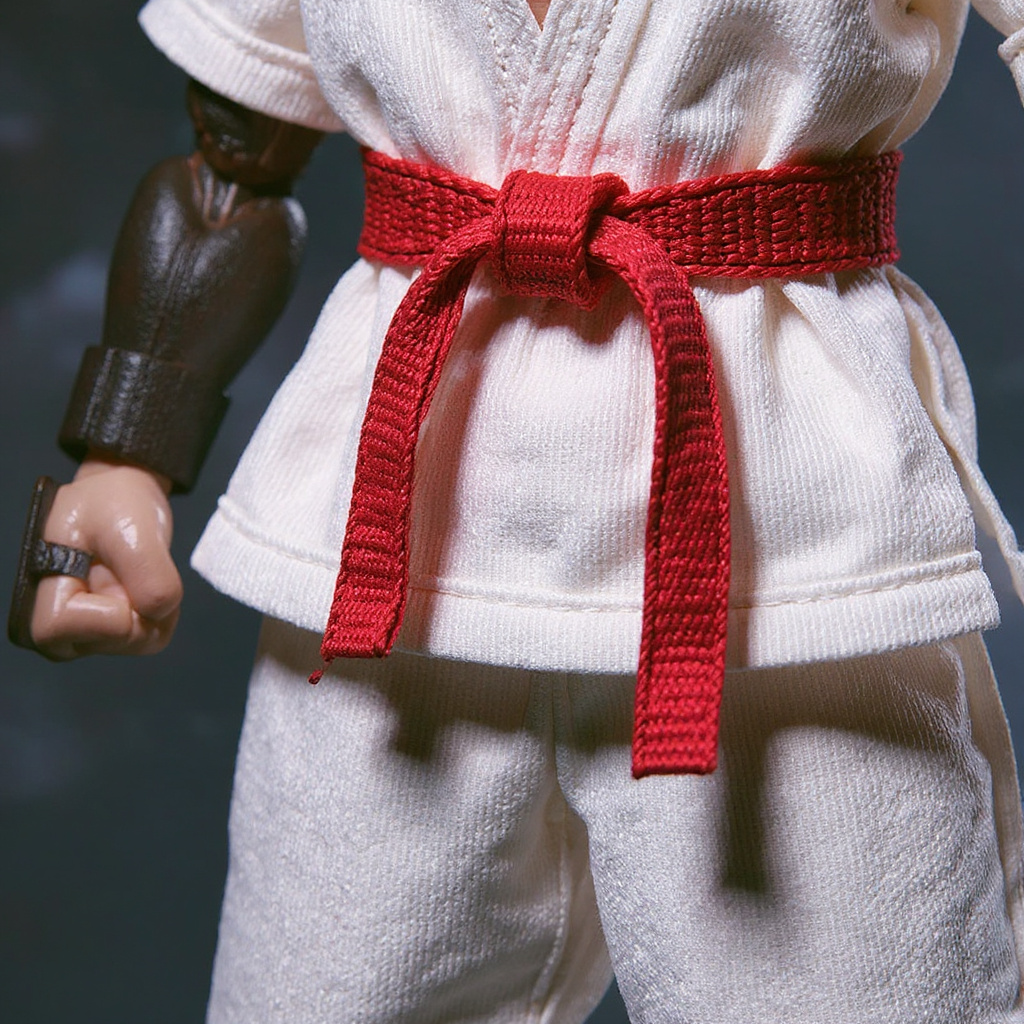
A handmade cloth gi with wired sleeves and pant legs changes that. This particular Ryu costume for Storm Collectibles figure setups uses white karate gi cloth with a red fabric belt, visible woven texture, and thin wire sewn into the seams so the sleeves and pant legs hold a fighting stance instead of springing back to "standing in line at the DMV."
The figure itself isn't the problem. Storm Collectibles builds genuinely excellent 1/12 scale bodies with articulation that puts most competitors to shame. It's the rigid plastic clothing riding on top of that articulation that kills the pose potential before you even start.
Why Factory Soft Goods Fall Short
Most Storm Collectibles Street Fighter figures ship with what manufacturers call "soft goods"—fabric pieces glued or sewn over plastic shells. Sounds fine on paper.
In practice, you get thick, non-poseable material that bunches at the joints like a bedsheet stuffed into a shoebox. The gi hangs stiff. Sleeves stay perpendicular to the arms no matter how far you twist the shoulders, because there's nothing inside the fabric telling it to do otherwise.
I've handled maybe forty of these figures across different release waves. The fabric itself isn't garbage—it's just built for factory speed, not for someone trying to freeze a hadoken mid-throw on a shelf. Mass production means minimal hand-finishing and zero wire armature inside the sleeves.
This creates what collectors call the "department store mannequin" effect. Your Ryu figure from the legendary Street Fighter II ends up looking like he's waiting for a bus, not throwing a fireball.
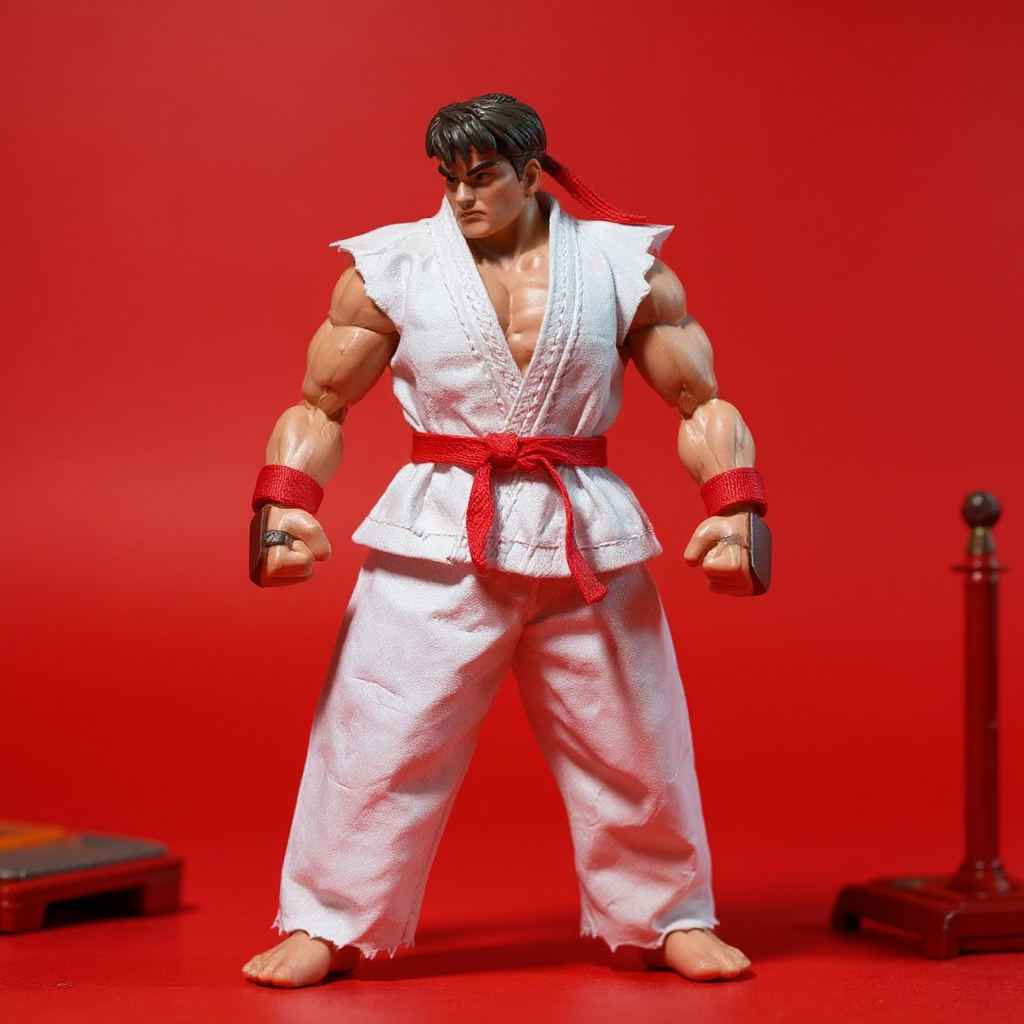
What a Ryu Costume for Storm Collectibles Figure Setups Actually Changes
Real fabric with internal wire armature bends and holds position the way actual clothing does. You can shape flowing sleeves mid-punch, wrinkle a pant leg into a deep stance, or let a gi top follow the torso twist of a spinning kick.
The difference shows up immediately in photos. Instead of the straight-armed pose that screams "action figure," you get something closer to a stop-motion animation frame—sleeves caught in motion, fabric folding where a real gi would fold.
Wired sleeves let you build the iconic poses: arms crossed for the victory screen, one fist cocked back for a shoryuken, or the classic fireball stance with sleeves billowing off the shoulder like the sprite art come to life.
Our Ryu Gi Cloth Set uses thin gauge wire sewn directly into the seams. Flexible enough to re-pose dozens of times. Rigid enough to hold a complex shape for months without drooping. If you want the same treatment for his rival, the Ken Gi Cloth Set shares the same wire gauge and construction.
Storm Collectibles vs Other 1/12 Figures
Not every 1/12 scale figure shares the same proportions, even inside the same rough 6-inch height range. Here's how Storm Collectibles compares to the other bodies people try to cram into a karate gi:
| Brand | Shoulder Width | Chest Depth | Arm Length | Gi Compatibility |
|---|---|---|---|---|
| Storm Collectibles | 28mm | 18mm | 52mm | Perfect fit |
| S.H.Figuarts | 26mm | 16mm | 50mm | Slightly loose |
| Mafex | 27mm | 17mm | 51mm | Good fit |
| Mezco One:12 | 32mm | 22mm | 55mm | Too small |
| Marvel Legends | 30mm | 20mm | 53mm | Tight but workable |
Storm Collectibles bodies run broader in the shoulder and deeper in the chest than most competitors. That single fact changes how a cloth gi drapes and how it poses once wired.
The thicker torso means fabric hangs the way it's supposed to—no gapping at the collar, no seams pulling tight across the back. Arms are proportioned correctly for gi sleeves too, which is more than you can say for some superhero lines with bodybuilder biceps stuffed into a 1/12 frame. For a broader look at how outfits translate across bodies, our 1/12 scale martial arts outfit collection breaks down fit notes for each line.
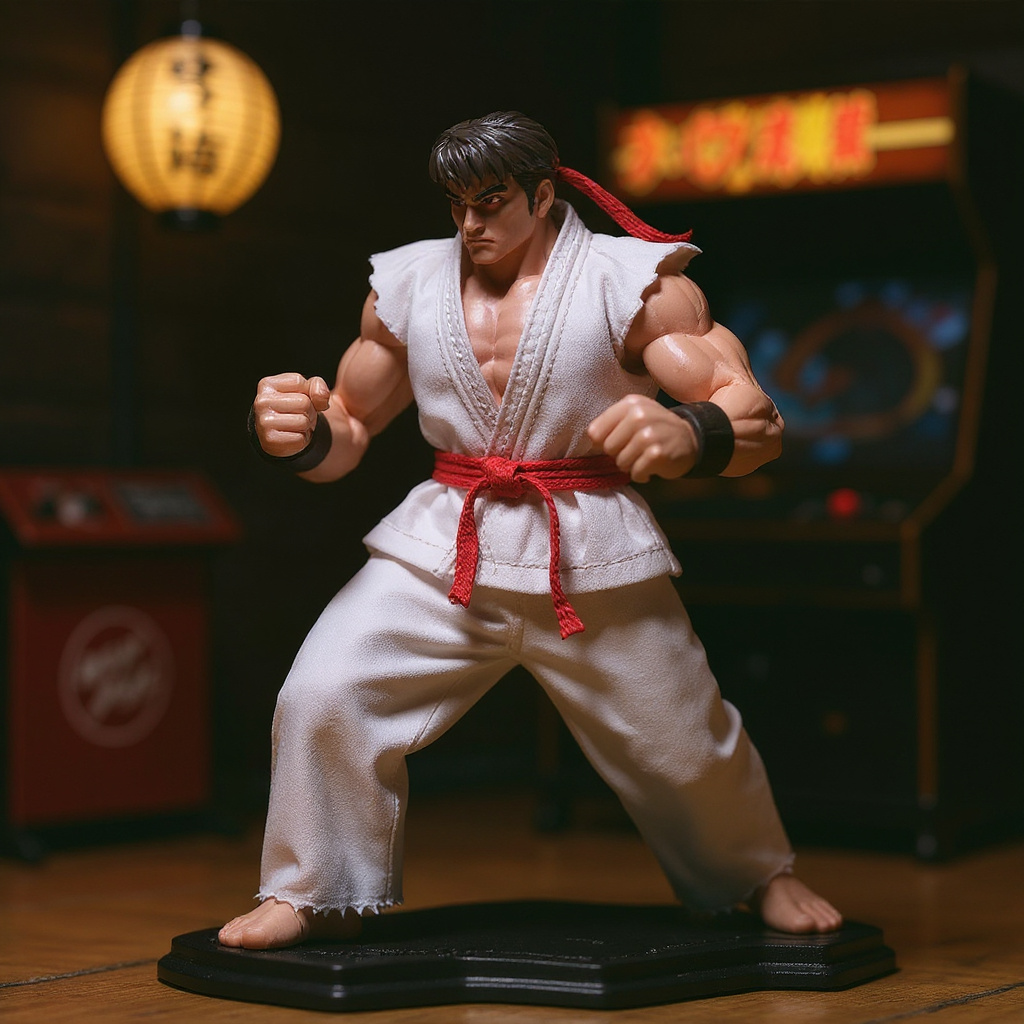
Getting Dynamic Poses Right
Posing wired cloth is a different skill than clicking plastic joints into place. You're sculpting fabric. Not just moving a limb until it stops.
Start with the figure's base pose, then work the clothing around it afterward. Don't fight the wire—guide it. Sharp, sudden bends create permanent creases that won't relax even after a season sitting untouched.
For Ryu's signature moves, a few approaches work reliably:
1. Hadoken stance: bend the throwing arm's sleeve back at the elbow, let the opposite sleeve flow forward with the extended palm 2. Shoryuken windup: wire the uppercut arm's sleeve tight against the bicep, loose fabric draping from the supporting arm 3. Defensive crouch: shape both sleeves to follow the arms' guard position, pants bunched at the bent knees 4. Victory pose: arms crossed requires careful sleeve positioning—too much wire tension pulls the fabric into an unnatural pucker 5. Meditation sit: flowing sleeves and relaxed pant legs, wire shaped just enough to suggest breath and stillness
Each pose holds once it's set. We've had customer photos of the same shoryuken pose still holding after 14 months on a shelf near a window, so the wire isn't just marketing talk. Our step-by-step guide to posing wired cloth figures covers the finer points if you're new to this.
Durability and Long-Term Display
Handmade cloth gi sets face different wear patterns than factory plastic. Fabric frays. Wire fatigues after enough repositioning. Seams take stress every time you push a pose past where the fabric wants to go.
Quality varies a lot between makers, and this is the part most sellers won't tell you: some use costume-grade material meant for actual stage wear, and others use thin cotton with hobby-store wire that snaps within a month of aggressive posing. Honestly, if you're planning to repose your figure weekly for social media content, budget for a second gi set eventually—no wired fabric loves that kind of daily bending forever.
Look for reinforced stress points at the shoulders, elbows, and belt attachment. Double-stitched seams outlast single-pass construction by years, not months.
Wire gauge matters as much as stitching. Too thin and it breaks under normal handling. Too thick and you can't get natural folds—it just looks like a coat hanger wearing a costume. The sweet spot lands around 22–24 AWG for 1/12 scale clothing.
Proper storage helps too. Leave a figure locked in an extreme pose for six months straight and even good wire develops memory it won't fully shake off.
Reddit Communities and Custom Figure Culture
The action figures community on Reddit has strong, occasionally heated opinions about soft goods quality. Custom clothing makers get regular shout-outs there for work that turns a static shelf display into something worth screenshotting.
Most threads circle around the same tension: authenticity versus poseability. Screen-accurate colors matter to a lot of collectors, sure, but so does the ability to actually recreate a fireball throw from the arcade cabinet.
Street Fighter fans specifically gravitate toward clothing that captures the martial arts feel—fabric that suggests motion even when the figure is standing perfectly still on a shelf.Custom gi makers often post work-in-progress shots showing the bare wire armature before the fabric goes on. That transparency helps buyers understand why a $15 factory set and a $35+ handmade Ryu costume for Storm Collectibles figure setups land in such different price brackets.
Price Breakdown and Value Comparison
Factory soft goods typically run $15–25 depending on the figure line and retailer markup. These use basic fabric with minimal wire reinforcement. Sometimes none at all.
Handmade alternatives start around $30–40 for quality construction. The higher price reflects material cost, labor time, and the economics of making things in small batches instead of factory runs of ten thousand.
Our cloth gi sits at $36.25—above factory clothing, well under the $60+ range some ultra-premium custom shops charge.
What actually drives that price:
- Materials: costume-grade fabric costs 3–4x more than basic cotton - Wire: quality armature wire adds $2–3 per garment in raw material alone - Labor: hand-sewing reinforced seams takes 45–60 minutes per outfit - Scale: small batches mean higher per-unit cost than factory mass production - Finishing: correct belt scaling and color matching eat up extra time that doesn't show in a spec sheet
The payoff shows up in photos. A well-made cloth gi makes a $40 figure photograph like something that cost five times as much.
So Is the Upgrade Worth Your Money?
If you're displaying your figures in neutral, museum-style poses, factory clothing does the job. No need to spend more. The upgrade matters once you want Ryu to look like he's mid-fight instead of mid-nap.
A handmade Ryu costume for Storm Collectibles figure setups creates those "wait, how did they pose that" moments other collectors stop to look at. The woven texture catches display lighting well, and the poseability opens up options that rigid plastic simply can't offer.
$36.25 makes sense if you've already sunk money into a quality figure. It's roughly one extra figure's worth of spend, and it upgrades every Ryu-style character you own that shares the body.
For casual collectors on a tight budget, factory soft goods are fine at half the price. But if you want the dynamic energy that made Street Fighter II a cultural landmark, browse our Ryu Gi Cloth Set and see what wired fabric does for a figure that's spent too long standing still.

