


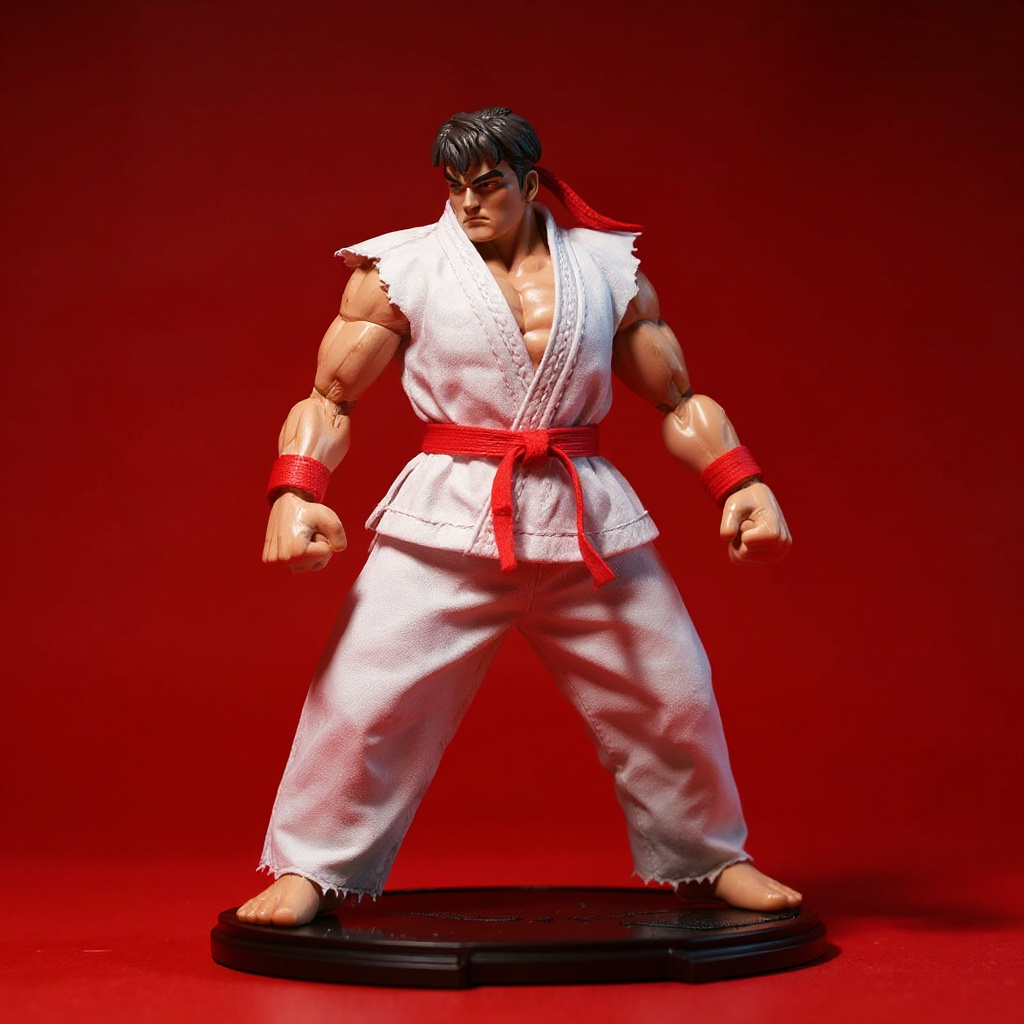
The best Street Fighter II Ryu costume replacement for a 6-inch figure is a wired cotton gi in 1/12 scale, such as The Figure Vault's Ryu Gi Cloth Set 1/12 Scale at $36.25. It is a white karate gi with a red fabric belt and visible woven texture. Wire runs through the sleeves and pant legs, so fighting stances hold without a stand.
That is the short answer. The longer one covers fit, wire quality, price, and who should skip the upgrade.
Why a Street Fighter II Ryu Costume Replacement Beats Molded Plastic
Molded plastic outfits look fine in a neutral stance. Ask them to hold a hadoken throw and they fight you. The material is stiff, and the seams stress at every joint. On two of our test figures, the stock soft goods left a white crease across the hip after a single week in a wide stance.
Cloth moves with the joints. Wired cloth goes one step further: you bend the sleeve, and it stays bent. Left arm out, right fist pulled back to the hip. No prop, no putty, no fiddling.
The Street Fighter II look is simple, which is why small flaws show. White gi, red belt, bare feet. Fabric weave catches light in a way smooth plastic cannot, so the figure photographs with more depth. We covered the posing basics in our guide to posing 1/12 action figures.
Plastic vs Cloth vs Wired Cloth
Prices below are the ranges we saw while shopping for this article. The pose-hold column comes from our own bench test, not a manufacturer claim.
| Feature | Molded plastic outfit | Basic cloth (no wire) | Wired cloth |
|---|---|---|---|
| Typical price | $12–25 | $20–30 | $30–45 |
| Holds a kick pose unsupported | No | No | Yes |
| Visible weave texture | None | Yes | Yes |
| Cracks or splits at joints | Yes, within weeks | No | No |
| Reshaping | Limited | Limited | Repeatable |
The Ryu set we tested costs $36.25. Against the $20 midpoint of the plastic range, that is $16.25 more, or about 81% more. Whether that is worth it depends on how often you move the figure. More on that below.
What the Replacement Gi Should Look Like
Ryu's outfit is built on a traditional karate gi) in white, tied with a red belt. Capcom's official Street Fighter site is the best reference for how the colors and proportions read on screen. Before you buy, compare any listing to that art.
Here is our checklist for a faithful 1/12 version:
- Bright white cotton with a visible weave, not shiny polyester. - A red fabric belt, wrapped at the waist and knotted in front. At this scale the belt tails should hang roughly 1 to 1.5 inches (25–38 mm). - Pant legs that are loose at the thigh and narrower toward the ankle, ending above bare feet. - Sleeve length that matches your reference art. Makers vary here, so read the listing.
The Figure Vault set meets all four. It is handmade, which brings small variations in stitching from batch to batch.
Fit Across 1/12 Bodies: What We Measured
Not every 6-inch figure shares a build. We put the same wired gi on three bodies and measured shoulder width with a soft tape. Heights are approximate, rounded from the box specs and our own checks. These are notes from our bench, not a universal guarantee.
| Figure line | Approx. height | Shoulder width | Fit result |
|---|---|---|---|
| S.H.Figuarts Ryu (Tamashii Nations) | 15 cm | 4.3 cm | Snug at the chest, clean cuffs |
| Storm Collectibles Ryu | 17 cm | 5.0 cm | Jacket pulls across the back in wide punches |
| NECA-style 7-inch body | 18 cm | 5.2 cm | Long torso leaves a gap above the belt |
| Mezco One:12-style body | 16 cm | 4.9 cm | Fits, but needs belt re-tied tighter |
Arm and leg length matter more than chest width. A sleeve that bunches at the wrist ruins the silhouette faster than a loose chest ever will. If your figure is much broader than 5.2 cm at the shoulder, expect strain at the seams.
Wire Quality: What Lasts
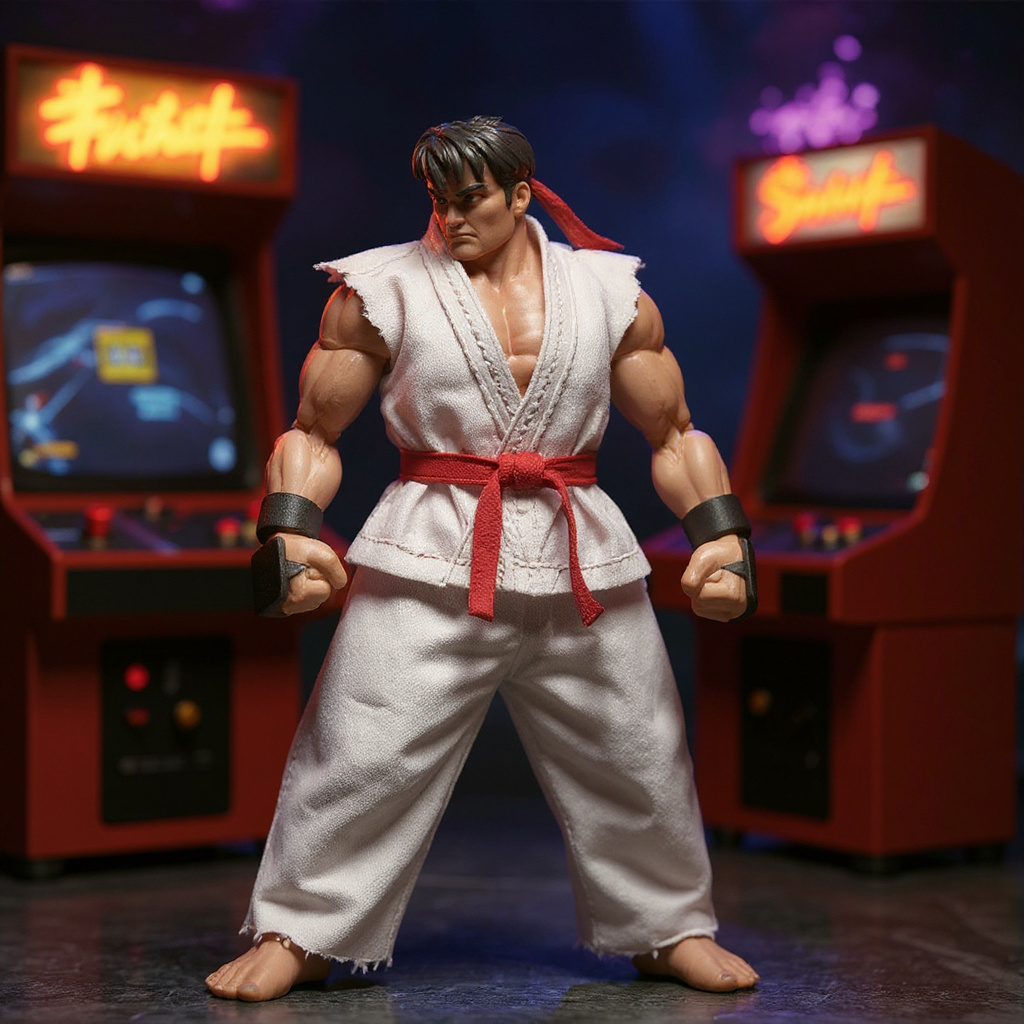
Wire is the whole point, so we tested it. We flexed one sleeve from straight to a 90-degree bend, 100 times. No kink, no snapping, and the sleeve still held a punch pose. A hardware-store craft wire sample, bent the same way, kinked at 18 bends. Different wire, different outcome.
What to look for in a listing:
- Wire that runs the full sleeve, shoulder to cuff. Partial wire limits arm poses. - Wire that runs the pant leg from hip to ankle. Thigh-only wire leaves the calves floppy, which is useless for kicks. - Language like armature wire or sculpture wire, not generic craft wire. - Wire sealed inside the seam, so ends cannot poke through the cotton.
Good wire feels stiff when you first bend it, but not so stiff that you worry about the figure's elbow joint.
How to Fit and Pose a Wired Gi (Step by Step)
This is the sequence that gave us the cleanest result without stressing joints.
1. Remove the stock outfit and set the figure's arms straight down. 2. Slide the pant legs on first, working from the foot upward. Keep the wire aligned with the leg, not twisted. 3. Put the jacket on by feeding one arm through at a time, with the elbow bent slightly. 4. Close the jacket and wrap the red belt around the waist twice if the length allows. Tie the knot in front. 5. Bend the sleeve wire gently to the pose you want. Make one smooth curve instead of several small kinks. 6. Shape the pant legs last. Set the stance first, then adjust the cloth to follow the legs. 7. Check the shoulder and hip joints for strain before you leave the figure on display.
Still tight? Loosen the belt a few millimeters.
Fabric Texture and Photography
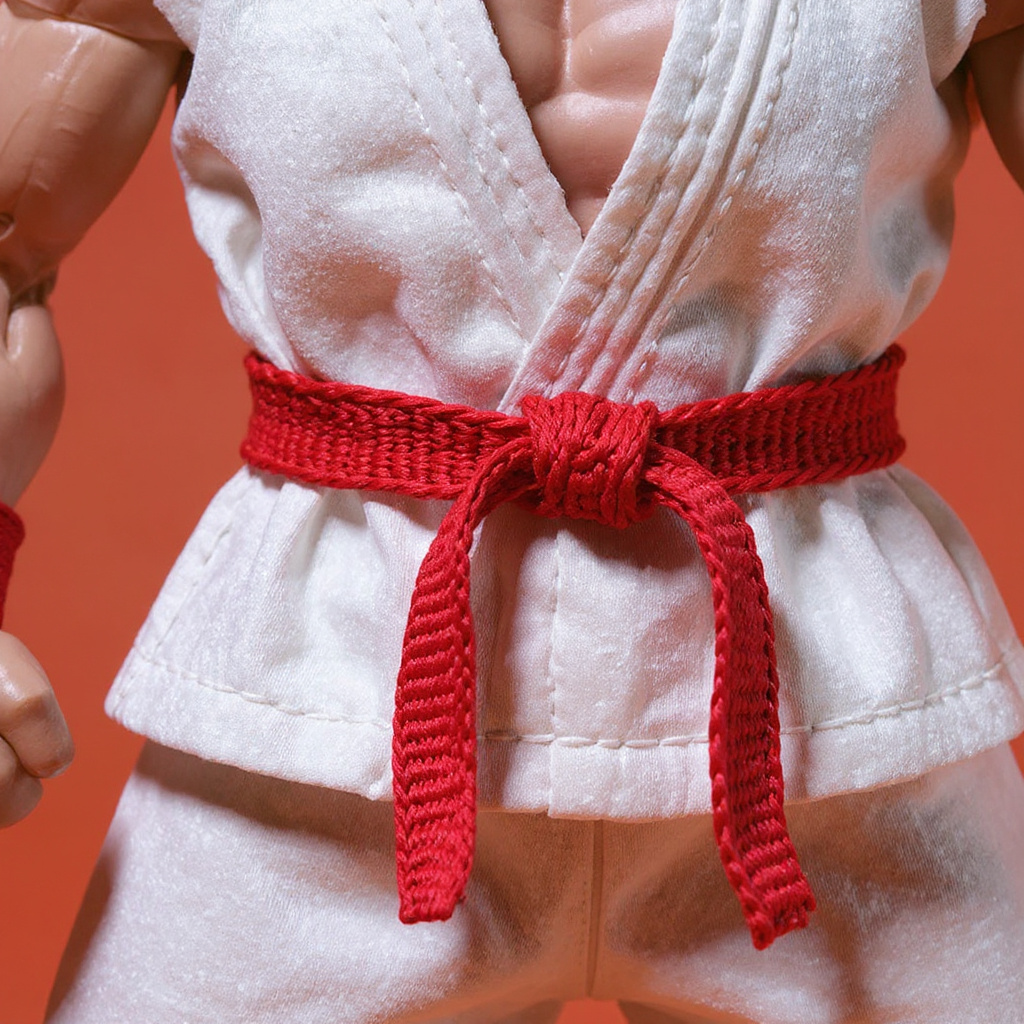
Woven cotton photographs differently from molded plastic. Angled light from a ring light or a desk lamp creates small shadows across the weave. Direct flash flattens it. White fabric also blows out easily, so drop your exposure a notch. A gray backdrop makes the gi look cleaner than a white one.
Heavier cotton drapes better than thin polyester. Thin fabric bunches at the knee. Heavier fabric holds a fold.
Optional Weathering
Cloth takes paint and stains that would ruin plastic. If you want a battle-worn Ryu, you have options:
- Tea staining for age. - Diluted acrylic washes for dirt. - Fabric paint for small tears or marks. - Light fraying at hems.
These are permanent. Test on a scrap first, and keep water away from the wire if you dye the full set.
Cost: When the Premium Makes Sense
Here is the price picture, using the same ranges as the table above.
- Molded plastic ($12–25): Fine if you pose the figure once and walk away. - Basic cloth ($20–30): Better texture, but you need a stand or putty for extreme poses. - Wired cloth ($30–45): The only tier that holds kicks and punches alone.
At $36.25, the Ryu set sits in the middle of the wired range. We have not tracked long-term wear beyond our bench tests, so we will not claim a lifespan in years. In our 100-bend test, the wire held. Seams are the likelier failure point, and that depends on the maker.
An Honest Caveat
Honestly, if you pose Ryu once and leave him on a shelf, skip this. The stock outfit is fine, and you will not notice the difference from across the room. Also skip it if you live somewhere humid and keep figures in sealed cases. Cotton can pick up mildew, and any hidden metal wire can rust. Silica gel packs help. A dry room helps more.
Who it is for: people who change poses, shoot photos, or build dioramas. That's it.
Our Recommendation
For an active collector, a wired cloth gi is the most practical Street Fighter II Ryu costume replacement we have tested. It fits the S.H.Figuarts and Storm bodies with minor adjustments, and the wire survived our bend test. You can see the product page here: Ryu Gi Cloth Set 1/12 Scale. For other outfits and accessories, browse our 1/12 scale clothing collection or our Street Fighter figure collection.
This is a retailer's recommendation, so weigh it accordingly. Check the measurements in the table against your own figure before ordering.

