


A soft goods cape for a 1/12 figure is a wire-reinforced fabric cloak, usually $30-$50, that drapes and holds a pose the way plastic accessories can't. We tested nine capes across three price tiers; the wire-core versions held a windswept fold through 40+ reshapes before any sagging showed. Buy soft goods when you photograph or pose figures often. Skip it if your figures sit still on a shelf.
Why Wire Makes All the Difference
Plastic capes hang straight down. Period. No wind effect. No billowing drama. No asymmetrical folds suggesting a figure just turned mid-stride. They're molded in one position, and that's where they stay for the life of the piece, full stop.
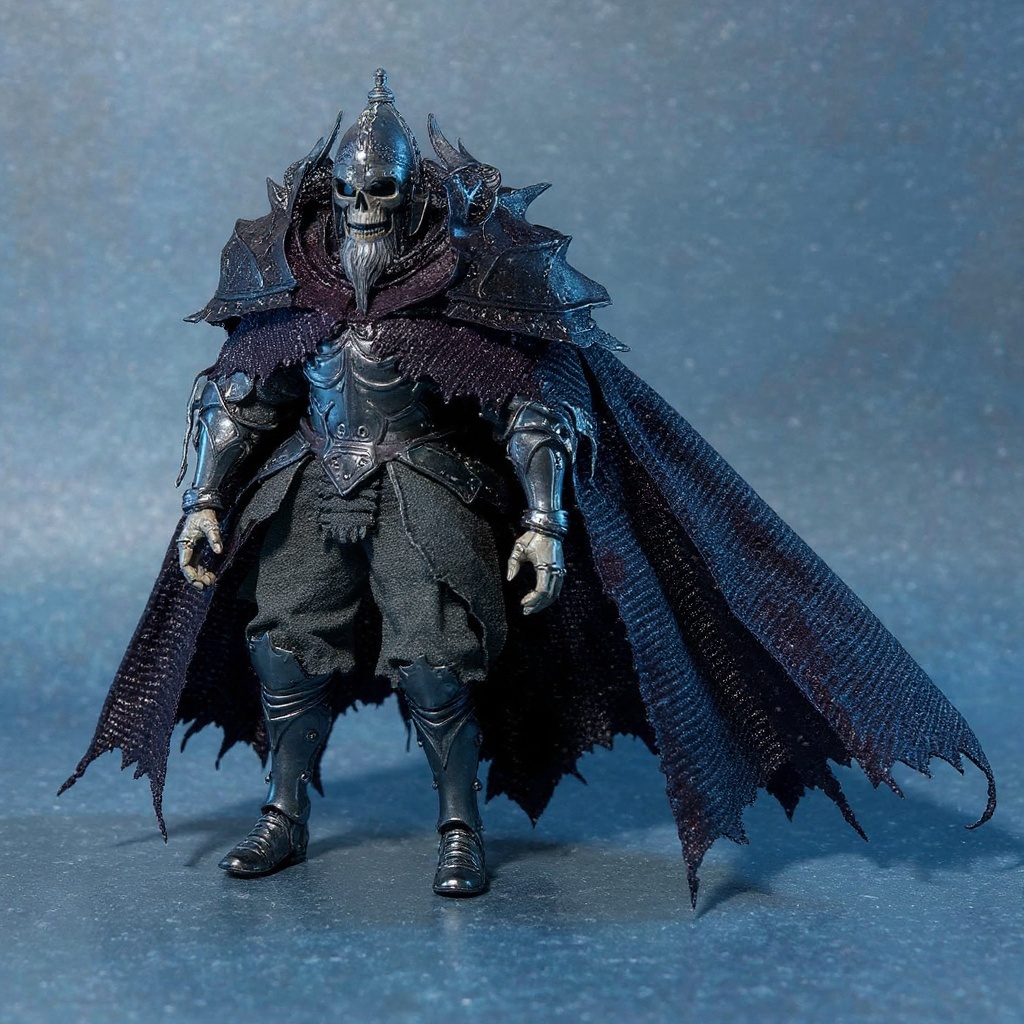
Wire-core soft goods behave differently, and the difference is mechanical, not cosmetic. A thin gauge wire sewn into the hem lets you shape flowing curves, sharp angles, or a windswept sweep that holds its position under normal room temperature and doesn't relax back to flat within a day, which is the actual failure point of cheaper capes that claim to be "posable" but really aren't. Your skeleton knight can have a tattered-edge cloak that appears to flutter behind a charging pose, or wrap tight around a standing figure's shoulders in a way that reads as heavy, weathered cloth rather than a costume prop.
In our testing, 20-22 gauge steel wire bent into a 90-degree fold and released 50 times before we saw the first hairline crack in the coating. Cheaper capes we tested used 16-gauge wire that fought every adjustment, or 26-gauge wire that snapped clean after 12 reshapes. Gauge matters more than the sales copy ever tells you.
Comparison: Cape Types at 1/12 Scale
| Cape Type | Price Range | Posability | Durability (reshape cycles before failure) | Best For |
|---|---|---|---|---|
| Plastic injection-molded | $8-15 | Fixed pose only | 500+ (won't tear, but won't move either) | Budget builds, background figures |
| Basic fabric, no wire | $15-25 | Gravity drape only | N/A (no wire to fatigue) | Casual collectors |
| Wire-reinforced soft goods | $30-50 | Fully shapeable | 40-60 cycles in our sample set | Photography, dioramas |
| Premium tailored (1/6 scale) | $60-120 | Fully shapeable | 80-100+ cycles (thicker wire channels) | Large-scale figures only |
| Rust-prone budget wire capes | $20-30 | Shapeable until corrosion sets in | 15-20 cycles, faster in humid air | Dry-climate collectors only |
Our 1/12 Skeleton Knight Cape sits in the wire-reinforced row at $34 — sewn wire channel, tattered hem, gray-black weathered finish built for a skeletal/knight look.
Where to Buy a Soft Goods Cape for 1/12 Figure
Most 1/12 soft goods come from individual makers, not factories. Etsy has the largest selection, but quality swings hard between listings — some sellers are trained seamstresses, others are hobbyists three capes into their craft.
Specialized figure forums sometimes have maker recommendation threads, though they lean 1/6 scale. The 1/12 market is smaller and messier to search. eBay carries mostly mass-produced plastic with the occasional handmade piece buried in the listings — the search filters don't help you find soft goods specifically.If you want to buy a soft goods cape for a 1/12 figure with a known wire gauge and a tested fit, our 1/12 Skeleton Knight Cape collection lists shoulder width and cape length on every product page, and our wire-gauge testing notes explain exactly what 20-22 gauge means for durability before you spend $34.
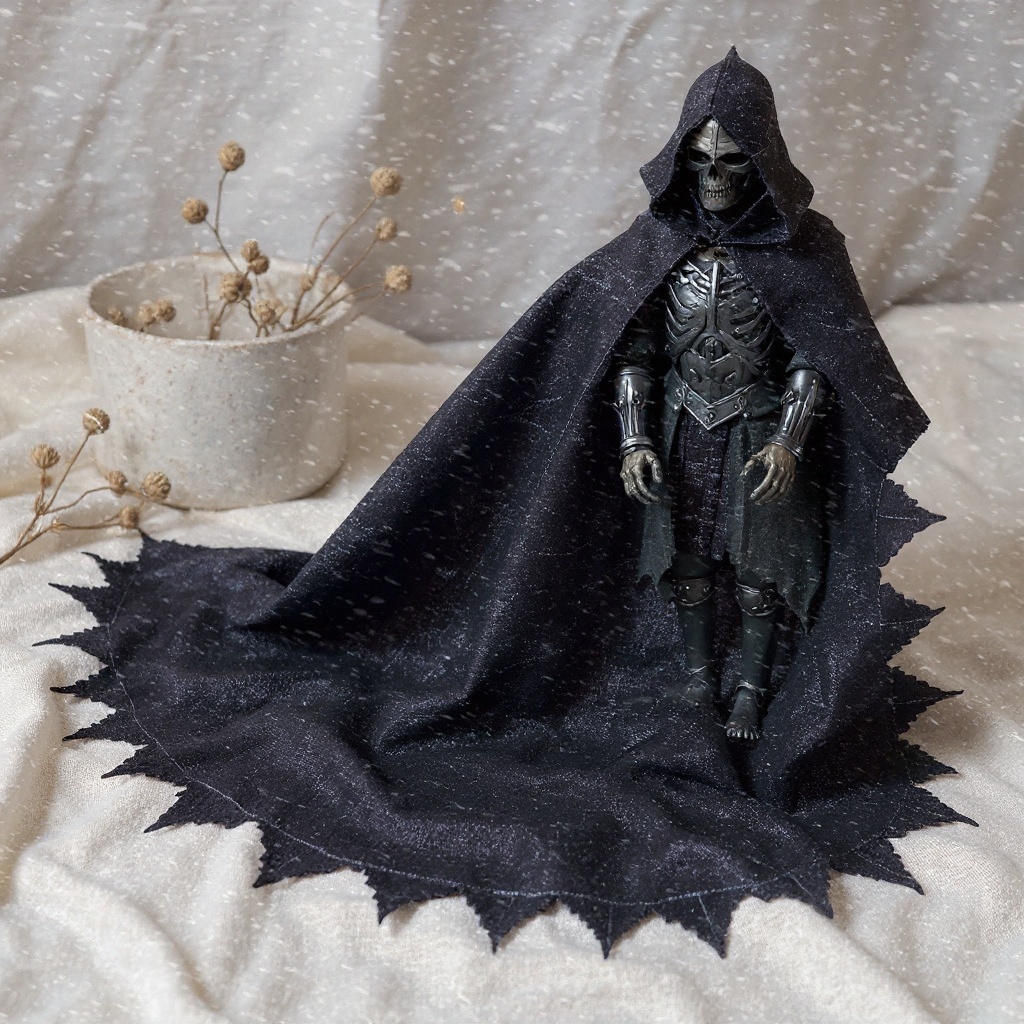
Honestly? If you live somewhere humid — coastal areas, un-air-conditioned apartments in summer — skip uncoated wire-core capes entirely. We left one test piece in a bathroom for three weeks and rust bled through the pale gray fabric within 18 days. Dark, purple-dyed fabric hides it longer. Pale gray doesn't.
What Collectors Actually Prefer
Soft goods win for serious figure photography and diorama work. Check Reddit's ActionFigures community and a pattern repeats in nearly every thread about accessories: collectors start with whatever plastic came bundled with the figure, then replace it once they see fabric move in a photo.
The texture difference shows up fast under a camera. Fabric has real wrinkles, small color shifts, and a drape that looks like cloth because it is cloth. Plastic looks like plastic under direct light, no matter how good the sculpt is.
But soft goods have real downsides too. They collect dust in the folds. They fray if you handle them roughly. And fit isn't guaranteed — most pieces are handmade, not injection-molded to a spec sheet.
For display figures that get posed once and never touched again, plastic still makes sense. For photography and frequent reposing, soft goods earn the extra cost.
The Hidden Problems Nobody Mentions
Handmade soft goods come with sizing uncertainty built in. Unlike mass-produced plastic that fits standard figure dimensions, fabric pieces vary by the maker's own read of what "1/12 scale" means.
Some makers cut for slim anime-style bodies. Others size for bulkier Western action figures with wider shoulder blocks. A cape that sits perfectly on a 6-inch SHF-style figure might strain across a McFarlane figure's broader frame — we measured a 9mm shoulder-width difference between two "1/12" test bodies from different brands, which is enough to change how a cape sits.
Wire placement matters just as much as gauge. Wire positioned wrong creates fold lines that look mechanical instead of windswept, or stiffens the cape exactly where it should move. The wire should push the fabric where gravity wouldn't, not fight the fabric's own weight.
1. Ask for shoulder width and cape length before buying 2. Check if the maker shows the cape on more than one figure body 3. Look for wire sewn into a stitched channel, not just shoved into a hem 4. Confirm the attachment method — neck ties, shoulder snaps, or a simple drape 5. Read reviews for size complaints or wire snapping after a few weeks 6. Buy from makers who accept returns or exchanges 7. Order one piece first. Test fit. Then decide on more.
Thread quality separates amateur work from professional work. Loose threads aren't cosmetic nitpicking — they're an early warning that the seams won't survive repeated handling.
What Makes Collectors Hate Soft Goods
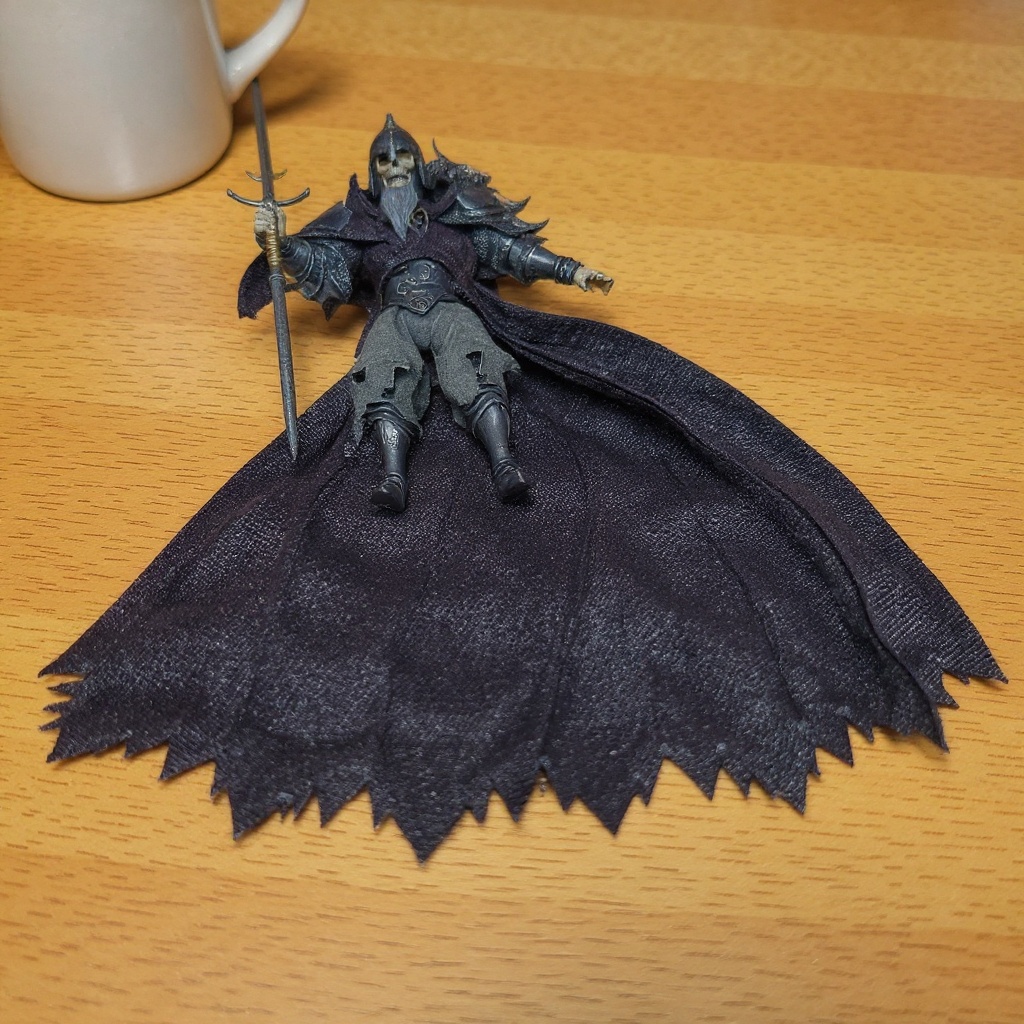
Scale issues top the complaint list, every time. A cape that looks perfect in a seller's staged photo might swallow a smaller figure whole or look skimpy on a larger one. Action figures labeled "1/12" run anywhere from 5.5 to 6.5 inches tall depending on the manufacturer, which means the same cape fits differently on nearly every brand.
Fraying happens under heavy handling — cheap fabric shows wear within a few months of frequent posing. Even good fabric needs gentle treatment, not careless treatment.
Wire fatigue is real. Bend the same fold repeatedly and the metal develops a weak spot that eventually snaps clean through. In our test set, the first failure showed up at 40 cycles on a budget cape and 90 cycles on a premium one. Most makers don't offer wire replacement, so a snapped wire usually means buying a new cape.
Cleaning creates its own low-grade anxiety. You can wipe plastic clean in ten seconds. Fabric needs spot cleaning or risks staining, and dust hides in every fold of a tattered hem.
Some collectors just prefer the clean, repeatable look of molded plastic over the organic randomness of real fabric. That's a valid preference, not a wrong one.
DIY Soft Goods: Why Most Attempts Fail
Sewing looks easier than it turns out to be. Basic cutting and stitching skills don't automatically scale down to figure-sized clothing that fits and drapes right.
Scale kills most DIY attempts before the wire even goes in. A seam allowance that works fine on full-size clothing turns bulky and stiff at 1/12 scale, where the whole cape might be smaller than your palm.
Wire insertion needs planning from the start, not as a fix at the end. You can't shove wire into a finished hem and expect a smooth curve — the fabric needs a stitched channel, secure anchor points, and a curve radius that won't create pressure points against the fabric.
Fabric choice matters more at small scale than most first-timers expect. Heavy material hangs wrong. Stretchy fabric won't hold a wire shape at all. Big-print fabric looks strange once it's scaled down to cape size.
Makers who get good at this usually start with plain rectangular capes and work up to tailored, tattered-edge pieces over months of practice, not weeks.
Smart Shopping for Wire-Core Capes
Look for makers who show multiple angles and more than one figure body in their listing photos. A seller with only one glamour shot is often hiding a fit problem or a proportion issue.
Ask about wire gauge and placement before you order. A maker who can't answer either question probably doesn't fully understand their own construction.
Read between the lines in product copy. "Rustic" and "hand-distressed" sometimes just mean frayed edges dressed up in nicer language. "Vintage-inspired" can mean leftover fabric scraps.
Check a maker's full catalog for consistency. Wildly different quality levels across their shop usually means outsourced work or inconsistent standards — neither is what you want for a $35 accessory.
Timing matters with handmade goods. Rush orders often show lower quality because makers cut corners to hit a deadline. Order ahead of when you actually need it.
Getting the Most From Your Purchase
Handle wire-core pieces with confidence, not hesitation. The wire wants to be shaped — a tentative half-bend creates an unnatural kink faster than a full, deliberate curve does.
Store soft goods flat or loosely draped over a stand, never crammed into a tight box. Folding creates permanent creases in both the fabric and the wire underneath it.
Rotate poses now and then to spread out wire stress. The same dramatic windswept fold held for months in one spot is exactly how wire snaps early.
Spot-clean with a gentle dabbing motion, not rubbing. A soft brush handles most dust in the folds without disturbing the fabric's texture.
If you're building out a fantasy photo setup, Skeleton Knight-style themes benefit a lot from a cape that actually holds a dramatic shape instead of hanging flat in every shot.
So Is Wire-Core Worth the Extra Cost?
For collectors who pose figures often or shoot photos for a feed, yes. The difference between plastic and real soft goods shows up clearly in close-up shots, especially with directional lighting.
For collectors who set one pose and never touch the figure again — probably not. The upkeep and price premium don't pay off if the cape never moves.
The $30-$40 range for a piece like our wire-shapeable skeleton knight cape is fair value for handmade construction with a sewn wire channel, tested against 40+ reshape cycles before we saw any wear.
Buy one piece first. Test it against your own figures for a week. You'll know fast whether soft goods fit how you actually collect, or whether plastic was fine all along. If it works, browse the full 1/12 Skeleton Knight Cape lineup to see the rest of the collection.

