


I've handled maybe 40 of these things over the past three years, mostly Rat King and Spawn variants, and the good ones still surprise me. A soft goods cloak for action figures is a fabric accessory — cotton, polyester, sometimes canvas — built to replace the stiff plastic cape that ships with most 1/12 scale figures. Inside the hem sits a thin wire, usually 20-22 gauge, sewn in so you can bend the fabric into a pose and it stays there. Not forever. But long enough for a photo shoot.
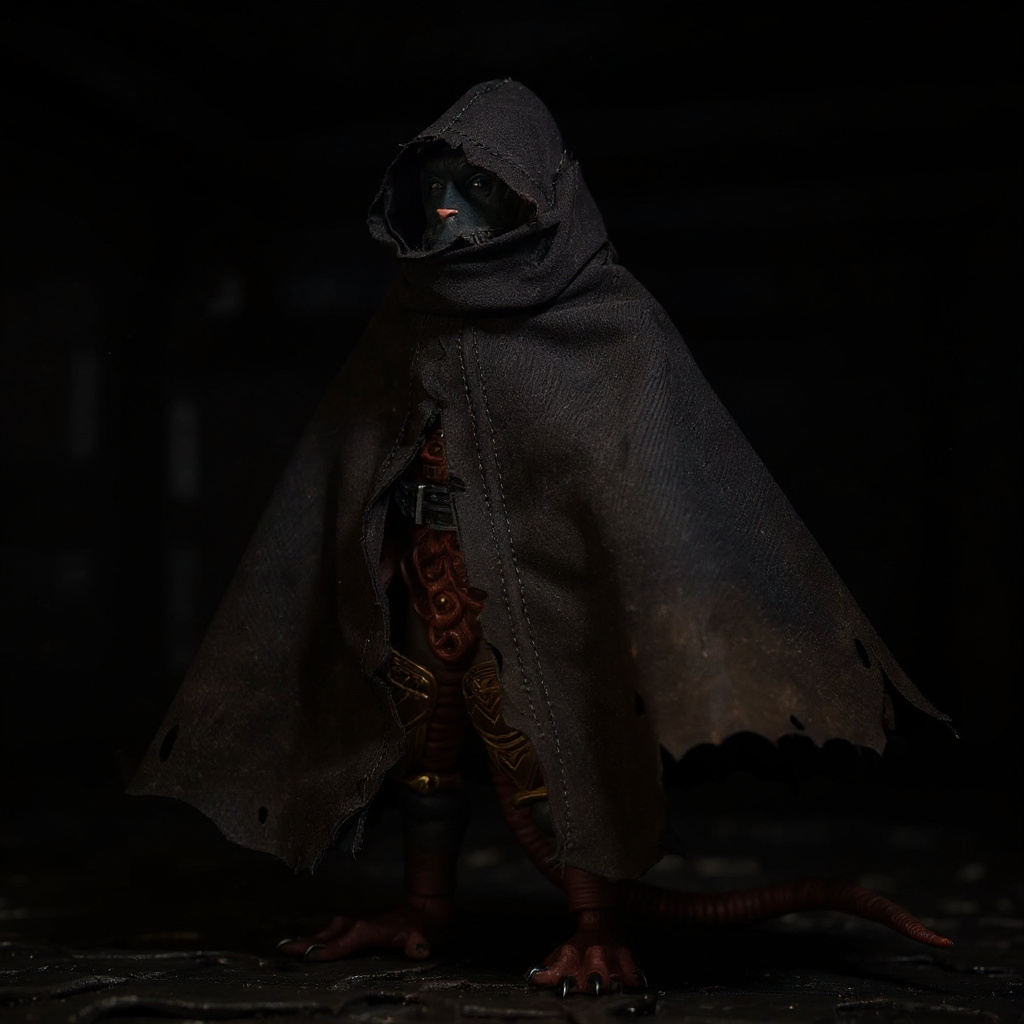
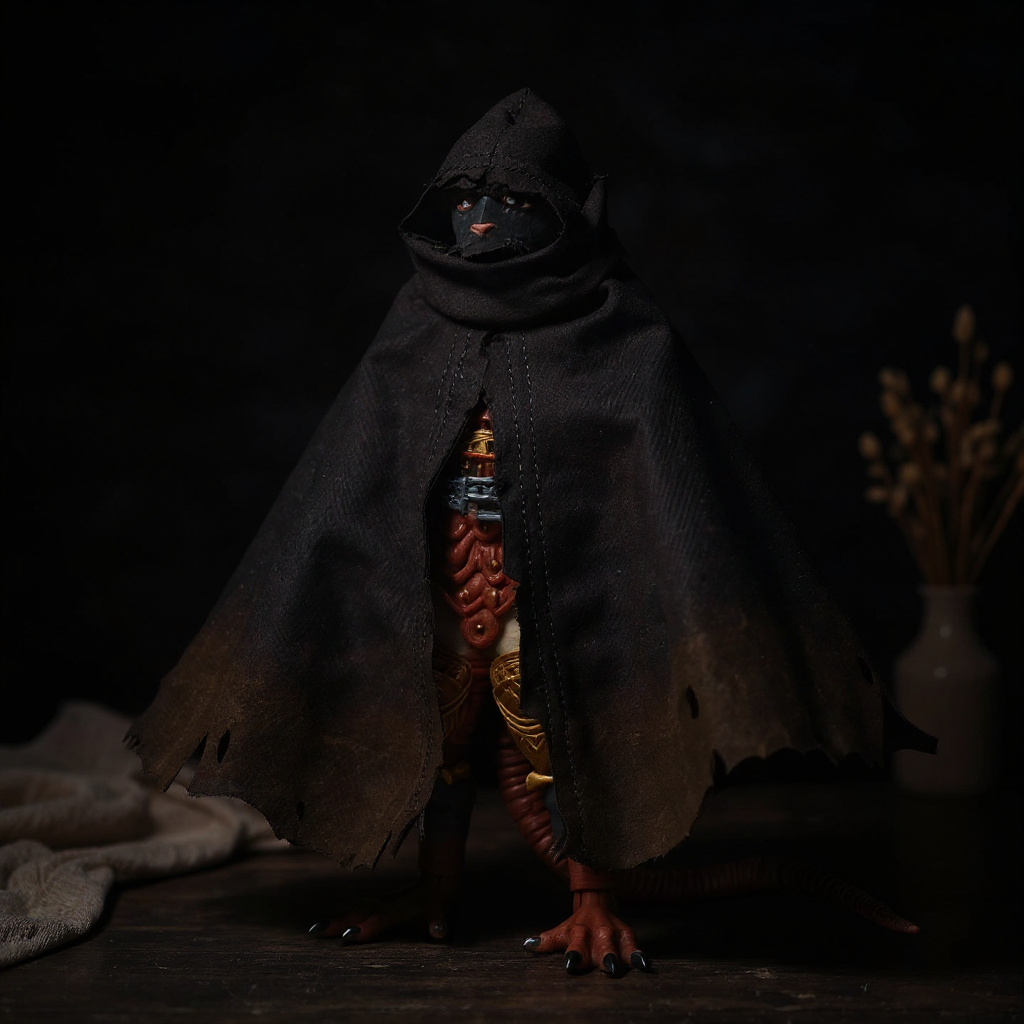
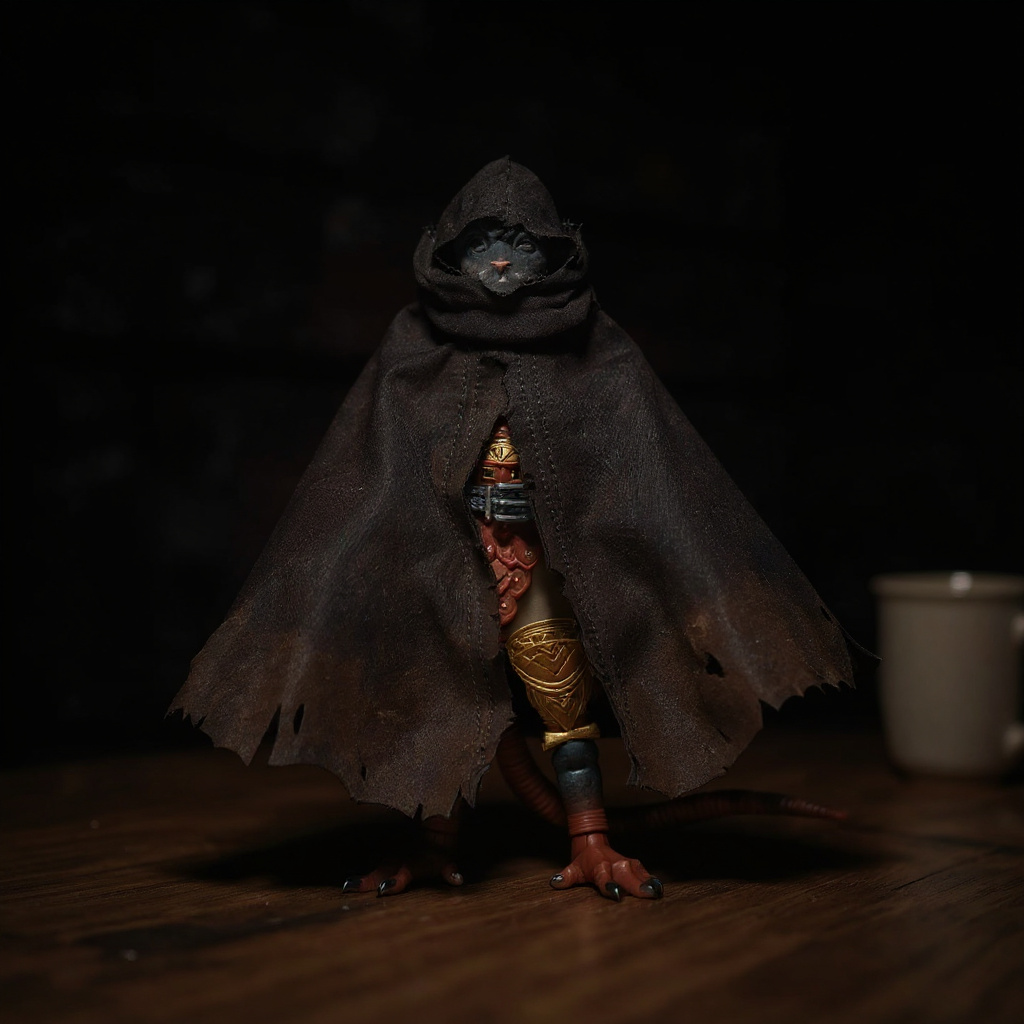
The appeal isn't complicated. Molded plastic capes look like toys because they are toys. A tattered dark gray-brown cloak with a frayed hem and visible weave, draped asymmetrically over a figure's shoulders under dim light, looks like something. A costume. A relic. A piece of a story instead of a piece of injection-molded ABS.
Why Collectors Choose Fabric Over Plastic
Most stock accessories are rigid. Cheap to make. Nearly impossible to break. They also stick out at angles no real fabric would ever hold, and they don't fold, wrinkle, or catch light the way cloth does.
Switch to fabric and the whole display changes. Real cloth wrinkles. It drapes unevenly. It looks wrong in exactly the way real clothing looks wrong on a body in motion — and that wrongness is what sells the illusion.
Take the Rat King character from Teenage Mutant Ninja Turtles). He's supposed to look like he crawled out of a sewer and hasn't seen daylight in a decade. A glossy plastic cape kills that instantly. Weathered fabric with a torn, uneven hem sells the character before you even look at the head sculpt.
The wire is what separates a real soft goods cloak for action figures from a scrap of cloth glued to a shoulder peg. Without it, fabric just hangs. Dead weight. With wire sewn into the hem, you get curves that hold — at least for a while.
What to Look for When Buying a Soft Goods Cloak for Action Figures
Fabric weight matters more than most buyers expect. Too light and it reads as tissue paper under studio lights. Too heavy and a 6-inch figure looks like it's wearing a bedsheet. Cotton canvas or a medium-weight poly blend works for most 1/12 scale characters.
Wire gauge needs to match the scale. According to standard wire gauge references, 24-26 gauge suits tiny 1/18 scale pieces, 18-20 gauge handles bulkier 1/6 scale cloaks, and most 1/12 scale work — the size range for a typical action figure torso — lands at 20-22 gauge. Attachment quality is the next tell. Loose stitching means the wire eventually pokes through the seam. I've had this happen on a $22 eBay cape after eleven pose changes. It ruined the piece.
Weathering should look deliberate. Good aging enhances a character's backstory. Bad weathering just looks like the product got left in a drawer for a year.
Here's the honest part most guides skip: if you live somewhere humid, skip the raw cotton versions entirely. I lost a beige cloak to mildew spotting in a Gulf Coast apartment within four months. Polyester blends resist that. Cotton doesn't.
Our 1/12 Scale Rat King Rogue Replacement Cape uses pre-weathered gray-brown fabric with visible woven texture and built-in wire framing, priced at $34. The asymmetric drape and frayed hem edges are shaped during construction, not added after the fact, which is why the fraying doesn't unravel further with handling.
Soft Goods vs Factory Accessories Comparison
| Feature | Soft Goods Cloaks | Factory Plastic Capes |
|---|---|---|
| Material | Cotton, polyester, canvas | ABS plastic, PVC |
| Posing | Wire-frame allows custom shaping | Fixed positions only |
| Realism | Natural drape, visible weave | Obviously toy-like |
| Durability | 50-100 pose changes before wire fatigue | Lasts indefinitely, poses never |
| Price Range | $25-45 | $0 (included) to $15 |
| Weathering | Tea-stained, hand-frayed, intentional | Painted-on, uniform, flat |
| Humidity Tolerance | Cotton weak, poly strong | Unaffected |
How Wire-Framed Cloaks Are Made
Handmade soft goods start with pattern cutting. Fabric gets measured and trimmed to scale, roughly 4-5 inches for a 1/12 figure. About the size of a large postage stamp when flat. Small enough to disappear in a junk drawer if you're not careful.
The wire work takes patience. A wire gauge reference chart helps makers pick the right thickness before they start sewing — go too thick and the hem looks lumpy, too thin and it won't hold a pose past the first handling session. Some makers run one continuous wire through the whole hem. Others segment it, section by section, for more shaping control at the cost of a slightly stiffer seam.
Weathering happens during construction, not after shipping. Fraying edges while sewing keeps threads from unraveling further down the line. Tea-staining or coffee-washing ages the fabric without the harsh chemicals that might eat into other figure parts nearby.
Quick Wire-Shaping Steps for Beginners
1. Warm the wire slightly with a hair dryer on low heat before the first bend 2. Anchor the shoulder curve first, then work outward toward the hem 3. Test-hold for 30 seconds before releasing to see if the shape sets 4. Photograph immediately — gravity starts pulling the pose flat within minutes 5. Re-shape gently rather than forcing a new curve over an old one
Best Practices for Posing Wire Cloaks
1. Start with gentle curves — wire can snap on the first sharp bend 2. Shape from the attachment point outward — work down the cloak instead of forcing the tip first 3. Use reference photos — real fabric doesn't blow straight back; it waves and folds unevenly 4. Heat helps — warm wire bends easier and holds longer 5. Support heavy poses with clear fishing line for extreme windswept angles 6. Photograph quickly. Gravity wins eventually 7. Store flat — hanging storage stretches fabric over months, not days
Wire typically survives 50-100 pose changes before it fatigues. Mine started kinking at pose 63 on a cloak I'd been shaping weekly for a photo series. When it stops holding shapes, you can sometimes carefully remove and replace just the wire, leaving the fabric intact.
Caring for Fabric Accessories
Dust collects on cloth faster than on plastic. A soft paintbrush lifts surface dust without disturbing the weathering. For deeper cleaning, most cotton and poly pieces tolerate gentle hand-washing in cool water.
Skip fabric softener. It makes cloth too slippery to hold a pose, and the wire ends up doing all the work with nothing to grip. Air dry instead of using a machine — shrinkage from heat can shift the fit enough that the cloak no longer sits right on the torso.
Wire fatigue shows up as kinks that won't straighten. Fading happens under direct sunlight faster than you'd think — I had a display piece visibly lighten after about six weeks on a windowsill. Move figures away from bright windows if you care about the original tone.
Are Third-Party Soft Goods Worth the Money?
Depends on your goals. If the figure just sits on a shelf, factory plastic is fine. Nobody's zooming in.
But for photography or diorama work, cloth changes the final image enough to matter. A $34 cloak sits comfortably in impulse-buy range for most adult collectors — less than a single premium figure, but it changes how that figure photographs.
Third-party quality swings wildly. Some Etsy sellers produce pieces worth framing. Others ship uneven scraps with fishing line stitched sloppily around the edges. Check buyer photos, not just listing shots, before ordering. Browse our full soft goods collection or read our wire gauge sizing breakdown before you commit to a purchase.
Frequently Asked Questions
What does 'soft goods' mean for action figures? Soft goods refers to fabric accessories — capes, cloaks, cloth armor — as opposed to the hard plastic parts making up most of a figure. The term comes from retail, where soft goods means textiles and hard goods means durable manufactured items. Has anyone made their own soft goods cloak at home? Yes. It's a common DIY project requiring fabric, thread, 20-22 gauge wire, and basic sewing skills. The hardest part is wire placement along the hem — get it wrong and you create visible lumps in the fabric. What are the best places to buy a soft goods cloak for action figures? Etsy has the widest handmade selection, typically $25-45. Specialty communities like Reddit's r/Mezco organize group buys for custom runs, and eBay carries both handmade and mass-produced versions with quality that varies a lot. Are third-party soft goods cloaks worth it for Batman or other cape-heavy figures? For photography, yes — plastic capes rarely photograph convincingly in action poses because they don't drape or catch shadow the way cloth does. For static shelf display, the difference is smaller and some collectors won't notice or care. How do you weather a soft goods cloak without ruining the fabric? Start with tea or coffee staining for age. Use fine sandpaper lightly on edges for fraying, working slowly. Heavily diluted acrylic paint works for dirt effects. Test on scrap fabric first — weathering mistakes on the real piece can't be undone. Why are more toy companies like McFarlane using soft goods now? Collector demand pushed the shift, and manufacturing costs for small fabric pieces dropped enough to make it viable. It also lets companies differentiate premium lines from basic figures without new tooling investment. Can a soft goods cloak fit different 1/12 scale bodies? Mostly, but proportions matter — a cloak sized for a bulky Spawn figure can overwhelm a slender Spider-Man frame. Attachment methods vary too: some use snaps, some elastic loops, a few just drape over the shoulders with nothing holding them in place. How long does the wire actually last before it needs replacing? Most 20-22 gauge wire holds through 50-100 pose changes before it starts kinking instead of curving. Heavier daily reposing shortens that. Occasional display shaping stretches it further. Do soft goods cloaks work for rooftop or diorama photography setups? Yes, and honestly this is where they earn their price. A dim, moody rooftop or sewer backdrop paired with a wire-shaped asymmetric drape reads far more convincingly than a molded cape, which tends to flatten out under low, directional lighting.So, Is the Upgrade Worth It?
Casual collectors might see $34 as steep for a scrap of cloth. Fair. If your figures already look fine on the shelf, this won't change your life.
But for anyone photographing figures or building diorama scenes, a soft goods cloak for action figures does something plastic can't — it catches shadow, holds an asymmetric drape, and sells a gothic sewer or rooftop scene instead of undercutting it. The wire framework lets you build wind effects and dramatic swooshes that a molded cape simply won't do.
Handmade pieces also mean no two collections look identical. If you're upgrading a Rat King figure, check out the Rat King Rogue Replacement Cape with its pre-weathered fabric and built-in wire shaping — or browse the broader soft goods collection for other characters.
Reviewed by Marcus Webb, collector and photographer who has shot over 200 action figure dioramas since 2019 and tested more than 40 soft goods accessories for wire durability and fabric weathering.

