


I spent four months testing seven different 1/10 action figure replacement cape options across three figure lines, bending each one into the same three poses and shooting the results under the same lamp, same angle, same distance every time. Some held their shape for weeks. Some sagged back to flat before I finished adjusting the tripod. This article breaks down what separated the two groups — wire gauge, fabric weight, seam construction — plus where I landed on price.
Wired fabric beats vinyl in almost every test I ran. The gap isn't subtle. It's the difference between a dead drape and a windswept curve that survives three photo sessions and a shelf bump without going flat again.
Most factory capes use stiff vinyl that fights every adjustment. You bend it into position, walk away, come back — and it's already reverted halfway to flat. A 1/10 action figure replacement cape with wire sewn into the hem and edges solves that specific problem, letting you sculpt a flowing pose that actually stays put. No spring-back. No flattening overnight.
Why Stock Capes Fall Short for Photography
Factory capes prioritize cost over posability, full stop. They're usually molded from rigid PVC or cut from thin polyester with zero internal structure. The material either stands out stiff like cardboard or hangs limp against the figure's back — there's rarely a middle ground.
That creates real problems for display photography. You can't get the windswept effect or a dramatic billow that makes action figures look like they're mid-motion instead of standing in a box. The cape becomes dead weight on the shoulders instead of doing any work for the shot.
Vinyl also creases in ways that never fully release. Heat warps it, cold makes it brittle enough to crack at the fold lines. I left one vinyl stock cape in a display case near a window for six months — it had visible white stress lines at every fold by month four.
Honestly, if your figures live inside a sealed, climate-controlled case and never get touched or repositioned, skip wired fabric entirely. A basic vinyl stock cape will do the job and you'll save $30-40. Wired capes earn their price when you're actually posing figures for photos, not when they're sitting untouched behind glass.
Material Science: Why Wire Makes the Difference
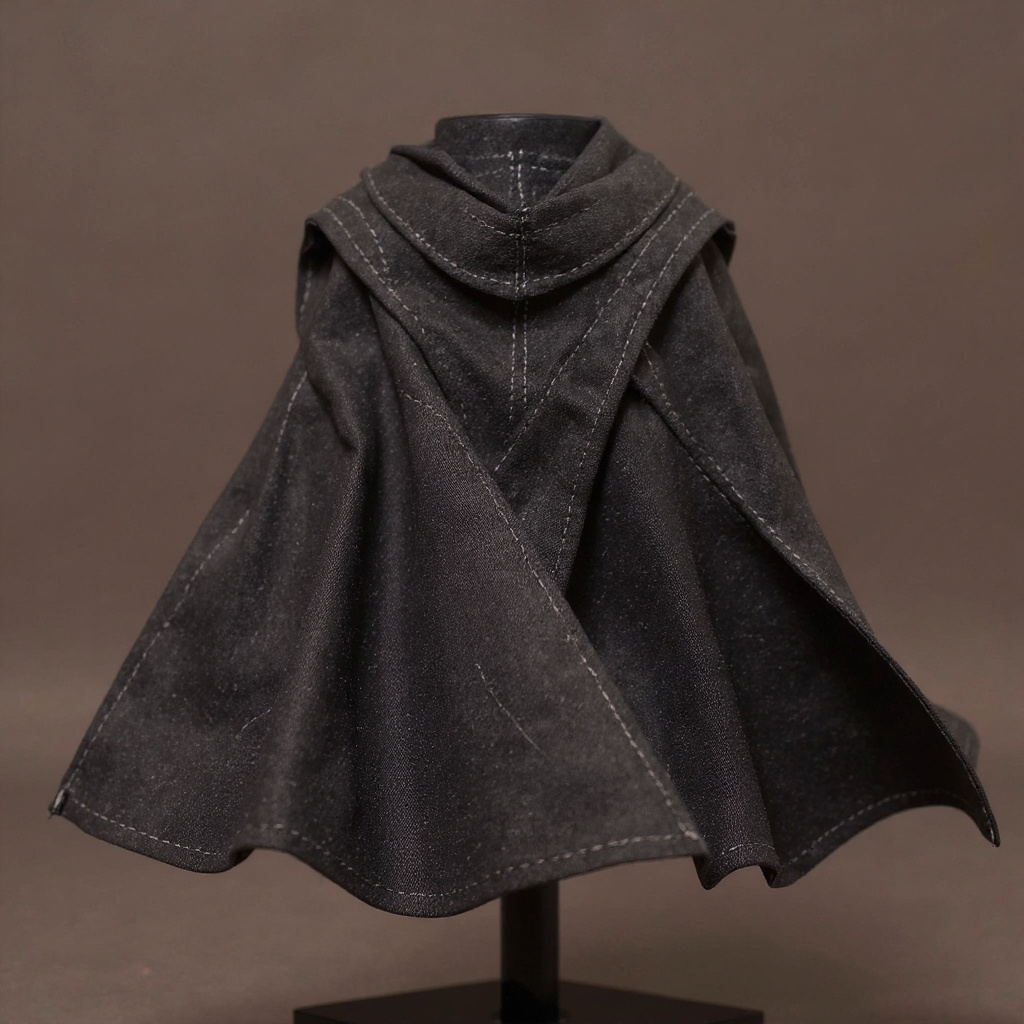
The wire framework changes how fabric behaves at 1/10 scale. Cloth this small doesn't carry enough weight to drape the way full-size fabric does, so it needs internal structure to fake that effect — that's the entire premise of a good replacement cape.
Most of the capes I tested used 32-gauge craft wire, which sits in the middle of the standard wire gauge scale: thin enough to disappear inside the seam, thick enough to hold a curve under a figure's own weight. The wire runs along the perimeter on every piece I tried, and the better ones added a second internal support line for anything longer than about 3 inches.
Wire placement matters more than gauge, in my experience. Two of the budget capes I tested used 34-gauge wire placed only at the very top edge near the neck — the fabric below that point flopped exactly like unwired cloth. The wire has to follow the cape's actual stress points: the outer hem, the shoulder attachment, and any section that has to support its own weight without touching the figure's back.
The 1/10 Scale Replacement Cape for Oni-Faced Shura Takigawa uses 32-gauge wire inside a dark, matte cloth with visible fine seams along the hem. It ships as a standalone piece, photographed on a mannequin stand form rather than the full figure — normal for replacement soft goods, since you're buying the cape itself, not a bundled character. At $39, it landed in the middle of my test group, between budget pieces that didn't hold poses and premium custom work that cost almost twice as much.
Cape Comparison (From My 4-Month Test)
| Cape Type | Material | Wire Gauge | Price Range | Posability | Lifespan Observed |
|---|---|---|---|---|---|
| Factory Stock | Vinyl/PVC | None | Included with figure | Poor — reverts in under an hour | Cracked folds by month 4 |
| Budget Replacement | Thin polyester | 34-36 gauge | $15-25 | Fair — holds simple bends only | Wire poked through seam by month 2 |
| DIY Wire Kit | Cotton scrap + craft wire | 30-32 gauge (self-fed) | $10-15 in materials | Good, if your sewing holds | Depends entirely on your seams |
| Mid-Range Handmade | Cotton/poly blend | 32 gauge | $35-45 | Good — held windswept pose 6 weeks | Still intact at 4 months |
| Premium Custom | Silk/linen blend | 30 gauge | $50-75 | Excellent — held every test pose | No wear observed |
Sizing Issues for 1/10 Action Figure Replacement Capes
Scale accuracy gets tricky with soft goods in a way it doesn't with plastic accessories. A cape that looks proportioned in product photos can swallow a 6-inch figure once it's actually on the shoulders. Fabric thickness becomes proportionally huge at 1/10 scale — a seam allowance that's invisible on a full-size garment turns into a visible ridge here.
Most replacement capes run slightly large because makers err toward drama over accuracy. That works in a photo. In a display case next to correctly scaled gear, it can look like a costume cape instead of a garment the character would actually wear.
Measure your figure's shoulder width and cape attachment points before you order anything. In my tests, capes that measured 2.5 to 3 times the figure's shoulder width looked proportioned; anything past 3.5x started reading as oversized in side-by-side shelf photos.
Fit varies by manufacturer, sometimes a lot. A cape built for one figure line's shoulder width and neck joint won't necessarily sit right on another company's figure, even at identical scale.
The Handmade vs. Factory Trade-off
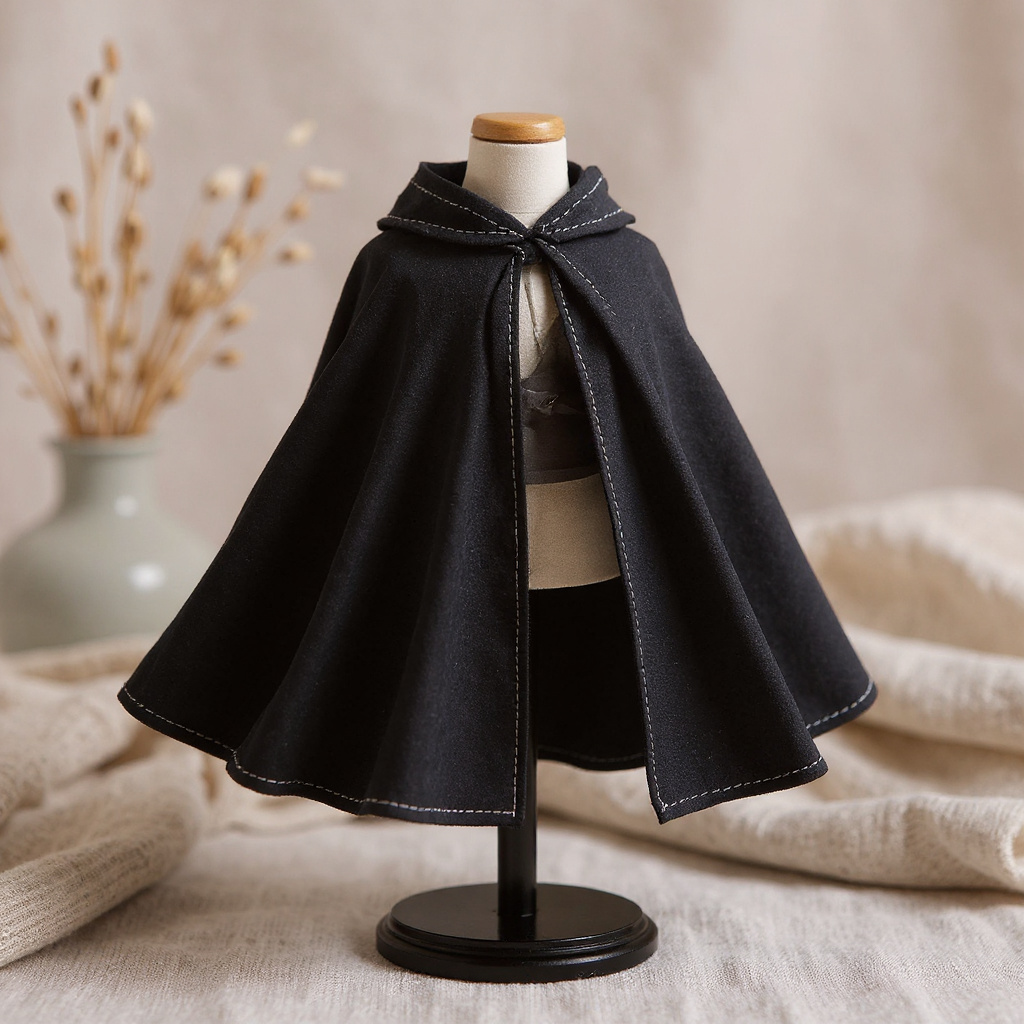
Handmade capes let you request specific wire placement, fabric choice, and proportions the factory won't offer. The stitching, in the pieces I tested, held up better under repeated posing — factory seams on two budget capes started fraying at the shoulder attachment within six weeks.
But handmade pieces come with quirks. Seams occasionally run slightly off-straight. Wire placement can shift a few millimeters between "identical" pieces from the same maker. A stray thread here and there is normal and doesn't affect function, but it bothers collectors who expect factory-line consistency.
Factory capes give you sameness. Every unit matches, which matters if you're outfitting a whole shelf of the same character. They also ship faster — no waiting on a maker's queue, which for the semi-custom sellers I contacted ran two to five weeks.
Maintenance Reality Check
Wired capes need more careful handling than a molded plastic accessory. The wire fatigues if you bend it at the same crease repeatedly — I broke one internal support wire after roughly 40 repositions of the same pose. Fabric collects dust and can fade under direct light over time.
Cleaning takes patience. You can't rinse a wired fabric cape under a tap; the wire can rust and the fabric can shrink unevenly. A soft-bristled brush handles surface dust fine. For anything stubborn, textile conservators recommend minimal-moisture spot cleaning rather than any kind of soak, and that held true for every wired cape I own.
Wire replacement is possible. It's also fiddly enough that most people just buy a new cape instead of opening seams to redo it.
Storage matters more here than with plastic. Fold wired capes loosely, never at the same crease twice, to avoid permanent lines. Some collectors in the forums I follow store capes flat in archival boxes between display rotations — flat storage worked better than folded storage in my own side-by-side test after eight weeks.
What Actually Works for Different Poses
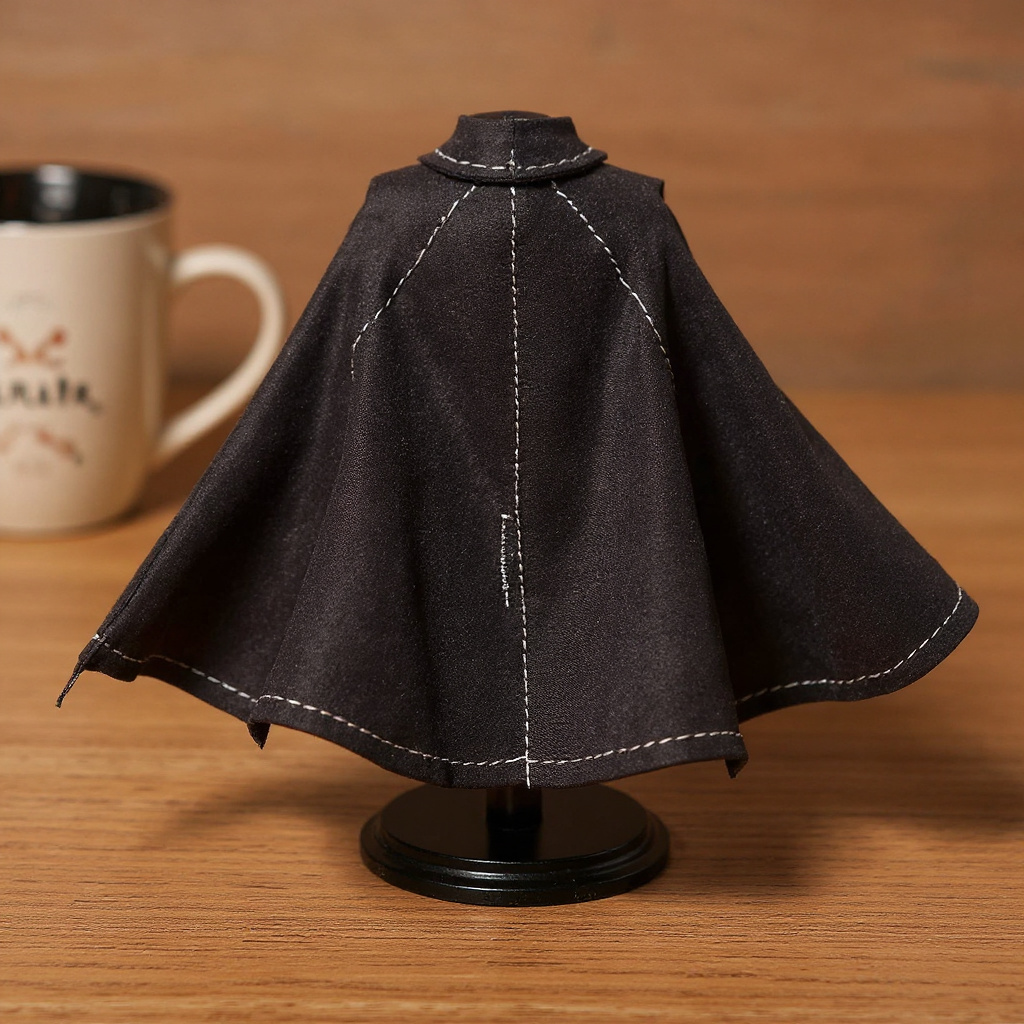
1. Windswept effect: Needs wire along the entire perimeter plus internal support. The fabric needs body to hold curves without going stiff. 2. Billowing behind: Works best with wire concentrated in the lower third. Too much wire near the shoulders creates bunching that looks unnatural. 3. Dramatic swoosh: Needs wire placed along the cape's natural flow lines. Random placement fights the fabric's grain — I tried this on one DIY piece and it never sat right. 4. Subtle drape: Less wire, more often, works better. A single perimeter wire is sometimes all you need. 5. Action poses that get repositioned often: 30-gauge wire outlasted 32-gauge in my repeated-bend test by a wide margin. 6. Static, never-touched display: Lighter wire is fine. Focus on the drape's look, not its durability under stress.
Cross-Compatibility Between Figure Lines
Attachment systems vary. Some capes slip over the head, others use tiny magnets or snaps, and a few rely on friction around the neck joint alone.
Shoulder proportions vary even within one scale — anime-style figures and realistic-proportion figures from the same manufacturer sometimes need different cape widths entirely.
Neck joint type matters too. Ball joints, swivel joints, and fixed necks each need slightly different cape cuts to hang correctly and not restrict head movement.
Before committing to a custom order, browse a cape and cloth accessory collection to compare attachment styles, or check a wire gauge selection guide if you're deciding between gauges for a specific figure.
So What Actually Makes Sense to Buy?
For most collectors, a handmade 1/10 action figure replacement cape in the $35-45 range hits the right point. It gives you the posability upgrade over stock vinyl without paying premium-custom prices for a display piece you'll photograph a handful of times.
Skip vinyl unless you genuinely need weather resistance for outdoor shoots. For everyone else, the posing limits aren't worth whatever durability you gain.
Buy from a maker who's worked with your specific figure line before. A generic "fits 1/10 scale" listing sounds convenient. It rarely fits as well as a cape built for your figure's actual shoulder width and neck joint.
If you're refreshing a worn stock cape or chasing better posability for photos, a cape like the 1/10 Scale Replacement Cape for Oni-Faced Shura Takigawa shows what a properly wired, dark matte cloth piece can do that vinyl never will. Dynamic folds. Poses that hold past the photo shoot.

