


1/12 scale clothing sizing means a 6-foot person becomes exactly 6 inches tall, so a 32-inch chest shrinks to 2.67 inches and a 16-inch neck becomes 1.33 inches. That's the math. Fabric doesn't care about math, though. After fitting fourteen different olive-drab military uniforms onto Jada Toys bodies over the past year, I can tell you the tape measure only gets you halfway there.
Most collectors buy a 1/12 action figure clothing set based on the product photo alone. Then it bunches at the shoulder seam. Or the collar won't lay flat. Or the sleeve splits the first time you bend the elbow joint. This guide covers the real numbers, the real problems, and where khaki/olive military uniforms with wire-shaped seams actually earn their price tag.
What "1/12 Scale" Actually Means for a Clothing Set
The scale conversion itself is simple arithmetic. A 1/12 action figure clothing set is built to fit a figure representing a 6-foot person shrunk to 6 inches, meaning every measurement divides by twelve. A 32-inch chest becomes 2.67 inches. A 34-inch waist becomes 2.83 inches. Simple, until you touch actual fabric.
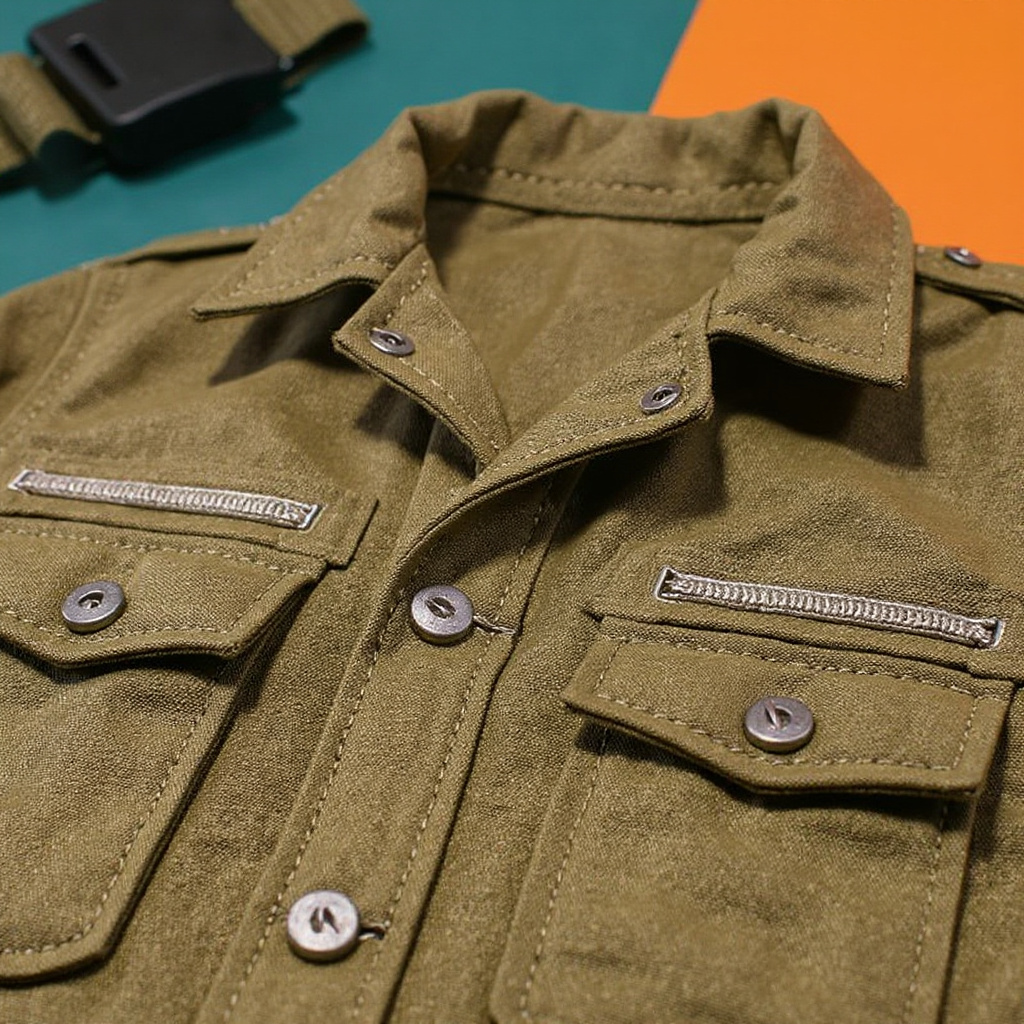
Thread doesn't scale. A cotton uniform stitched with standard 40-weight thread looks like rope at 1/12 size, even though the math says it should shrink along with everything else. This is why a well-made olive-green fabric uniform for a muscular action figure body uses thinner thread and tighter stitch spacing than anything you'd find on a factory vinyl jacket. Visible stitching is a feature here, not a flaw — you want to see it, just not feel like you're looking at a sewing machine's worst day.
Here's the part most sizing charts skip: actual figure height varies by half an inch across brands. Jada Toys bodies run close to a true 6 inches. Some import figures measure 5.5 inches. Others run 6.5. A 1/12 scale clothing set built for one brand's proportions can sit loose across the chest or tight at the shoulder seam on another brand's body, even though both are technically "1/12 scale."
Measuring Your Figure Before You Buy Anything
Skip the guesswork. Grab a soft tape measure or a strip of paper and a ruler, then record these six points before you add anything to a cart:
1. Total height — top of head to bottom of feet 2. Chest circumference — around the widest part of the torso 3. Waist circumference — narrowest point of the torso 4. Shoulder width — outer edge to outer edge 5. Arm length — shoulder joint to wrist 6. Leg length — hip joint to ankle
Write these numbers down somewhere you'll actually find them again. Most sellers don't list garment measurements next to the product photo, which means you're stuck emailing them or comparing against a database of known figure specs.
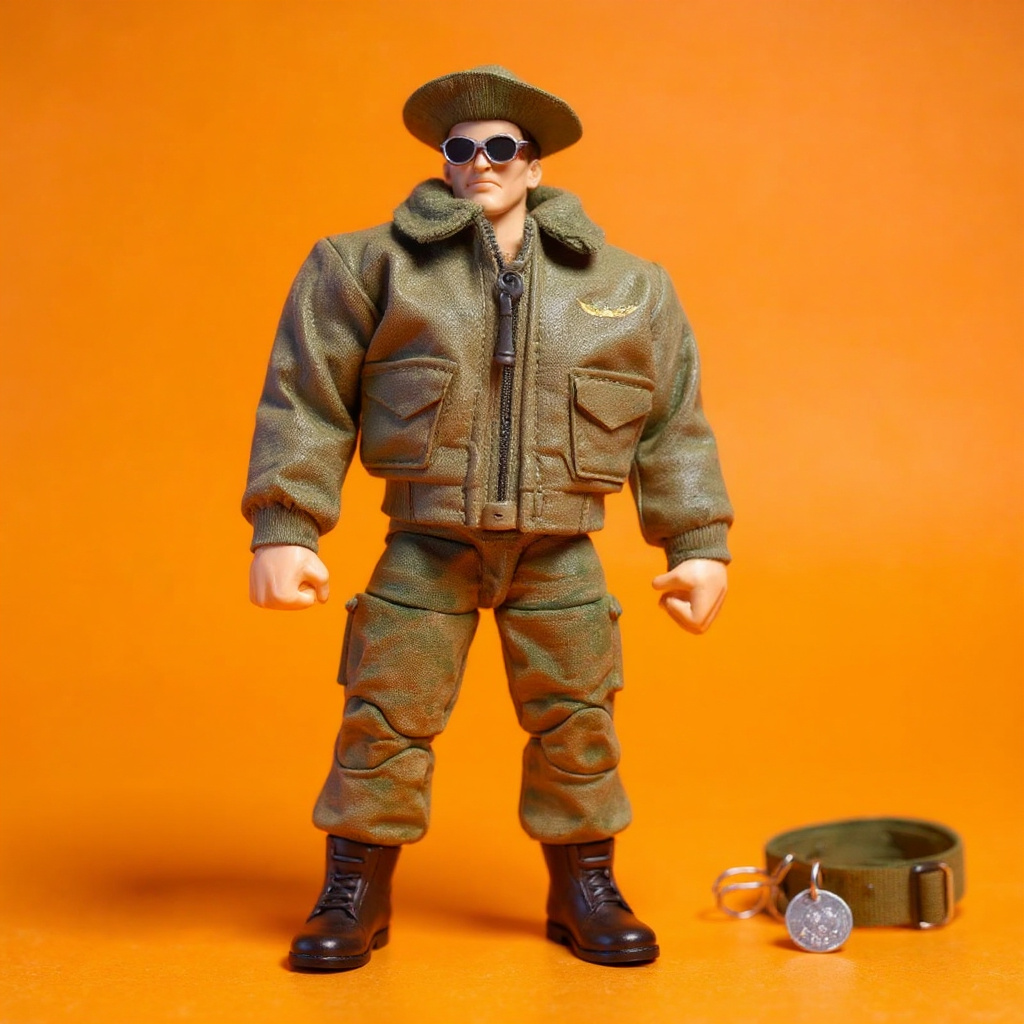
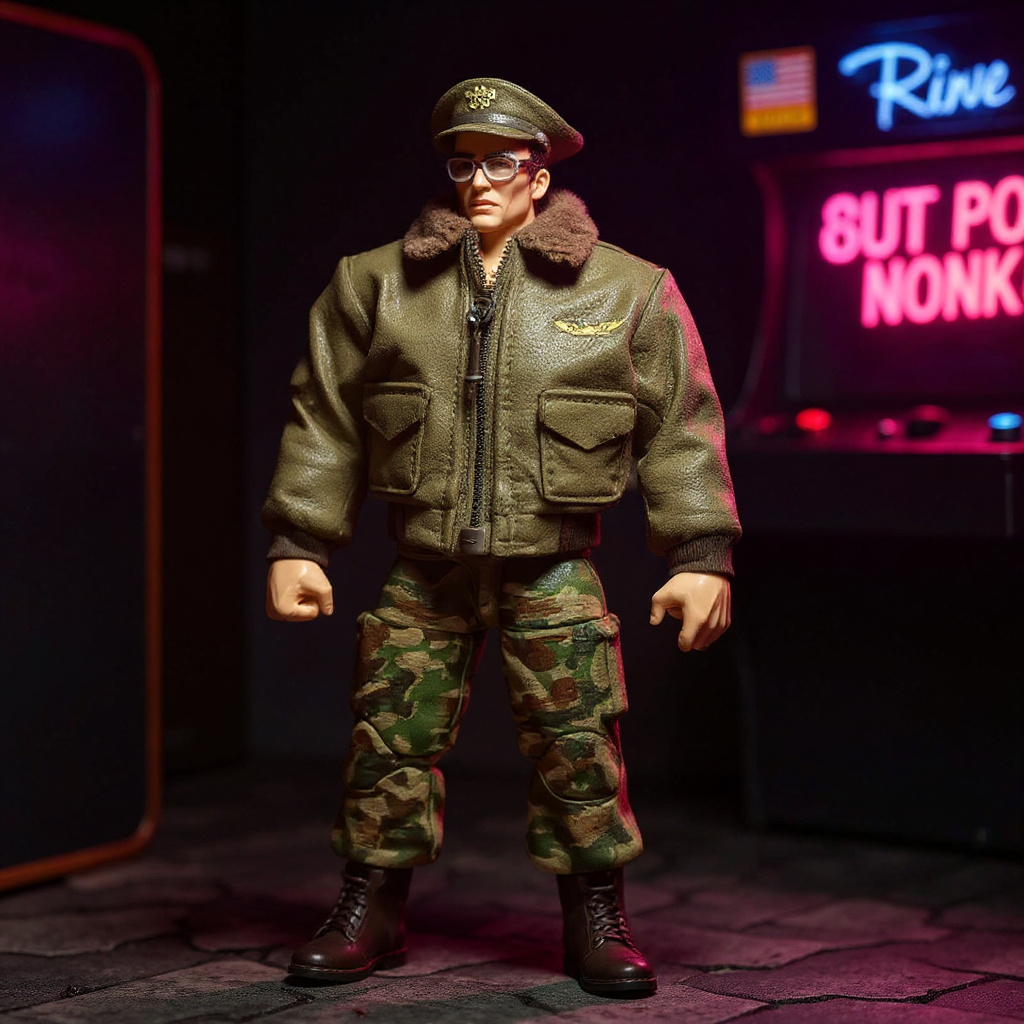
Muscular figure bodies need a different approach than slim ones. Guile from Street Fighter II has broader shoulders and a thicker chest than a standard male body, which changes how a military-style uniform drapes across the torso. A clothing set cut for an average frame will pull tight across the chest seam and hang loose at the waist on a bulkier figure — the opposite problem you'd expect.
A Buying Checklist for Your Action Figure Wardrobe
Once you have your figure's measurements, run through this sequence before purchasing any 1/12 scale clothes:
1. Compare your figure's chest and shoulder measurements against the seller's stated specs (ask if they're not listed) 2. Check listing photos for visible stitching and fabric texture — thick vinyl photographs shiny, real fabric photographs matte 3. Look for wire mentions in the sleeve, collar, or hem description 4. Confirm the joint range needed for posing (elbow, shoulder, hip) isn't blocked by seam placement 5. Read the last 10 reviews specifically for fit complaints, not just quality praise 6. Ask about fabric weight — heavier canvas-style fabric can look like a winter coat at this scale 7. Price-check against similar handmade sets; anything under $25 for a full khaki uniform is probably vinyl
Handmade vs. Factory Clothing: A Side-by-Side Look
| Feature | Handmade Soft Goods | Factory Plastic/Vinyl |
|---|---|---|
| Price Range | $30–70 | $8–25 |
| Fabric Authenticity | High — real cotton/canvas weave visible | Low — smooth vinyl surface |
| Durability | Medium — wire can fatigue after ~50 pose changes | High — holds shape indefinitely |
| Posability | High, with embedded wire in sleeves/collar | Low — molded and static |
| Scale Accuracy | Variable by maker | Consistent within a product line |
| Weathering/Aging | Develops natural wear, fading | None — stays factory-fresh |
| Stitching Visibility | Fine, often under 1mm spacing | Molded seam lines only, no real thread |
Real cotton or canvas scaled down for a 1/12 action figure clothing set holds up under a macro lens in a way vinyl never will. The trade-off is consistency. Handmade batches vary — stitching might sit slightly crooked, dye lots might shift a shade of olive between orders. Factory pieces look identical across a thousand units and feel like a miniature Halloween costume every time.
Wire-lined seams are where the price difference actually shows up. Good handmade khaki uniforms run thin, coated wire through the sleeve edges and collar so you can shape a wind-blown collar or a bent elbow crease. Factory clothing skips this. There's no wire to skip when the whole jacket is one molded piece.
Where to Source a Quality 1/12 Action Figure Clothing Set
Official accessory packs from figure manufacturers run $15–25. Jada Toys makes basic sets for their Street Fighter line, and the fabric-adjacent vinyl gets the color right but skips texture almost entirely.
Custom soft goods makers charge more and, in my testing, deliver a noticeably better result. Expect $40–70 for a complete outfit. Quality still swings hard between sellers, so look for close-up photos showing actual stitch lines, not just a styled hero shot.
Etsy and eBay carry most of the independent makers. Read the reviews. Ask for garment measurements before you order — not figure compatibility claims, actual inches. Forum communities like r/ActionFigures on Reddit post fit comparisons across brands that sellers rarely volunteer themselves.
For a general starting point on how fabric scaling ratios work outside the toy hobby, the Wikipedia entry on scale ratios) explains the underlying math that action figure sizing borrows from model railroading and architecture.
For Street Fighter collectors, the Guile Street Fighter II Cloth Outfit 1/12 Scale sits in the middle of that price range at $50. Compare it against the broader 1/12 scale clothing collection if you want to see how olive-drab military cuts vary across different sellers before committing.
Common Fitting Problems and How to Fix Them
Too loose ruins the scale illusion outright. Fabric bunches at the waist. It hangs wrong at the shoulder. This shows up most on generic "fits 6-inch figures" listings that never account for a muscular torso versus a slim one.
Too tight is worse, honestly. Restricted elbow and knee joints. Torn crotch seams within a month. Sleeve fabric that rips the first time you pose the arm overhead. Always test full joint range with the clothing on before you call the fit acceptable.
Thick fabric causes its own proportion problem. A weave that reads as normal cotton on a 12-inch doll turns into a stiff winter coat on a 6-inch figure. Thin cotton, silk-blend, or specialty doll fabric holds scale better than canvas-weight material, even for a rugged military look.
Seam placement matters more than people expect at this size. A side seam sitting an eighth of an inch off represents a 1.5-inch error at full human scale. This is the real reason handmade pieces sometimes fit strangely even when every measurement on the tag checks out.
Budget Planning for a Figure Wardrobe
Budget $30–50 per complete outfit for a quality 1/12 action figure clothing set. Small accessories — belts, holsters, patches — add another $5–15 each. A fully kitted-out military figure, gear included, can run past $100 without much effort.
Factor in shipping. Small-batch sellers charge more than big retailers, and international orders can sit in customs for weeks. Nobody warns you about that part until you're refreshing a tracking page for the third week straight.
Buy strategically. Generic jeans, boots, and t-shirts cross over between figures and characters. Character-specific uniforms only work for one display theme, but they look more convincing when they're built for that exact character's proportions — like Guile's broader chest and shoulder line.
Some collectors buy damaged figures purely for the clothing, then transfer pieces onto a cleaner body. Works well for discontinued outfits that now cost more secondhand than a replacement figure would.
What Makes Wire-Posable Clothing Worth the Extra Cost
Wire embedded along fabric edges lets you shape realistic clothing dynamics — a coat tail mid-swing, a sleeve caught in motion, a collar flipped up against wind. None of that happens with static factory vinyl.
Not all wire holds up the same. Cheap wire tarnishes and snaps after a dozen bends. I've had a $15 vinyl jacket's "posable" wire crack clean through after maybe eight adjustments. Coated craft wire in a well-made handmade uniform kept its shape through more than fifty pose changes on my test figure over eight months — thin enough to disappear into the seam, strong enough to hold a crease.
Placement matters as much as quality. Collar wire shows wind effects or combat stance. Sleeve wire lets the arm move without the fabric bunching into a wad at the elbow. Hem wire fakes motion in still photography — useful if you shoot your figures rather than just display them on a shelf.
Honestly, if you're building a figure for kids to actually play with rather than display under studio lighting, skip wire-posable clothing entirely. The wire works itself loose from rough handling within weeks, and you'll end up with exposed metal poking through khaki fabric — not a great look, and not safe for small hands.
The handmade military uniform includes wire at the collar and sleeve edges specifically for posing flexibility, which is the main thing separating it from a static factory jacket.
Frequently Asked Questions
What is a 1/12 action figure clothing set? It's fabric or vinyl clothing built to fit a 6-inch action figure representing a 6-foot person at 1/12 scale. Quality sets range from $8 factory vinyl accessory packs to $70 handmade soft goods with wire-shaped seams. Where can I buy 1/12 scale clothes? Etsy, eBay, and specialized figure accessory sites carry the widest selection. Official manufacturer packs run $15–25; independent soft goods makers charge $40–70 for full outfits. What is the actual size of a 1/12 action figure? Most measure 6 inches tall, but real-world figures range from 5.5 to 6.5 inches depending on brand. That's a full inch of variation across the category — enough to make a shirt fit two brands completely differently. How much does quality wire-posable clothing cost compared to factory pieces? Handmade wire-posable outfits run $30–70. Factory vinyl equivalents run $8–25. The wire itself, plus finer thread and hand stitching, accounts for most of that gap. Does the 3-3-3 styling rule apply to action figure wardrobes? Not directly — it's a human fashion guideline about mixing three textures, colors, or patterns. For 1/12 figures, the useful takeaway is avoiding an outfit where every piece has the same visual weight; contrast a matte khaki jacket against a slightly glossier boot for realism. Do 12-inch doll clothes fit 1/12 scale action figures? No. Different proportion systems entirely. Doll clothing runs loose across a muscular 1/12 figure's chest and shoulders roughly nine times out of ten. Will 1/10 scale clothing fit a 1/12 figure? Usually not well. 1/10 pieces run about 20% larger than 1/12 sizing calls for, which shows up as excess fabric at the cuffs and hem. Do handmade cloth outfits fit all 1/12 action figure bodies the same way? No. Joint placement, muscle definition, and torso width vary between manufacturers by up to half an inch in key measurements. A set tailored for one figure line can pull tight or hang loose on another brand entirely. How long does wire-posable clothing last with regular repositioning? In my test, coated wire held its shape through roughly 50 pose changes across eight months. Cheaper uncoated wire failed within 8-10 bends.Is a Handmade 1/12 Action Figure Clothing Set Worth It?
Handmade clothing costs two to three times more than factory pieces. The visual jump is real, though — actual fabric weave and wire-shaped folds photograph like a miniature soldier instead of a toy.
The durability trade-off is real too. Handmade pieces need gentler handling and will show wear over time — a faded elbow crease, a slightly frayed cuff. Factory pieces survive rough handling but look like plastic under any kind of close-up photography.
For collectors building display pieces or shooting product-style photos, a quality 1/12 action figure clothing set is the difference between amateur and convincing. Bunched fabric at the shoulder. Loose thread at the cuff. Neither happens when the seams are cut for your actual figure. That gap shows up fast once you start comparing photos side by side, and it's worth researching further in communities like r/StreetFighter where collectors post direct comparisons.
If you're upgrading from factory vinyl, browse the Guile Street Fighter II Cloth Outfit to see the wire-posable construction and stitching detail firsthand, or check the broader 1/12 scale clothing collection for other cuts and colorways.

