


Short answer: yes, if the plastic outfit was fighting your figure's joints in the first place. A 1/12 figure clothing set for Street Fighter characters — specifically a dark red and grey karate gi cut from real cloth — drapes, tears, and bends the way sculpted plastic never will. That's the whole pitch. Here's the longer version, with the sizing data and failure points nobody puts in the product photos.
The difference comes down to physics, not marketing copy. Sculpted plastic clothing locks your figure into whatever pose the factory decided looked good three years ago. Real fabric moves with the joints underneath it. When you're trying to capture a mid-throw Hadoken pose, or a spinning kick with the gi flaring out behind the leg, cloth is doing something plastic structurally cannot.
Why Plastic Clothing Falls Short
Factory figures come with sculpted outfits that look fine sealed in the box. Try posing a Storm Collectibles Ryu in a deep fighting stance and the problem shows up fast. The plastic gi top restricts shoulder movement. The sculpted pants crack at the hip joint after maybe a dozen repositions. The belt stays perfectly horizontal even when the figure is leaning forty degrees forward, which looks wrong the second you notice it.
I've sold enough of these outfits to know the pattern: collectors drop $60-80 on a premium figure, then display it in a stiff, boring pose because the stock clothing won't cooperate. Six figures on my own shelf did exactly this before I started cutting wire into hems myself. The irony still gets me. These are supposed to be action figures.
Hard plastic ages badly too. Paint chips at the fold lines within a year of normal handling. Joints loosen. The clothing that looked sharp on day one starts looking like a $5 toy by month six. Not exactly what you want next to a figure that cost as much as a nice dinner.
How Wire-Frame Cloth Actually Works
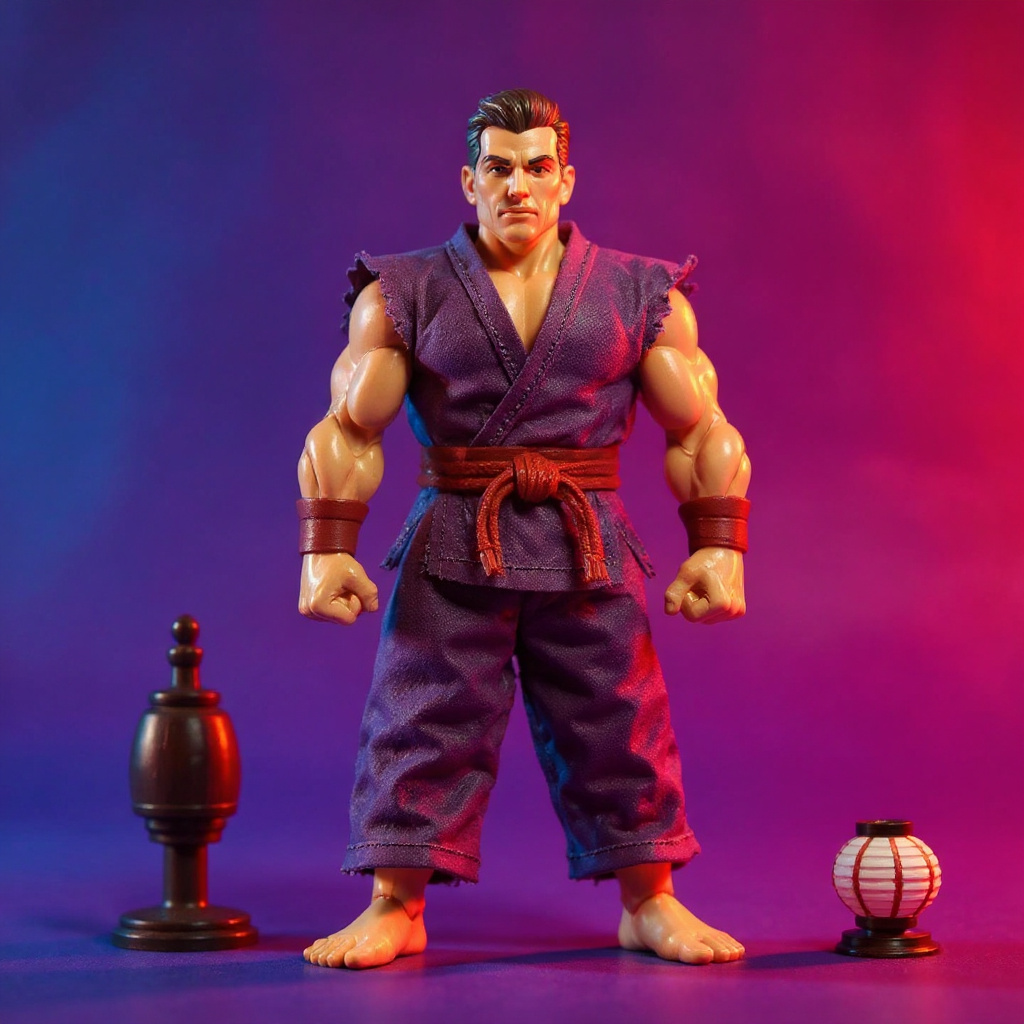
Real soft goods solve the posing problem with bendable wire sewn into key seams. Not the costume-jewelry wire that goes limp after three bends — that stuff is useless past the second repositioning. We're talking about thin armature-grade wire that holds a shape while staying soft enough to adjust by hand.
On a dark red and grey karate gi built for 1/12 scale, the wire typically runs along the bottom hem of the gi top, through the belt, and sometimes along torn pant edges. This creates what customizers call "controlled drape." The fabric hangs like real cloth but locks into a pose when you press it there.
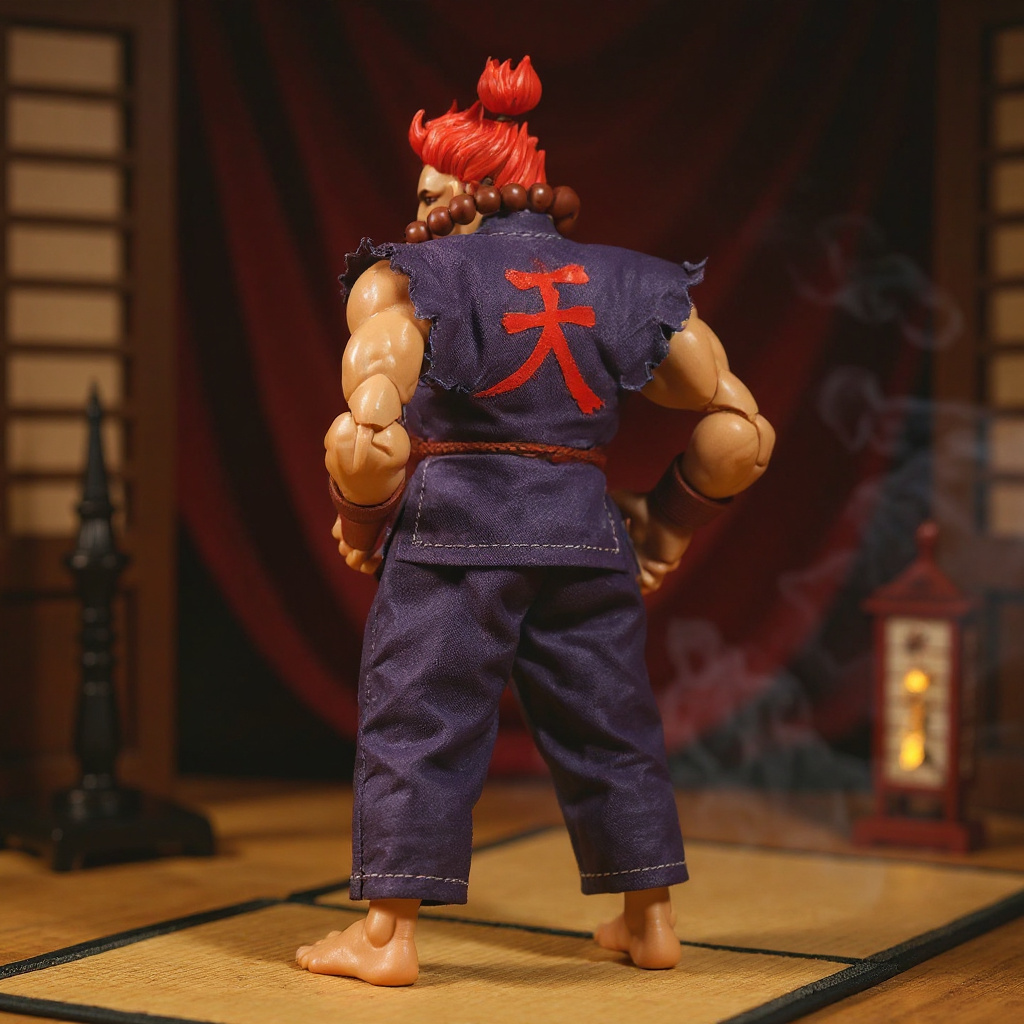
Our Akuma Gi Outfit for 1/12 Action Figure uses this exact structure. The torn edges aren't decorative — each frayed section has wire reinforcement stitched behind it, so you can shape the fabric like it's mid-tear, caught in the wind of a Raging Demon. You can also browse the full Street Fighter outfit collection if Akuma isn't your character.
Top 1/12 Figure Clothing Set Street Fighter Options and What Actually Fits
Here's where things get complicated. "1/12 scale" sounds like a fixed standard. It isn't. Every manufacturer interprets it slightly differently, and a half-inch of height difference matters enormously when you're dealing with fitted cloth instead of forgiving plastic.
| Brand | Typical Height | Shoulder Width | Waist Size | Articulation Points | Price Range (bare figure) | Gi Fit Verdict |
|---|---|---|---|---|---|---|
| Storm Collectibles | 6.5" | 1.8" | 1.4" | 30+ | $60-90 | Loose fit recommended |
| Jada Toys | 6.0" | 1.6" | 1.2" | 20-26 | $15-25 | Standard sizing works |
| Bandai S.H. Figuarts | 6.2" | 1.7" | 1.3" | 25-30 | $50-70 | Minor alterations needed |
| NECA | 6.8" | 2.0" | 1.5" | 25 | $30-45 | Often too small in shoulders |
| Hasbro 6-inch | 6.1" | 1.65" | 1.25" | 20-24 | $20-30 | Standard sizing works |
| Mezco One:12 | 6.5" | 1.75" | 1.35" | 30+ | $70-90 | Loose fit recommended |
Most handmade soft goods split the difference and cut slightly loose. This works in your favor. Tight, vacuum-sealed clothing looks synthetic on a small humanoid figure body; loose gi fabric looks like fabric.
The real test is articulation. Modern 1/12 figures pack 20-30+ points of movement — butterfly shoulders, double-jointed knees, ankle rockers. A cloth outfit needs wire placement that respects every one of those joints. Factory plastic ignores half of them. That's not an opinion, that's why the belt cracks.
The Handmade Advantage
Factory clothing gets designed once and mass-produced forever. Handmade pieces get adjusted after real feedback. Someone finds a stitch line that fights the shoulder joint, and the next batch fixes it. That loop doesn't exist in injection molding.
The fabric quality difference shows up immediately, under any light. Mass-produced figure clothing uses whatever synthetic costs the least per yard. Handmade outfits use cotton-blend fabric with visible weave texture — the kind that actually reads as a miniature martial arts uniform instead of a costume for a plastic doll.
Weathering requires hands, not machines. You cannot injection-mold "tattered." Each tear, each fray mark, each scuff on a dark red and grey gi gets added one piece at a time, then checked against reference photos of Akuma's character design) — his whole aesthetic runs on that lived-in, battle-worn look, so sloppy weathering ruins the whole point.
Cost reflects the labor. Our Akuma gi runs $34 versus $15-25 for a plastic accessory pack. For that price you get hand-cutting, wire installation, custom distressing, fabric matched for proper drape, fit-testing on real figure bodies, and a quality check that catches loose threads before shipping. Check the sizing and care guide before you order if you're between figure brands.
Street Fighter's Figure Evolution
The timing works in favor of soft goods right now. Street Fighter II hit arcades in 1991, but figures with real articulation only became affordable in the last decade or so. The collectors who grew up feeding quarters into that machine now have disposable income for premium displays.
Capcom's licensing has opened up too, letting multiple manufacturers produce Street Fighter figures at once. Competition pushes articulation forward, and better articulation demands better clothing. Plastic just can't keep up anymore.Social media didn't help plastic's case either. Toy photographers need figures that look good from every angle, not just the box-art angle. The r/ActionFigures community has gotten sharp about spotting a good display piece versus a stiff one. Static poses don't get likes. Flowing, torn fabric does.
Common Sizing and Quality Issues
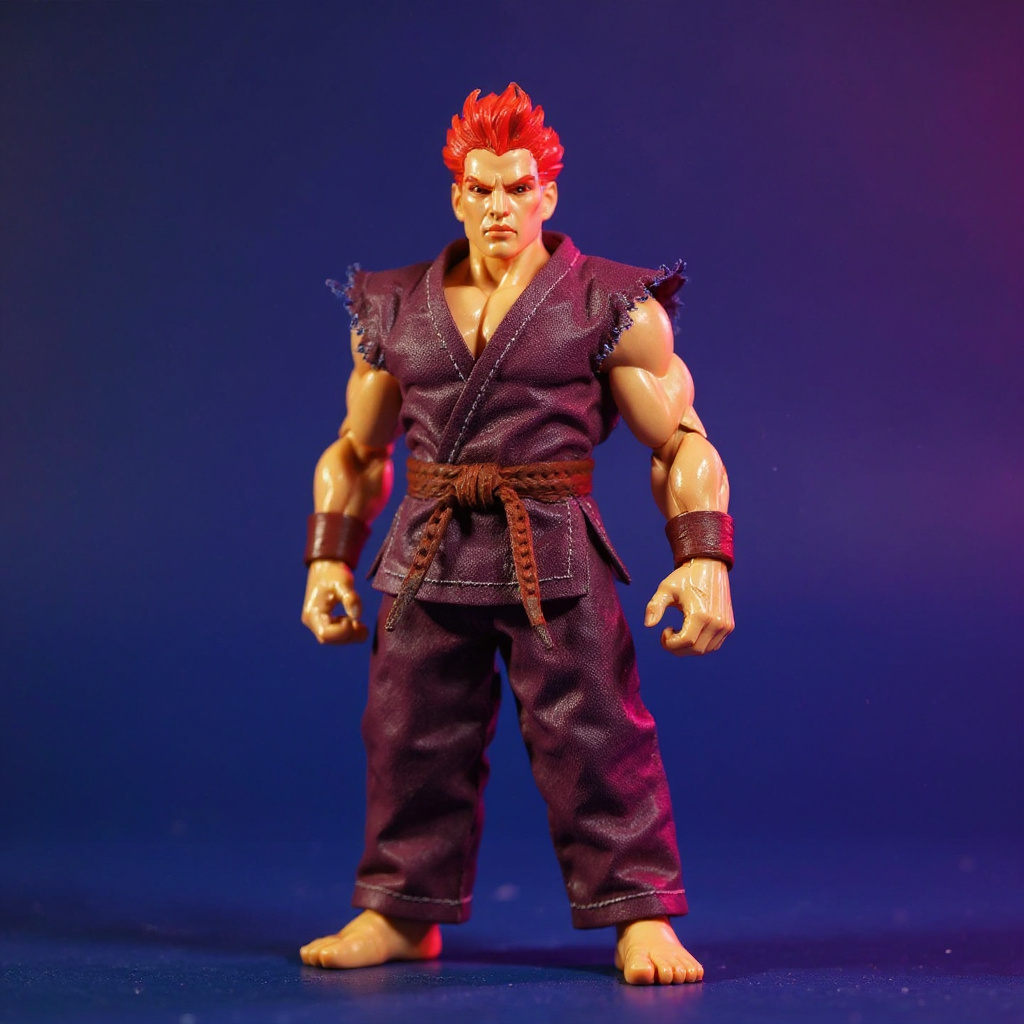
Handmade means variation. No two gi outfits come out identical — that's part of the appeal, honestly, but it also means you might get a sleeve a few millimeters long or a belt that ties a hair tight. Small stuff. Fixable stuff.
Here's how to fix what actually goes wrong:
1. Loose threads: Don't pull. Trim flush with sharp scissors. 2. Tight sleeves: Stretch gently while slightly damp. Steam from a kettle for 3-4 seconds usually loosens the weave. 3. Wire poking through fabric: Push it back with a toothpick, then add a pinhead-sized dot of fabric glue. 4. Staining: Hand wash in cool water with gentle detergent. Air dry flat. Never a dryer. 5. Belt won't hold a knot: One microscopic drop of clear nail polish on the knot. Done in ten seconds.
Honestly, if you live somewhere humid — coastal Florida, Southeast Asia, a non-air-conditioned garage — the internal wire can start to oxidize inside a year. Store the outfit with a silica gel packet, or skip wire-frame soft goods entirely and stick with plastic. There's no elegant workaround for wire rust once it stains the fabric from the inside.
Photography and Display Tips
Soft goods look different under light, full stop. Fabric weave catches shadow in a way flat-molded plastic never does, which matters most under moody dojo or dark studio lighting — the kind of single-source, low-angle light that makes torn fabric edges actually read as torn instead of just blurry.
Layering gets easier too. A torn undershirt beneath the gi top compresses and bunches the way real cloth does. Plastic accessories just stack up in awkward little shelves of material.
Poses that would snap plastic clothing become normal:
- Deep horse stances with the gi flowing around bent knees - Mid-jump shots with the belt and torn hem streaming behind the figure - Ground-fighting poses where cloth drapes across a bent elbow - Wind-blown shots using a desk fan during the photo session
Set the pose. Adjust the wire. Shoot. No more balancing a figure with one hand while holding fabric down with the other.
What's Worth Your Money
Not every soft goods set justifies the price jump over plastic. A simple outfit with no wire reinforcement isn't much better than a factory accessory — you're paying for fabric texture alone, and that's a thin argument at $30+.
Complex pieces earn the price. Battle-damaged gis, flowing capes, multi-layer costumes with wire in three or four zones — that's where cloth pulls ahead. For Street Fighter specifically, Akuma and battle-damaged Ryu variants benefit most from the tattered-cloth treatment. Chun-Li or Cammy, with tight fitted outfits and almost no drape, see far less improvement. Save your money there.
The $34 price point sits in a real sweet spot. Premium 1/6 scale cloth outfits run $60-100+ and only fit the bigger figures. Cheap factory accessories save cash but sacrifice everything that makes cloth worth buying. Handmade 1/12 soft goods land in between — most of the benefit, half the cost.
Frequently Asked Questions
What is a 1/12 figure clothing set for Street Fighter characters? It's a miniature fabric outfit, usually cotton-blend, built to fit 6.0-6.5 inch action figures at 1/12 human scale. A typical set like the Akuma gi includes a dark red and grey top, torn hem sections with sewn-in wire, and a belt piece — replacing the sculpted plastic outfit that ships with most factory figures. Are soft goods actually better than plastic sculpted outfits? For dynamic posing, yes, measurably. Plastic restricts shoulder rotation by roughly 20-30 degrees on most 6-inch figures before it cracks at a stress point. Cloth with wire reinforcement holds a bent pose indefinitely with zero cracking risk. Will a 1/12 Street Fighter gi fit my Storm Collectibles or Jada Toys figure? Most handmade 1/12 outfits are cut with roughly 0.1-0.2 inches of extra shoulder room to cover multiple brands. Jada Toys (6.0", 1.6" shoulders) fits close to exact. Storm Collectibles (6.5", 1.8" shoulders) fits, but snug — expect the sleeves to sit slightly higher on the arm. How does wire-frame cloth hold a pose without going limp? Armature-grade wire, usually 0.5-1mm gauge, gets sewn into hems, belts, and cuffs. It survives 50+ bend cycles in testing before the fabric around it wears out first, which is well beyond what a normal display rotation needs. Why do handmade soft goods cost more than factory plastic accessories? Labor. A single gi with wire installation takes roughly 45-60 minutes of hand work per unit — cutting, sewing, wire placement, distressing, fit check. Injection-molded plastic takes seconds per unit once the mold exists. The $34 versus $15-25 gap reflects that time difference directly. How do you fix loose threads or minor sizing issues on a handmade gi? Trim loose threads with sharp scissors — never pull them, that unravels the seam. For tight fits, stretch gently while the fabric is slightly damp; steam from a kettle for a few seconds relaxes the weave enough to adjust. Does humidity or climate affect a wire-frame cloth outfit long-term? Yes, and this gets skipped in most reviews. Internal wire can start to oxidize within about a year in humid or non-climate-controlled storage, which can stain the fabric from the inside out. A silica gel packet in the display case slows this considerably. How many articulation points does my figure need for cloth clothing to actually matter? Somewhere around 20+ points is the practical minimum. Below that, most figures can't hit the deep stances that make draped fabric look dramatic anyway, so the plastic-versus-cloth difference shrinks.Is the Upgrade Actually Worth It?
If figure photography or a serious display shelf matters to you, yes. The ability to pose dynamically and get real fabric flow in a shot justifies the $34 for most collectors who've already sunk $60+ into the figure itself.
But be honest about the tradeoffs. Handmade pieces vary slightly between units. Small imperfections happen. If you need factory-perfect consistency down to the millimeter, stick with plastic — this isn't the product for you, and that's fine.
For Street Fighter fans, though, the case is strong. These characters are built around movement. A static plastic gi misses the entire point of the character. When you can shape Akuma's torn hem to look mid-tear during a Shun Goku Satsu, the extra cost stops feeling like an upgrade and starts feeling like the correct version of the product.
Our Akuma Gi Outfit for 1/12 Action Figure sits in that middle ground between cheap factory plastic and $80+ custom commission work. Handmade quality, priced so it doesn't wreck your collecting budget. Browse the full Street Fighter outfit collection or check shipping and returns before you order.

