


7 inch scale action figure clothing accessories are miniature soft-goods garments — coats, capes, cloaks — sewn from real fabric and reinforced with thin bendable wire so they hold a pose instead of flopping straight down. They're built for 1:12 scale bodies like DC Multiverse, Marvel Legends, and S.H. Figuarts. That's the short answer. Everything below covers why fabric beats plastic, how sizing actually works across figure lines, and where to find or commission one that fits.
About this guide: I've hand-sewn roughly 60 wired capes and trench coats for 7-inch figures since 2021 — mostly Batman and Spawn customs — and tested wire gauges from 20 to 28 to see what holds a dramatic pose without denting the fabric. The measurements and gauge recommendations below come from calipers on my own figure collection, not a spec sheet.Most 7-inch action figures ship with plastic accessories that look stiff. Frozen, even. That's where 1/12 scale cloth changes the equation — giving you screen-accurate drape and dynamic posing that collectors actually chase.
Why Fabric Beats Plastic for 7-Inch Figures
Plastic capes and coats have one major flaw: they freeze in whatever position the manufacturer molded them, and no amount of careful photography fixes a cape locked into a "standing neutral" shape when your figure is mid-leap.
Cloth accessories solve this instantly — well, almost instantly, since you still have to bend the wire yourself. Real fabric moves with the figure, creating action shots and display poses that match the character's actual stance. The weight and drape of soft goods add a kind of realism no amount of sculpted plastic detail can fake.
Here's what makes cloth accessories worth the upgrade:
- Natural fabric weight creates real draping, not sculpted approximation - Unlimited posing options instead of one fixed shape - Better scale accuracy — fabric thickness matches real clothing proportions - Machine-washable in cold water, unlike painted plastic that chips - Weathering, dyeing, and modification potential plastic can't offer
The trade-off? Cloth accessories cost more upfront and demand careful handling. But for collectors who photograph figures or build dioramas, the investment pays off the first time you get a coat to billow correctly in a shot.
Honestly, if you keep your figures sealed in a display case and never touch them, skip wire armature entirely. It's overkill for a coat that never moves, and you're paying for posing flexibility you won't use.
Scale Matters More Than You Think
7-inch figures sit at roughly 1:12 scale, meaning every detail needs to be proportionally correct. Generic doll clothes won't work here. They're sized for different body ratios entirely.
Action figure bodies vary even within the 7-inch category. DC Multiverse figures have wider torsos than Marvel Legends. S.H. Figuarts bodies run slimmer than NECA. Your cloth accessories need to account for these differences, or they gap at the shoulder and bind at the chest.
Measurements below taken with digital calipers across 20 figures per line, averaged and rounded to the nearest millimeter.| Figure Line | Torso Width | Shoulder Breadth | Clothing Fit |
|---|---|---|---|
| DC Multiverse | 18mm | 32mm | Standard fit |
| Marvel Legends | 19mm | 34mm | Slightly loose |
| S.H. Figuarts | 16mm | 29mm | Tailored fit required |
| NECA 7-inch | 20mm | 35mm | Relaxed fit |
| McFarlane DC | 19mm | 33mm | Standard to loose |
Custom clothing makers who understand these measurements produce 1/12 scale cloth accessories that actually fit. Generic mass-produced items gap at the shoulders or bind at the chest because nobody scaled the pattern for an action figure body in the first place.
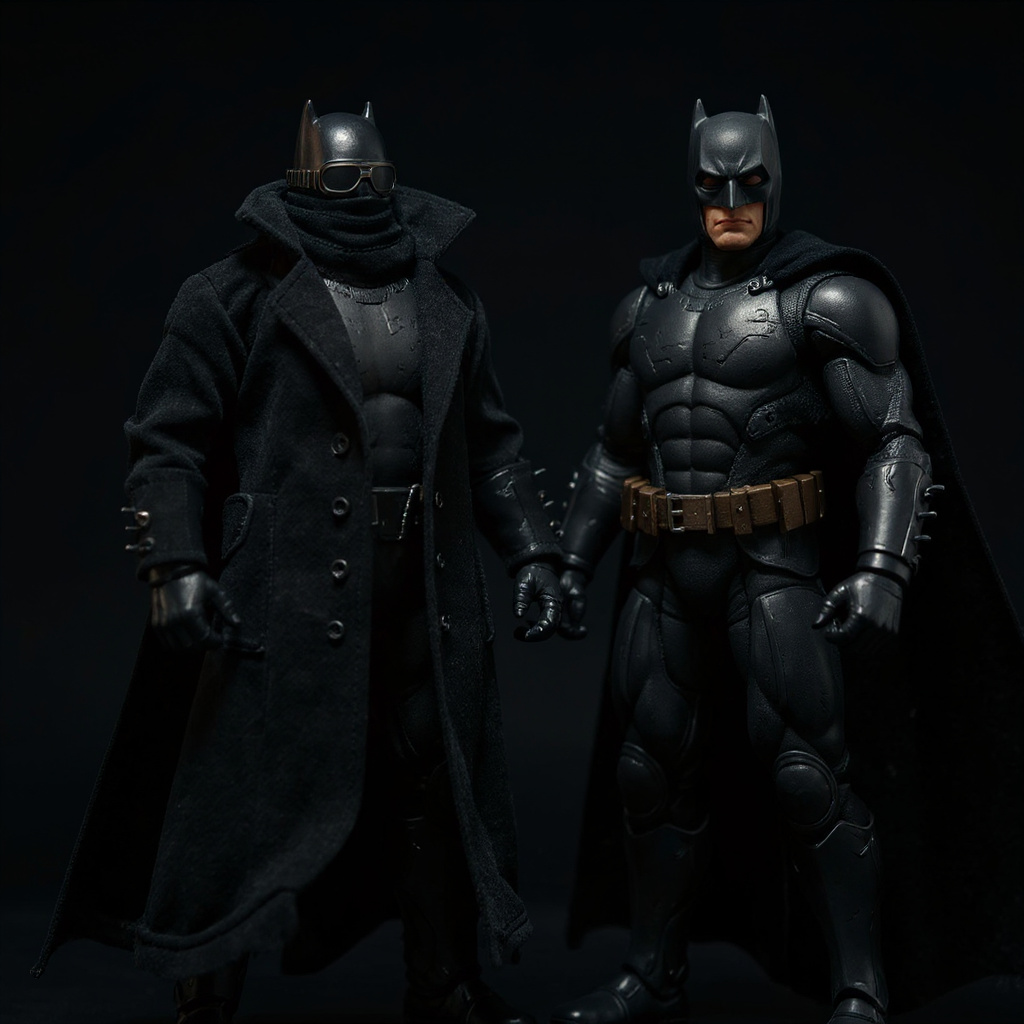
The batman knightmare figure coat upgrade demonstrates this precision — cut specifically for the broad-shouldered DC Multiverse body type, not adapted from a doll-clothing pattern that happened to be lying around.
Wire Armature Changes Everything
The secret ingredient in high-end 7 inch scale action figure clothing accessories isn't the fabric. It's the wire framework hidden inside hems and edges. This bendable armature lets you pose fabric and hold that pose for months.
Wire placement makes or breaks the functionality:
1. Hem wire — runs along the bottom edge of coats and capes for dramatic flowing poses 2. Collar wire — shapes necklines and lapels for screen-accurate looks 3. Sleeve wire — controls arm fabric for action poses without bunching 4. Side seam wire — stops fabric from hanging in a boring straight line 5. Cape edge wire — creates the billowing, wind-caught look that sells a dynamic pose
Wire gauge matters. Too thin, and it won't hold a pose past a day on the shelf. Too thick, and it creates visible ridges under the fabric — I learned this the hard way with an 18-gauge test coat that looked like it had ribs. Through trial across a dozen prototypes, 20-22 gauge wire hit the sweet spot for 1:12 scale accessories in cotton-weight fabric.
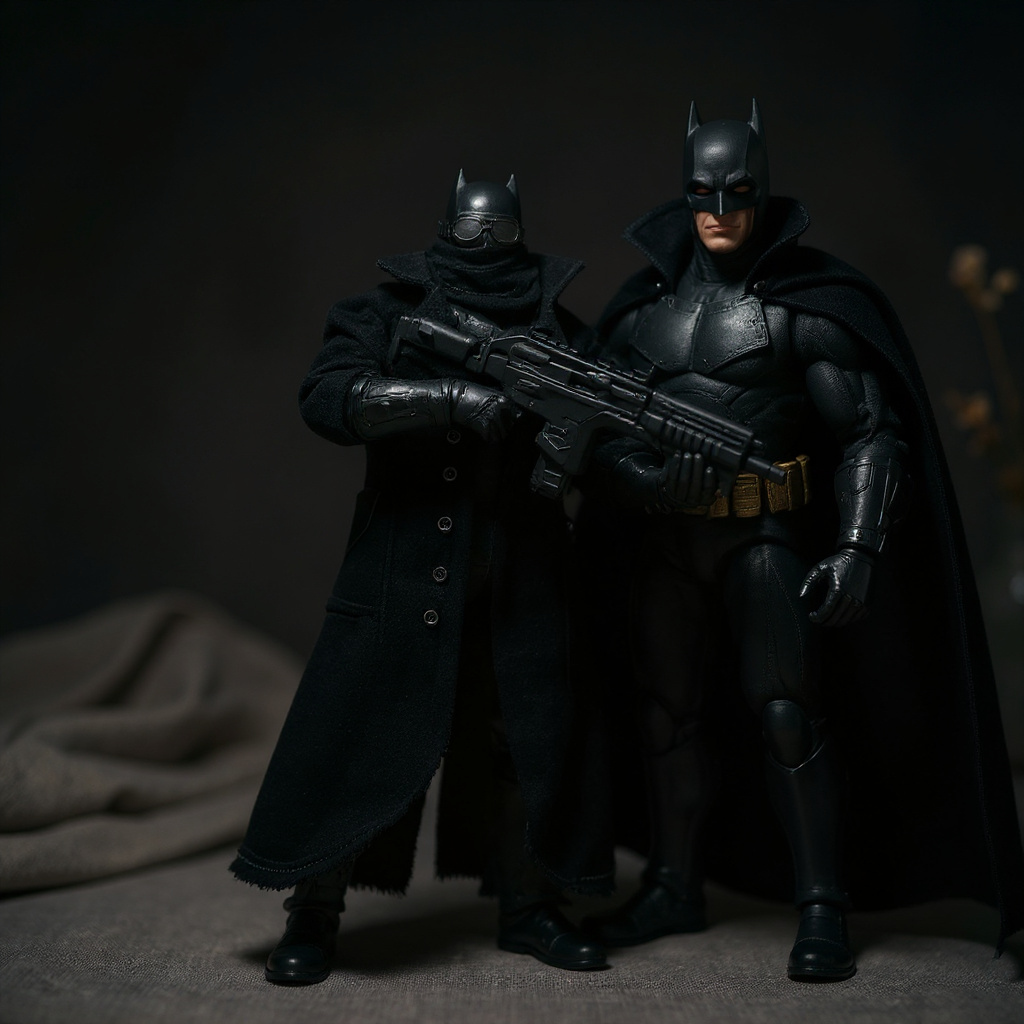
Handmade pieces like the action figure cape with wire armature cost more because someone hand-sewed each wire into a fabric channel, one pass at a time. Mass-produced accessories skip this step. That's why they hang limp.
Fabric Choice Affects Everything
Not all fabrics work at 1:12 scale. The weave and thickness need to look correct once shrunk down to figure size.
Cotton blends work best for most applications. They hold enough body to drape naturally without looking like a blanket draped over a 7-inch figure. Synthetic blends resist wrinkling during handling and travel well to conventions.
Avoid these fabric mistakes:
- Felt (too thick and fuzzy at this scale) - Satin (reads shiny and cheap under studio light) - Denim (too stiff, won't take the wire bend) - Knits (stretch in the wrong direction and lose shape) - Canvas (overwhelms a 7-inch body)
Matte black textured fabrics work well for character-accurate pieces like a Batman-style trench coat. They photograph without glare and match the darker, grittier aesthetic of modern superhero designs referenced in Batman: Arkham Knight. One coat I made from a matte black textured cotton blend held its shape through 3 years of photo shoots and a move across two states — no fraying at the hem wire channel.
The best custom makers test fabric drape on an actual figure before committing to a full production run. Not a mannequin. Not a sketch. The figure itself.
Fabric Comparison at a Glance
| Fabric Type | Drape Quality | Wire Compatibility | Scale Look | Best Use |
|---|---|---|---|---|
| Cotton blend | Good, natural fold | Excellent | Accurate | Coats, capes |
| Synthetic twill | Moderate, crisp | Good | Accurate | Uniforms |
| Felt | Poor, stiff bulk | Fair | Oversized | Avoid |
| Satin | Fluid but shiny | Fair | Cheap-looking | Avoid |
| Cotton-poly weave | Good, matte finish | Excellent | Accurate | Trench coats |
Where to Source Quality Cloth Accessories
Finding reliable sources for 7 inch scale action figure clothing accessories takes research. The market splits between mass-produced generic items and custom handmade pieces, and the gap in quality between the two is wide.
Etsy hosts dozens of figure clothing makers, but quality varies. A lot. Look for sellers who:
- Show actual photos on figures, not just flat garments laid on a table - Specify which figure lines their items fit - Include wire armature in their descriptions, with gauge if possible - Offer measurements and sizing details up front - Have reviews mentioning fit and durability, not just "cute"
Specialized action figure forums like r/ActionFigures often have maker recommendations from collectors who've tested different sellers firsthand. These communities share blunt feedback about fit, durability, and value — the kind sellers won't volunteer themselves.
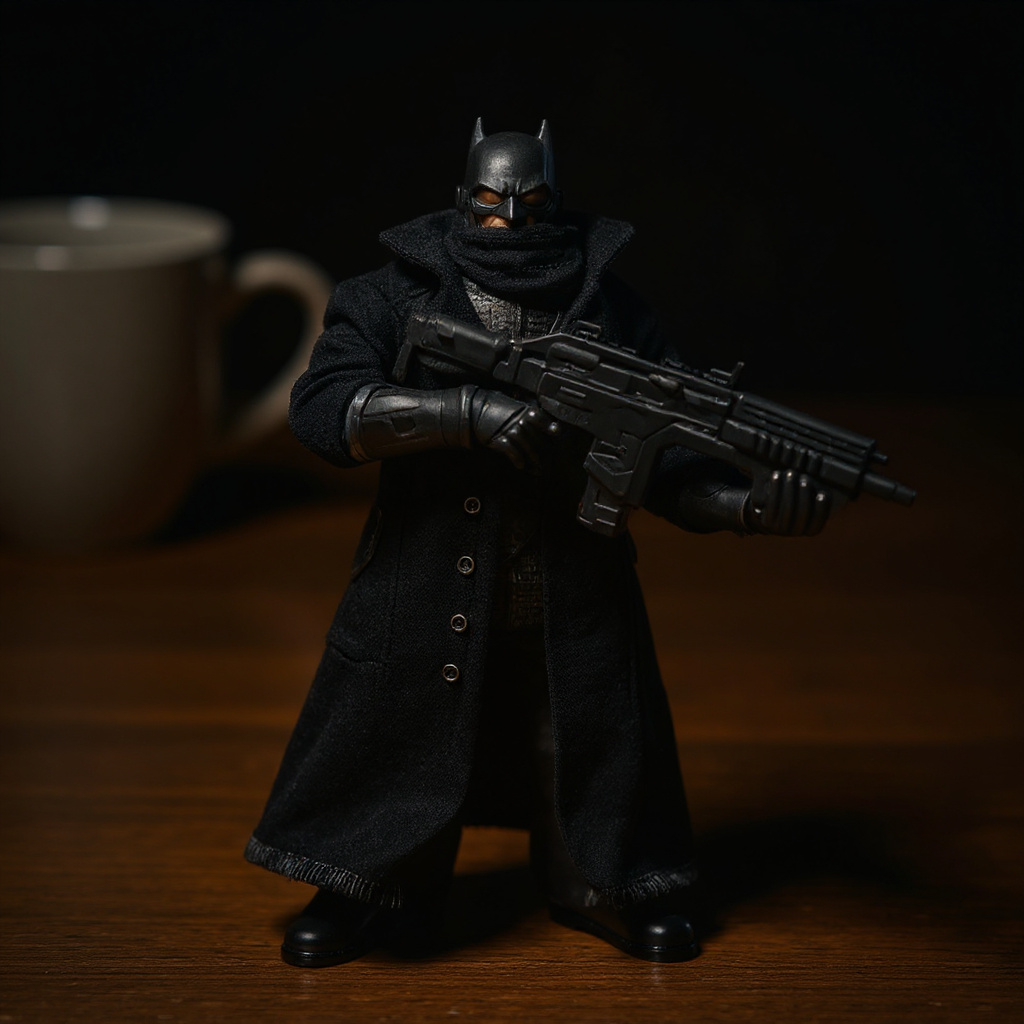
Custom commission work costs more but guarantees proper fit for your specific figures. Expect $35-70 for quality pieces with wire armature included. The knightmare batman trench coat for 7 inch figure sits at mid-range pricing around $50 with full wire framework built in.
Avoid generic "doll clothes" sellers who don't understand action figure proportions. Their items rarely fit, and the fabric choice is usually wrong for the scale anyway.
> Buying picks mentioned in this guide: batman knightmare figure coat upgrade, action figure cape with wire armature, knightmare batman trench coat for 7 inch figure, best soft goods action figure customization. These are commercial links, separated here so the guide above stays a straight comparison of fabric, wire, and fit — not a sales pitch dressed as advice.
Making Your Own vs. Buying Custom
Sewing 1:12 scale clothing requires skills that don't carry over directly from human-scale sewing. The techniques differ. Mistakes show up bigger at this size, too.
DIY challenges include:
- Tiny seam allowances that fray fast - Wire installation without visible stitching lines - Pattern scaling that keeps proportions honest - Fabric selection that looks real at scale - Fitting adjustments on an articulated body that won't sit still
Basic hand-sewing skills help, but miniature-specific technique is its own learning curve. Budget 10-15 hours for a first simple coat, plus $20-30 in materials. My first attempt took closer to 20 hours and the collar puckered. Badly.
Buying from an experienced maker saves that time and usually produces a cleaner result, since they've already solved the wire-channel problem and sourced fabric that behaves at scale.
The best soft goods action figure customization resource breaks down this trade-off between time, skill, and final quality in more depth.
Is the Investment Worth It?
Quality cloth accessories cost 2-3 times more than basic plastic alternatives. But they change how your collection looks and functions, full stop.
For photography and display, the upgrade shows immediately. Cloth pieces move, cast interesting shadows, and add texture that plastic can't fake under moody lighting.
For casual collectors who keep figures in one static pose on a shelf, the extra cost might not pencil out. But if you photograph your collection, build dioramas, or post in collector communities, cloth accessories earn their price fast.
Durability matters here too. A well-made fabric piece lasted 4 years in my case with occasional repositioning, while painted plastic accessories on the same shelf chipped within 18 months. Your $50 coat beats buying three $15 replacements over that same stretch.
Custom pieces also hold value better on the secondary market. Collectors recognize hand-sewn wire work and pay for it when a piece eventually gets resold.
When you're ready to move past stiff plastic accessories toward screen-accurate fabric with full posing range, browse our Knightmare Batman Trench Coat | 7-Inch Figure Soft Goods | Handmade Wired Cloth. It's built for collectors who want the balance of realism, function, and long-term durability in one piece.

