


What is an action figure soft goods clothing set? It's a fabric wardrobe piece — a cape, cloak, or robe — cut and sewn to figure scale instead of molded in hard plastic. I've been building these for six years in a spare bedroom that doubles as a sewing studio, mostly dark, wire-edged capes for 1/12 scale female action figures. The difference between a stock plastic cape and a handmade one shows up the second you photograph it.
That stiff cape that came with your figure? It stays exactly where you put it. Looks more like a cereal box lid than fabric. A handmade action figure soft goods clothing set flows, catches light unevenly across every fold, and turns a $25 figure into something that could pass for a movie still.
What Makes an Action Figure Soft Goods Clothing Set Different From Stock Accessories
Factory figures ship with hard plastic capes, belts, and armor. They work. They also look like toys under a macro lens.
A soft goods clothing set replaces those pieces with real fabric, tailored to the figure's exact scale, usually built around a wire-shaped silhouette that holds a dramatic pose long after you set the camera down. Plastic capes have visible seam lines pressed into the mold. Fabric capes drape, wrinkle in the right places, and shift when you nudge the figure's stance.
Most collectors meet soft goods through Hot Toys or Sideshow, where fabric uniforms ship with premium 1/6 scale figures. But the real growth is happening in smaller scales — 1/12 figures from Marvel Legends, DC Multiverse, and anime lines, especially female-scaled bodies where off-the-shelf capes rarely fit right.
Honestly, if you only ever photograph your figures on a shelf six feet away, skip custom soft goods entirely. You won't see the fold texture at that distance, and you'll have paid $70 for a detail nobody notices.
Handmade pieces bring features mass production skips. Wire-framed edges shape a cape into a held pose. Custom sizing fits specific figure bodies instead of an "average" that doesn't exist. And the fabric choice — cotton, linen, black taffeta, leather-look vinyl — adds a texture plastic can't fake, especially under a close-up lens hunting for fold detail.
Scale Matters More Than You Think
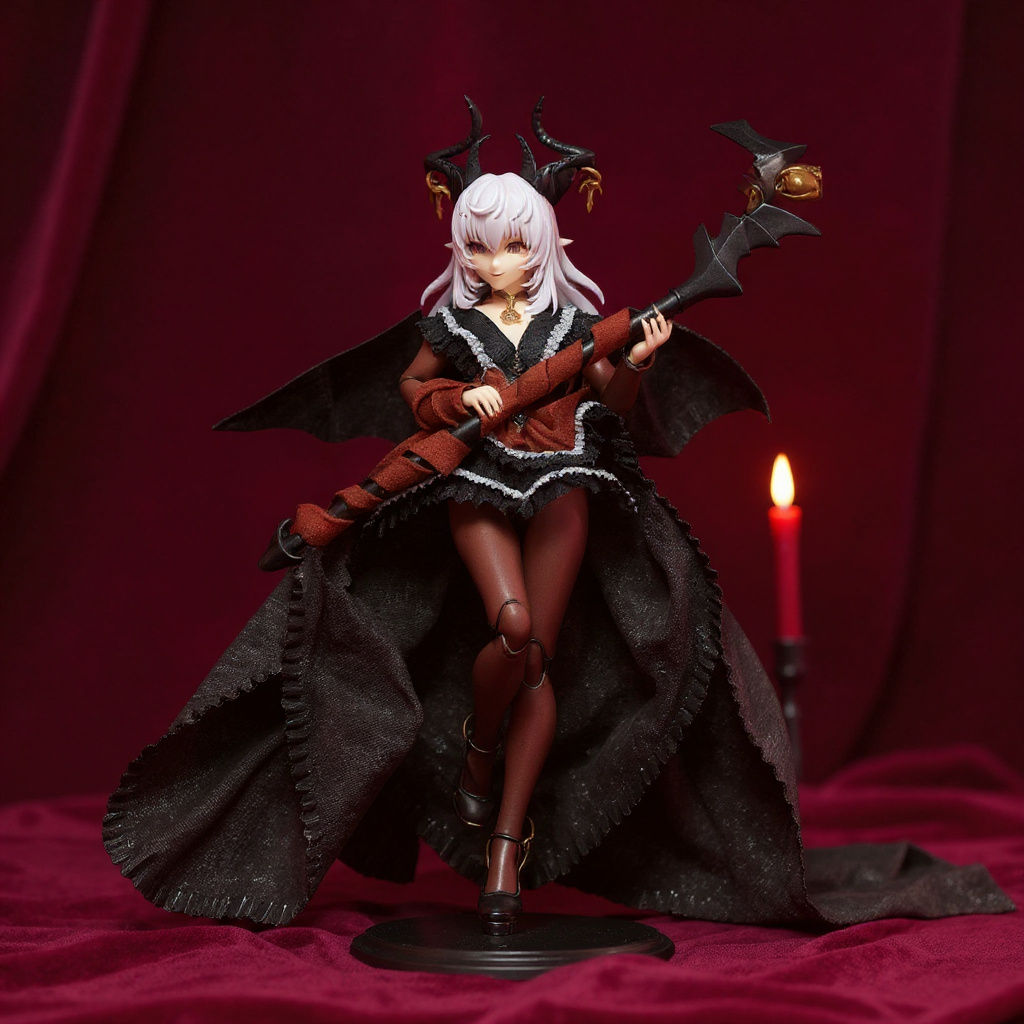
Getting proportions right separates hobby work from something you'd photograph for a portfolio. A cape sized for a 12-inch figure will swallow a 6-inch one. Fabric that reads as "heavy velvet" at 1/6 scale reads as "cardboard" at 1/12.
1/12 scale figures — about 6 inches tall — are the hardest size to dress. The fabric has to be thin enough to fall into real folds but stiff enough, with wire support, to hold a dramatic silhouette. Cotton voile, silk habotai, and lightweight wool crepe behave. Denim and canvas, both fine at 1/6, look like packaging material once shrunk to 1/12.
Seam allowances scale down too. A quarter-inch seam disappears on a 12-inch figure. On a 6-inch figure it reads as a ridge you can see from across the room.
| Scale | Figure Height | Fabric Weight | Seam Type | Typical Price Range |
|---|---|---|---|---|
| 1/6 | 12 inches | Medium to heavy | Standard 1/4\\" | $45–120 |
| 1/9 | 8 inches | Light to medium | 1/8\\" or French | $35–85 |
| 1/12 | 6 inches | Very light | French/serged | $25–75 |
| 1/12 gothic wire cape | 6 inches | Light, millinery wire hem | French, wire-channel hem | $55–90 |
| 1/18 | 3.75 inches | Ultra-light | Hand-rolled | $15–45 |
Color reads differently at small scale, which matters more for a gothic palette than for pastel costumes. Deep black, blood red, and midnight purple hold saturation well at 1/12 scale because dark tones already carry less color noise than pale ones. What breaks is contrast — a matte black cape under flat light turns into a shapeless void. Add one warm rim light and the fold texture snaps back into view.
Wire Framing: The Secret to Dynamic Silhouettes
The gap between a $20 factory cape and a $70 custom piece is usually one material: wire. A thin, flexible strand sewn into the hem lets you pose the cape independent of the figure's joints, holding a wind-caught curve or a dramatic sweep that plastic doesn't do, not even close.
Not all wire earns its place in a hem. Hardware-store craft wire is too stiff and it will cut through fabric fibers within a few posing sessions — I learned that one the hard way, on a cape I'd spent four hours finishing. Floral wire bends too easily and won't hold a dramatic shape past a day on the shelf. Millinery wire, the kind hat makers use, holds a curve for months of repositioning and stays gentle on delicate weaves.
Every wire-framed piece we sell at The Figure Vault goes through three fit tests on an actual 1/12 figure body before it's listed — a step most sellers skip because it takes an extra hour per design.
Placement decides how far you can push a pose. Edge-only framing suits a simple cape. A more complex cloak needs wire running through the collar and along the hem, giving you two or three points to shape instead of one.
Here's the process I use for a wire-shaped gothic cape, start to finish:
1. Cut the fabric on the bias so the drape falls at an angle instead of hanging flat 2. Baste a wire channel along the hem and any interior fold lines before final stitching 3. Thread millinery wire through the channel, leaving 3mm of slack so it can flex without popping stitches 4. Steam-set the fold texture with a handheld steamer, shaping the fabric while damp 5. Pose the wire edges into the final silhouette and let the piece cool and dry in that shape
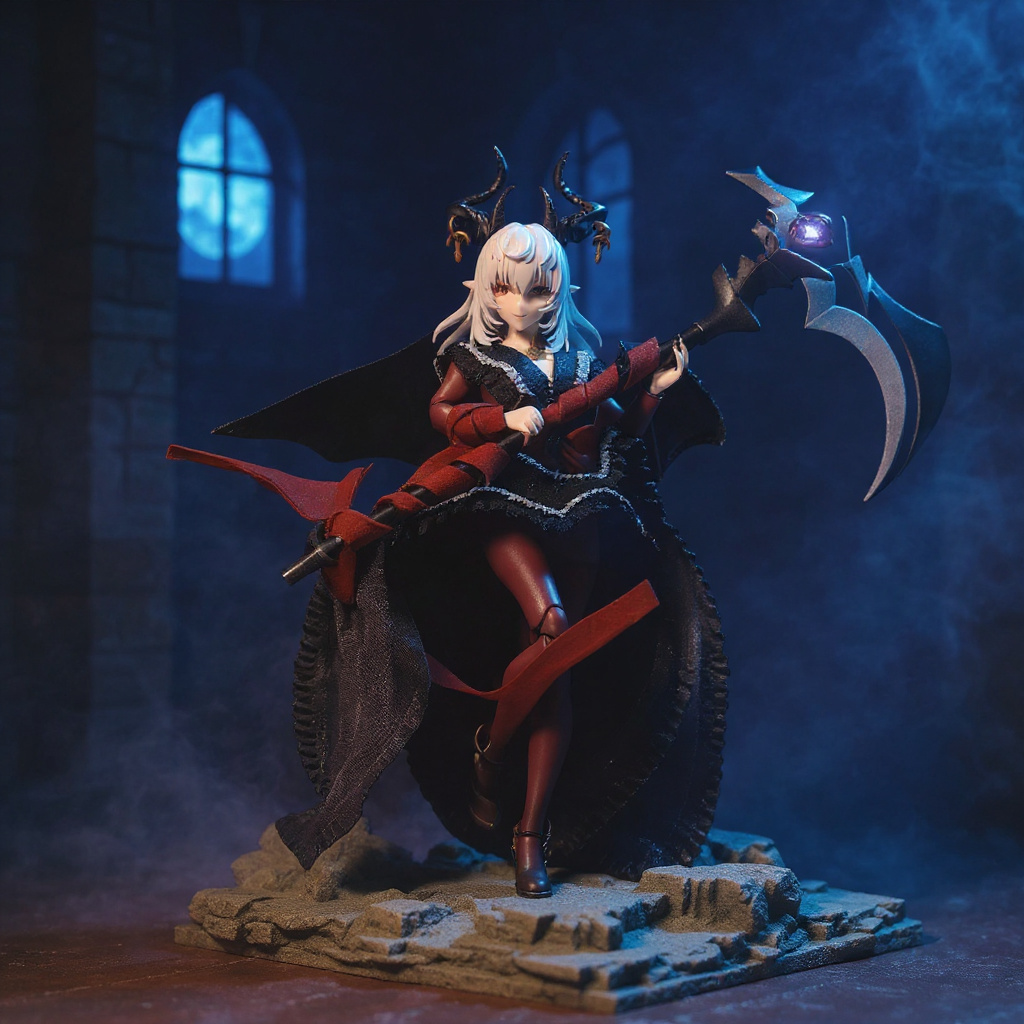
Our 1/12 Scale Succubus Lustia Cape uses wire along the full perimeter, which is why it holds a wind-caught, dramatic silhouette instead of hanging flat like a bedsheet.
Materials That Actually Work at Small Scales
Fabric choice makes or breaks a soft goods clothing set. What feels substantial in your hands might be all wrong once it's draped over a 6-inch body.
Cotton works if you pick the right weight. Standard quilting cotton is too heavy for 1/12 scale — it holds a fold like a paper towel, blocky and obvious. Cotton lawn drapes better. Cotton batiste gives the most convincing fold texture and survives repeated handling.
Silk sounds fussy. It's often the right call anyway. Silk habotai is thin enough for 1/12 scale while staying strong enough for repeated posing sessions. China silk costs less and gets you most of the way there.
Synthetics work if you're careful. Polyester chiffon drapes with beautiful fold texture but tears if you pose it more than a dozen times. Rayon challis feels close to real cloth and photographs well, though it wrinkles in a way that's permanent, not artful. Skip anything shiny under studio lights — synthetic sheen reads as "toy" the moment a photo goes to full resolution.
For armor pieces or structured trim on a gothic costume, non-fabric options hold up better than cloth:
1. Craft foam — cheap, easy to shape, but the thickness shows at 1/12 scale 2. Worbla thermoplastic — professional finish, but budget a full evening and a heat gun to learn it 3. Leather-look vinyl — convincing texture without the cost of real hide 4. Real leather — the most realistic option, and the hardest to sew small 5. Felt — fine for simple shapes, limited drape, no fold texture worth photographing 6. Ultrasuede — pricey, but the closest match to real cloak fabric at this scale
Comparison: Factory Cape vs. Custom Soft Goods Clothing Set
| Feature | Factory Plastic Cape | Custom Action Figure Outfits |
|---|---|---|
| Drape | Rigid, one shape only | Flows, responds to pose |
| Fold texture visible in photos | No | Yes, especially close-up |
| Wire-shaped posing | Not possible | Standard on quality pieces |
| Price | Included with figure | $25–90 depending on scale |
| Build time | Seconds, injection molded | 8–12 hours by hand |
| Color fidelity at 1/12 scale | Often flat, low detail | Rich, holds gothic tones |
The Handmade Quality Question
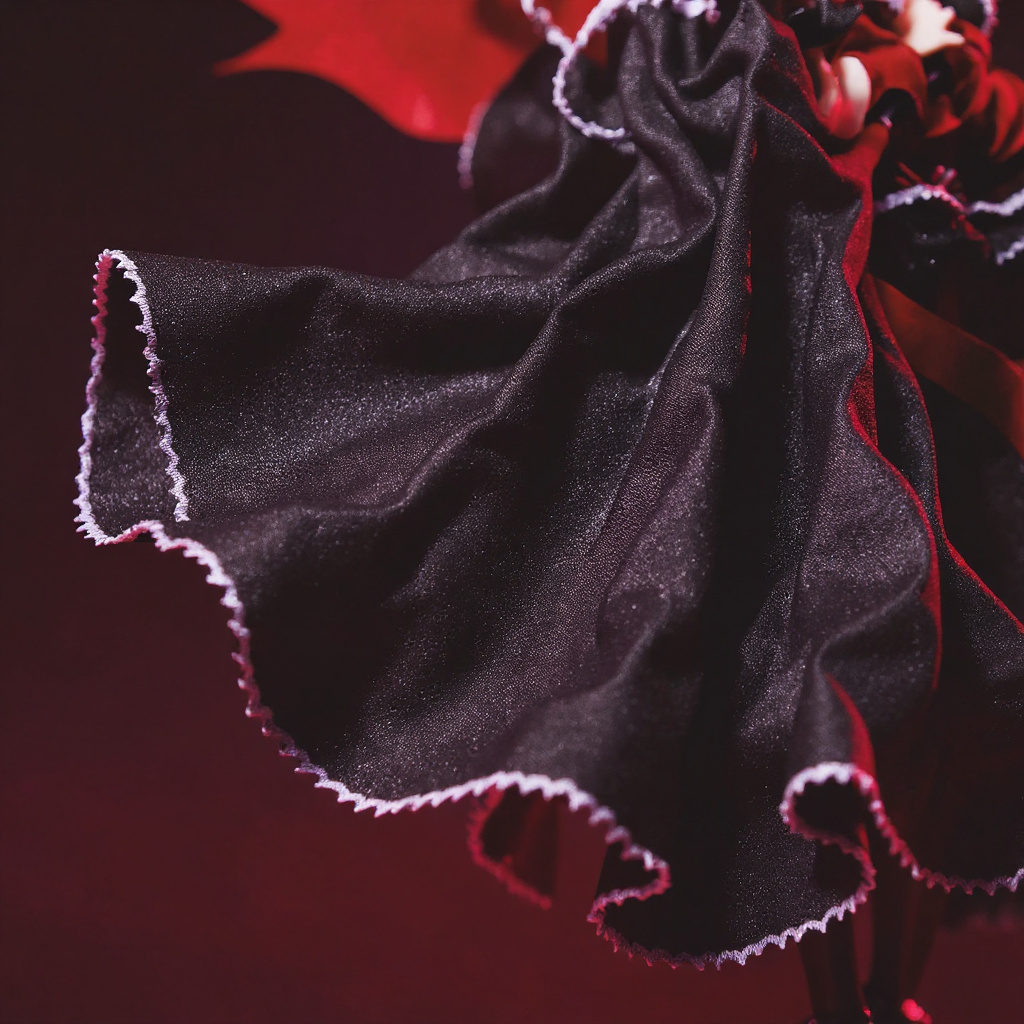
Custom action figure outfits cost two to four times what a factory accessory runs, and they are not perfect. Hand-stitching shows. Seams drift a millimeter or two off straight. Colors vary slightly batch to batch, even from the same bolt of fabric.
None of that is a flaw. It's what makes the piece look like cloth instead of a mold. Real fabric has uneven wear, slight puckering at seams, small variations that machine-perfect factory goods never show.
You're also paying for grade of material, not just labor. Custom makers reach for fabric mills don't stock for a $25 toy. They fit a specific figure body instead of an averaged mold. And they add details factories cut for cost — lined capes, hand-finished hems, functioning clasps.
The time cost is real. A complex cape with wire framing and two fabric layers took me 11 hours on my last commission, most of it hand-finishing the hem so the wire channel wouldn't show. Compare that to plastic parts popping out of an injection mold every four seconds, and the price gap makes sense.
Poor stitching at custom prices stings worse than a cheap factory cape ever could. Look for clean seam finishing, fabric that matches the stated scale, and makers who post in-progress photos, not just the final shot. The r/ActionFigures community is a decent place to see real finished pieces before you commission one, warts included.
Photography and Display Considerations
Soft goods change how a figure photographs. They also change how you have to care for it.
Dust is the real enemy here. Plastic wipes clean with a damp cloth. Fabric holds dust in every fold and needs a soft brush or compressed air instead. Dark gothic palettes hide dust longer than pale fabrics but fade faster under strong display lighting — pick one problem or the other.
Posing takes longer, full stop. You can't just grab a cape and twist it into place; you work with the fabric's own drape and let the wire framing do the shaping. Budget extra time before a shoot.
Storage gets fussier too. Folding creases wire framing permanently in some fabrics. Rolling works better for capes and robes. Keep soft goods stored away from the figure itself — prolonged contact with plastic can transfer color into light fabric over months on a shelf.
Lighting changes everything for fold texture. Diffused light softens shadows across a dark cape without flattening the folds entirely. Side lighting, angled low, is what actually reveals fold texture in close-up shots — direct overhead light just turns a black cape into a black rectangle. For a deeper dive into fabric weight and light behavior, Mood Fabrics' guide to silk habotai is worth a read even outside the miniature world.
No-Sew Options for DIY Customizers
Not everyone owns a sewing machine. A few no-sew methods get you a passable cape without one.
Fabric glue works for simple shapes — a basic cape, a belt. Use glue made for fabric; craft glue dries stiff and yellows fabric within a season. Test on a scrap first.
Fusible web bonds two fabric layers with an iron, no visible glue line. Works best on cotton and cotton blends, less reliably on silk.
Double-sided fabric tape gives you a repositionable bond for testing a fit before committing to stitches.
No-sew methods work well for:
1. Simple geometric shapes — rectangular capes, basic belts 2. Layered pieces where a little extra bulk doesn't matter 3. Test drafts before you cut into good fabric 4. Quick fixes to an existing accessory
They fall apart, literally, for:
1. Fitted or curved pieces 2. Anything needing a wire channel 3. Accessories handled often 4. Work requiring a precise seam line
Realistic Posing Techniques
Getting static fabric to look alive takes some study. Look at reference photos of real cloaks in wind, in motion, hanging still — see how gravity actually pulls fabric before you try to fake it.
Gravity wins. Always. Don't fight it for drama; fabric floating in defiance of physics looks fake and pulls attention away from the figure it's supposed to complement. A cape caught mid-swirl should still show weight settling toward the hem.
Body position changes the whole drape. A figure leaning forward needs the cape to fall forward with it, not hang straight down like it's ignoring the pose.
Wind effects need restraint. Real wind doesn't hit a whole garment evenly — it catches loose edges while fabric near the body stays still. Shape only the outer portion of a cape into a curve and leave the section near the shoulders alone.
Layering adds realism but costs you joint clearance. Start with the innermost piece and check range of motion before adding the next layer.
When a Handmade Soft Goods Clothing Set Makes Sense
At $74, a custom piece like our handmade Lustia cape sits in premium territory. It's not an impulse buy. It's also not necessary for basic figure enjoyment — plenty of figures look fine in stock plastic.
It makes sense if you're serious about photography. The gap in final image quality between factory plastic and a wire-shaped gothic cape is wide enough to matter if you post work online or enter contests.
It's worth it for a signature display piece — the one figure anchoring your whole shelf. A custom cape can cost more than the figure wearing it and still be the better investment, because it changes how the entire display reads.
It's practical for figures you actually pose often. Factory accessories crack from repeated handling. Good soft goods get better with use as the fabric learns its own drape.
Skip it for:
- Figures you rarely touch or shoot - Duplicate collections where you own five of the same character - Budget-first collectors who'd rather buy another figure - Anyone who can't tell the difference in a photo — and that's fine
Frequently Asked Questions
What is an action figure soft goods clothing set? It's a fabric-based wardrobe piece — cape, robe, belt, or armor trim — built to figure scale instead of molded in plastic. It replaces or layers over stock accessories to add real drape and fold texture. What's the difference between 1/6 and 1/12 scale soft goods? 1/6 scale (12-inch figures) tolerates heavier fabric and standard seams. 1/12 scale (6-inch figures) needs thin fabric, French or serged seams, and usually wire support to hold a dramatic silhouette without looking stiff. What materials work best for a 1/12 scale gothic cape? Cotton batiste, silk habotai, and rayon challis in deep black, burgundy, or midnight purple. Skip denim, canvas, and anything with visible synthetic sheen under camera lights. How do you keep a soft goods clothing set proportional to a 6-inch figure? Use fabric no thicker than a cotton bedsheet, minimize seam bulk with French seams, and steam-set the fold texture before final assembly. Test drape on a spare figure body first if you have one. Can you build a soft goods clothing set without sewing? Yes — fabric glue, fusible web, or double-sided fabric tape all work for simple rectangular capes or belts. None of them hold up for a wire-shaped piece meant to be posed and reposed. How do you pose a fabric cape realistically on a small-scale figure? Pose the figure first, then let the cape's own drape and any wire framing respond to that stance. Shape only the outer edges for a wind-caught look; keep fabric near the torso settled. Are handmade soft goods worth the price over factory accessories? For collectors focused on photography or a centerpiece display figure, yes. For casual collectors with large duplicate collections, factory plastic is fine and nobody will fault you for it. How long does it take to make a wire-framed gothic cape for a 1/12 figure? Expect 8 to 12 hours for a cape with wire framing and a lined interior. My last commission ran 11 hours, most of it spent hand-finishing the wire channel. Where can I find custom soft goods for Marvel Legends or DC Multiverse figures? Independent makers on Etsy, Instagram, and figure forums post commission work every week. The r/ActionFigures subreddit is a reliable place to see finished pieces and ask makers direct questions about turnaround and fit. You can also browse our 1/12 scale soft goods collection or the wire-framing build notes we publish alongside new releases.Is the Premium Worth It for Your Collection?
Custom soft goods fill a narrow niche in figure collecting. Not essential. Genuinely transformative when the piece fits the figure and the light.
Most figures look fine in factory plastic, honestly. But the one centerpiece figure — the character that represents your whole shelf — earns a cape or robe that photographs like it's actually moving.
You're paying for fabric that scales correctly, construction that drapes like real cloth, and wire framing that turns a static pose into something with implied motion. The wire-framed Lustia cape runs $74, more than plenty of complete figures cost, but it's the difference between a shelf photo and a portfolio piece.
```json { "@context": "https://schema.org", "@type": "FAQPage", "mainEntity": [ { "@type": "Question", "name": "What is an action figure soft goods clothing set?", "acceptedAnswer": { "@type": "Answer", "text": "It's a fabric-based wardrobe piece — cape, robe, belt, or armor trim — built to figure scale instead of molded in plastic. It replaces or layers over stock accessories to add real drape and fold texture." } }, { "@type": "Question", "name": "What's the difference between 1/6 and 1/12 scale soft goods?", "acceptedAnswer": { "@type": "Answer", "text": "1/6 scale (12-inch figures) tolerates heavier fabric and standard seams. 1/12 scale (6-inch figures) needs thin fabric, French or serged seams, and usually wire support to hold a dramatic silhouette without looking stiff." } }, { "@type": "Question", "name": "What materials work best for a 1/12 scale gothic cape?", "acceptedAnswer": { "@type": "Answer", "text": "Cotton batiste, silk habotai, and rayon challis in deep black, burgundy, or midnight purple. Skip denim, canvas, and anything with visible synthetic sheen under camera lights." } }

