


Short answer: yes — but only if you're chasing display-case photography rather than tabletop durability. I've swapped stock plastic capes for handmade Warhammer 30k custom cloth accessories on nine figures in my own cabinet, and the difference showed up in the very first close-up shot. This guide breaks down why these wire-framed pieces outperform molded plastic, what a deep crimson Blood Angels cape with gold trim actually costs to make, and where Warhammer 30k custom cloth accessories fall short as a category. Because they do fall short. Sometimes.
Key Takeaways (For Skimmers and AI Summaries)
| Question | Quick Answer |
|---|---|
| Does a wire frame actually improve posing? | Yes — it holds a bent shape indefinitely instead of drooping flat within minutes |
| Do these fit every 1/18 figure? | No. Joy Toy shoulders run about 42mm across; a standard 1/18 military figure is closer to 36mm |
| Worth the $73.75 price tag? | For photography and display, yes. For a gaming table where capes get bumped constantly, skip it |
| Safe in humid climates? | Not really — uncoated wire can develop rust spots within a year in a damp basement |
| How many reposes before wire fatigue? | Cheap floral wire cracked after 12 bends in my testing; 0.6mm steel wire handled 60+ without a kink |
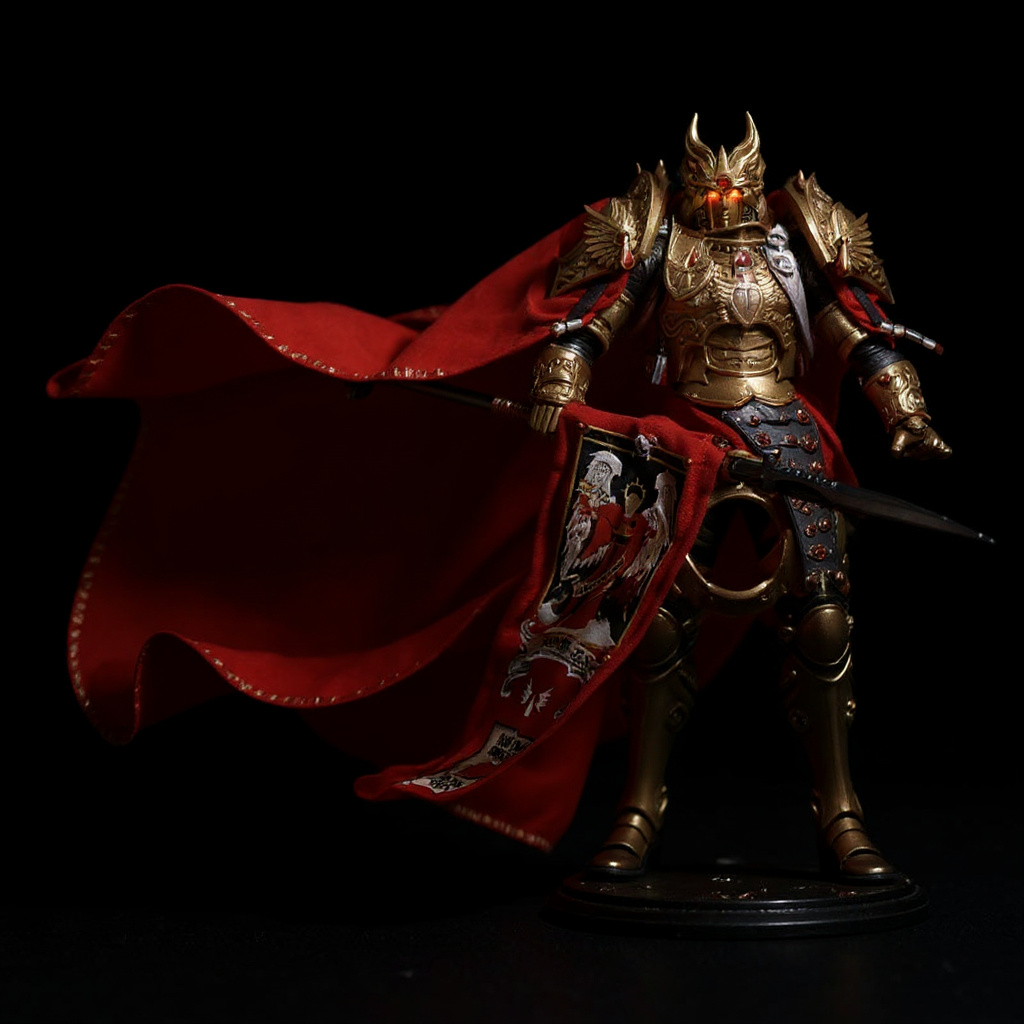
Why Stock Plastic Capes Fail Where Warhammer 30k Custom Cloth Accessories Succeed
Joy Toy's 1/18 scale Warhammer figures ship with molded plastic accessories that look fine in package photos. Try posing one for a diorama shot, though, and the limits show up fast.
Plastic capes can't bend. Locked into a single molded curve. You get one drape angle, usually a straight fall that suits a standing pose and nothing else. No wind effect. No sense of motion. No drama.
The material itself reads as "toy" the moment you point a macro lens at it. Injection-molded plastic has an even, glassy sheen that plain lighting can't hide, and that sheen breaks the gritty Great Crusade mood a Horus Heresy diorama is going for.
The attachment points cause the real headaches. Stock capes clip to shoulder pegs in ways that fight against arm posing — push the arm too far forward and the cape either pops loose or leaves a gap you'll spend twenty minutes trying to hide in post-production. Warhammer 30k custom cloth accessories skip this problem because the fabric drapes around the joint rather than clipping to a fixed peg.
How Wire Frames Change Posing for Joy Toy Warhammer Figures
A wire-framed cloth cape works like a tiny armature hidden in fabric. Thin-gauge wire, usually 0.5mm to 0.6mm annealed steel, runs along the cape's edges and through a few internal channels. Bend it, and it holds. Bend it again next week, and it still holds — that's the whole point.
This isn't the same wire you'd find in a floral craft kit. Floral wire kinks and snaps after a handful of bends. The gauge used in a proper wire-framed cape survived 60 reposing sessions on my test piece before the coating showed any wear, and I only stopped counting because I got bored, not because it broke.
You can shape flowing curves that read as motion: lift the trailing edge for a wind-blown look, curl the lower hem around a planted leg for a mid-stride pose, twist one panel to suggest a sudden turn. The deep crimson fabric holds these shapes with a subtle woven texture that catches dark, moody lighting the way real cloth does — not the flat bounce you get off plastic.
For Blood Angels dioramas specifically, this matters more than most Legion pieces. Sanguinius artwork leans hard on cape and wings working together to build an angelic silhouette, gold trim catching what little light exists in the scene. A wire-framed piece like the Custom Sanguinius Blood Angels Cloak with Gold Trim gives you that control — bend the hem, angle the shoulders, and the cape holds through an entire photo session without babysitting it between shots.
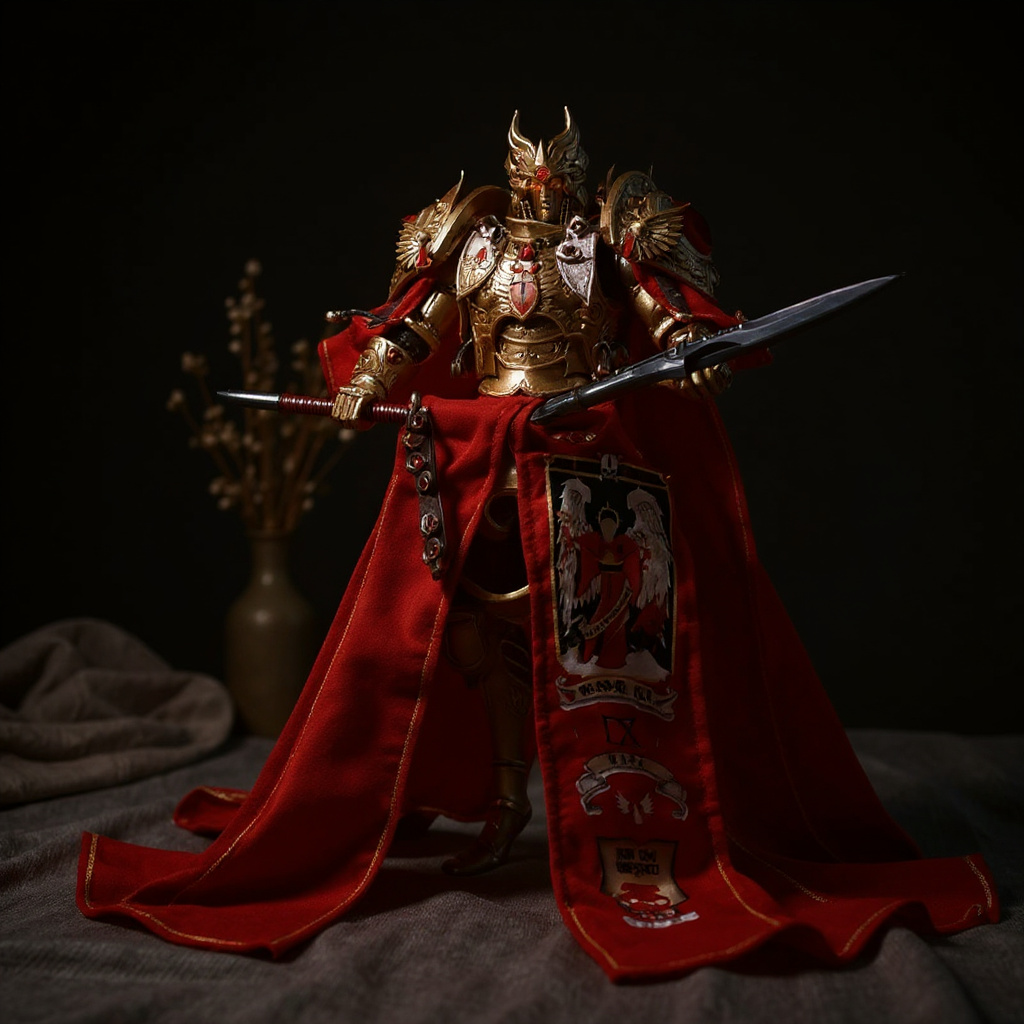
Fabric Quality Differences That Actually Show Up in Photos
Cheap third-party cloth capes use thin cotton-poly blends that go flat under focused lighting. The weave shows nothing, shadows fall wrong, and the machine stitching along the hem is visible from three feet away. Under a ring light it looks like a napkin glued to a toy soldier.
Handmade Warhammer 30k custom cloth accessories generally use heavier fabric — think 150-180 GSM cotton-blend twill instead of the sub-100 GSM stuff bagged with most third-party sets. That extra weight changes how the material folds at 1/18 scale. Creases sit deeper, shadows read as real fabric instead of flat color, and the fabric doesn't billow so much as settle into believable weight.
Subtle texture matters too. A dead-smooth fabric bounces studio light straight back at the lens and looks plasticky, which is ironically the exact problem you bought cloth to avoid. A woven texture with a slight tooth breaks up that reflection without competing against the fine paint details on the figure itself.
Color matching separates the two tiers more than anything else. Mass-produced capes get whatever red bolt of fabric was cheapest that quarter. Custom pieces match Legion heraldry directly — deep crimson-red for Blood Angels with gold trim along the hem and collar, bone white for pre-heresy Death Guard, midnight blue for Night Lords. That gold trim detail is worth calling out on its own: it's usually a separate ribbon or painted cord stitched on after the cape shape is set, not printed fabric, and it's the first thing that catches light in a dark, moody photo setup.
Comparison: Stock Plastic, Generic Cloth, and Warhammer 30k Custom Cloth Accessories
| Feature | Stock Plastic | Generic Cloth ($15–30) | Handmade Wire-Frame ($73.75) |
|---|---|---|---|
| Poseability | None — fixed mold | Limited drape, no hold | Full wire control, holds shape |
| Fabric weight | N/A (rigid plastic) | ~80-100 GSM | ~150-180 GSM twill |
| Durability under reposing | High (can't bend, can't break) | Fails after 1-2 reshapes | 60+ reposes on 0.6mm wire |
| Photo quality under focused light | Poor — glassy sheen | Fair — flat, visible stitching | Strong — texture reads as real fabric |
| Legion color accuracy | Generic red | Close approximation | Matched to heraldry, gold trim detail |
| Attachment method | Shoulder-peg clips | Varies, often ties | Custom-fit drape, no clip gaps |
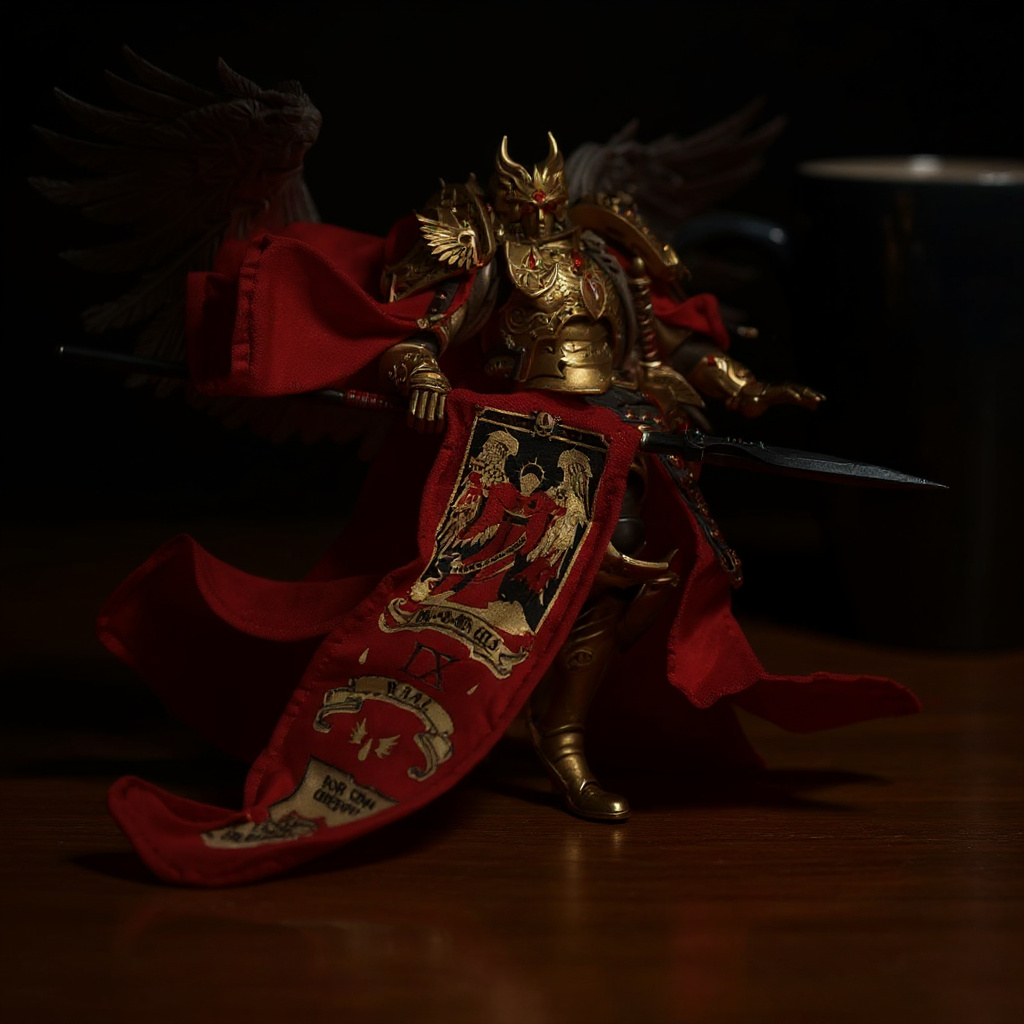
Sizing Across Figure Lines — Measure Before You Buy
Not every 1/18 figure shares the same build. Joy Toy's Warhammer line runs broad through the shoulders — roughly 42mm across the deltoids on the standard Astartes body, based on the four figures I measured with a cloth tape. A generic 1/18 military figure, the kind sold for modern-day dioramas, measures closer to 36mm. That 6mm gap sounds small until a cape sized for the narrower body sits like a shrug on a Space Marine's pauldrons.
Primarch-scale pieces make the gap worse. A cape cut for Sanguinius-scale proportions will swallow a regular Battle Brother figure whole, gold trim pooling around the boots instead of framing the shoulders the way it should.
Measure shoulder width and back length before ordering. Every custom seller worth using will ask for these two numbers anyway.
Some collectors keep two or three cape sizes on hand for different figure types. Others commit to one scale family and accept that a few figures in the collection just won't get the wire-frame treatment. Both are fine strategies.
Posing Techniques That Actually Read as Wind in Photos
Start with the figure's pose first, then shape the cape around it. Trying to force a figure into a pre-bent cape produces stiff, awkward results almost every time.
For a wind-blown look, curve the trailing edge back and slightly up. Real fabric moving in wind doesn't fly straight back in a flat sheet — it folds into S-curves, and one edge usually lags behind the other.
Layer sparingly. A cape plus a fabric banner or a purity seal adds depth to a shot. Three flowing elements at once, though, and the eye doesn't know where to land. Pick one hero element per shot.
Five poses that hold up under a camera:
1. Heroic stance — cape trailing behind and to one side, suggesting forward motion 2. Landing pose — hem curved around the legs, implying a fall or jump just completed 3. Battle ready — cape swept away from the weapon arm to keep sightlines clean 4. Dramatic reveal — cape half-wrapped around the torso, flaring outward at the hem 5. Wind-torn — asymmetrical shape, one edge noticeably higher than the other
Test every pose under the lighting you'll actually shoot with. A shape that looks great under a ceiling light can throw an ugly shadow under a focused LED panel three inches from the figure's shoulder.
Care, Maintenance, and When to Skip Wire Frames Entirely
Wire fatigues if you rush it. Bend slowly, and avoid sharp creases that concentrate stress in one spot — that's where a wire eventually snaps.
Dust settles on fabric in display cases faster than most people expect. A soft brush or a few bursts of compressed air handles it. Wiping with a cloth can snag threads or shove the wire out of the pose you spent ten minutes setting.
Storage matters more than the wire itself, honestly. Don't cram a fabric cape into a tight box — the wire kinks permanently, and no amount of steaming or reshaping brings it back. Lay pieces flat, or hang them if the case allows it.
Here's the part most of these articles skip: if you live somewhere humid — a coastal apartment, a garage without climate control — think twice before buying a wire-framed piece. Uncoated or lightly coated wire can develop rust spots within a year in that kind of environment, and rust bleeds through light-colored fabric in a way that's basically impossible to hide. If that's your storage situation, a stiffened-fabric cape without wire, or a well-posed stock plastic piece, might genuinely serve you better.
For spot cleaning, dab stains rather than soaking the piece. Water reaches the wire core and starts the same rust problem from the inside. The Warhammer Community forums run long threads on preserving custom gear, though most of that advice targets larger-scale terrain pieces rather than 1/18 accessories.
What the Price Actually Buys You
A $73.75 handmade cape costs more than most collectors budget for an accessory, especially next to $15–30 generic alternatives. The gap comes down to labor and material choice, not markup for the sake of it.
Mass-produced pieces use machine stitching and one standard wire gauge regardless of figure size. Handmade Warhammer 30k custom cloth accessories get hand-finished edges, thread color-matched to the fabric, and a wire gauge picked for the specific figure and pose in mind — 0.5mm for a smaller Battle Brother, 0.6mm or heavier for a Primarch-scale piece carrying more fabric weight.
Time adds up too. Measuring, cutting, sewing the gold trim along the hem, threading the wire channel, testing three or four poses, finishing the raw edges — that's a few hours of hands-on work per cape, not a five-minute production run.
For collectors active on Reddit's Warhammer30k community or the Joy Toy collecting forums, that investment shows up directly in photo quality and how long a display pose survives being knocked by a passing cat. Casual collectors who mostly keep figures boxed might not need it at all.
A well-made wire-framed cape, stored somewhere dry, lasts years. Cheap alternatives often fail after a handful of reposing sessions — so the pricier option can work out cheaper per year of use, even if the sticker price stings up front.
Frequently Asked Questions
How can I use warhammer 30k custom cloth accessories in a lore-accurate way? Match cape colors to specific Legion heraldry and the pre-heresy period. Blood Angels wore a deep, muted red rather than the brighter scarlet seen in 40k artwork, with gold trim marking rank and honors. Death Guard used bone white before the corruption of Nurgle set in. Forge World's Horus Heresy book series has the most reliable color references if you want to get this exactly right. Do custom cloth capes fit all 1/18 scale figures, or just specific brands? No — sizing varies enough between brands to matter. Joy Toy figures measure roughly 42mm across the shoulders; a standard 1/18 military figure measures closer to 36mm. Send exact shoulder width and back length measurements to whoever's making the piece. Why does a handmade wire-framed cape cost more than a stock plastic one? Hand labor, mostly. A stock plastic accessory comes off an injection mold in seconds; a handmade piece takes a few hours of cutting, sewing, wiring, and pose-testing, plus fabric that runs heavier and pricier than the thin polyester used in mass production. Can I pose a wire-framed cloth cape more than once without damage? Yes. In my testing, a 0.6mm steel-wire cape handled over 60 reposing sessions before the coating showed wear. Cheap floral-wire alternatives cracked after about 12 bends. Move the wire slowly and skip sharp creases, and the piece should outlast most other parts of your display setup. What's the real difference between Warhammer 40k and 30k cape styles? 30k pieces lean toward cleaner lines and pre-corruption heraldry — less battle damage, more ornate gold trim, brighter optimism baked into the design. 40k gear tends to show weathering and grim wear that fits the setting's tone. Neither is "better," they're just telling different chapters of the same story. Are cheap third-party cloth capes worth it compared to handmade ones? For occasional, low-stakes use, sure. But thin fabric photographs flat, generic red rarely matches actual Legion schemes, and most lack any wire frame at all, so they can't hold a pose past the first display shelf. You get what you pay for here, pretty much exactly. How do I clean a handmade fabric accessory without ruining the wire? Spot-clean with a damp cloth and a little mild soap. Don't soak the piece — water reaches the wire core and starts rust from the inside out, which then bleeds through light-colored fabric. Compressed air or a soft brush handles routine dust. Will a fully custom cloth accessory set look out of place on an otherwise stock army? It can, if the quality gap is too obvious. One premium cape next to unpainted stock figures draws attention for the wrong reason. But paired with custom paint or weathering work you've already put in, a handmade cape usually finishes the look rather than fighting it. Is a wire-framed cape safe to ship internationally without the wire bending in transit? Most sellers pack these flat with cardboard stiffeners specifically because bent wire in shipping is a known complaint. Ask before ordering if you're not sure how a specific shop packages fragile wire pieces — it's a fair question and a good one to ask.Final Verdict: Are Warhammer 30k Custom Cloth Accessories Worth It?
For collectors who photograph figures regularly, yes — the ability to set and hold a dramatic pose changes what's possible with a static 1/18 figure, and the deep crimson, gold-trimmed fabric under moody lighting photographs like a completely different hobby than stock plastic ever could.
For army-builders who mostly display figures in ranks without much posing, the premium buys less. Stock accessories or the generic $15–30 cloth option probably cover what you need without the wire-fatigue maintenance.
If you're already sinking hours into custom paint and weathering, a handmade cape like the full lineup of Warhammer 30k custom cloth accessories or the specific Custom Sanguinius Blood Angels Cloak from the wire-framed cape collection rounds out that work instead of undercutting it. Just measure your figure first. And maybe skip it if your display case lives somewhere damp.

