


Custom soft goods clothing for action figures means real fabric — not molded plastic — built around an internal wire skeleton so it holds a pose. That's the whole definition. A black cotton-blend cape with 30-gauge wire sewn into the seams will drape over a figure's shoulders and bend into a wind-blown stance, then hold that stance on a shelf for months.
Stock plastic capes can't do that. They flex once, snap back, and look like cardboard cut into a cape shape.
The difference shows up fastest in photos. Fabric absorbs light. Plastic throws it back in one hard glare. Once you see the side-by-side, it's hard to unsee.
Why Stock Plastic Accessories Fall Short
Most action figures ship with injection-molded plastic capes. Cheap to produce. Durable enough to survive shipping. Ugly under any lighting setup better than a phone flash.
Plastic capes have three specific problems:
1. Zero drape. They hold one rigid shape, usually angled away from the figure's back like a stiff cardboard flag. 2. Shiny finish. The plastic sheen catches light at the wrong angle and screams "toy" in every photo. 3. Limited posing. You get two positions, tops: straight down, or blown back. That's it.
Custom soft goods clothing for action figures solves all three. Real cloth carries weight. It folds around joints instead of floating above them. With wire inside, you can shape a dramatic bent-back pose and it stays that way — I've had one hold the same stance on my shelf for eight months without sagging.
McFarlane Toys has started shipping more soft goods with their DC Multiverse line, but most figures on store shelves still come with the same basic plastic pieces from a decade ago.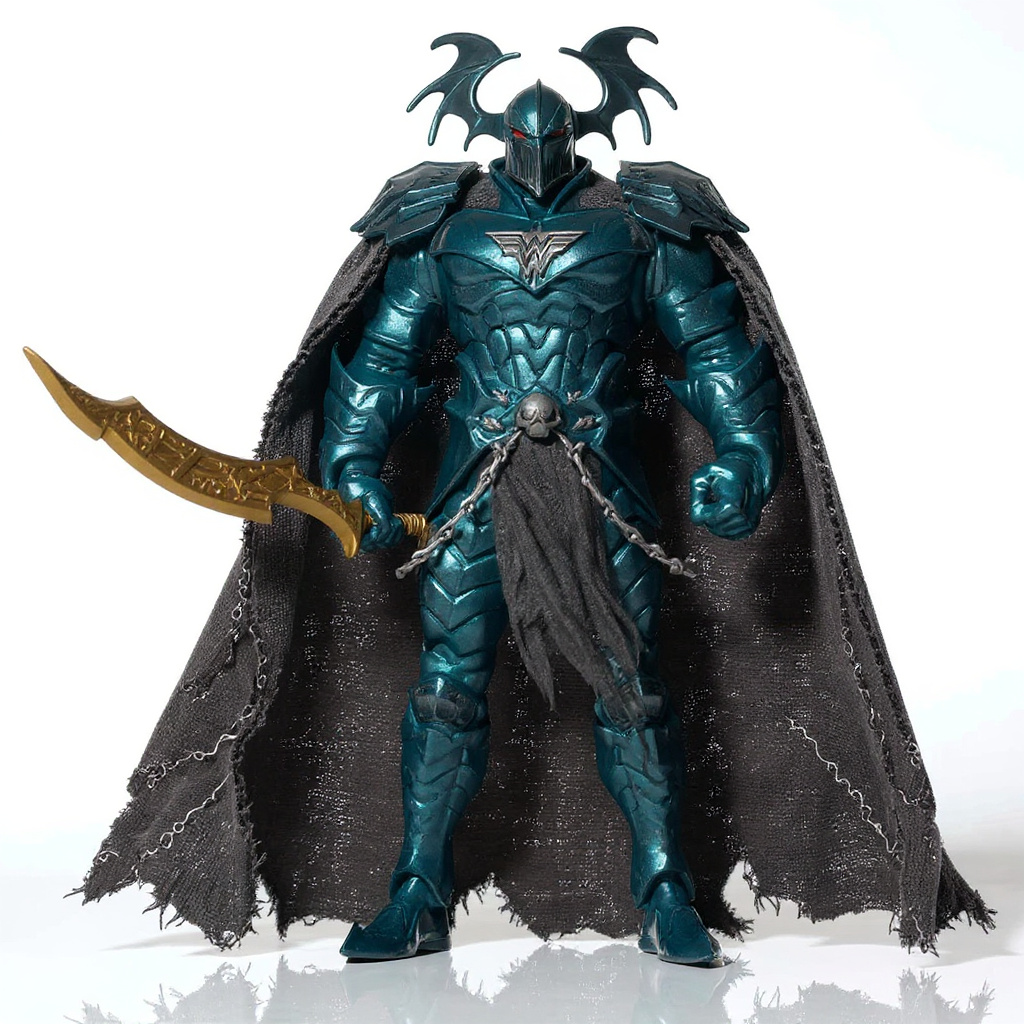
Materials That Actually Work for Mini Clothing
Not every fabric behaves correctly once it's shrunk down to 1/12 or 1/9 scale. Household fabric that looks fine on a jacket looks like a bedsheet on a 6-inch figure.
Cotton works for thick coats and heavy robes. It holds body at small scales and takes paint well for weathering. Synthetic blends handle fine detail better than cotton. They resist fraying during construction and hold a sharp crease along a fold line. Avoid denim or canvas. Too thick. At action figure scale, regular denim looks like medieval armor plating instead of cloth.Wire gauge matters more than fabric choice, honestly — I've ruined more capes with the wrong wire than with the wrong cotton. 30-gauge craft wire gives structure without bulk. Go thicker and you get visible ridges under thin fabric. Go thinner and the wire folds flat the first time you touch it.
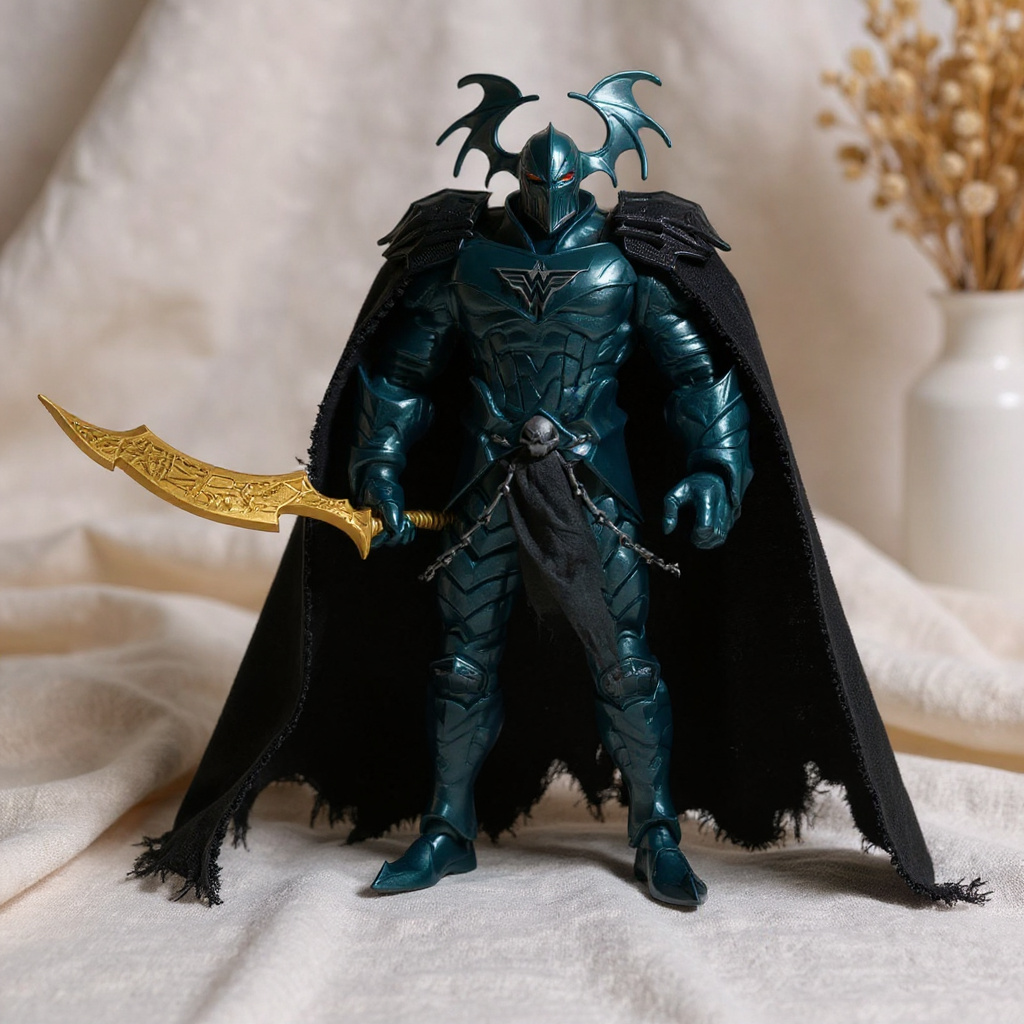
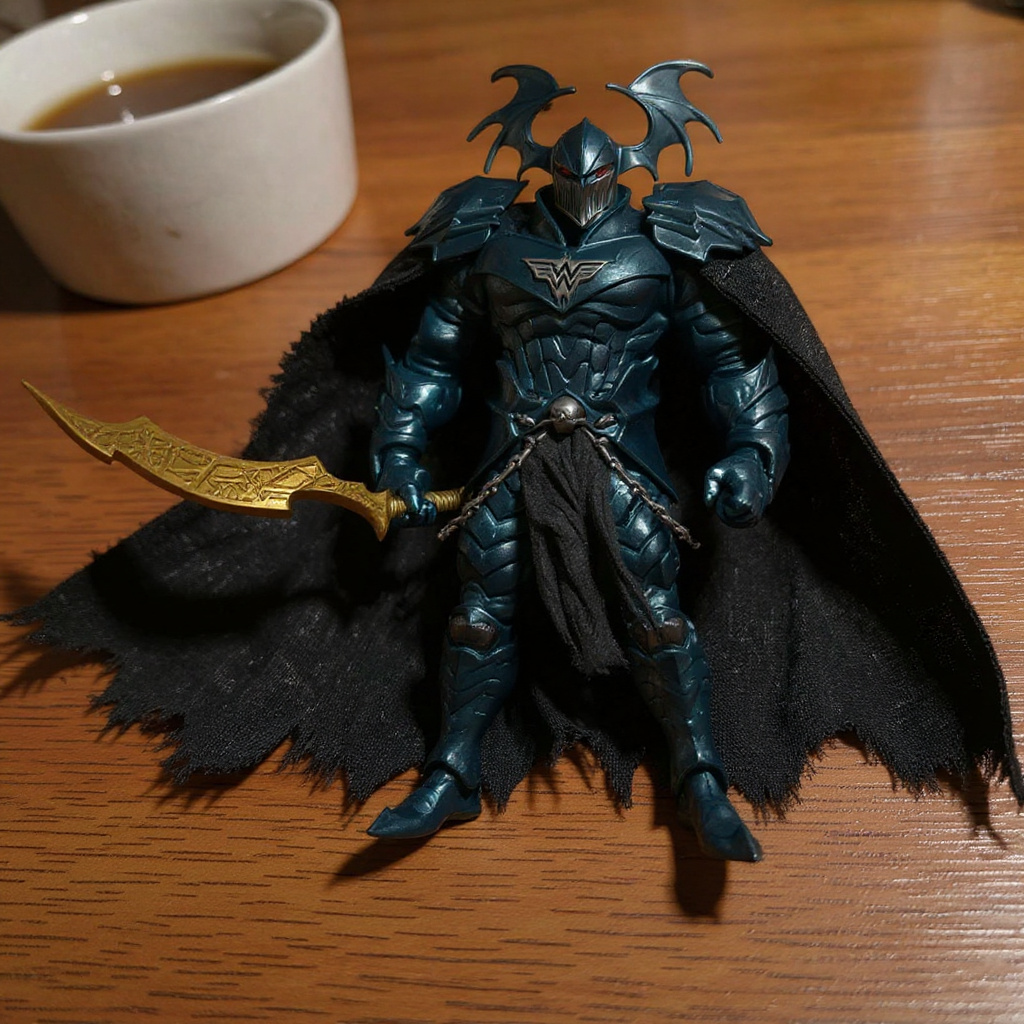
For reference, the 9 Inch Merciless Cape Replacement uses matte black cloth with an internal bendable wire spine, hand-sewn, for $61.25. Lay it flat and you can see the wire structure running along both edges — drape it over a shadowy villain figure and the same wire lets you bend the collar up and the hem out in one motion. That's premium pricing. For photo work, it earns it.
Scale Matching Problems Most People Miss
Getting proportions right separates amateur custom soft goods clothing for action figures from work that actually looks professional. Fabric behaves differently depending on scale, and most DIY attempts ignore this completely.
1/6 scale figures (12-inch) need fabric that's about twice as heavy as real clothing fabric. Light material looks like tissue paper at this size. 1/12 scale figures (6-inch) need even heavier material relative to size. What reads as silk on a 12-inch figure reads as gossamer — barely there — on a 6-inch one. 1/9 scale figures sit in between. 8-to-9-inch figures need medium-weight fabric that still moves when you pose it.| Scale | Figure Height | Fabric Weight | Wire Gauge | Seam Width |
|---|---|---|---|---|
| 1/6 | 12 inches | Heavy cotton | 28-30 gauge | 2mm max |
| 1/9 | 8-9 inches | Medium blend | 30-32 gauge | 1.5mm max |
| 1/12 | 6 inches | Light synthetic | 32-34 gauge | 1mm max |
Most sellers use the same materials across every scale they offer. That's why so many Etsy capes look oversized on the actual figure once they arrive.
Cost Comparison: Plastic vs. Custom Soft Goods
| Source | Price Range | Wire Framework | Hand-Sewn | Scale-Specific Sizing |
|---|---|---|---|---|
| Official accessory pack (McFarlane, Hasbro) | $10-20 | No | No | Sometimes |
| Generic Etsy cape | $15-30 | Rarely | Sometimes | Rarely |
| Third-party manufacturer (e.g. Storm Collectibles) | $20-40 | No | No | Yes |
| Mid-tier custom maker | $30-50 | Sometimes | Yes | Sometimes |
| Premium wired cape (9 Inch Merciless Cape) | $55-70 | Yes | Yes | Yes |
| Full custom figure commission | $200-500+ | Yes | Yes | Yes |
DIY Attempts vs. Professional Custom Work
I've dug through dozens of DIY soft goods posts on Reddit's ActionFigures community over the past three years. About 80% fail at the same three basic issues, and I made all three mistakes myself on my first attempt.
Seam placement trips up most beginners. Real clothing hides seams along natural body lines. Action figure clothing needs seams somewhere else entirely, because the proportions aren't human proportions. Attachment points cause the next failure. Real clothing hangs from shoulders. Figure clothing often needs to attach at the neck or upper back instead, so it doesn't block the joint articulation underneath. Wire routing separates decent custom work from great work. Random wire placement creates a lumpy, unnatural shape. Good makers route wire along the fold lines the fabric already wants to make.The learning curve is steep. My first three capes looked homemade — because they were. Materials run $15-30 per cape even for a basic attempt. By the time you've practiced enough to make something that photographs well, you've often spent more than a finished custom piece would have cost. Browse the soft goods capes collection if you want to see what a finished result should look like before you start cutting fabric.
Honestly, if you only display your figure in one static pose and never photograph it, skip the wire framework entirely. A $15 plastic cape will do the job and you'll never notice the difference from across a room.
When Handmade Beats Mass Production
Factory-made accessories optimize for cost and durability. Custom soft goods clothing for action figures optimizes for appearance and posability instead. Different goals. Different results.
Mass production advantages: 1. Consistent quality control across every unit 2. Lower per-unit cost, usually $10-20 3. Matches official character designs exactly 4. Survives normal handling without falling apart Custom work advantages: 1. Better materials — real fabric instead of plastic 2. Superior posability from the internal wire 3. Scale-appropriate proportions instead of one-size-fits-all 4. Unique weathering and detail work per pieceFor basic shelf display, factory accessories are fine. For photography and diorama work, custom soft goods clothing for action figures makes a difference you can see in a single frame.
The price gap reflects the labor. Official McFarlane accessory packs run $10-20. Generic Etsy soft goods capes run $15-30. Premium wired capes hit $60+ because of the hand-sewing time and the wire fitting, not because the fabric itself is expensive.
Photo Quality Impact of Fabric Upgrades
Action figure photography has exploded on Instagram over the past five years, and soft goods are usually the first thing that separates amateur shots from professional-looking ones. Lighting behavior differs completely between plastic and fabric. Plastic reflects light hard, creating hot spots and blown-out patches. Fabric absorbs and scatters light the way real cloth does, which kills the "toy" look in a photo instantly. Dynamic posing becomes possible with a proper wire framework. You can shape a flowing, wind-caught silhouette that tells a story in one still image. Static plastic just hangs there. It doesn't do anything. Depth and layering improve by a wide margin. Fabric capes interact with other costume pieces and background props instead of floating over them. Real shadows fall across real folds.Collectors who post figure photography regularly tend to invest in soft goods for exactly these three reasons. Forums like OneSixthWarriors have long threads comparing stock accessories to custom wired pieces if you want more photo examples before buying.
Getting Scale-Appropriate Custom Pieces
Finding quality custom soft goods clothing for action figures means knowing which questions to ask before you order.
Ask about scale specifics. "Will this fit 6-inch figures?" isn't detailed enough. Ask whether it's sized for Marvel Legends proportions or DC Multiverse proportions — shoulder width and torso length differ between the two lines. Request wire gauge information. Thicker isn't automatically better. 28-gauge wire works fine on 12-inch figures but leaves visible ridges on 6-inch ones. Check fabric type. "Cotton" could mean lightweight quilting cotton or heavy canvas. Ask for a fabric weight number or a brand name. Understand attachment methods. Some capes need a permanent modification to your figure. Others use removable ties or clasps — check the 9-inch figure accessories page for examples of both approaches. Set realistic expectations. Handmade means small imperfections. A loose thread here, a slightly uneven stitch there. Normal for work done at this scale.FAQ Section
How do you make custom clothing for action figures? Start with paper pattern templates fitted to your specific figure. Use medium-weight fabric matched to your scale, install the wire framework before final assembly, and hand-sew every seam to keep flexibility. Most beginners need 5-8 attempts before the results look professional rather than homemade. Can I get a custom action figure made? Yes, but full custom figures run $200-500+ from professional customizers. Most collectors start smaller, with custom accessories like capes and coats running $15-80 depending on complexity, before commissioning a full figure. Where can I find custom clothes for my doll or figure? Etsy carries hundreds of sellers making action figure clothing. Filter by scale (1/6, 1/9, 1/12) and read reviews before buying. Quality swings wildly between sellers — $15 basic pieces sit next to $80+ wired, detailed work in the same search results. Where can I buy action figure clothes? Official accessory packs from toy companies, third-party manufacturers, and independent makers on Etsy or Instagram. Official packs run $10-25, third-party pieces run $20-40, and custom work starts around $30 and climbs with complexity. The Merciless Cape Replacement sits at the top of that range for a reason. Does anyone know where to get custom soft goods? Instagram and Etsy have the widest selection right now. Search #actionfigureclothing or #customcapes, check the McFarlane Toys Reddit community for maker recommendations, and always ask for photos of finished work before you order. What's the rule of thumb for 1/12 vs. 1/6 scale figure clothing? For 1/12 (6-inch), use lighter fabric with 32-gauge wire and keep bulk off the joints. For 1/6 (12-inch), heavier fabric with 28-gauge wire holds up better. Confirm the maker knows your figure line's specific proportions — Marvel Legends and DC Multiverse are not the same shape. Why do soft goods sometimes look wrong on Marvel Legends figures specifically? Scale mismatch, mostly. Many makers reuse the same pattern across different 6-inch lines, but Marvel Legends figures run broader in the shoulders and shorter in the torso than most competitors. Cheap fabric makes it worse — thin cotton reads as tissue paper at this scale. How long does a custom wired cape actually last? Mine has held the same bent pose for eight months without the wire fatiguing. Expect the fabric to outlast the wire in most cases; if a pose starts sagging, a light reshape by hand usually fixes it in under a minute. Can I move a soft goods cape between different figures? Sometimes, if the attachment is a tie or clasp rather than a sewn-in loop sized to one specific figure's neck. Ask the maker before you buy if you plan to swap it around.What You Should Actually Buy
For most collectors, one quality custom cape teaches you more about soft goods than any amount of reading. You see the difference in your own photos immediately.
Start with a character you photograph often. The upgrade will be obvious, and you'll actually use the piece enough to justify the cost. Generic fantasy capes work across multiple figures. Character-specific pieces look more convincing.
Expect to pay $40-70 for professional wired work. Cheaper options usually skip the wire framework or use the wrong fabric weight for the scale. More expensive pieces sometimes bolt on detail that doesn't improve how the cape actually moves.
The 9 Inch Merciless Cape Replacement sits in that sweet spot: hand-sewn construction, a wire framework that lays flat to show the structure or drapes over a shadowy villain figure to hide it, scaled specifically for 9-inch figures, and priced at $61.25 for that level of work. Not cheap. It solves the actual problems stock plastic can't fix.

