


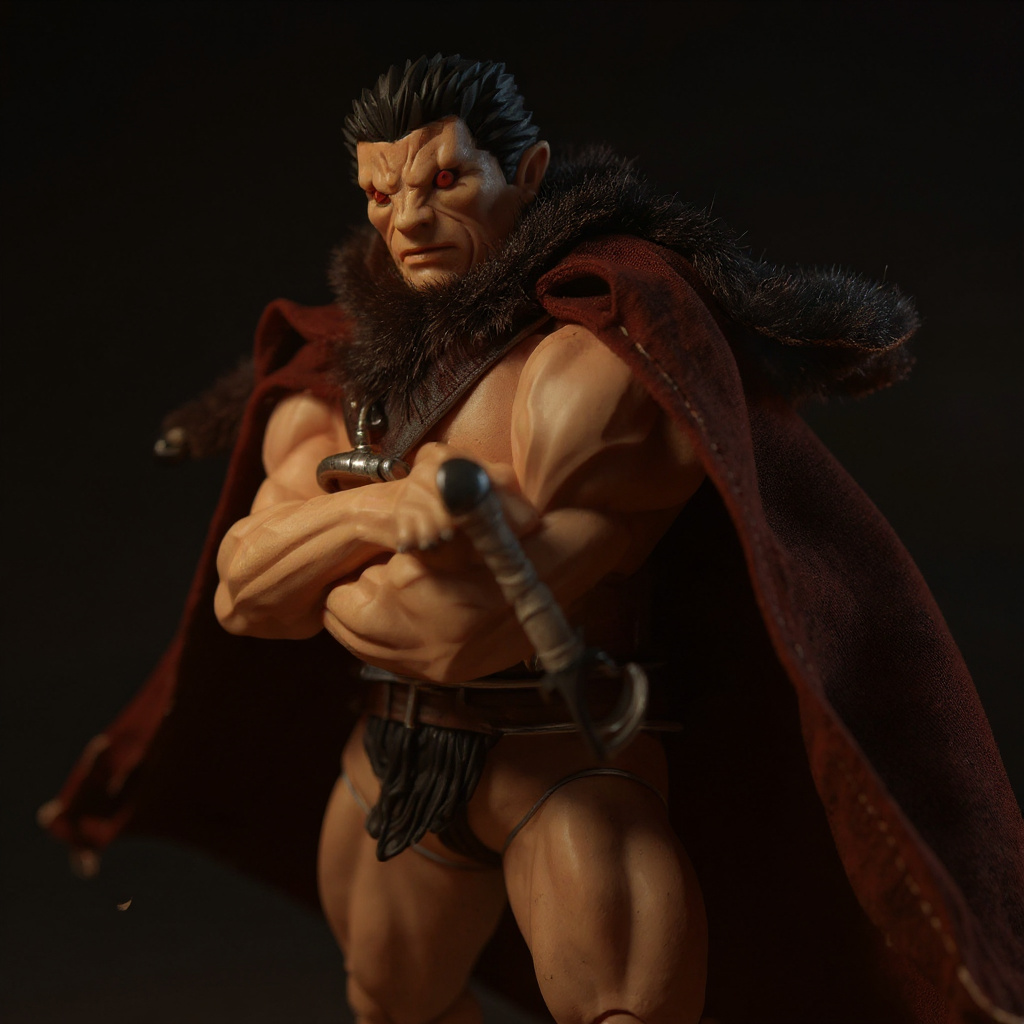
A faux fur cloak for action figure photography is a small fur-textured cape, cut for 1/12 scale (6-inch) humanoid figures, with thin wire sewn into its edges so you can bend it into a windswept shape. The Zodd Berserk Faux Fur Cape is our test example. It has dark brown/black shaggy fur, a visible fabric lining, stitched seams and a tattered, asymmetrical hem. It costs $32.50. The wire measures about 0.6 mm (22 AWG). Bend it once, and the cape stays put.
Quick Specs
| Spec | Detail |
|---|---|
| Outer material | Shaggy faux fur, dark brown/black |
| Lining | Fabric inner lining, visible at the edges |
| Scale | 1/12 (6-inch humanoid figures) |
| Hem | Asymmetrical, deliberately tattered |
| Internal wire | About 0.6 mm (22 AWG), hem and side edges |
| Length | About 10-12 cm; varies a little because each piece is handmade |
| Weight | About 12 g on my kitchen scale |
| Construction | Hand-stitched, seams left visible |
| Price | $32.50 USD |
How I Tested It
I used the cape for 30 days on two 1/12 figures. Calipers put their shoulder widths at 36 mm and 44 mm. The collar closed around both necks without elastic, although the wider figure showed a small gap at the back that a folded edge hid.
For the pose test, I swept the hem back at about 40 degrees and left it on an open shelf. After 30 days the tip had drooped less than 3 mm against a ruler. Good. After about 25 re-bends at the same crease, though, the wire felt stiffer and gritty under my fingers, which is metal fatigue, the same thing that snaps a paperclip you keep bending. Move your bend points each session and the wire lasts far longer.
Choosing the Right Faux Fur Cloak for Action Figures
Fit comes first. The 1/12 figures I've measured have shoulders between 34 and 46 mm, but brands differ, so check yours with calipers or a ruler before you order. A cape that is too wide slides off the arm mid-pose. One that is too narrow drags the collar up into the chin.
Wire gauge comes second. Per the American wire gauge standard, 22 AWG is 0.644 mm and 20 AWG is 0.812 mm. Thinner wire bends by accident when you handle the figure, while thicker wire prints ridges through the fur and fights you on every curve.
| Cape type | Wire | Typical price | Pose hold (my bench notes) | Fur texture in macro |
|---|---|---|---|---|
| Stock cape, thin polyester | None | Included with figure | 0 days; falls flat within minutes | Smooth, uniform |
| Factory cape, loose hem wire | About 0.5 mm, unsecured | $15-25 | 1-2 weeks; wire shifts and bunches | Short, even pile |
| Aftermarket, hem-only wire | 1 run at the hem | $20-30 | Edge curves only | Varies by maker |
| Wired faux fur, hem and sides | About 0.6 mm (22 AWG) | $32.50 | 30 days, under 3 mm droop | Long, shaggy, uneven |
| DIY wire added to your own cape | 0.6 mm | About $5 materials plus 2 hours | Depends on your stitching | Depends on your cape |
The Zodd cape sits in the fourth row. Zodd is the towering apocalypse demon from Berserk (see the Zodd entry on Wikipedia), so the shaggy, ragged look suits the character. It also suits any dark warrior, beast-hunter or barbarian custom.
Why Texture and Seams Matter in Photos
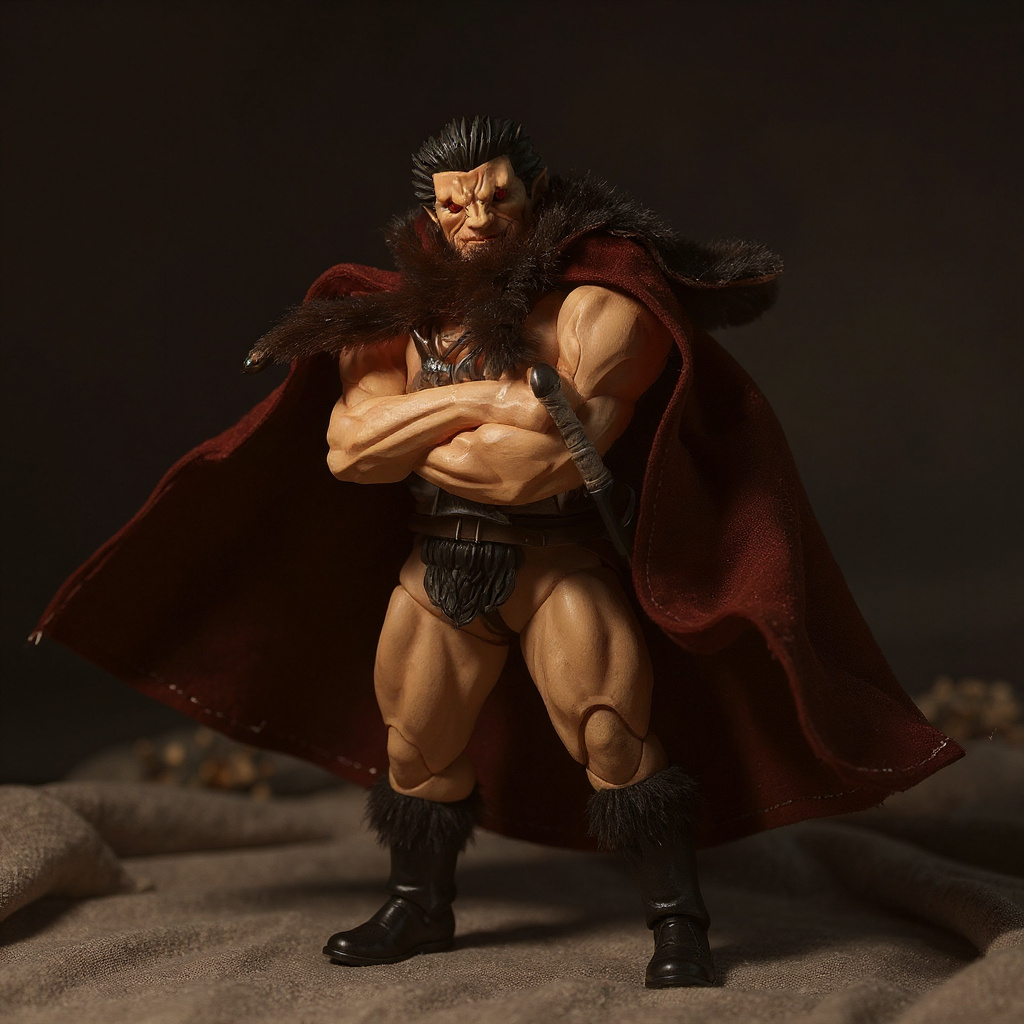
Smooth fabric reflects light evenly, and in a photo that reads as flat. Shaggy fur does the opposite. Each fiber catches light at its own angle, so the surface breaks into highlights and deep shadow. The tattered hem adds ragged edges that look like they've survived a fight. Visible stitching and lining show up in macro shots as proof of handwork.
Dark brown/black fur is hard to expose, though. It soaks up light. Flat. Muddy. Lost.
How to Shape a Windswept Battle Pose
1. Seat the collar flat against the figure's neck, with the seams facing inward and the lining hidden at the front. 2. Pose the figure first. Set the stance, then shape the cape to match, never the other way around. 3. Grip the cape near the shoulder with one hand and bend the wire with the other. Never bend from the tip. 4. Sweep the longer side back and up at 30-45 degrees from the spine, as if a gust just hit. 5. Curve the shorter side the opposite way, forward or sideways, to build asymmetry. 6. Add one gentle S-curve along the hem so the line doesn't look ruler-straight. 7. Tease the fibers with a soft brush, but leave one seam and a patch of lining exposed for macro shots. 8. Check the pose through your camera, not your eyes. Wire shapes that look good in hand can look lumpy through a lens.
Lighting and Macro Settings for Dark Fur
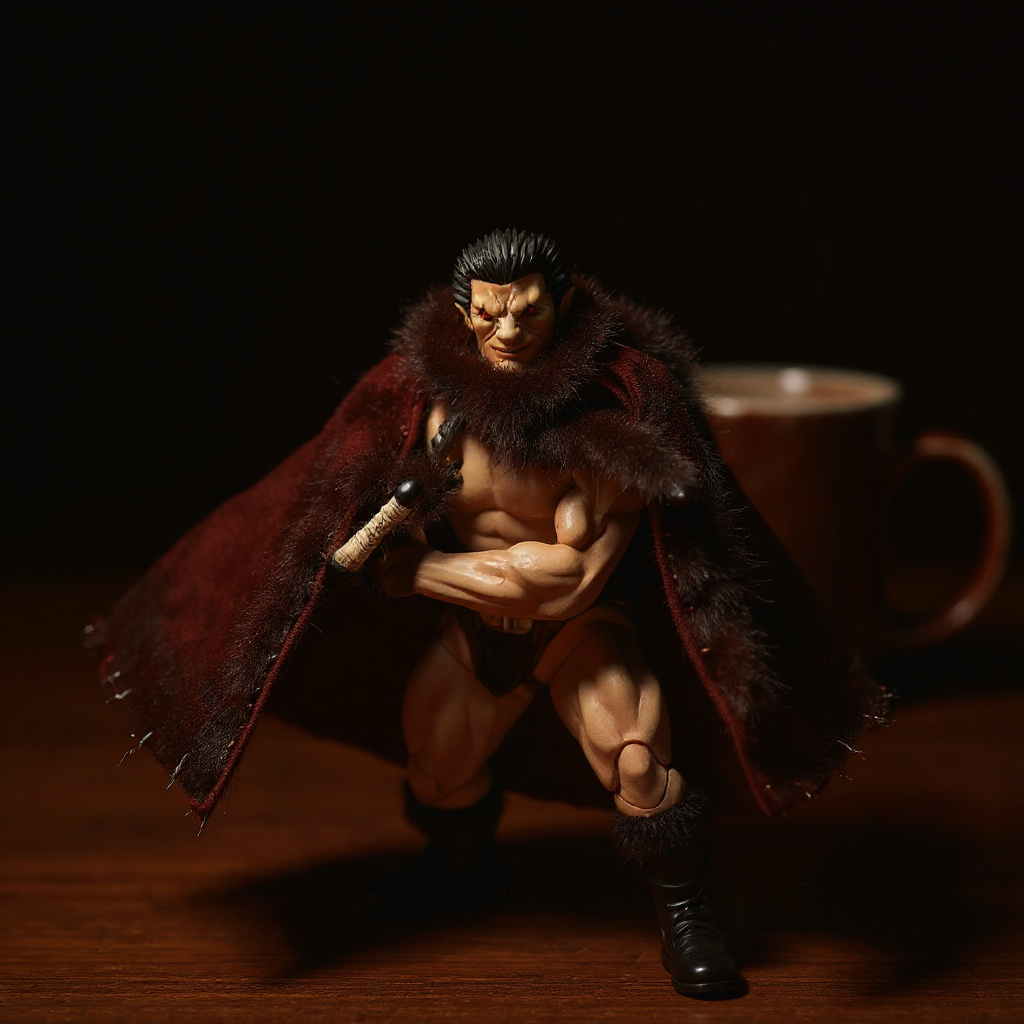
Use one hard light placed 45-90 degrees to the side of the figure. The side angle throws shadows between fibers, and the texture pops. Front light erases it.
Add a small rim light from behind to separate black fur from a dark studio background. I shoot at f/8-f/11 for macro so the seam and fiber detail stay sharp across the hem, and I raise exposure by about 0.7 EV because the fur drinks light. Photographers trade pose and lighting ideas on /r/actionfigures, and many posts there show how much a single side light changes a shot.
Honest Limits: Who Should Skip This Cape
Honestly, if you shoot in a white light tent with soft front lighting, skip this cape. Dark brown/black fur will turn into a shapeless blob in that setup, and you'll have paid $32.50 for a texture the light never reveals. Also skip it if you only display figures on a shelf and never pose them. The stock cape does that job fine.
If your room is humid, keep the cape away from the window and the bathroom wall. Moisture can rust bare wire over time.
Handmade vs Factory: What the Extra $7.50-$17.50 Buys
Factory capes cost $15-25. This handmade cloak is $32.50, so the premium is $7.50-$17.50. For that, you get longer and more varied fibers, wire sewn along both side edges, and seams you can see and inspect. Quality can vary between handmade pieces, so look closely at product photos for loose threads or uneven hems before you buy. A good seam shows even stitches, no gaps between the fur and lining, and a hem that is ragged on purpose rather than by accident.
Frequently Asked Questions
What size figures does this faux fur cloak for action figures fit?
It is cut for 1/12 scale (6-inch) humanoid figures. In my test it closed around shoulder widths of 36 mm and 44 mm. Measure your figure's shoulders with calipers first.
What wire gauge is inside the cape?
The wire measures about 0.6 mm, close to 22 AWG (0.644 mm). Anything thinner bends by accident, and 20 AWG (0.812 mm) starts to show ridges through the fur.
How long will the pose hold?
In a 30-day shelf test, the swept-back hem drooped under 3 mm. After about 25 re-bends at the same crease, the wire stiffened from fatigue, so change your bend points between sessions.
How do I clean and care for it?
Brush the fur with a soft brush, working against the grain to restore volume. Spot clean with a barely damp cloth and air dry. Don't machine wash it, because water can rust the wire and mat the fibers.
How much does it cost compared with a factory cape?
It costs $32.50. Factory capes run $15-25, and a DIY wire upgrade costs about $5 in materials plus around 2 hours of sewing.
Will it fit 1/12 figures from other brands?
It should fit any 1/12 humanoid with shoulders in the 34-46 mm range I've measured. Oversized or bulky bodies may not close at the neck, so check your measurements before you buy.
Can I use it for human cosplay?
No. It is a 1/12 scale accessory, only about 10-12 cm long, and won't work as a costume piece.
Is It Worth $32.50?
If you shoot macro, light from the side and want a battle pose that looks caught mid-gust, yes. The wire holds the shape, the fur gives you texture, and the seams and lining add proof of craftsmanship. If you don't, keep your stock cape.
Ready to try it? Get the Zodd Berserk Faux Fur Cape, or browse more 1/12 accessories and the rest of The Figure Vault.

