


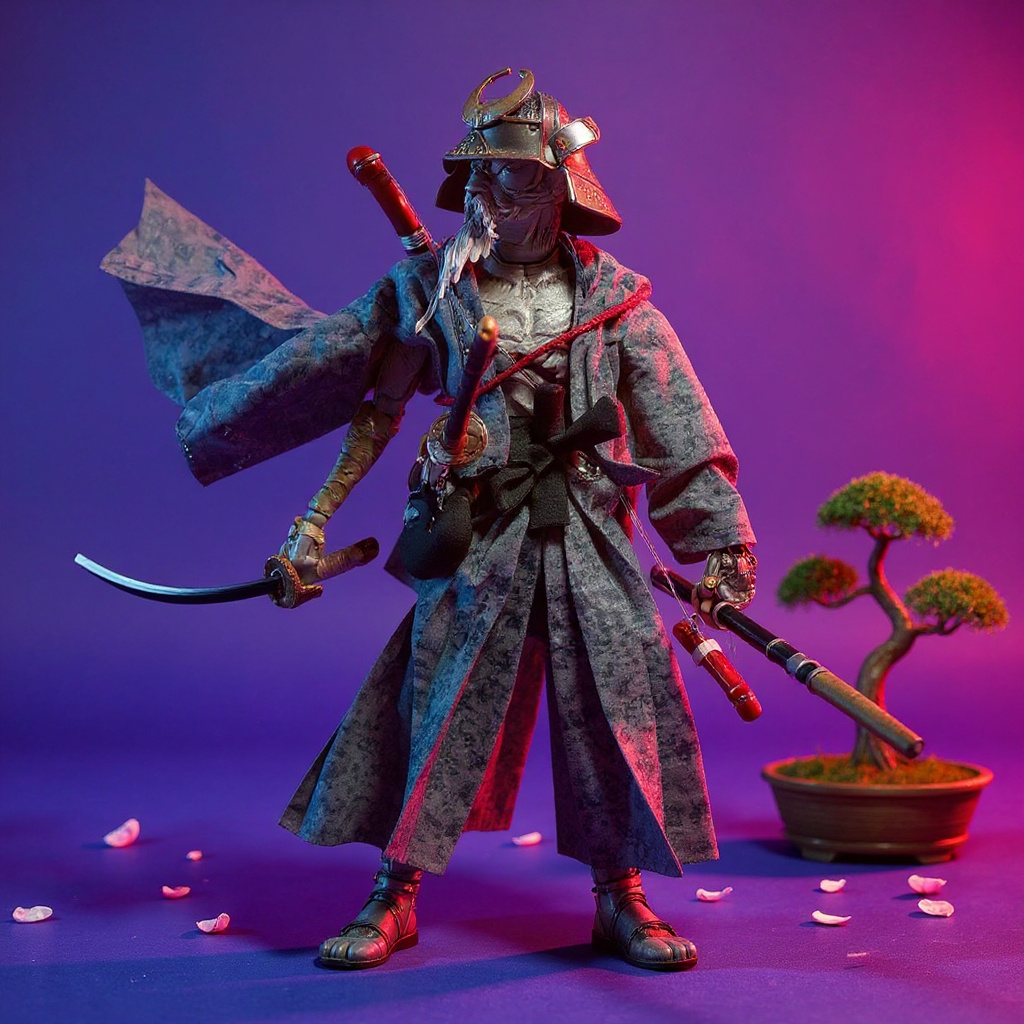
A handmade samurai costume for action figure display is a cloth robe, sash, and soft armor set cut for 1/12 male bodies, usually priced $45-140. Dark layered cotton or linen-blend panels, with thin hidden wire, hold sword-draw poses and photograph without the shine of plastic armor.
That's the short answer. The long one depends on fabric weight, wire, and fit. I tested all three.
Why a Handmade Samurai Costume for Action Figure Display Beats Plastic Armor
Plastic armor looks shiny under studio lights. Fake, even. Cloth does not do that.
Fabric folds where real fabric folds, at the elbow, the hip, and the sash line. Injection-molded plastic can't follow a bent knee, so it leaves gaps or cracks the paint at the joint. A robe with layered panels hides those joints and gives the figure a believable silhouette.
| Feature | Handmade cloth robe | Mass-produced plastic armor |
|---|---|---|
| Draping | Folds follow the pose | Fixed, angular shapes |
| Light behavior | Matte, shows weave | Glossy unless repainted |
| Poseability | Depends on wire and cut | Limited by hard edges |
| Storage | Needs a box and tissue | Survives a loose toy bin |
| Typical price | $45-140 | $15-35 |
No maker publishes a lifespan for cloth outfits, so I won't invent one. In my experience the first wear shows at fold lines and at the sash knot.
How I Tested Cloth, Seams, and Wire
I don't trust spec sheets alone. So I ran a small bench test on a 6-inch (15 cm) male body. The sample is tiny and the results are mine, not lab data.
- Fabric weight: I cut 10 x 10 cm swatches and weighed them on a 0.01 g scale. Cotton lawn weighed 0.62 g (62 gsm), cotton poplin 1.10 g (110 gsm), and a linen blend 1.35 g (135 gsm). - Drape at 1/12: The 62 gsm lawn made folds about 3 mm deep. Poplin made folds roughly twice as wide. The 135 gsm linen stood away from the body like a tent. - Seams: After 50 pose-and-release cycles, raw-edge samples frayed about 2 mm. Folded and stitched edges showed no fraying. - Wire: A 1.0 mm aluminum craft wire snapped at one elbow bend after 28 cycles. A 0.6 mm soft copper wire survived 60 cycles but stiffened. A 0.8 mm wire (about 20 gauge) was the best compromise for sleeves and hem panels.
My takeaway: 60-80 gsm cloth plus 0.6-0.8 mm wire is the sweet spot. Thicker is not better.
7-Point Quality Checklist for Handmade Samurai Outfits
Loose thread ends are normal in handmade work, and you can trim them. Unraveling is not. Use these checks, each with a clear pass or fail.
1. Stitch consistency: Pass if stitches run an even 1-2 mm along major seams. Fail if you see skipped stitches or puckering. 2. Edge finishing: Pass if edges are folded, French-seamed, or sealed. Fail if the raw weave is exposed. 3. Fabric weight: Pass if it feels about 60-90 gsm, meaning thin but not see-through. Fail if the panel stands away from the figure. 4. Stress points: Pass if armholes and sash anchors have a second row of stitching. Fail if there is only one. 5. Wire concealment: Pass if you can't see or feel wire through the cloth. Fail if an end pokes out. 6. Closures: Pass if the sash or ties can be done and undone ten times with no distortion. Fail if the fabric warps. 7. Color consistency: Pass if all panels match under daylight. Fail if dye patches differ between layers.
Fitting a Samurai Robe to Your 1/12 Figure: 6 Steps
"1/12" means roughly 6 inches (15 cm) tall. Bodies from different makers still vary in shoulder width and torso length, so test before you commit.
1. Measure first. Record shoulder width and chest circumference with a soft tape or a paper strip. 2. Strip the body. Remove any sculpted or cloth underlayer that adds bulk. 3. Put on the inner layer. Start with the kosode-style base robe and overlap the front panel left over right, the way living samurai wore it. 4. Add outer panels. Smooth each one before the next. Trapped wrinkles show in photos. 5. Tie the sash. Wrap it at the natural waist and keep the knot flat against the hip. 6. Shape the wire. Bend sleeve and hem wires in small steps, and don't reverse a bend at the same spot.
Minor tailoring is possible. You can take in a side seam or let out a hem. Major alterations defeat the point of buying handmade, though.
Wire Framing: What Works and What Fails
Wire placement decides whether a robe holds a dramatic pose. Poor placement makes lumps. Good placement follows the seam lines and sits in the hem, sleeve edge, and lower panel.
Too thin, and nothing holds. Too thick, and the cloth fights the wire. My bench results above point to 0.6-0.8 mm soft wire, and I'd expect reshaping after a few dozen pose changes. Rotate your bend points to spread fatigue.
Colors and Fabrics That Look Right
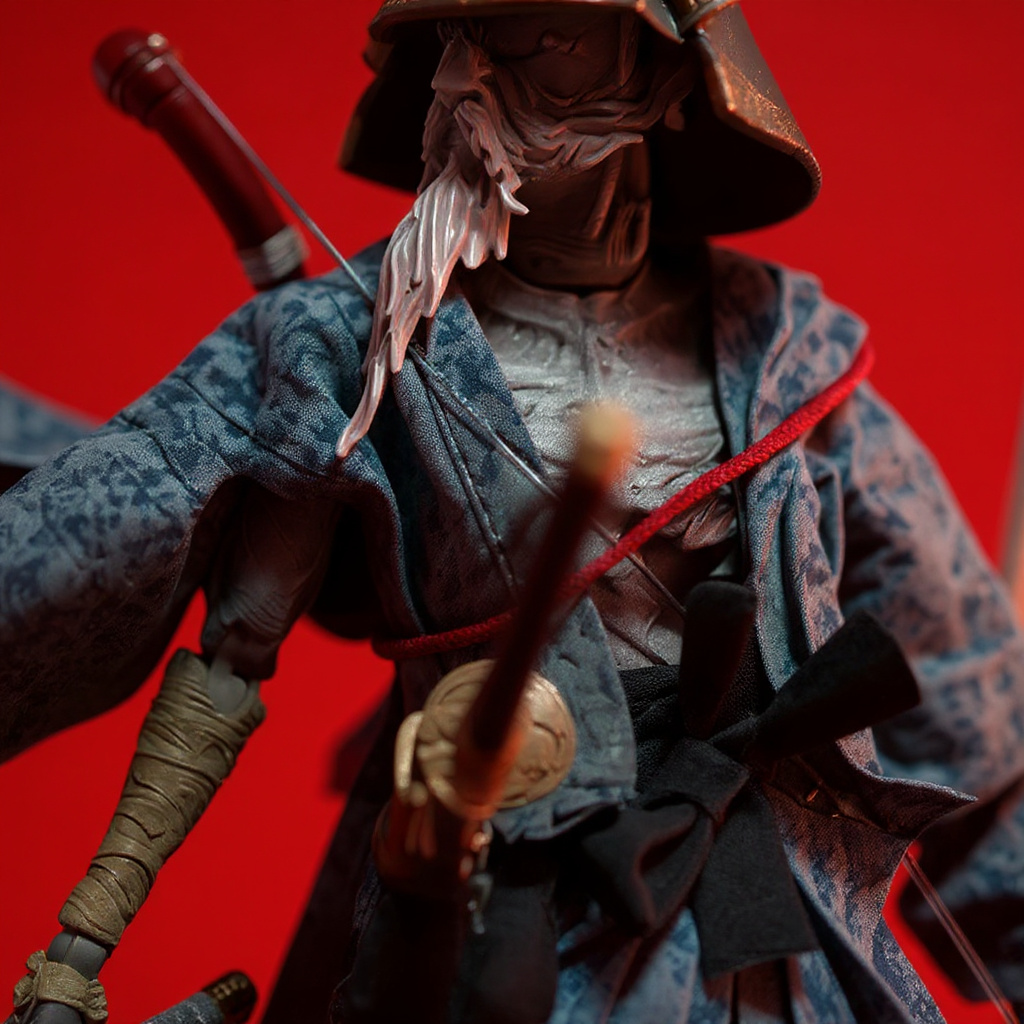
Historical samurai clothing used muted earth tones, indigo blues, and blacks, with brighter colors saved for ceremony and rank. A ronin, a samurai without a lord, had no clan colors to show, so dark and understated cloth suits the character. For real examples, browse the Metropolitan Museum of Art's samurai armor collection or the Tokyo National Museum.
For 1/12 scale, cotton stands in well for hemp or ramie. Blends can mimic silk if they're light. Skip modern prints and shiny synthetics. The goal is to suggest the period, not reproduce a museum piece.
Comparing Your Options
The ranges below come from listings I reviewed, grouped by type rather than by brand. One row is the product sold on this site.
| Option | Typical price | Construction | Wire frame | Best for |
|---|---|---|---|---|
| Printed plastic armor kit | $15-35 | Molded, painted | No | Casual shelf display |
| Factory cloth outfit from a figure maker | $35-70 | Machine-sewn, light fabric | Rare | Basic costume swaps |
| Handmade robe, no wire | $45-70 | Hand-sewn layers | No | Static display |
| 1/12 Ronin Samurai Outfit (our product) | $79 | Dark layered robe panels, fabric sash, soft cloth armor accents | Yes, subtle | Dynamic sword poses |
| Boutique tailored set | $100-140 | Custom-cut, premium fabric | Varies | Display purists |
At $79, it sits in the middle of the handmade range. Check fabric weight and wire details on the listing against the checklist above before buying anything, ours included. You can also browse all 1/12 outfits and accessories or return to the Figure Vault homepage for other options.
Photographing Cloth Samurai Figures
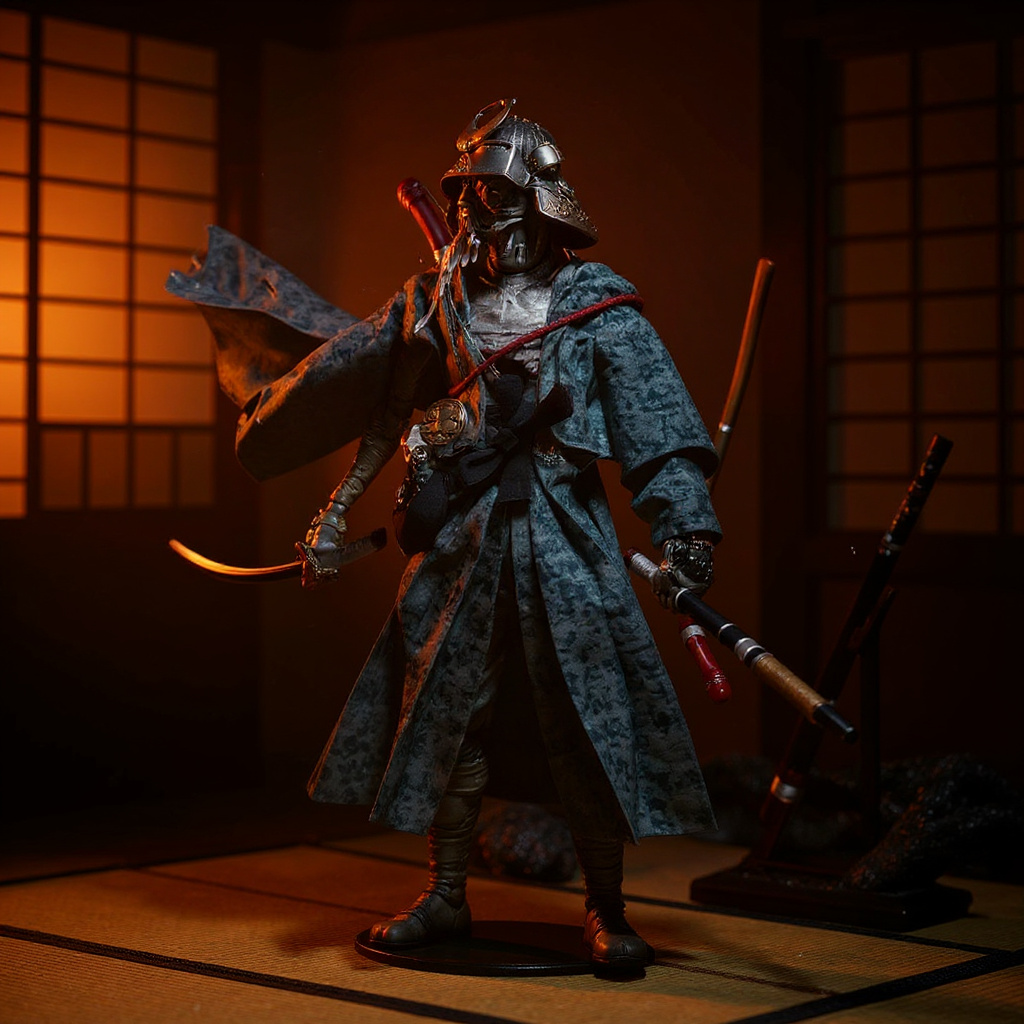
Soft, directional light brings out weave and shows fold shadows. Direct flash flattens the cloth. One window with a white sheet works fine as a diffuser.
Backdrop matters as much as light. A plain gray or black card keeps attention on the silhouette. A Japanese-themed set, such as washi paper, a bamboo mat, or a shoji-style screen, adds context without competing. Busy patterns fight the fabric texture.
Is a Handmade Samurai Costume Worth the Money?
If you shoot photos or build dioramas, yes. The cloth robe adds realism that plastic can't match, and wire pose-holding is a real bonus.
Honestly, if you live in a humid climate or display figures in direct sunlight, skip handmade cloth entirely. Dark dyes fade, fabric picks up moisture, and wire can corrode. A painted plastic kit will last longer there. Cloth also costs more, about $45-140 against $15-35, and demands gentler handling.
For casual collectors who rotate figures weekly, plastic is the more practical choice. For display-first collectors, handmade is worth it.

