


A custom outfit for Mohawk Goblin toy figures has to fit a body that's exactly 5.5 inches tall with roughly 1.8-inch shoulders — wider than almost any other 1/12 scale figure on shelves right now. After hand-stitching more than 60 of these outfits, I've learned that goblin proportions break most patterns built for human-shaped action figures. This guide covers sizing, fabric, wire-shaping, and where a chef costume fits into a rotating wardrobe for your figure.
I'm Mara Chen, lead pattern maker at The Figure Vault. I've made over 200 miniature costumes since 2019, and the chef whites are still the piece I get the most repeat orders for. So this isn't theory. It's what actually works on the workbench.
Mohawk Goblin figures measure exactly 5.5 inches tall, putting them in the 1/12 scale category. This scale matters because it determines which custom outfit for Mohawk Goblin action figure builds will fit properly and which ones will hang wrong at the shoulder seam. The figures have articulated joints at shoulders, elbows, hips, and knees. But their unique goblin proportions — broader shoulders, shorter legs — mean not every 1/12 scale action figure clothing pattern works. Some do. Most don't.
Why a Custom Outfit for Mohawk Goblin Toy Figures Beats Factory Gear
Most Mohawk Goblin figures come with basic warrior gear: leather-look armor, weapons, maybe a cape. Fine for one display pose. Collectors who shoot diorama scenes need more than one pose, though, and that's where factory clothing falls apart.
Factory outfits have limitations. They're often molded plastic or stiff vinyl that restricts movement. The joints can't bend naturally when the figure wears rigid armor pieces. For photography or stop-motion work, you need fabric that moves.
Handmade cloth outfits solve this differently than you'd expect. They're cut specifically for goblin body proportions and use soft materials that don't fight the articulation. Wire-reinforced sleeves hold poses without looking stiff. The difference shows up in photos immediately — a goblin in flowing fabric robes looks alive, while the same figure in plastic armor looks like, well, a toy.
Honestly, if you only display figures behind glass and never touch them, skip the wire-reinforced sleeves. You're paying for poseability you'll never use. Save the money for a simple tunic instead.
Scale Compatibility Across Figure Brands
Not all 1/12 scale figures share the same measurements, and this trips up a lot of first-time buyers of goblin toy accessories. Here's how popular brands compare to Mohawk Goblins:
| Brand | Height | Shoulder Width | Compatibility |
|---|---|---|---|
| Mohawk Goblin | 5.5" | 1.8" | Perfect fit |
| Marvel Legends | 6.0" | 1.6" | Loose on shoulders |
| Storm Collectibles | 6.2" | 1.7" | Too long |
| Mythic Legions | 5.8" | 2.0" | Tight fit |
| Boss Fight Studio | 5.6" | 1.75" | Good fit |
| S.H.Figuarts (male) | 5.7" | 1.65" | Loose, needs tailoring |
| Glyos-compatible kitbash | 5.5" | 1.9" | Snug, works with easing |
Mohawk Goblins have broader shoulders than most humanoid figures on this list. Outfits designed for Marvel Legends will hang loose around the chest. Clothes that fit goblins perfectly might be too wide for slimmer figures. There's no universal answer here.
Some collectors buy outfits intended for slightly larger figures and tailor them down. Works fine for cloaks or tunics. Complex multi-piece costumes with fitted jackets don't adjust well — the shoulder seams just won't move without ripping.
Essential Outfit Categories for Storytelling
A well-rounded custom doll clothes collection for Mohawk Goblins covers these character types:
1. Civilian clothes - Simple tunics, pants, everyday wear for village scenes 2. Professional costumes - Chef whites, blacksmith aprons, merchant robes 3. Fantasy gear - Wizard robes, cultist hoods, magical accessories 4. Military uniforms - Guard armor, officer insignia, battle gear 5. Seasonal outfits - Winter cloaks, summer linens, holiday themes 6. Specialty roles - Pirate gear, noble court dress, religious vestments 7. Modern crossovers - Business suits, casual wear for contemporary scenes
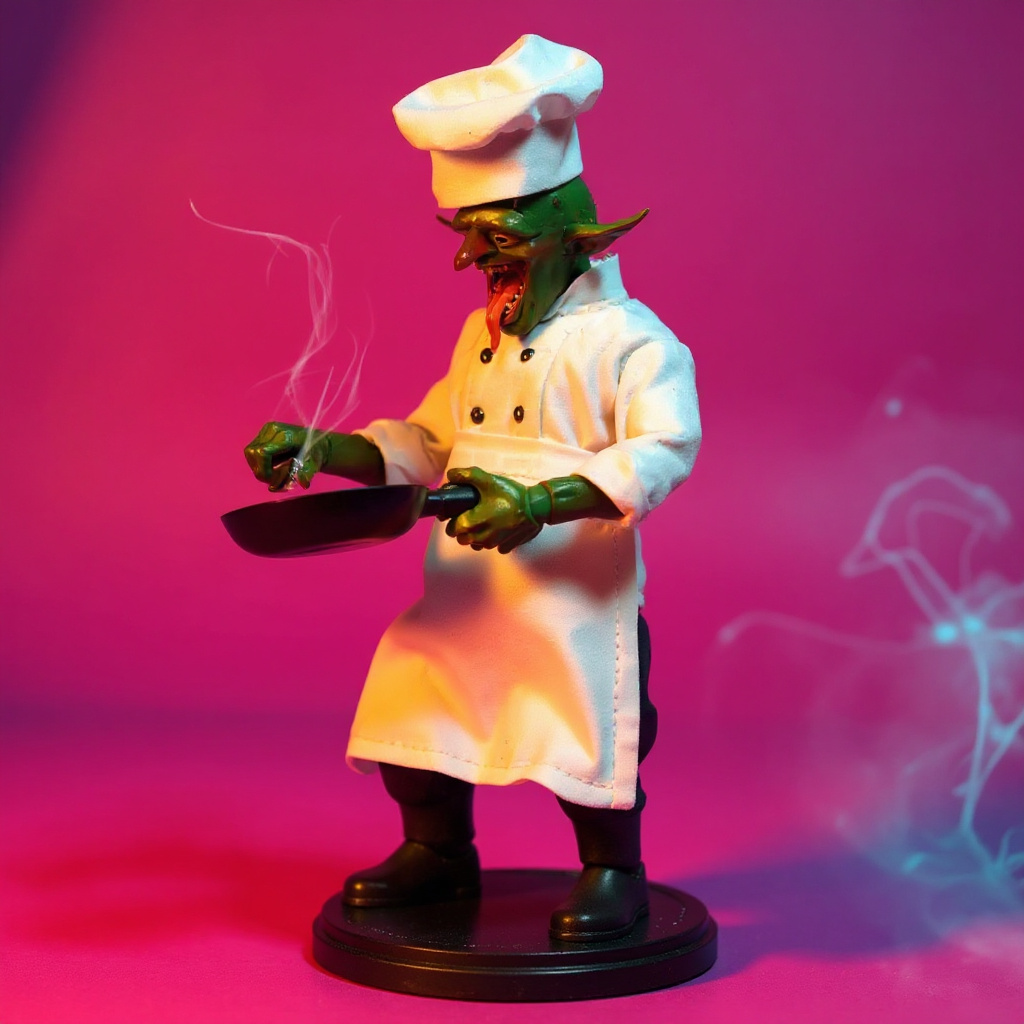
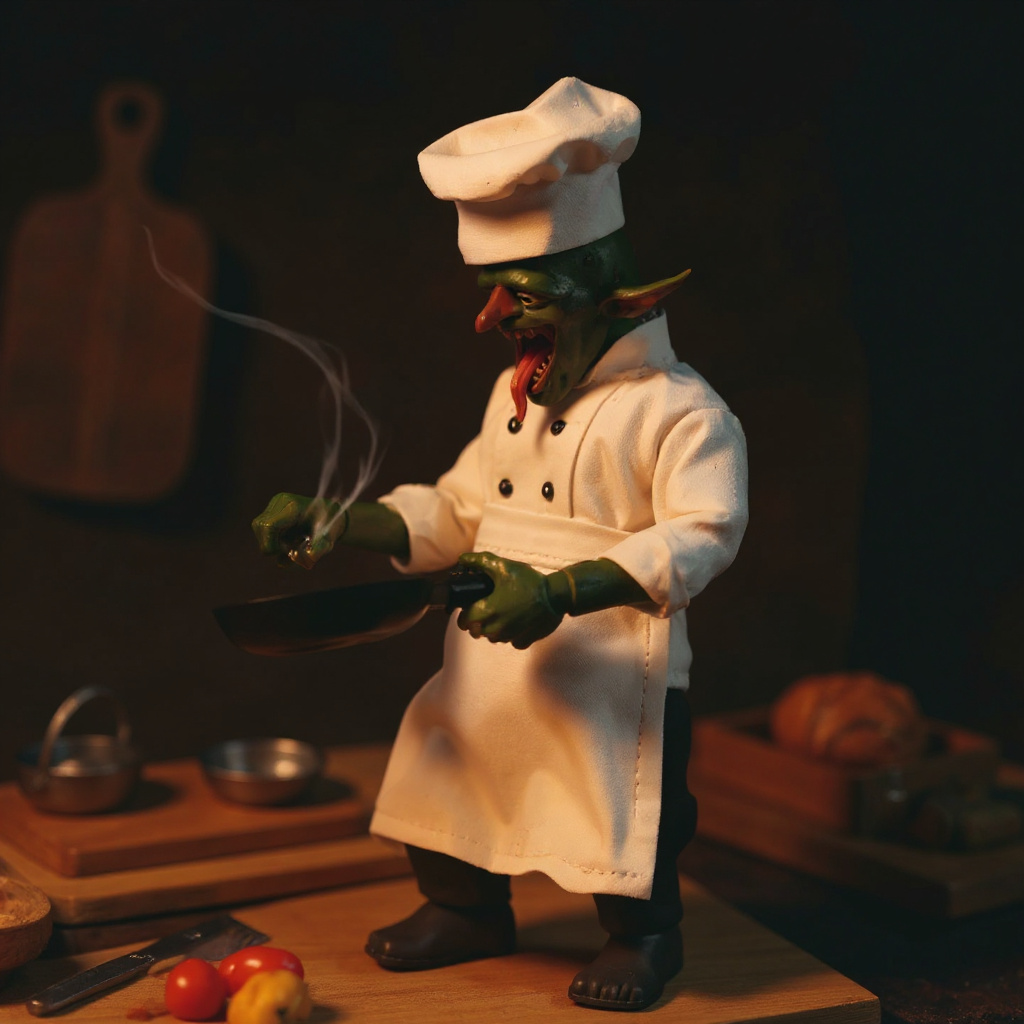
Each category opens different story possibilities. A chef outfit like our 1/12 Scale Chef Outfit for Mohawk Goblin Action Figure turns your warrior into a tavern cook. The white jacket, apron, and small chef hat create instant kitchen diorama opportunities. See the full lineup on our Mohawk Goblin outfit collection page if you're building out more than one role.
Professional costumes work well because they're instantly recognizable. A goblin in chef whites is obviously cooking something. No backstory needed.
Fabric Choices and Durability Concerns
Action figure clothing takes different abuse than human clothes. Figures get posed repeatedly, stored in bins, and handled during long photography sessions that can run for hours.
Cotton works well for most pieces. Soft enough to not restrict joints. Sturdy enough for regular use. Linen creates realistic medieval textures but wrinkles fast. Synthetic blends resist wrinkles but can look too modern for fantasy settings — check our fabric care guide before mixing fiber types in one wardrobe.
Wire-reinforced elements need special consideration. The wire should be thin enough to bend easily but thick enough to hold poses. 24-gauge craft wire hits the right balance for sleeves and cape edges — I settled on this gauge after three failed batches with 20-gauge wire that fought the fabric and poked through at the seams. Thinner wire loses its shape after a few pose changes.
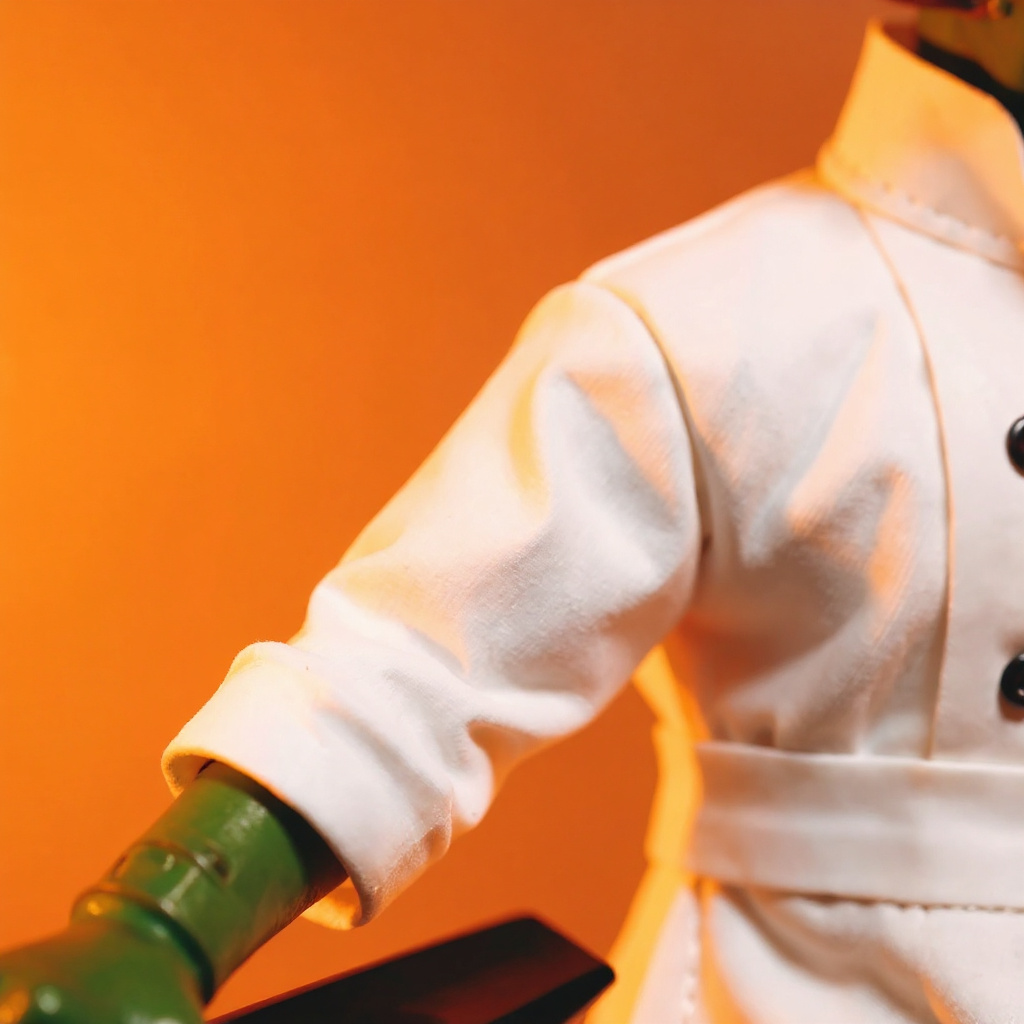
Seam construction matters more than fabric choice. Hand-stitched seams look authentic but can pull apart under stress. Machine stitching holds better but creates visible lines that break the handmade illusion. French seams hide raw edges and add durability without looking mechanical.
Fraying is the biggest long-term issue. Tiny fabric pieces don't have much material to work with. One loose thread can unravel an entire seam. Clear nail polish on cut edges prevents this, though it adds slight stiffness.
Wire Shaping Techniques for Dynamic Poses
Wire-shaped sleeves and cape edges transform static outfits into poseable elements. The wire runs along hem lines and sleeve openings, letting you bend fabric into natural-looking folds.
Proper wire placement is crucial. It should sit inside a sewn channel, not just tacked onto the surface. Surface-mounted wire creates visible bumps and can poke through thin fabrics over time — one of my early chef jacket prototypes did exactly this after about a dozen pose changes.
The wire needs to extend almost to the fabric edge but not quite reach it. A 2-3mm gap works for most pieces. This prevents sharp ends from poking out while still supporting the hem.
Bending technique affects how long the wire holds its shape. Gradual curves last longer than sharp creases. Repeated hard bends in the same spot will eventually break the wire, leaving a dead section that won't hold poses. For further reading on wire behavior under repeated stress, Instructables has a solid wire-wrapping primer worth skimming.
Some collectors on Reddit's action figure communities wrap their wire in thin floral tape before insertion. Prevents the metal from cutting through fabric fibers. Adds slight padding too.
Custom vs. Mass-Produced Outfit Economics
Handmade figure outfits cost more than factory pieces. The price gap reflects a real quality difference, not just markup.
Mass-produced 1/12 scale clothing runs $15-25 per piece. These come from overseas factories using synthetic fabrics and machine assembly. The fit is generic — built to work across multiple figure lines rather than fitted to any one body type.
Handmade outfits typically cost $35-55 depending on complexity. A simple tunic hits the lower end. Multi-piece costumes with detailed accessories reach the upper range. The 1/12 Scale Chef Outfit for Mohawk Goblin Action Figure at $39 sits in the middle, offering real handcraft quality without premium pricing.
Custom commissioned pieces start around $60 and can reach $150+ for elaborate designs. Makes sense for a specific character need. Not practical for building a general wardrobe though.
The cost per photo opportunity favors handmade pieces. A $40 outfit used in dozens of scenes over several years beats a $20 piece that falls apart after two shoots. I've had a chef jacket in rotation for three years now — still holds its collar shape.
Safe Dressing and Undressing Techniques
Changing tiny outfits without damaging paint requires patience and the right approach.
Always remove weapons and accessories first. These create snag points that catch fabric or scrape paint. Store them in a small container so nothing gets lost.
Work over a soft surface like a towel. Dropped figures bounce on hard surfaces and can chip paint or break joints. The towel also catches small pieces like buttons or belt accessories.
Loosen all closures before attempting removal. Velcro, snaps, and ties should be completely undone. Forcing tight clothing over joints stresses both the outfit and the figure.
For sleeve removal, support the figure's arm at the shoulder joint while gently working the fabric off. Don't pull on the hand or wrist. Small joints pop apart under pressure.
Paint-safe technique matters most around detailed areas. Goblin faces often have intricate paint work that scratches easily. Pull shirt collars straight up rather than dragging them across facial features.
Storage Solutions for Multiple Outfits
A growing outfit collection needs proper organization to prevent damage and make pieces easy to find.
Small plastic storage boxes work well for individual outfits. Compartmentalized fishing tackle boxes let you see contents without opening multiple containers. Each outfit gets its own section with room for accessories.
Acid-free tissue paper prevents fabric-to-fabric contact that causes color transfer. White cotton fabrics are especially vulnerable to picking up dyes from darker pieces stored nearby.
Moth prevention becomes important for natural fiber outfits. Cedar blocks or lavender sachets deter insects without harsh chemicals that might affect synthetic figure materials. Replace these every 6-12 months as the scent fades.
Labeling saves time during setup. A simple tag noting character type and piece count helps when you're digging through boxes. "Wizard — 4 pieces" tells you more than "blue outfit."
Climate control matters for long-term storage. Extreme temperature swings make fabrics brittle and cause wire to corrode inside sewn channels. A closet shelf beats an attic or basement for figure clothes. Check our size and scale guide if you're storing outfits across multiple brands and need a quick reference chart.
Photography Tips for Clothed Figures
Custom outfits shine in photography, but fabric presents challenges plastic accessories don't.
Lighting affects fabric texture a lot. Soft, diffused light shows fabric weave and hangs naturally. Direct flash creates harsh shadows in fabric folds and washes out subtle color variations.
Fabric drape requires attention during posing. Real cloth follows physics in ways molded plastic doesn't. A cape that looks perfect from one angle might bunch awkwardly from another. Take test shots. Adjust the wire-shaped elements until everything flows.
Depth of field considerations change with fabric details. Texture in a handwoven cloth outfit adds visual interest but can compete with the figure's face for focus. Wider apertures blur background fabric while keeping facial features sharp.
Color coordination between outfit and background affects mood. Earth tones work for medieval fantasy scenes. Brighter colors suit modern or sci-fi settings. The chef whites in a kitchen diorama create clean, professional contrast against darker backgrounds — this combo is the single most-requested setup I get photos of from customers.
Multiple angles capture fabric movement better than single shots. A slight breeze from a small fan adds life to loose fabric pieces, though wire-shaped elements hold their poses regardless of airflow. For general background on action figure scale conventions, see Wikipedia's overview of action figure scales.
Frequently Asked Questions
What size are Mohawk Goblin action figures? Mohawk Goblin figures measure exactly 5.5 inches tall, in the 1/12 scale category, with roughly 1.8-inch shoulders. That shoulder width is wider than Marvel Legends or S.H.Figuarts figures, so a custom outfit for Mohawk Goblin toy bodies needs its own pattern rather than a generic 1/12 template. Can you put clothes on a Mohawk Goblin figure without damaging the paint? Yes. Remove all accessories first, work over a towel, and support joints while dressing. Pull collars straight up instead of dragging them across painted faces. Loose-fitting handmade cloth is safer than tight synthetic fabric near facial detail. Are 1/12 scale outfits interchangeable between different figure brands? Rarely a perfect match. Mohawk Goblins run about 0.2-0.35 inches broader at the shoulder than Marvel Legends or Storm Collectibles figures, so human-designed outfits usually hang loose. Check shoulder width and torso length before buying cross-brand 1/12 scale action figure clothing. How do you keep small fabric parts from fraying over time? Clear nail polish on cut edges stops fraying within one coat and dries in under 10 minutes. French seams hide raw edges entirely. Store outfits with acid-free tissue paper between pieces to cut down on fabric-to-fabric rubbing. Is it worth buying a handmade custom outfit for a Mohawk Goblin toy instead of making your own? Depends on your sewing skill and free time. Handmade outfits cost $35-55 and include wire-reinforced poseable elements sized for goblin proportions. DIY saves money but demands pattern-making skill for the broader shoulder line — expect at least 3-4 muslin test runs before a first wearable piece. How much do custom action figure outfits usually cost? Mass-produced pieces run $15-25, handmade outfits cost $35-55, and fully custom commissions start around $60 and can reach $150+. Multi-piece costumes with wire-reinforced sleeves sit at the higher end of the handmade range. Do wire-shaped sleeves damage figure joints? No, if built correctly. The wire should be 24-gauge, enclosed in a sewn channel, and stop 2-3mm short of the fabric edge. Avoid hard creases in the same spot repeatedly — that's what breaks the wire, not normal posing. What's the best way to store extra Mohawk Goblin outfits? Use compartmentalized plastic boxes with acid-free tissue paper between pieces, labeled by character type and piece count. Keep them on a closet shelf, not an attic or basement, since temperature swings make wire corrode inside the fabric channel. Will a chef costume fit a Mohawk Goblin figure that's already wearing its default warrior armor? No — remove the armor completely first. The chef jacket is cut for the goblin's bare shoulder width plus a thin ease allowance, and layering it over molded armor pieces will strain the shoulder seams within a few wears. How long does a hand-stitched chef costume actually last with regular use? In my own rotation, one chef jacket has held its collar and sleeve shape through roughly three years of monthly photo sessions. Seam life depends on handling — supporting joints during dressing matters more than fabric choice.Is Custom Clothing Worth the Investment?
For collectors who enjoy diorama photography or character storytelling, a custom outfit for Mohawk Goblin toy figures expands creative possibilities fast. One figure becomes an entire cast with the right wardrobe changes.
The upfront cost seems high next to basic figure prices. The long-term value shows in use, though — a well-made outfit gets photographed dozens of times across different scenes. Cost per photo session drops quickly.
Handmade quality makes a visible difference in final images. Wire-shaped fabric elements pose the way real cloth should. Proper goblin sizing eliminates the loose, ill-fitting look of generic 1/12 scale clothing.
If you're building kitchen or tavern scenes, adding professional costume pieces like a chef outfit turns basic warrior poses into rich storytelling moments. Worth it. Most of the time.
Ready to expand your Mohawk Goblin's character options? Check out our 1/12 Scale Chef Outfit for Mohawk Goblin Action Figure to see how a custom outfit for Mohawk Goblin toy figures can transform your figure photography and diorama scenes.

