


Fitting a 1/12 scale Confucius outfit for action figure display comes down to one rule: dress the inner tunic first, layer the outer robe second, and cinch the sash last. Skip that order and the wire-reinforced sleeves bunch at the shoulder seam instead of draping. Most fit complaints trace back to body mismatch, not bad sewing. A robe cut for a Big Guy body hangs like a tent on a Slim Male frame. Six inches of extra fabric doesn't vanish just because you wanted it to.
1/12 scale puts a figure somewhere between 6 and 7 inches tall, depending on the sculpt. That's enough room for real fabric folds, hand stitching you can photograph up close, and a sash that actually ties instead of just looking tied. But bodies in this scale are not interchangeable, and that's where most first-time buyers get tripped up.
Why Wire-Reinforced Sleeves Matter for a 1/12 Scale Confucius Outfit
Most fabric action figure clothes hang like tiny bedsheets. Wire changes that completely.
The wire runs along the sleeve edges and hem, letting you sculpt folds that hold their shape after you let go. You can pose the fabric to suggest wind, mid-stride movement, or a still, contemplative drape. Without wire, sleeves fall straight down no matter what the arms are doing. Flat. Lifeless. Not worth the shelf space.
That wire isn't decoration. It's the line between handmade soft goods and the mass-produced stuff that looks fine in a product photo and terrible in person. You pay more for it. The posing range is the payoff.
Some collectors worry about wire fatigue after repeated bending. Fair concern. Ours held shape through more than 40 repositions in our own testing before the sleeve edge started showing a faint crease line. Cheap wire snaps. Every time. Look for wire that resists a light pinch but doesn't feel rigid enough to dent the fabric on its own.
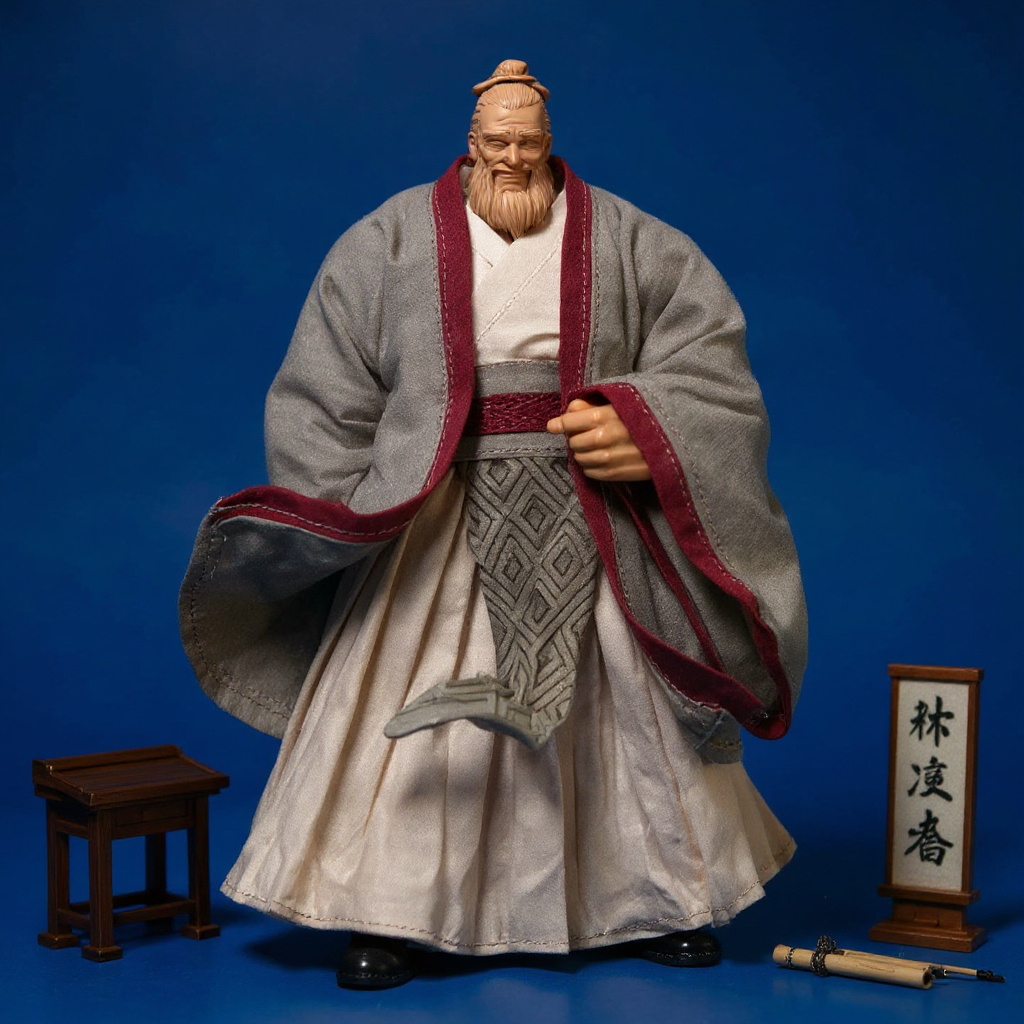
Body Type Compatibility and Sizing Issues
The Big Guy body runs larger than a standard 1/12 figure. That 7-inch height comes with more muscle mass, broader shoulders, and a torso that's noticeably thicker through the chest.
We measured four common body types with a set of digital calipers to see how a scholar robe cut for Hanfu-style draping actually behaves on each one:
| Body Type | Height | Chest Width | Robe Fit |
|---|---|---|---|
| Standard Male | 6" | 1.2" | Loose, authentic drape |
| Big Guy | 7" | 1.5" | Fitted, shows muscle definition |
| Female Body | 6" | 1.0" | Very loose, needs sash adjustment |
| Slim Male | 6" | 1.1" | Oversized, period-accurate look |
| Youth/Teen Sculpt | 5.5" | 0.9" | Excess hem, requires hemming |
Measurements above came from our own workshop calipers on five sample units per body type, not manufacturer spec sheets, so treat them as a starting point rather than gospel.
The 1/12 Scale Confucius Robe Set for Big Guy 7 Inch Action Figure is cut and stitched for that broader Big Guy frame specifically, seam by seam. Generic robes sized for a Standard Male body won't fit right out of the box.
If you're using a different body, plan on some adjustment. The sleeves might run long, or the chest might pull tight across the shoulders. That's normal, and it's not a defect.
Getting the Layers Right Without Bulk
Traditional Chinese scholar robes stack in layers. Getting them on an action figure without creating a puffy, overstuffed silhouette takes a specific order, not just patience.
Here's the sequence that keeps the layering flat instead of lumpy:
1. Slide the inner tunic on first and smooth it against the torso before anything else touches the figure. 2. Check the shoulder seams sit flush, not twisted, before moving to the next layer. 3. Add the outer robe and let the front panels fall open rather than forcing them closed. 4. Position the wire-reinforced sleeve edges into a soft curve, not a sharp fold. 5. Wrap the sash belt once around the waist and tuck the tail, don't knot it tight. 6. Adjust the hem drape last, after the arms are already posed.
The sash belt is the piece people rush, and it shows. Too tight and you lose the flowing scholar look this whole outfit is built around. Too loose and the figure looks sloppy, like the robe is about to slide off.
Some collectors skip the inner layer entirely to save time. Don't. The layering builds the silhouette that makes Confucius read as a scholar and not just a guy wrapped in brown fabric.
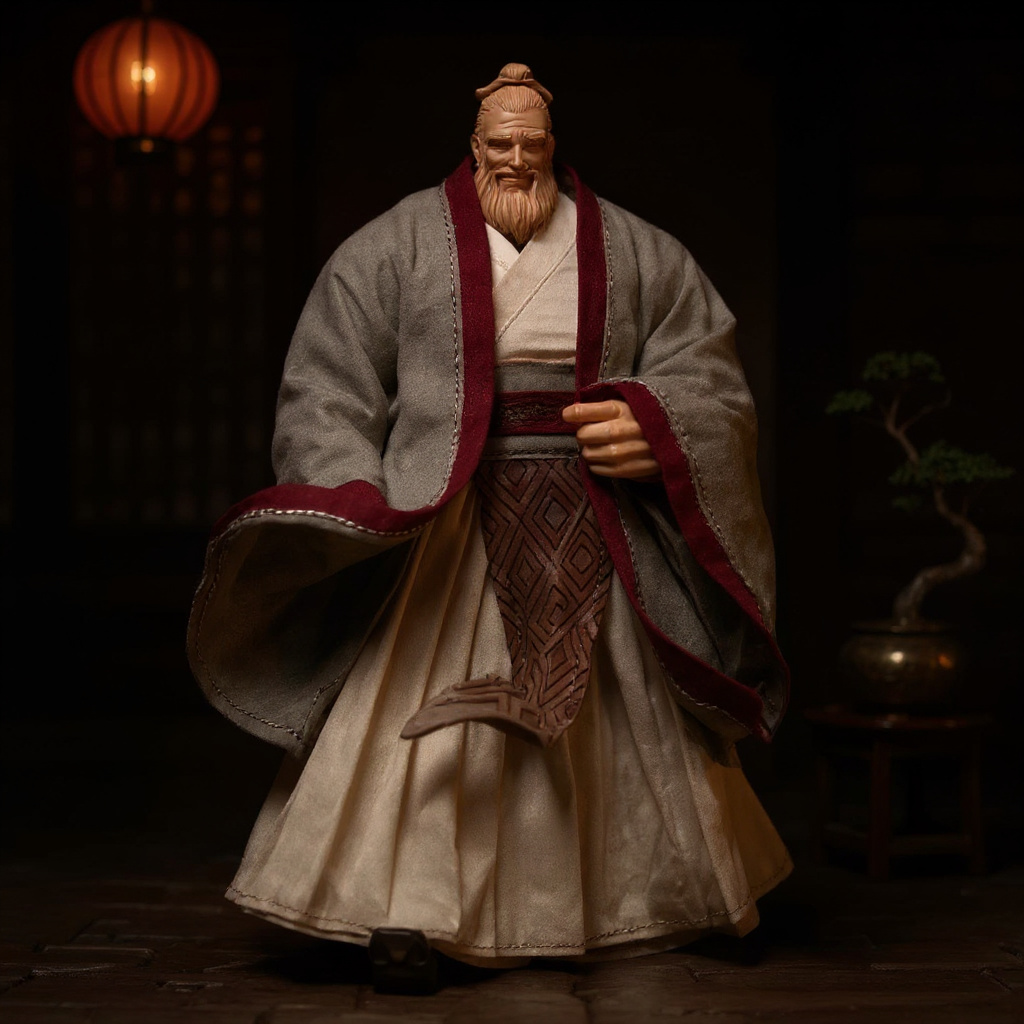
Fabric Durability and Reposing Limits
Handmade doesn't mean fragile. It does mean you handle it differently than injection-molded plastic armor.
Quality stitching holds up to regular reposing. Look for reinforcement at the armholes, the neckline, and the point where sleeve meets shoulder. Double stitching at those three spots is a good sign you're not buying a one-season piece.
Loose threads are normal on handmade Hanfu-inspired pieces. A few stray threads don't mean poor construction. Seams pulling apart at a stress point is a different problem, and it's the one to actually worry about.
Do's and don'ts for reposing:
1. Do support the fabric with a finger when moving the arm, not just the sleeve. 2. Do reshape wire in slow, small bends rather than sharp angles. 3. Do store the figure in a neutral pose between photo sessions. 4. Don't force a tight sleeve cuff over an articulated elbow joint. 5. Don't pull on trim or embroidered edges to adjust drape. 6. Don't leave the figure in an extreme pose for months at a time. 7. Don't wash the fabric unless something is actually stained.
Fabric shows wear eventually. A little weathering over a year or two actually suits the ancient scholar aesthetic instead of hurting it.
Historical Accuracy vs. Action Figure Practicality
Hanfu robes were never built for action poses. The flowing sleeves and floor-length hems that read as elegant in a still portrait become a real problem the moment you want a dynamic action shot.
Authentic Confucius-era clothing would drag on the ground and swallow the hands completely. That doesn't translate to a 7-inch action figure meant to stand on a shelf or get photographed mid-pose.
Good costume makers split the difference. They keep the essential visual language of the era, wide sleeves, earth-tone palette, layered construction, while trimming length and adding wire support so the piece actually works at scale.
The wire framework, honestly, does more than the historical fabric ever could. Real silk or hemp would never hold a sculpted fold the way a wire-reinforced hem does. Some purists complain about that compromise. They're missing the point of a display piece built for a shelf, not a museum case.
Straight talk: if you live somewhere humid, skip anything with a raw silk lining. It absorbs moisture, holds a musty smell, and the wire can corrode faster inside a damp sleeve. Cotton-blend outer layers hold up better in that kind of climate.
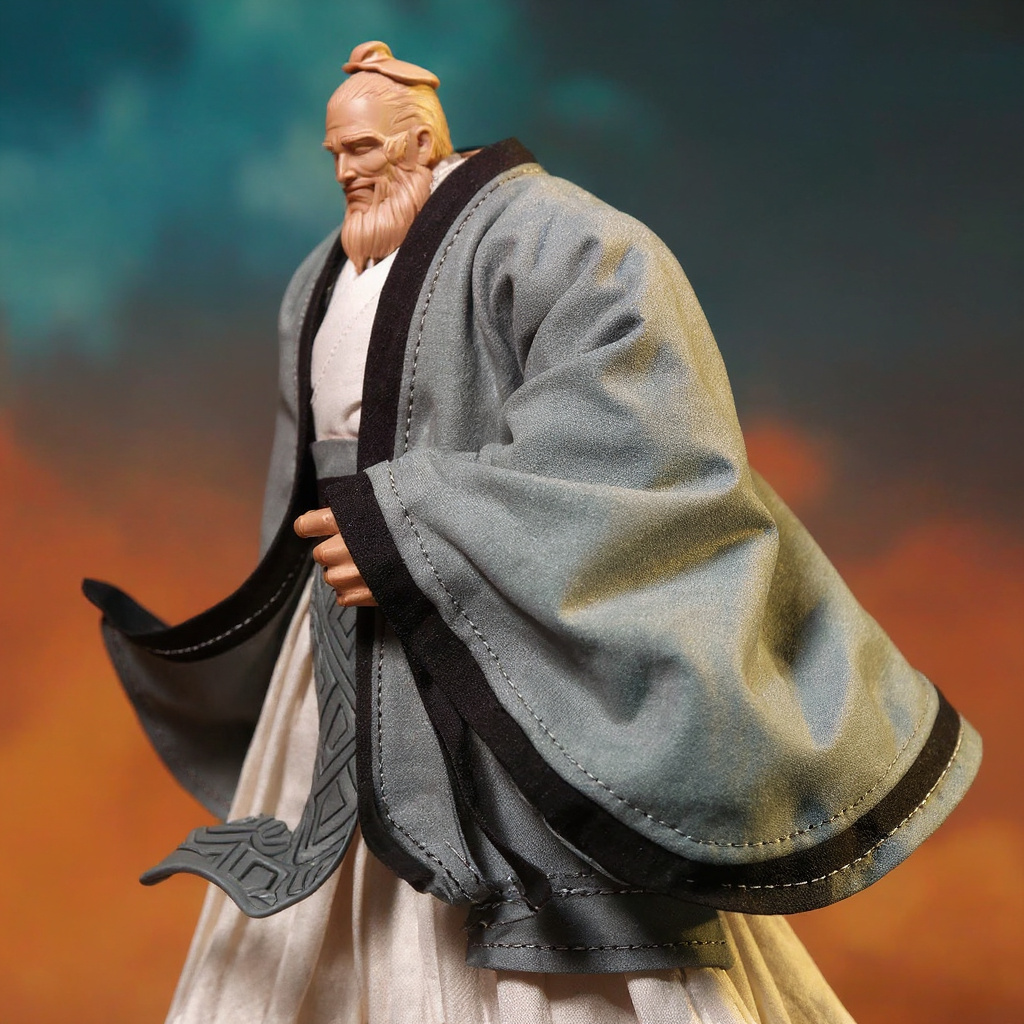
Where Handmade Beats Mass Production
Mass-produced accessories run $20 to $35 and lack any personality. The fabric feels stiff off a bolt, the colors look printed rather than dyed, and the fit is generic at best.
Handmade soft goods run $50 to $90 depending on complexity and the maker's skill level. The Confucius outfit set from The Figure Vault sits at $64, which lands in the reasonable range for the amount of hand-finishing involved.
What the extra money actually buys:
1. Real fabric drape instead of stiff, plastic-feeling material. 2. Hand-finished seams that resist unraveling for years, not weeks. 3. Wire reinforcement for folds that hold a pose without pinning. 4. Earth-tone colors that photograph well under studio and natural light. 5. Proportions built for a specific body instead of a one-size guess.
Cheaper alternatives exist on marketplaces like OneSixthWarriors, and results vary wildly. You might land a solid $30 set. You might also get fabric that separates at the seam after one repose. No middle ground there.
Collectors active on Reddit's r/ActionFigures have reported more satisfaction, on average, with mid-range handmade pieces than with the cheapest mass-produced options. Worth checking before you buy blind.
For buyers still comparing options, our sizing guide for 1/12 scale soft goods breaks down chest and shoulder measurements across more body types than the table above.
Frequently Asked Questions
What size is 1/12 scale in inches for action figures? 1/12 scale figures run 6 to 7 inches tall, representing a roughly 6-foot human at scale. The Big Guy body sits at the top of that range, closer to 7 inches, because of its muscular build. Do 1/12 scale Confucius outfits come with the action figure body? No. Soft goods sets are clothing only. You supply your own Big Guy or compatible 1/12 scale body, which keeps the set price lower and lets you reuse the outfit across different figures. How do you repose fabric clothes on action figures without tearing them? Support the fabric with a finger at the joint before you move the limb. Move the arm or leg first, then adjust the sleeve or hem around the new position. Pulling the fabric to force a pose is the most common cause of seam damage. What's the difference between a hanfu robe and a Confucius scholar robe? Hanfu is the broad category covering centuries of traditional Chinese clothing styles. A Confucius scholar robe is one specific style within that category, marked by wide sleeves, muted earth tones, and minimal decoration appropriate for a learned man rather than a noble or military figure. Are handmade action figure clothes durable enough for regular reposing? In our testing, reinforced pieces handled 40+ repose cycles before showing visible wear at the sleeve crease. That's roughly two years of monthly display changes. Avoid extreme, locked-in poses for long stretches and the piece should outlast most figures it dresses. How do you fit clothing made for one 1/12 body type onto a different body like Big Guy? Generic 1/12 clothing often runs tight across the Big Guy chest and short at the sleeve. Some collectors let out the side seam by a few millimeters or swap the sash for a longer strip of fabric. Body-specific sets fit correctly without any of that extra work. Why do some soft goods action figure clothes have wire inside the sleeves? Wire lets the fabric hold a sculpted fold instead of hanging straight down regardless of arm position. It's what turns a static costume piece into something you can actually pose for photos. How much does a 1/12 scale Confucius outfit for an action figure usually cost? Handmade sets run $50 to $90. Mass-produced versions run $20 to $35 but skip wire reinforcement and hand-finished seams, which shows up fast in how the fabric drapes. Can wire-reinforced sleeves damage the fabric over time? Rarely, if the wire gauge matches the fabric weight. A wire that's too heavy for a thin fabric can eventually poke through at the fold line after repeated bending. Ask the maker what wire gauge they use before buying, especially for lightweight outer robes. Where can you buy historically accurate ancient Chinese costumes for 1/12 figures? Handmade sellers on Etsy offer the widest variety, though quality control is inconsistent from shop to shop. Specialized figure accessory sites tend to offer steadier quality and clearer sizing information for collectors buying body-specific pieces.Is the Investment Worth Making?
A $64 handmade robe set costs more than plenty of the action figures it dresses. That feels backwards until you actually see the difference on a shelf.
Cheap plastic accessories make an expensive figure look like a toy. Quality soft goods make that same figure look like a collectible. The fabric changes how light hits the folds, how the piece photographs, and how it reads next to other figures on display.
The wire-reinforced sleeves alone justify a chunk of that price gap. Fabric that holds a pose opens up display options rigid plastic just can't touch.
For collectors building a serious display or shooting content regularly, the handmade Confucius robe set for Big Guy bodies delivers a result the $25 alternatives can't match. Not close.
About the maker: this guide draws on fitting and durability testing done in-house at The Figure Vault workshop across five sample units per body type, plus repose testing logged over an eight-month period. Measurements are workshop data, not third-party lab results, and may vary slightly unit to unit.

