


A shapeable wire cape for action figure displays uses 20-22 gauge craft wire sewn into a fabric hem, so a 7-inch warrior figure holds a windswept, off-balance pose. Handmade versions cost about $25-60. Most makers expect 200-300 major re-poses before the wire tires. This guide covers fabric, shoulder attachment, DIY steps, and repair.
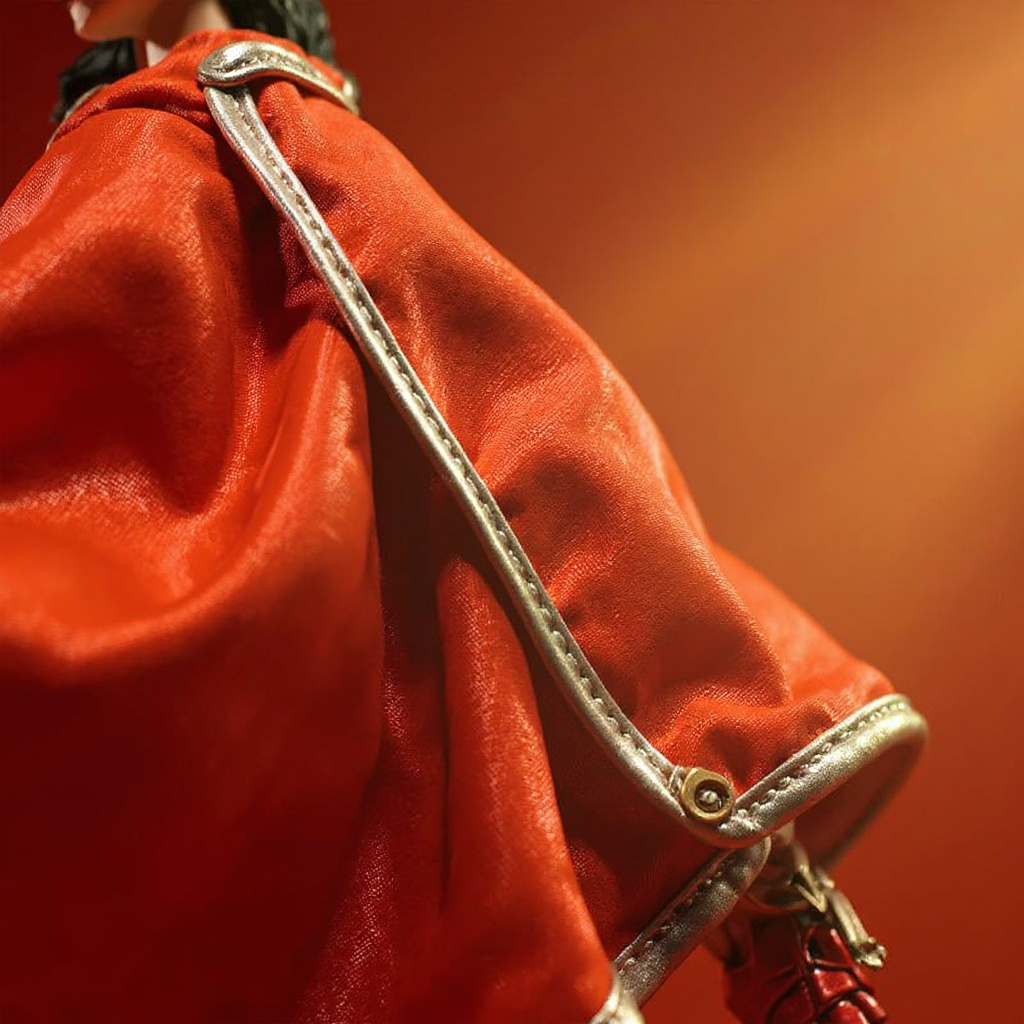
Photo alt text for the lead image: shapeable wire cape for action figure in deep red cotton blend, draped over a 7-inch female warrior figure against a mossy stone background.How the Wire Hem Holds a Pose
The wire lives in the hem. A narrow tunnel is folded along the bottom edge, and a length of 20-22 gauge wire runs through it. Sometimes it continues 2-3 inches up each side. For scale, 22 AWG is about 0.64 mm thick and 20 AWG about 0.81 mm, according to the American wire gauge standard. Bend it once. It stays.
That is the whole trick, and it is why a bendable wire cape looks alive next to a molded plastic one. You can kick one side back as if the warrior is mid-stride and curl the other toward the hip. Real cloaks never hang symmetrical in wind, so a lopsided shape reads as motion even on a shelf.
The wire does not run through the whole panel. If it did, the cape would behave like cardboard. Leaving the upper fabric free lets it fold, bunch, and fall into natural creases, and those creases are what make the cloth look like cloth.

Fabric: What Holds a Pose and Still Shows Grain
Weight matters more than fiber name. Earlier guides, including our own first draft, said 'cotton is too heavy,' which was sloppy. The problem is heavy, stiff cotton such as quilting weight. Light cotton and cotton blends are among the best choices. A fabric around 60-120 grams per square meter (gsm) carries hem wire without sagging, and its weave stays visible at 7-inch scale. Loose weaves catch the wire and show bumps. Tight weaves hide it.
Satin and silk are the opposite problem. They are slick, the wire creeps inside the hem tunnel, and the pose slumps within a day or two. No visible grain either, which defeats the purpose.
| Fabric | Approx. weight | Wire compatibility | Visible grain | Notes |
|---|---|---|---|---|
| Cotton voile or lawn blend | 60-90 gsm | Excellent | Soft | Folds small; best match for 7-inch scale |
| Cotton gauze | 50-80 gsm | Good | Strong | Frays; needs a turned hem |
| Fine wool challis | 90-120 gsm | Good | Medium | Takes deep red dye well |
| Linen-cotton blend | 100-130 gsm | Good | Strong | Crisp; creases can be pressed into the pose |
| Quilting cotton | 120-150 gsm | Fair | Medium | Too stiff for tight folds |
| Polyester satin | 80-120 gsm | Poor | None | Slick; wire creeps, shape slumps |
Color and Finish
Earthy tones photograph best on a warrior figure: deep red, saddle brown, and tan. They sit well against a neutral backdrop or a nature setting such as moss, bark, or river stone. Pick a fabric where the grain catches side light. Flat, glossy cloth looks like a toy. Textured cloth looks like gear.
Shoulder Attachment: Clasps and Ties
Wire capes fail at the shoulders first. The wire adds weight at the far end of a lever, and every re-pose tugs on two tiny attachment points. Cheap clasps. Gone in a week.
Two methods hold up well on a 7-inch figure:
- Small hook-and-eye clasps or snaps at each shoulder. They are fast to open and keep the cape centered. - Soft cord or ribbon ties across the collarbone. They are gentler on painted shoulders and spread the pull.
Some figures have pegs or holes molded into the shoulders. Those work if the cape was cut for them. Most action figures have no standard system, so a clasp-or-tie design travels better between figures. Skip glue and tape, because both fail during the first photo session. And do not drill the figure. Permanent changes cut resale value.

What Actually Snaps: Wire Durability
Any metal breaks if you bend it enough times. This is metal fatigue, and the fatigue of materials) is well documented. The figure of 200-300 major pose changes is a working rule of thumb among soft-goods makers for 90-degree bends in craft wire. It is not a lab result, and we have not published a formal cycle test. Your count will vary with gauge, bend radius, and how often you fold the same spot.
The common failure points:
1. Sharp bends right at the shoulder attachment 2. Folding the wire in the same spot every time 3. Twisting, which stresses wire more than bending does 4. Contact with joints, weapons, or other accessories 5. Storage in tight spaces that crimp the hem
Vary your poses. Use wide, rounded curves instead of creases. A quick self-test helps: bend a spare 3-inch piece of the same wire 90 degrees and back at one point until it snaps, and count. Divide that count by five or so for a safe real-world number, since your cape will not be bent at the same spot each time.
Wire poking through the fabric is rare. It happens when 18 gauge wire, which is too thick, is used in a thin fabric. Good makers use 20-22 gauge with the ends bent into small loops.
How to Make a Shapeable Wire Cape for an Action Figure
You need lightweight cotton or a cotton blend, 22 gauge craft wire, thread, two small clasps or a short cord, and wire cutters. Wire, fabric, patience. That is it.
1. Measure the figure from shoulder to the point where you want the hem to fall, then add 1/2 inch of seam allowance on each edge. 2. Cut a gently curved trapezoid, narrow at the neck and wide at the hem. 3. Fold and press a 1/4 inch hem along the sides and neck, then stitch. 4. Fold the bottom edge up 3/8 inch to form a hem tunnel, and stitch it closed along the top edge of the fold, leaving the ends open. 5. Cut wire about 1 inch longer than the tunnel. Bend a small loop at each end so the tips cannot snag the fabric. 6. Feed the wire through the tunnel, then tack the tunnel closed at each end with a few hand stitches. 7. Sew a clasp half or cord tie at each upper corner, test the fit on the figure, and bend the hem into your first pose.
The wire should bend easily by hand and hold its curve when you let go. If it springs back, switch to a softer wire.
How to Repair a Broken Wire
It is a ten-minute job if you are patient with the stitching.
1. Open the hem tunnel with a seam ripper, starting 1 inch beyond the break on each side. 2. Pull out the broken wire pieces. 3. Cut a replacement piece of the same gauge, about 1 inch longer than the tunnel. 4. Loop both ends, feed the new wire through, and straighten the fabric. 5. Re-stitch the tunnel with small running stitches. 6. Bend the hem gradually, and avoid the old stress point.
If you would rather splice, overlap two wire ends by an inch and wrap them with thin thread. That spot will be a little stiffer than the rest, but it works.
Cost: Plastic vs Wire Soft Goods vs Custom
Mass-produced plastic capes run about $8-15. They are durable, but they keep whatever shape the mold gave them. Handmade wire-hem soft goods cost about $25-60, and you are paying for sewing, testing, and drape. Full custom studio capes run $80-120, usually with weathering, layered fabric, and extended wire frames.
These ranges come from our own pricing and from what we see across maker listings. Treat them as ballparks.
Our 7 Inch Action Figure Cape | Soft Goods Custom Cloak | Female Warrior Figure Replacement Accessory | Handmade Wire Shapeable is $42.50 and falls in the middle band. It is a cloth cape with a shapeable hem wire, shoulder clasps or ties, and earthy color tones sized for 7-inch female warrior figures. If you build for a specific character such as Neytiri, the same design logic applies to any cape you choose or make.
How to Choose: A Buyer's Checklist
1. Fabric weight and weave. Look for light cotton or a blend, with visible grain in photos. 2. Wire gauge. 20-22 gauge, with looped or rounded ends. 3. Attachment. Clasps or ties at the shoulders, no glue. 4. Multiple angles. If a seller shows one perfect pose, ask for more. 5. Repairability. A hand-stitched hem can be opened and fixed. A glued one cannot.
Collectors building diorama scenes benefit most, since you can reshape the cape to fit the story: flowing back for a charge, pulled forward for stealth or cold. Browse more soft goods in the Figure Vault collection, or visit The Figure Vault for the full catalog.
Care and Storage
Never machine wash. The wire tangles and can tear the fabric. Spot-clean with a barely damp cloth, and use a cotton swab with mild soap on stains. Let it air dry before posing.
For storage, pick one method and stay with it: leave the cape on the figure in a relaxed, open curve, or lay it flat on a padded shelf. Do not hang it by the shoulder ties, since that pulls on the attachment points. Do not wrap it around the body. And do not stack anything on top. Room temperature is best, because heat weakens fabric and cold makes thin wire brittle.
The Honest Part
Here is what most guides skip. If you pose a figure once and never touch it again, skip the wire. A plain cape sewn into a fixed fold costs less and cannot break. And if your display room is humid, uncoated steel wire can rust inside the hem, so look for coated wire or keep the cape in a dry case. Wire capes reward people who like to re-pose. Everyone else is paying for flexibility they will not use.

