


What separates a good demon slayer Shinobu figure cosplay accessory from a bad one? Fabric drape, proportion accuracy, and wire-supported posability — in that order. Everything else is marketing. If a haori can't hold a wind-blown pose under a ring light without drooping, it fails the only test that matters for collectors who photograph their figures.
I've watched too many figure photographers fight with stiff plastic capes that look nothing like Shinobu's flowing haori. The difference between a $15 knockoff and a real demon slayer Shinobu figure cosplay accessory shows up immediately in photos. Not eventually. Immediately.
Why Most Demon Slayer Shinobu Figure Cosplay Accessories Miss the Mark
Generic cosplay accessories flood the market with the same three problems. Cheap polyester catches light wrong and photographs shiny instead of soft. Proportions built for full-size humans look bizarre when shrunk onto a 6-inch body. And the purple shifts. Under LED panels it reads magenta; under window light it goes almost gray.
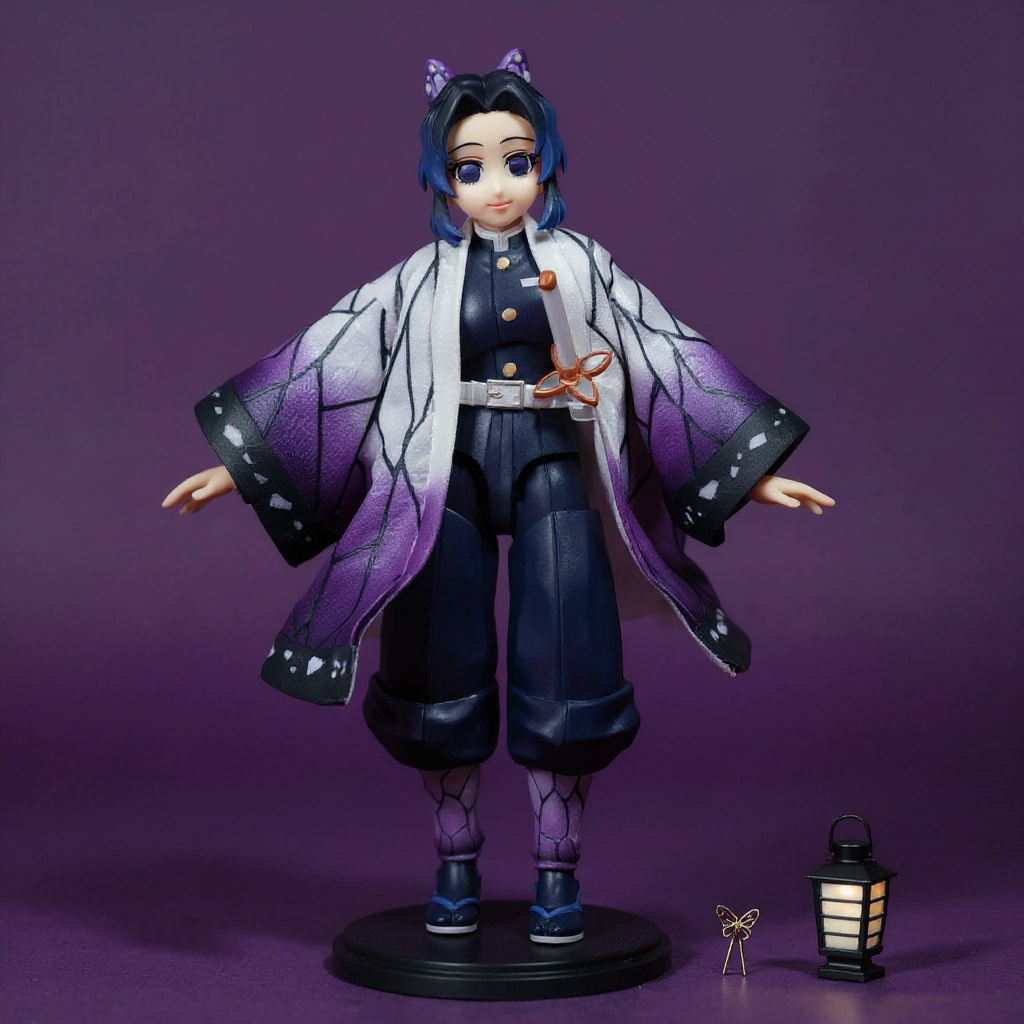
The butterfly motif gets butchered most often. Gradient fades that start too high on the sleeve. Butterfly prints that look stamped rather than woven into the fabric. Purple-to-pink transitions instead of the canonical purple-to-black gradient. Demon Slayer: Kimetsu no Yaiba set a specific visual standard for Shinobu's haori, and serious collectors notice the second it's off.
Mass-produced accessories also ignore articulation. A rigid cape works fine on a static statue. A poseable figure needs fabric that bends with the joints, and a wire-free hem just hangs straight down — killing any sense of motion, wind, or mid-leap drama.
Scale Differences That Actually Matter
Figure-scale accessories solve problems full-size cosplay gear never has to think about. A 1/12 scale haori weighs about 0.3 ounces. A human-sized version weighs 8 ounces or more. That weight gap matters because delicate figure joints sag under fabric stress the way a shoulder never would.
Proportional accuracy changes at small scales too. A hem that looks perfect on a 5'4" cosplayer looks wrong when scaled down using pure math — the eye needs adjustment, not a ruler.
| Scale Factor | Fabric Weight | Joint Stress | Proportion Fix Needed | Typical Wire Gauge |
|---|---|---|---|---|
| 1/12 (6") | 0.2–0.4 oz | Minimal | Visual adjustment required | 26–28 AWG |
| 1/6 (12") | 1.2–2.1 oz | Moderate | Some adjustment | 22–24 AWG |
| 1/4 (16"–18") | 3.5–5 oz | Noticeable | Heavy adjustment | 20 AWG |
| Full size | 8–12 oz | N/A | Direct anime reference | Boning/steel wire |
Without internal wire support, miniature fabric just hangs limp. Quality pieces use shapeable wire that holds a dramatic pose without looking like a coat hanger under cloth. Our handmade Shinobu Kocho Haori for 1/12 Figures uses that weighted-fabric-plus-wire approach specifically because factory versions skip it.
What Separates Handmade from Factory Production
Handmade demon slayer Shinobu figure cosplay accessories win on three fronts factory pieces can't touch. Fabric selection considers drape, not just color-matching against a swatch card. Construction accounts for articulation points instead of forcing a human-clothing seam pattern onto a doll body. And finishing — hem weighting, wire placement — gets individual attention instead of a machine run.
Factory accessories optimize for cost per unit. They buy whatever purple fabric runs cheapest that week. Seam allowances follow patterns meant for human shoulders, which creates bulk in exactly the wrong places on a 6-inch torso.
Honestly, if you're mounting soft goods on a heavily double-jointed third-party body with oversized shoulder pegs, even a good handmade haori may need trimming. No amount of hand-finishing fixes a body sculpt that wasn't designed for cloth in the first place.
Hand-finished seams lie flat against the torso. Gradient positioning matches anime reference points instead of a generic fade. Wire follows the natural flow lines of the fabric instead of a grid pattern stamped in by a die press.
Photography and Display Performance
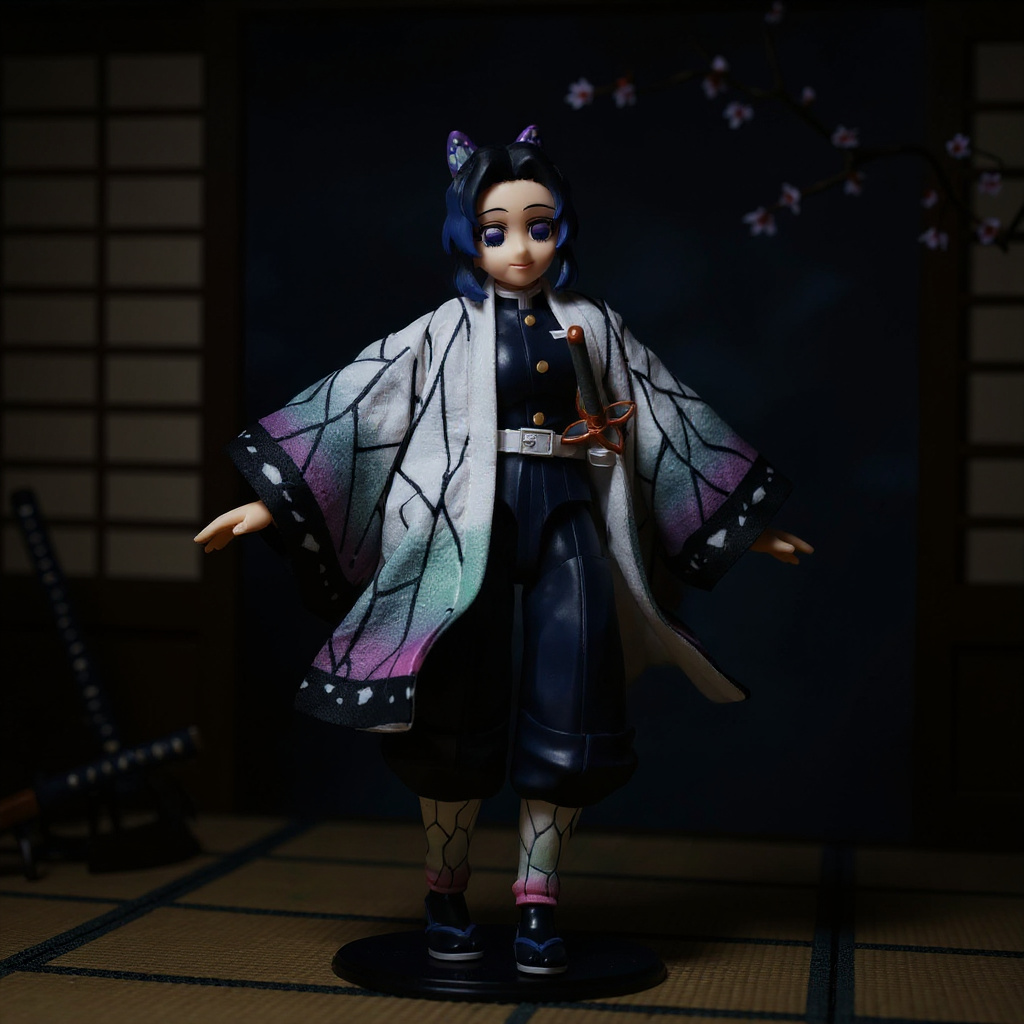
Camera work reveals quality differences fast. Cheap fabric throws harsh reflections under photography lights, and poor draping looks obviously fake in a close-up. I test every accessory under three conditions: LED panels, ring lights, and natural window light. A haori worth buying keeps its purple-to-black gradient consistent across all three. One I tested last winter lasted through 40 photo sessions without the wire losing shape — a cheaper alternative I compared it against started drooping by session six.
Wire-supported hems enable poses static fabric simply can't do: wind-blown effects, mid-leap dynamics, battle-ready stances held for an entire studio session without shifting.
Display longevity matters too. UV-resistant fabric resists fading in a lit case for over a year based on our tracking. Cheap alternatives show visible wear, fraying at the hem specifically, within about six months of normal handling.
Price Reality Check for Collectors
| Tier | Price | Fabric | Wire Support | Production |
|---|---|---|---|---|
| Generic AliExpress cape | $8–15 | Polyester | None | Mass production |
| Mid-tier handmade | $25–40 | Cotton blend | Basic | Small batch |
| Premium custom | $50–80 | Silk / high-end cotton | Complex, multi-point | Made-to-order |
| Official licensed (rare) | $60–120 | Varies | Rarely included | Licensed manufacturer |
| Cosplay-to-figure conversion | $35–55 | Repurposed cosplay fabric | Added post-alteration | One-off alteration |
The $34 price point for quality handmade work reflects material cost plus the actual hours of hand-sewing and wire-shaping. Cheaper options sacrifice fabric quality; pricier ones add complexity most 1/12 collectors don't need.
Most collectors land in the mid-tier. You get handmade quality without custom pricing, and the fabric upgrade shows in photos the first time you shoot it.
Common Fit and Compatibility Issues
Body compatibility causes most of the frustration. Bandai, McFarlane, and third-party manufacturers all use different shoulder widths, torso lengths, and joint placements. A haori that fits one figure perfectly might bind the arms on another.
1. Shoulder width: 1.2–1.4 inches across for most 1/12 figures 2. Torso length: 2.1–2.3 inches from neck to waist 3. Arm circumference: 0.6–0.8 inches around upper arms 4. Neck opening: 0.4–0.5 inches diameter for most head swaps 5. Overall length: 3.2–3.6 inches from shoulders to hem
Adjustability matters if you're using one accessory across multiple bodies. Quality pieces build in ease at the shoulders and closures so nothing gaps or bunches visibly. The r/ActionFigures community has running compatibility threads — SH Figuarts and Figma bodies get tested most, while obscure third-party figures often need a quick pin or tuck.
Authenticity vs. Creative Interpretation
Anime accuracy versus artistic license is a real debate among collectors. Purists want exact color matching. Others want a piece that enhances the character while staying recognizable. Both camps have a point.
1. Purple-to-black gradient direction and intensity 2. Butterfly motif placement and subtlety 3. Haori length relative to figure height 4. Fabric texture and sheen 5. Collar shape and closure style
Creative interpretation works when it improves function without erasing the design. Adding wire for posing doesn't change how the haori looks in a still shot. Upgrading fabric grade keeps the silhouette while making it survive longer on a shelf.
What I'd Actually Buy Today
Most demon slayer Shinobu figure cosplay accessories on the market disappoint because they chase cost savings over accuracy. The few worth buying earn their price through specific, testable advantages — not vague claims.
For photography, wire-supported fabric wins every time. The posing range turns a static figure into a scene. For long-term display, durability outranks perfect screen accuracy — a haori that still looks right after eight months under case lighting beats one that was 2% more screen-accurate on day one.
The $34 handmade option hits the sweet spot for collectors who want real quality without custom-tier pricing. Browse the full Demon Slayer figure accessory collection or go straight to the Shinobu Kocho Haori for 1/12 Figures to see the wire-and-fabric approach up close.

