


Soft Goods Cape vs Plastic Cape Figure: Quick Comparison
| Feature | Plastic Cape | Soft Goods Cape (wire-frame) |
|---|---|---|
| Posing | One molded shape | Re-bendable; holds new shapes |
| Look on camera | Even sheen, can show hot spots | Matte fabric, natural folds |
| Lifespan (estimate) | Decades; PVC can turn tacky over time | 2-5 years with regular posing |
| Cleaning | Wipe with a damp cloth | Spot clean or hand wash, air dry |
| Light and humidity | Can yellow or fade | Dyes fade; damp can cause mildew and wire rust |
| Added cost | $0 (ships with the figure) | $25-$70 for custom work |
The rest of this article explains each row, so you can decide where your money goes.
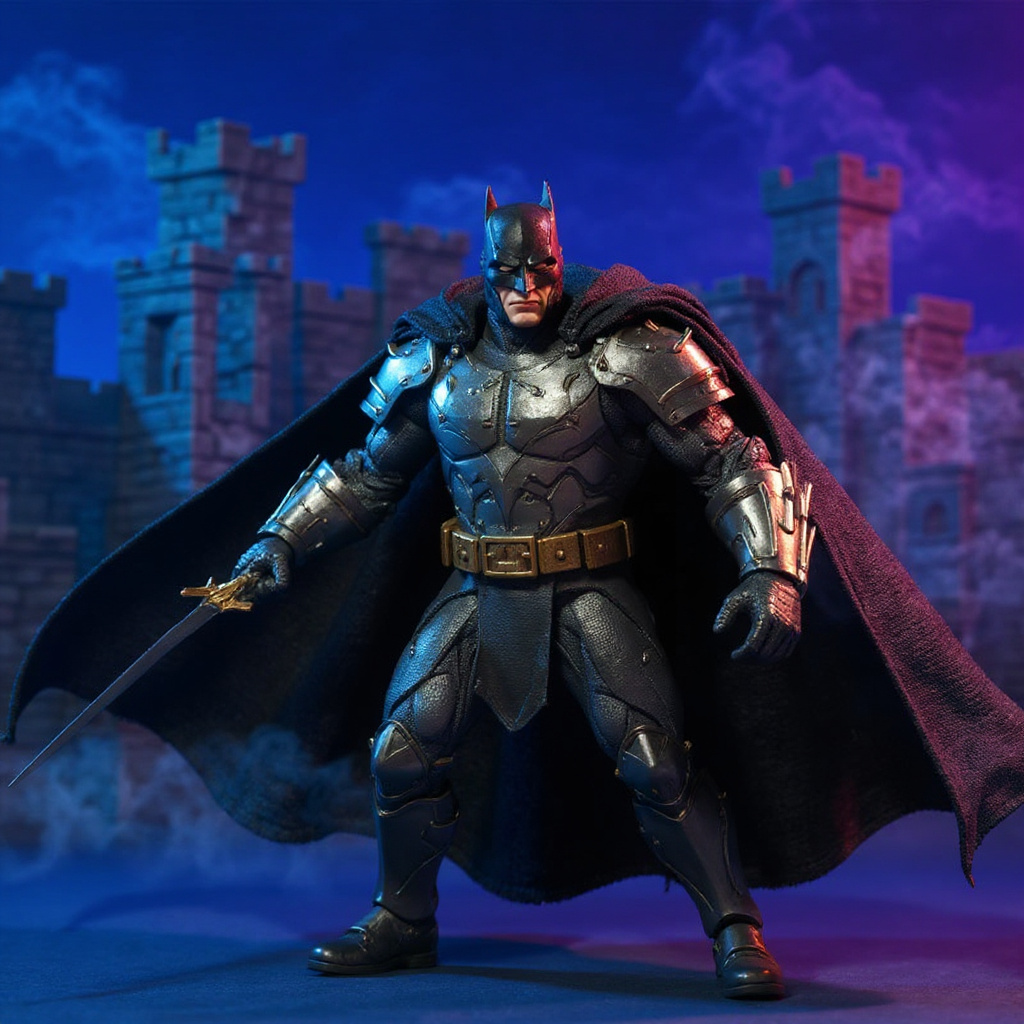
Posing Flexibility: Where the Wire Frame Earns Its Keep
A stock plastic cape is molded in one pose. Usually that pose is a generic billow. You can warm soft plastic to nudge it a little, but you risk warping the paint or snapping the part.
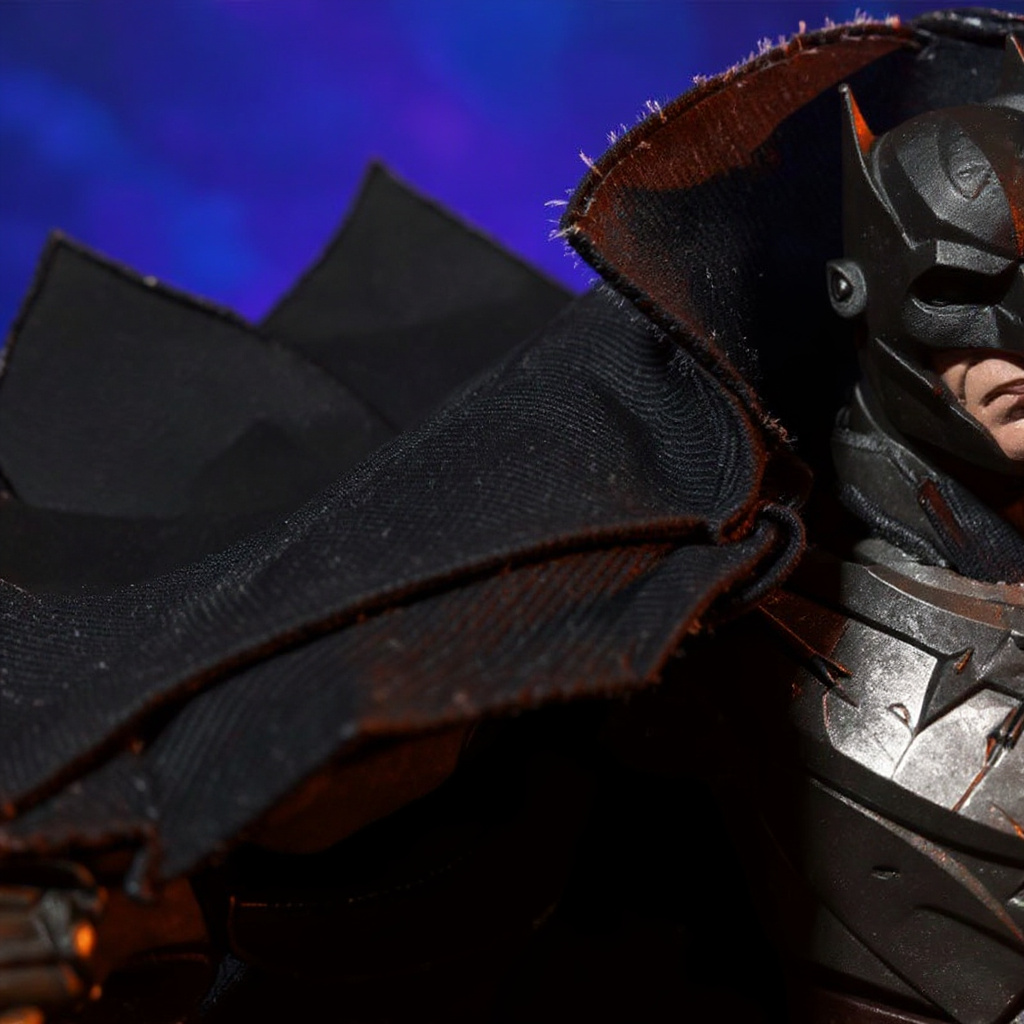
A wire-frame fabric cape works differently. Thin wire runs along the edges, and you bend it into a wrap, a swoop, or a windswept curve that stays put until you move it again. On the Medieval Batman cape, the wire-frame ridges are faintly visible in the dark fabric. That is the cost of the feature.
Wire fatigues. Bend the same spot fifty times and it will crack. So pose with intent, not out of boredom.
Photography: Why Fabric Reads Better Up Close
Plastic reflects light in one even, slightly glossy way, even when the finish is matte. Studio lamps can produce hot spots that flag it as a toy.
Fabric scatters light. The cape in our example is dark charcoal-black with a subtle sheen, so it picks up soft highlights along the folds and stays quiet everywhere else. Against a dark gothic backdrop, it reads as cloth on a armored knight rather than a molded accessory. The edges carry a little handmade fray, which looks like battlefield wear.
Not a flaw. A feature.
For tips on lighting and angles, see our action figure photography guide.
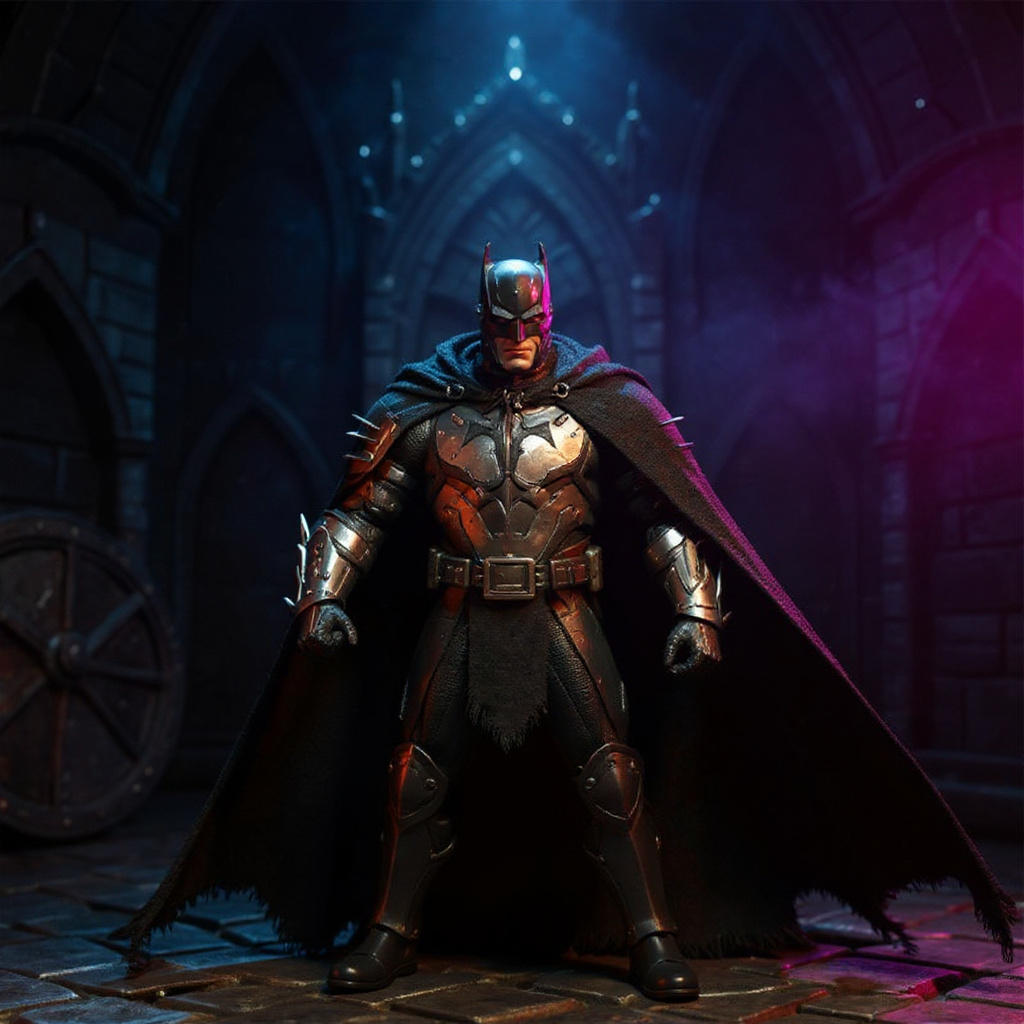
Durability and Fading: Plastic Wins, With Caveats
Plastic is the tougher material. Drop the figure and a molded cape bounces. Wipe it and it looks new. Fabric can snag on armor spikes, and a bent wire can poke through a seam.
But plastic is not immortal. PVC, the soft plastic common in toys, can turn sticky as plasticizers migrate out, and light can yellow or fade pigments (PVC overview). Fabric dyes fade too. The Canadian Conservation Institute notes that light damage is cumulative and that dyes and pigments are vulnerable (light as an agent of deterioration). Our rule of thumb: keep any cape out of direct sun, whatever it is made of.
Here is the honest part most sellers skip. If you live in a humid climate and your shelf sits against an exterior wall, skip fabric capes entirely. Damp fabric can grow mildew, and the wire can rust. Plastic will not care.
Cost: What a $59 Cape Actually Pays For
A stock cape costs nothing extra because it ships with the figure. McFarlane's 7-inch DC Multiverse figures retail in the low-to-mid $20s (McFarlane Toys), so a custom cape can cost more than double the figure.
Why so much for a scrap of cloth? Because the cloth is the cheap part. This illustrative estimate shows how a handmade price adds up. These are our estimates, not audited costs.
| Cost item | Estimated range |
|---|---|
| Fabric, wire, thread, string | $5-$8 |
| Labor (2-3 hours at $12-$15/hour) | $24-$45 |
| Fit testing, finishing, packaging | $4-$6 |
| Marketplace and payment fees | $6-$9 |
| Total | $39-$68 |
The $59 price for the Medieval Batman cape lands inside that range. You are paying for hours of cutting, sewing, and wire work in a small batch, not for fabric.
Sizing a Cape for a 7-Inch Figure
Scale trips up more buyers than material does. Many 6-inch lines sit near 1:12 scale. Seven-inch figures such as McFarlane's DC Multiverse run larger, so a cape cut for a 6-inch figure comes up short and narrow.
Use this process before you buy:
1. Measure your figure from the base of the neck to the heel. Expect roughly 5.5-6 inches on a 7-inch figure. 2. Add 0.5-2 inches for drape. A cape that is 6.5-8 inches long is a sensible target for a dramatic but controlled look. This is a rule of thumb, not a standard. 3. Check the shoulder width, including any armor pauldrons. Batman needs enough width to wrap the torso. 4. Confirm the neck closure. The Medieval Batman cape ties with a small string at the neck, which tucks under armor collars. 5. Compare the listing's stated dimensions with your numbers.
For more on fit, browse our 7-inch figure accessories.
Material Comparison: Fabric, Vinyl, and Plastic
| Material | Drape | Weight | Typical cost | Fraying |
|---|---|---|---|---|
| Matte woven fabric | Natural, soft folds | Light | $25-$70 | Edges fray; can be a styled look |
| Thin polyester | Smooth, can look synthetic | Very light | $10-$30 | Low |
| Vinyl or pleather | Stiff, leather look | Heavier | $20-$50 | None; can crack with age |
| Soft PVC (stock cape) | None; molded fold | Light | $0 | None |
| Rigid ABS (armor parts) | None | Medium | $0 | None |
Manufacturers seldom publish resin specs for each part, so treat the plastic rows as typical, not guaranteed.
Common Problems and How to Fix Them
1. Wire ridges show through the fabric. You cannot erase them. Dark charcoal fabric hides them better than light colors, and front lighting hides them better than side lighting. 2. The neck tie slips. Knot the string snugly beneath the armor collar, then trim the tails. Do not overtighten, since strain pulls the seam. 3. The cape pools or looks stubby. The length is wrong for your figure's scale. Re-measure using the steps above. 4. The black looks navy or gray. Handmade dye lots vary. Ask for a photo in daylight before ordering. 5. You want a battle-worn look. Dab diluted acrylic paint with a damp brush, stain with cooled black tea, and trim threads with fine scissors. Skip sandpaper on fabric. It fuzzes fibers.
Who Should Buy Which?
- Buy plastic (keep the stock cape) if the figure sits behind glass, you view it from three feet or more, or you pose it once and leave it. - Buy a soft goods cape if you shoot close-ups, re-pose often, or the figure is your centerpiece. - Be honest with yourself. If you never photograph the figure, the upgrade is a luxury, not a necessity. - Fantasy and medieval figures gain the most from fabric, since cloth fits the armored-knight look. Sleek high-tech suits can look odd with visible weave.
Worth it? Sometimes. For the right figure, yes.
Frequently Asked Questions
What is the difference between a soft goods cape and a plastic cape on an action figure?
A soft goods cape is sewn fabric, often with internal wire, so you can bend it into new shapes. A plastic cape is molded in one fixed pose at the factory. Fabric gives you drape and posing control. Plastic gives you durability and no added cost. The trade-off is maintenance versus flexibility.
Are soft goods capes worth it for 7-inch figures?
They are worth it for a centerpiece or a figure you photograph, not for a whole shelf. A $59 cape on a roughly $25 figure more than doubles your spend. If you pose rarely and view from three feet away, stock plastic looks fine. If you shoot close-ups, fabric changes the result.
What are plastic action figure capes made of?
Manufacturers seldom publish resin details for each part. Flexible capes are generally soft PVC or a similar pliable plastic, while rigid armor pieces often use ABS (ABS plastic overview). Specs vary by line and year, so contact the maker if you need certainty.
How do you hide wire frame ridges on a fabric cape?
You cannot remove them completely. Thin wire sewn into a seam shows as faint ridges under matte fabric, most visible in side lighting. Light the figure from the front, shoot from slightly above, and choose dark charcoal fabric, which masks ridges better than lighter colors.
How do you weather a fabric cape?
Dab diluted acrylic paint with a damp brush, stain with cooled black tea, and trim threads with fine scissors to build fray. Skip sandpaper, which fuzzes fibers and can snag. Test on a hidden hem first and build effects in thin layers, letting each dry before the next.
How do you attach a string-tie cape to an armored figure?
Loop the string around the neck beneath the armor's collar, tie a small knot or bow, and adjust until the cape hangs behind the shoulders. Trim the tails. Do not overtighten, since pulling strains the fabric and can distort the cape's shape on the figure.
Will a 7-inch cape fit a 6-inch Marvel Legends figure?
Not well. A cape cut for a 7-inch figure runs long and wide on a 6-inch body, so it pools and bunches at the feet. Look for listings that state the figure scale and cape length, and compare them with your own neck-to-heel measurement before buying.
Do humidity and sunlight damage fabric capes?
Yes, both can. Light fades dyes over time, as the Canadian Conservation Institute explains, and damp air can cause mildew and rust the wire. Keep the display away from windows, avoid basements and exterior walls, and add a silica gel packet inside the case if your climate is humid.
The Verdict
The soft goods cape vs plastic cape figure decision comes down to how you use the figure. Display it and forget it? Keep the plastic. Photograph it, pose it, and want it to look like a medieval knight in a real cloak? Fabric is the upgrade. The Medieval Batman soft goods cloak is one example, at $59, with a dark charcoal matte finish, a wire frame, and a string-tie neck. To compare more options, browse our soft goods capes collection or read our wire-frame cape posing guide.

