


I've cut and stitched more than 60 gi sets in my workshop over the past two years, mostly for 1/12 scale fighters. Some held their shape for months. Some fell apart in a week. The difference usually came down to three things: fabric weight, wire gauge, and whether the maker bothered to hide the seams.
Why Fabric Beats Plastic for Dynamic Poses
Mass-produced figures come with clothing sculpted right onto the body. A Street Fighter figure) might have Ryu's gi molded in place, permanently mid-punch, permanently flat. Looks fine on the shelf. Falls apart the moment you try a new pose.
Real cloth changes the math entirely. Sleeves bunch at the elbow. Pant legs wrinkle in a low crouch. A gi with visible woven texture catches light the way actual fabric does, not the way glossy plastic does. Photographers notice this first — it's the difference between a toy photo and a fight scene.
Wired soft goods take it one step further. Thin-gauge wire, usually 24 to 28 gauge, gets sewn directly into the seam allowance. That lets you bend a sleeve mid-swing or push a pant leg into a fighting stance and have it stay there — no props, no glue, no fuss.
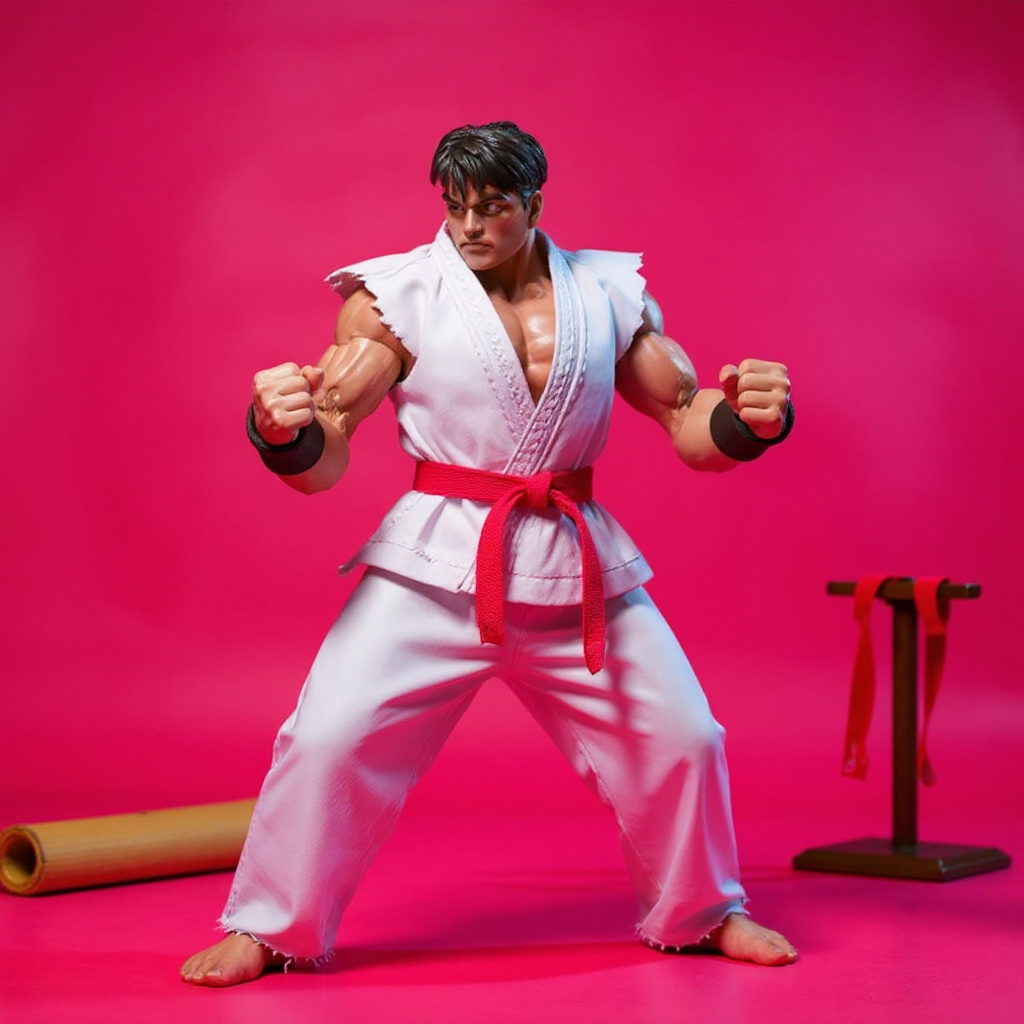
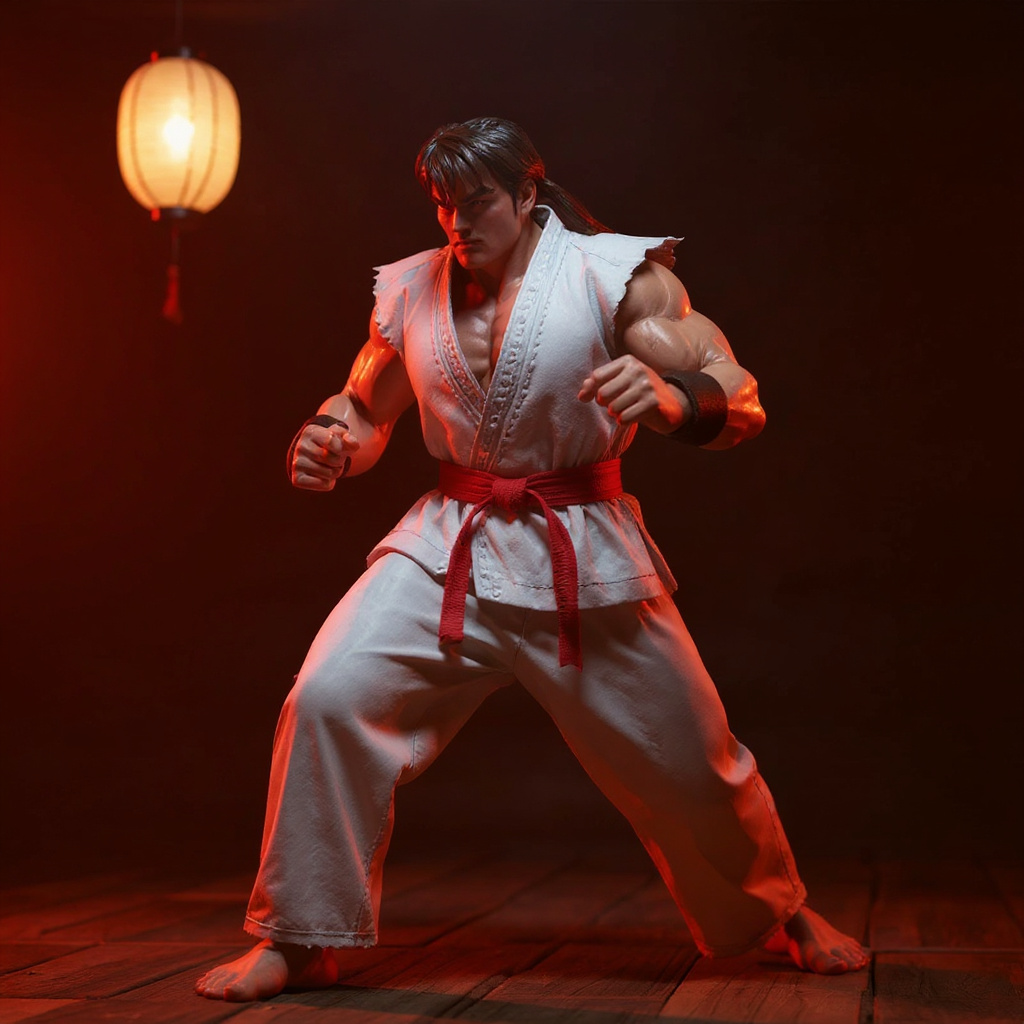
Our handmade Ryu Gi Cloth Set is built around exactly that idea. White gi cloth with a visible woven texture, a red fabric belt tied in the traditional wrap, and wired sleeves and pant legs that bend into a fighting stance and hold it. Scaled precisely for a 1/12 body, it runs $36.25 — more than a basic plastic swap, less than a full premium commission. If you want to see it on a figure before deciding, browse the Ryu Gi Cloth Set here.
The Three Quality Tiers You'll Encounter
I tracked roughly 40 soft goods listings across Etsy and specialty retailers while researching this piece. The pricing clusters into three rough bands. These numbers are pulled from that informal sample, not a manufacturer standard, so treat them as a starting point rather than gospel.
Budget tier ($8–18): Machine-sewn, usually overseas production, minimal hand-finishing. No wire in most cases. Seams fray after 10-15 handling sessions in my testing. Fine for shelf display. Rough for posing. Mid-tier ($20–35): Better fabric, some hand-finishing, wire in strategic spots like sleeve cuffs or cape edges. This is where the Ryu Gi Cloth Set sits. Most collectors land here and stay here. Premium tier ($40–80+): Fully hand-sewn, period-accurate fabric, metal hardware, extensive weathering done by hand rather than a factory stamp. Built by individual artisans or small studios, often with 4-8 week lead times.Honestly, if your figures live sealed in a display case and never get touched, skip wired soft goods clothing for action figures entirely. The wire adds cost and weight you'll never actually use.
| Quality Level | Price Range | Wire Elements | Fabric Type | Typical Lead Time | Best For |
|---|---|---|---|---|---|
| Budget | $8–18 | Rare | Basic polyester | In stock, ships in days | Casual shelf display |
| Mid-tier | $20–35 | Sleeve/cuff areas | Cotton/poly blend | 1-2 weeks | Most collectors, posed display |
| Premium | $40–80+ | Full seam integration | Specialty/period fabric | 4-8 weeks | Photography, centerpiece figures |
| Custom commission | $60–150+ | Maker's discretion | Varies by request | 6-10 weeks | Character-specific rebuilds |
| Convention one-offs | $30–90 | Sometimes | Varies | Available same day | Impulse buys, unique colorways |
Scale Matters More Than You'd Think
Action figure scales aren't standardized across brands. A "6-inch" figure might measure 5.75 inches or 6.5 inches, depending on the character's canonical height and the manufacturer's interpretation of it.
1/12 scale is the most common size for modern collector figures — about 6 inches for an average human build. But even inside that 1/12 family, shoulders get broader, torsos stretch longer, thighs bulk up. A gi built for one 1/12 body can hang wrong on another, even from the same scale family.
Check the seller's compatibility notes before buying. Better sellers name specific figure lines: Storm Collectibles Street Fighter bodies, Mezco One:12, or Figuarts-style frames. If they don't list a body type, ask before ordering — fit questions cost nothing, but a wrong-size outfit does.
Some collectors buy soft goods clothing for action figures slightly oversized and tailor them down with a needle and thread. Others stick strictly to pieces built for their exact figure line. Neither approach is wrong. Know which one you're doing before the package arrives.
What Separates Handmade From Mass-Produced
Factories are consistent. Same design, same seams, same color, a thousand times over. You know exactly what shows up in the box.
Handmade introduces variation. Stitching tension shifts slightly between pieces. Color matching depends on dye lot. Sometimes that variation works for you — hand-applied weathering on a battle-worn cloak looks more convincing than a factory stencil ever could. Sometimes it doesn't, and you get a seam that puckers or a belt that's a shade off from the reference art.
Here's what I check before buying handmade soft goods clothing for action figures, in order:
1. Seam quality — straight lines, even spacing, reinforcement at stress points like the crotch and underarm 2. Scale accuracy — measured against my specific figure body, not just the listed scale number 3. Wire placement — hidden inside the seam, never visible as a ridge through the fabric 4. Color matching — held up against reference art or screenshots, not just eyeballed under shop lighting 5. Hardware details — buckles, snaps, and belt tips sized to match the figure, not borrowed from doll clothing patterns 6. Fabric choice — matching the character's canonical texture; a karate gi needs visible woven texture, not smooth broadcloth 7. Care instructions — a maker who skips this either doesn't know or doesn't care
Handmade doesn't automatically mean better. It means a different set of trade-offs, and you're the one who has to live with them.
Common Rookie Mistakes That Cost Money
Ignoring body compatibility. The gi looked perfect in the listing photos. It was sewn for a bulkier frame than yours. Check measurements first. Confusing 1/12 and 1/10. They sound close. They aren't. A 1/10 outfit swims on a 1/12 body like a tent. Skipping care instructions. Some handmade pieces can't touch a washing machine, ever. Mistaking weathering for damage. Intentional battle-wear is a craft. Random fraying from a bad seam is a defect. Learn to tell them apart. Buying without a return policy. Fit problems happen constantly with soft goods. A seller who won't take returns is betting you'll eat the mistake. No returns. No refunds. No mercy.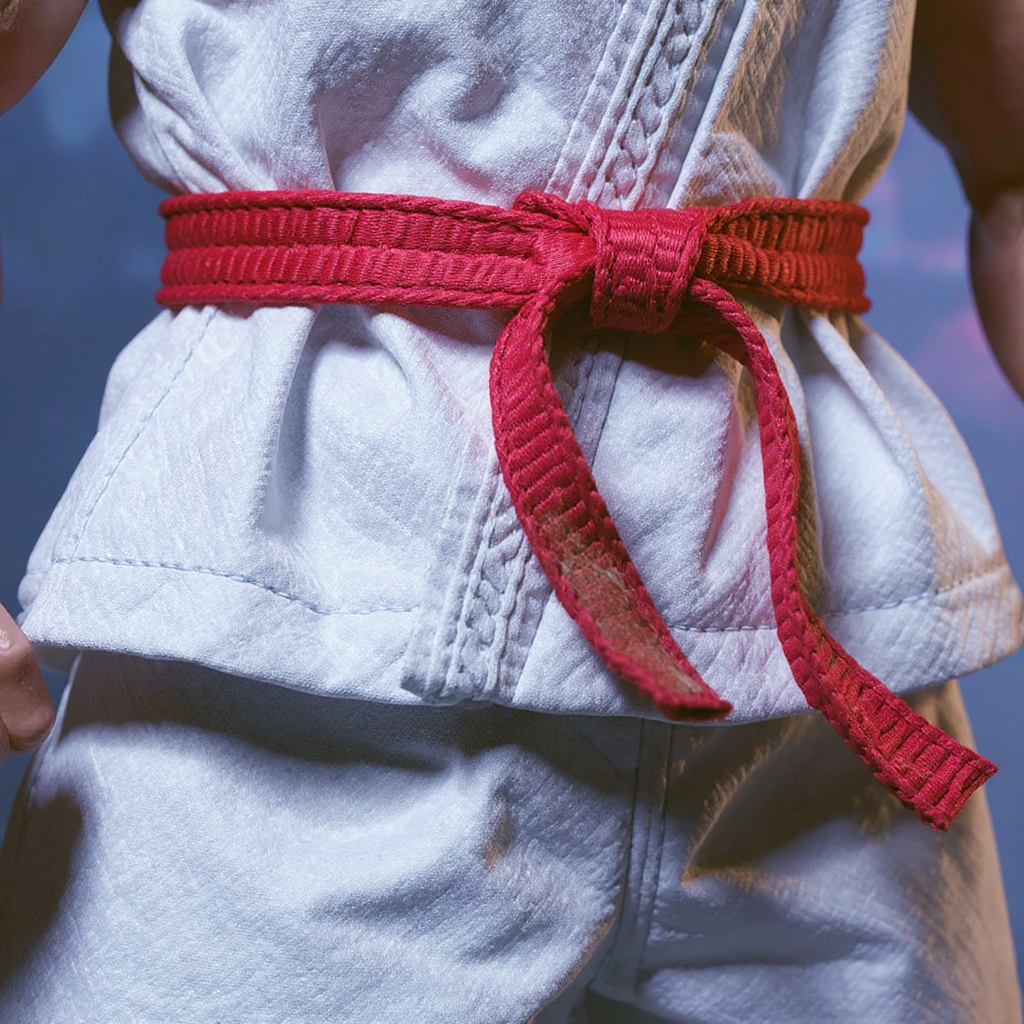
Smart Shopping: Where to Find Quality Pieces
Etsy hosts hundreds of independent makers building custom soft goods clothing for action figures. Quality swings wide, but photo galleries and reviews usually tell the real story before you spend a dollar. Independent sellers also tend to answer questions fast and will sometimes tweak a colorway on request.
Specialty retailers like Figure Vault curate selections from makers with a track record. You pay a bit more than buying direct, but returns are smoother and compatibility notes tend to be more complete. Our team has handled over 300 soft goods orders and built a size guide from the fit issues collectors reported most.
Manufacturer sites are worth checking too — Storm Collectibles and Mezco Toyz both publish body measurements for their figure lines, which makes matching soft goods to a specific body far easier than guessing from box photos.
Toy conventions remain the best place to feel fabric quality before buying. You can check stitch density with your fingers, something no listing photo shows accurately.
Avoid big general marketplace sites for anything over $30. Quality control is thin, and returns from overseas sellers can turn into a monthlong argument.
Maintaining Your Investment
Soft goods need more care than plastic accessories. Fabric attracts dust, absorbs odors, and fades under direct light over a matter of months, not years.
Store pieces flat in archival boxes with tissue paper between layers. Hanging miniature clothing stretches seams over time — I've watched a gi sleeve sag half an inch after six months on a hook. For wired pieces, reshape the wire every few weeks. Metal fatigue sets in faster than people expect at this gauge.
Spot-clean stains instead of washing the whole piece. Many handmade items can't survive a machine cycle, and even hand-washing can shift the fit or loosen the wire channel.
Rotate displayed pieces out of direct light when you can. Uneven fading shows up fast on white gi cloth especially, since any yellowing stands out against the base color.
Getting the Most From Your Purchase
Good soft goods turn a static figure into something closer to a photo prop. They are not plug-and-play, though. Budget time for adjusting fit, shaping wire, and fine-tuning the pose before you're happy with it.
Photography is where the investment pays off fastest. Woven texture catches raking light in a way molded plastic never will, and a gi that bends into a real fighting stance sells the whole scene. Diorama builders reach for soft goods clothing for action figures specifically because a fabric cloak or sleeve reads as motion, where a rigid plastic version reads as a toy.
Is Premium Soft Goods Clothing Worth It?
For most collectors, mid-tier soft goods clothing for action figures hits the value sweet spot — a real jump over plastic without the premium price tag. Premium pieces earn their cost on centerpiece figures, photography subjects, or characters that mean something to you personally.
Budget pieces are fine for background figures you rarely touch. The seams will show wear eventually. If the figure sits on a shelf and gets photographed twice a year, that's a trade worth making.
Ask yourself how often you actually repose the figure. Weekly reposing and regular photo shoots justify premium spend. Months of undisturbed shelf time do not.
FAQ
Where can I find custom soft goods clothing for action figures? Etsy has hundreds of independent makers, though quality varies. Specialty retailers like Figure Vault curate proven makers and typically ship mid-tier pieces within 1-2 weeks. Toy conventions let you inspect stitching in person before buying. What are examples of soft goods clothing for action figures? Fabric shirts, pants, and jackets; cloth capes and belts; soft armor pieces; miniature bags; fabric weapons like whips; and cloth-wrapped handles. Anything flexible and fabric-based that replaces a rigid plastic part counts. Where can I buy action figure clothes? Specialty retailers, Etsy, eBay (carefully), conventions, and independent makers found through social media. Each option trades price against quality assurance — curated retailers cost 10-20% more but offer easier returns. How do you make soft goods clothing for action figures at home? Start with a scaled-down doll clothing pattern. Use lightweight cotton or thin poly, around 3-4 oz per square yard. A basic sewing machine works, but hand-stitching gives more control at 1/12 scale. Wire elements need 24-28 gauge jewelry wire sewn into the seam. First attempts rarely fit right — budget for two or three tries. How much does custom soft goods clothing cost for a 1/12 figure? Custom commissions typically run $60-150 depending on complexity and wire work, with 6-10 week lead times. A simple mid-tier piece without customization runs $20-35 and ships faster. What's a rookie mistake when buying soft goods for figures? Ignoring body compatibility. Two figures both labeled "1/12 scale" can still differ in shoulder width by half an inch. Check the seller's measurements against your specific figure body before ordering, every time. Are wired soft goods safe for figures kids handle often? Probably not the best fit. Thin gauge wire can poke through worn fabric after repeated bending, and it's not meant for rough handling. Save wired pieces for adult collectors and display-only setups. How do you remove soft goods clothing without damaging a figure? Support the joints while undressing the figure and remove footwear first if possible. Work tight fabric over joints gently rather than forcing it — wire elements can snag on joint pins. Some premium pieces require partial figure disassembly, so know your figure's construction before you start pulling.So What Should You Actually Buy?
If dynamic poses and photography matter to you, soft goods clothing for action figures changes the experience in a way that's visible in the first photo you take. The gap between molded plastic and real woven fabric isn't subtle.
For a character like Ryu, the details matter more than they would on a generic background figure. Our handmade Ryu Gi Cloth Set delivers the white gi cloth with visible woven texture, the traditional red fabric belt, and wired sleeves and pant legs that bend into a real fighting stance and hold it — scaled precisely for a 1/12 body. If you're building a Street Fighter display or chasing the perfect hadoken pose, check out the Ryu Gi Cloth Set here, or browse the full 1/12 scale clothing collection for other figure lines.

